Dumpling ramen bowl brings the comfort of a noodle soup and the punch of a dumpling night into one bowl. The broth turns silky and savory from miso, the dumplings give you that satisfying bite, and the soft-boiled egg adds richness that runs right into the noodles. It eats like something you spent a lot longer on than you actually did.
What makes this version work is the layering. The miso goes into hot broth, not a hard boil, so it stays mellow and fragrant instead of tasting flat. The noodles cook separately, which keeps the broth clean and prevents the bowl from turning starchy. I also like adding the bok choy near the end so it stays bright and tender instead of losing all its structure.
Below, you’ll find a few small changes that matter, from keeping dumplings intact to timing the egg so the yolk stays soft. Those little details are what make this bowl feel cozy and pulled together instead of rushed.
The broth had that deep savory miso taste without getting salty, and the dumplings stayed tender instead of falling apart. I also loved that the noodles were cooked separately because the bowls still looked perfect at the table.
Save this dumpling ramen bowl for the nights when you want silky miso broth, tender dumplings, and a soft egg in one fast bowl.
The One Mistake That Makes Ramen Broth Taste Flat
The fastest way to lose the character in this bowl is boiling the broth after the miso goes in. Miso has a gentle fermented flavor that turns dull when it gets hammered by high heat, and the broth starts tasting one-note instead of layered. Keep the pot at a steady simmer and whisk the paste in until it dissolves before the dumplings go in.
The other thing that matters here is timing. Dumplings need enough simmer time to cook through, but not so much that the wrappers get swollen and tired. Adding the bok choy at the end keeps it bright and slightly crisp, which gives the bowl a cleaner texture against the noodles and rich egg.
- Hold the broth at a simmer, not a boil, once the miso is in.
- Cook the dumplings directly in the broth so they pick up flavor.
- Add bok choy late so it stays green and tender.
- Cook the noodles separately so the soup stays clear and the texture stays springy.
What Each Ingredient Is Doing In This Bowl
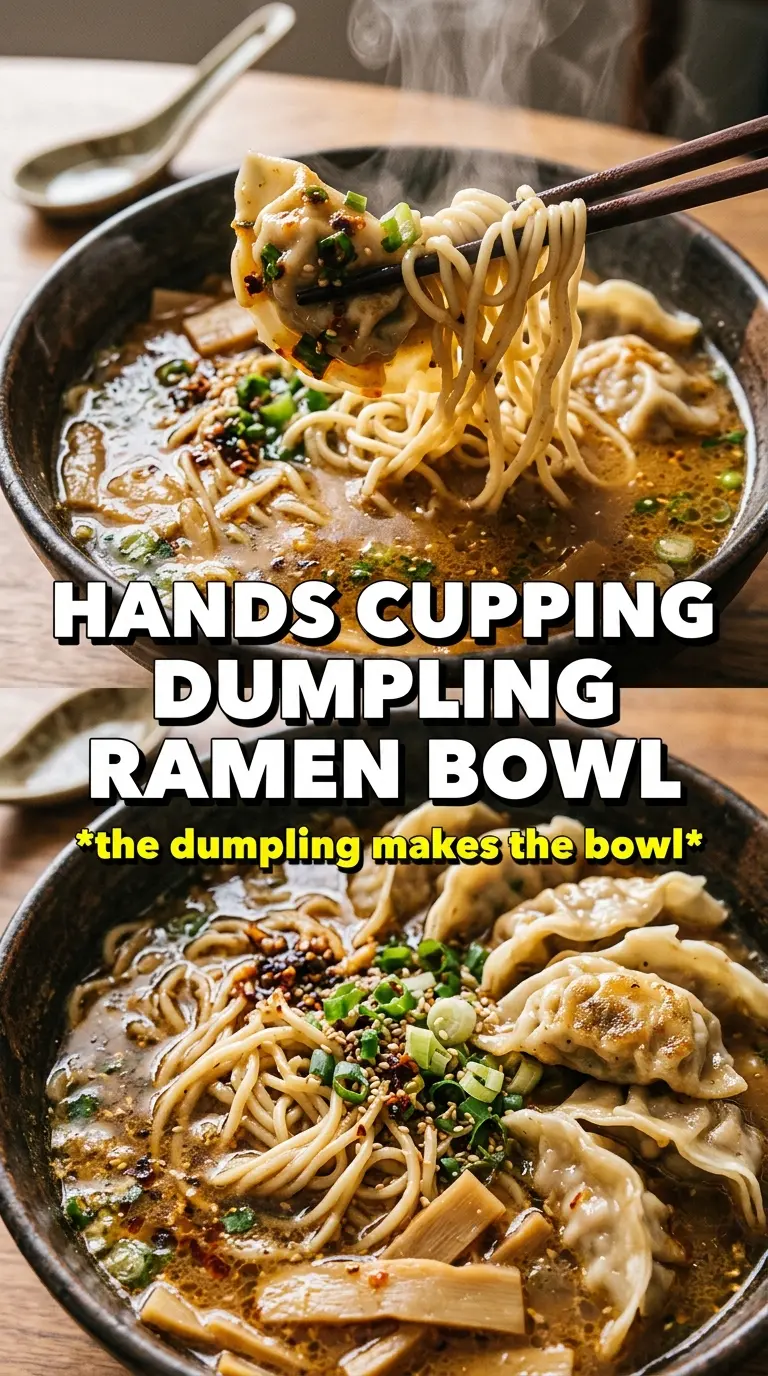
- Frozen dumplings — These carry the bowl. Pork dumplings give you a richer broth, while chicken dumplings stay lighter. Use them straight from frozen; thawing first makes the wrappers fragile and more likely to split.
- White miso paste — This is what gives the broth body and that rounded savory taste. White miso is the best choice here because it’s mild and doesn’t overpower the dumplings. If you only have red miso, use a little less and expect a deeper, saltier broth.
- Fresh ramen noodles — Fresh noodles keep the bowl bouncy and chewy. Dried ramen works in a pinch, but it changes the texture and absorbs broth differently. Cook them separately so the pot doesn’t turn cloudy and starchy.
- Soft-boiled eggs — The runny yolk turns the broth silky once you break it open. Seven minutes is the sweet spot for a set white and a jammy center.
- Bok choy and corn — Bok choy brings freshness and crunch, and corn adds a little sweetness that balances the miso. If you don’t have bok choy, baby spinach works, but it wilts more quickly and won’t hold the same shape.
- Sesame oil, mirin, soy sauce — These round out the broth. Sesame oil should be toasted and fragrant, not neutral, and mirin adds a soft sweetness that keeps the soup from tasting harsh.
Building the Bowl Without Overcooking Anything
Starting the Broth
Bring the chicken broth up to a gentle simmer first, then whisk in the miso, soy sauce, mirin, and sesame oil until the broth looks smooth and evenly colored. If the miso clumps, press it against the side of the pot with your spoon and keep whisking. Don’t let the broth boil hard at this stage or the flavors start to flatten.
Cooking the Dumplings
Add the frozen dumplings straight into the hot broth and let them cook until they’re heated through and floating comfortably, about 5 to 7 minutes. Stir only enough to keep them from sticking, because rough stirring can tear the wrappers. If a dumpling splits, it’s usually from boiling too aggressively or crowding the pot.
Finishing the Vegetables and Noodles
Drop in the bok choy during the last 2 to 3 minutes so it softens without going limp. Cook the ramen noodles in a separate pot according to the package directions, then drain them well. If you add them to the broth too early, they soak up too much liquid and the whole bowl turns heavy.
Assembling the Bowl
Divide the noodles between bowls first, then ladle the broth and dumplings over the top. Add the halved eggs, corn, green onions, nori, sesame seeds, and a little chili oil at the end. The toppings should sit on top and stay visible, not disappear under the broth.
How to Adapt This Bowl When You Need a Shortcut or a Swap
Make It Vegetarian
Use vegetable broth and swap in vegetable dumplings. The broth will be a little lighter, so keep the miso and sesame oil in place for depth, and add a splash more soy sauce if it tastes thin at the end.
Gluten-Free Version
Use gluten-free dumplings and gluten-free tamari in place of soy sauce, then choose rice noodles or gluten-free ramen. The bowl still works, but the broth will taste a little softer and the noodles will be less chewy than wheat ramen.
Use What You Have for the Greens
Baby spinach, napa cabbage, or shredded kale all work if bok choy isn’t in the fridge. Spinach wilts almost instantly, cabbage needs a little longer, and kale brings a firmer bite that changes the bowl into something heartier.
Storage and Reheating
- Refrigerator: Store broth, dumplings, noodles, and toppings separately for up to 3 days. The noodles get softer after sitting in broth.
- Freezer: Freeze the broth and dumplings together if needed, but don’t freeze the noodles or egg. The texture is best when you cook fresh noodles for serving.
- Reheating: Reheat the broth and dumplings gently on the stove until steaming, then add freshly cooked noodles. If you boil it hard, the dumplings can burst and the broth can turn cloudy.
Answers to the Questions Worth Asking
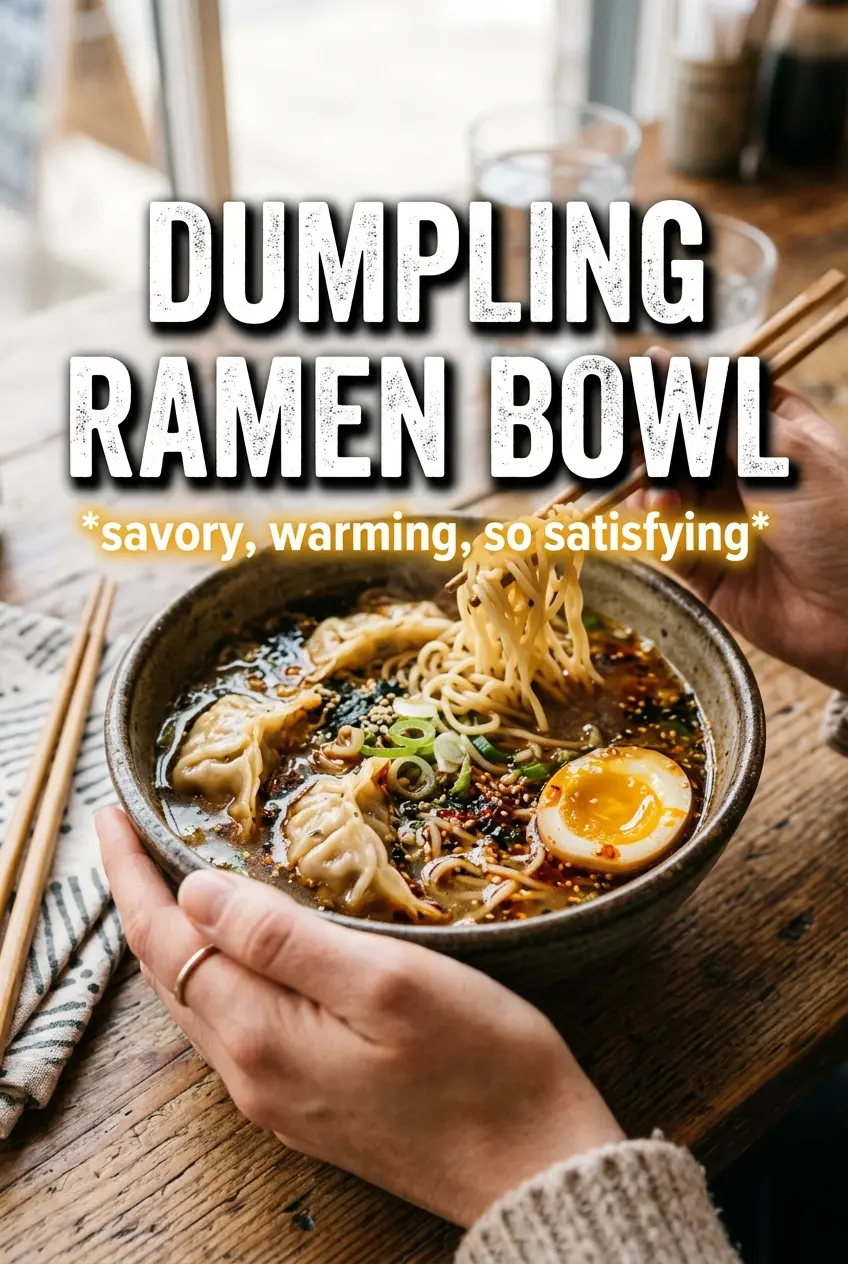
Dumpling Ramen Bowl
Ingredients
Equipment
Method
- Bring the chicken broth to a simmer in a Dutch oven. Whisk in the white miso paste, soy sauce, mirin, and sesame oil until smooth.
- Add the frozen dumplings to the simmering broth. Cook for 5-7 minutes until the dumplings are cooked through.
- Add the halved bok choy to the broth. Cook for 2-3 minutes until wilted.
- Cook the fresh ramen noodles separately according to package instructions, then drain. Keep them hot while you assemble the bowls.
- Divide the drained noodles between 4 bowls. Ladle the broth and dumplings over the noodles.
- Top each bowl with halved soft-boiled eggs, corn, green onions, nori, sesame seeds, and chili oil. Add salt to taste if needed before serving.


