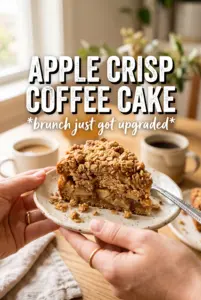
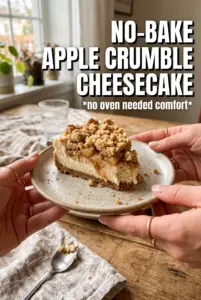
Apple crisp coffee cake lands right in the sweet spot between a bakery-style breakfast cake and the kind of crumb-topped treat people sneak a second slice of before lunch. The cake stays soft and moist from sour cream, the apples melt into little pockets of tenderness, and the oat crumble bakes into a thick, sandy cap with caramelized edges that crackle when you cut into it.
The key here is keeping the topping cold so it bakes up in distinct clumps instead of disappearing into the batter. Sour cream also does a lot of heavy lifting; it keeps the crumb plush without making the cake heavy, and it gives the batter enough richness to stand up to all that cinnamon and apple. Dice the apples small enough that they soften through the bake, but not so small that they vanish.
Below you’ll find the trick to getting the crumble right, what each ingredient is actually doing, and a few useful ways to adapt the cake if you need to work with what you’ve got.
The oat topping stayed crisp all the way to the edges, and the apples baked into the cake instead of sinking to the bottom. I served it warm with coffee and everyone kept going back for “just one more square.”
Save this apple crisp coffee cake for a breakfast bake with a tender sour cream crumb and a thick oat streusel.
The Trick to Keeping the Oat Crumble on Top Instead of Melting In
The topping needs to be mixed until the butter forms pebble-sized clumps, not a smooth paste. That texture is what turns into a crisp, craggy layer in the oven. If the butter gets too warm, the oats and flour absorb it completely and you lose the crisp top that makes this cake stand out.
Chilling the crumble before baking gives those butter pieces time to firm back up, which helps them hold shape while the cake rises underneath. That also keeps the sugar from melting too early, so the topping browns in patches instead of turning flat and greasy. The other thing that matters is pan size: a 9×13 dish gives the batter enough room to bake through without burying the apples under too much weight.
What the Sour Cream, Apples, and Brown Sugar Are Each Doing Here
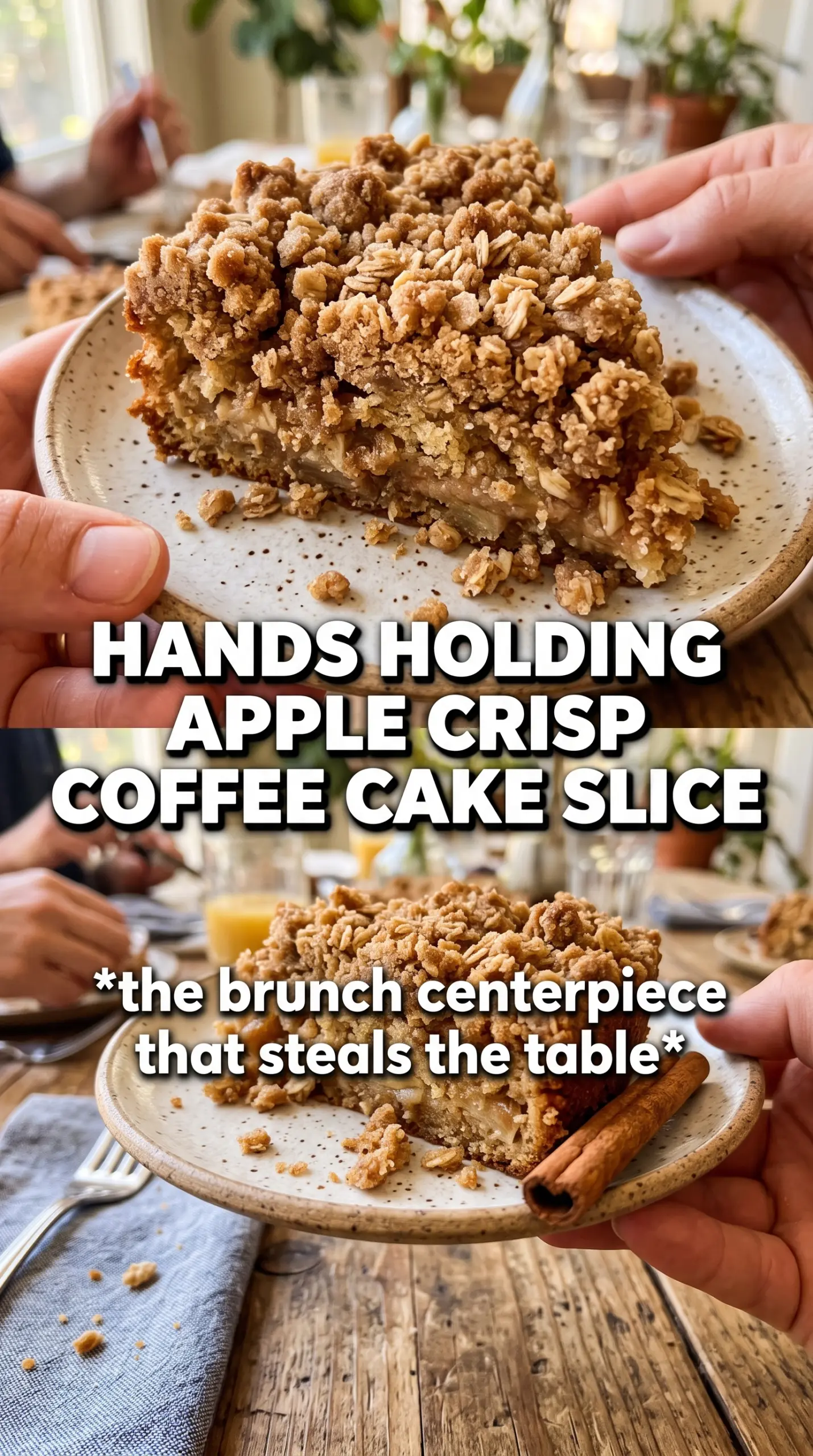
- Sour cream — This keeps the crumb tender and moist without thinning the batter. Plain full-fat yogurt works in a pinch, but the cake will bake up a little less rich and slightly tangier.
- Apples — A firm baking apple holds its shape and gives you little soft bites instead of applesauce pockets. If your apples are very juicy, dice them small and pat them dry so they don’t water down the batter.
- Brown sugar in the topping — This is what gives the crumble its caramel edge and deeper flavor. Granulated sugar won’t give the same warmth or that slightly sticky finish on the baked crumbs.
- Rolled oats — They add texture and help the topping bake into chunky clusters. Quick oats will work, but the crumble will be a little finer and less nubby.
Building the Batter Without Overworking It
Mixing the Dry Ingredients First
Whisk the flour, baking powder, baking soda, cinnamon, and salt together before they ever meet the butter. That keeps the leavening even, which matters because this cake is dense enough to show any uneven spots. If you skip this step, you’ll get random pockets that rise faster than the rest of the cake.
Beating the Butter and Sugar to the Right Texture
Beat the softened butter and sugar until the mixture looks lighter and a little fluffy, not just blended. That process traps air, which gives the cake lift and keeps it from baking up heavy under the crumb. If the butter is too cold, the mixture stays grainy; if it’s melted, the cake loses structure.
Folding in the Apples Last
Add the flour mixture in just until the batter comes together, then fold in the diced apples. Overmixing after the flour goes in makes the cake tight, and stirring too hard once the apples are added can break them down. Spread the batter evenly in the pan, then scatter the chilled crumble over every inch so the top bakes with coverage instead of bald patches.
Knowing When the Cake Is Done
Bake until a toothpick comes out clean from the center and the topping is deep golden with a few darker edges. If the top browns before the middle is set, tent it loosely with foil for the last part of the bake. The crumb should spring back when pressed lightly, and the center shouldn’t wobble when you nudge the pan.
How to Adapt This Cake for Different Kitchens and Different Tables
Gluten-Free Version
Use a 1:1 gluten-free flour blend in the cake and topping, and keep the oats certified gluten-free. The texture stays tender, but the crumble may be a little more delicate, so let the cake cool before slicing.
Dairy-Free Swap
Use plant-based butter in both the batter and topping, then replace the sour cream with thick dairy-free yogurt. The cake will still be moist, but the flavor will be a little less rich and the crumble may brown a touch faster.
Extra Apple, Stronger Fruit Layer
Add another 1/2 cup diced apples if you want a more obvious fruit layer, but don’t go much farther or the center can turn wet. A small increase works best when the pieces are firm and the dice stays even.
Storage and Reheating
- Refrigerator: Store covered for up to 4 days. The crumble softens a bit in the fridge, but the cake stays moist.
- Freezer: Freeze individual slices tightly wrapped for up to 2 months. The topping won’t be quite as crisp after thawing, but the flavor holds up well.
- Reheating: Warm slices in a 300F oven for about 10 minutes or microwave briefly if you don’t mind a softer top. Reheating too hard dries out the crumb and makes the apples taste flat.
Answers to the Questions Worth Asking
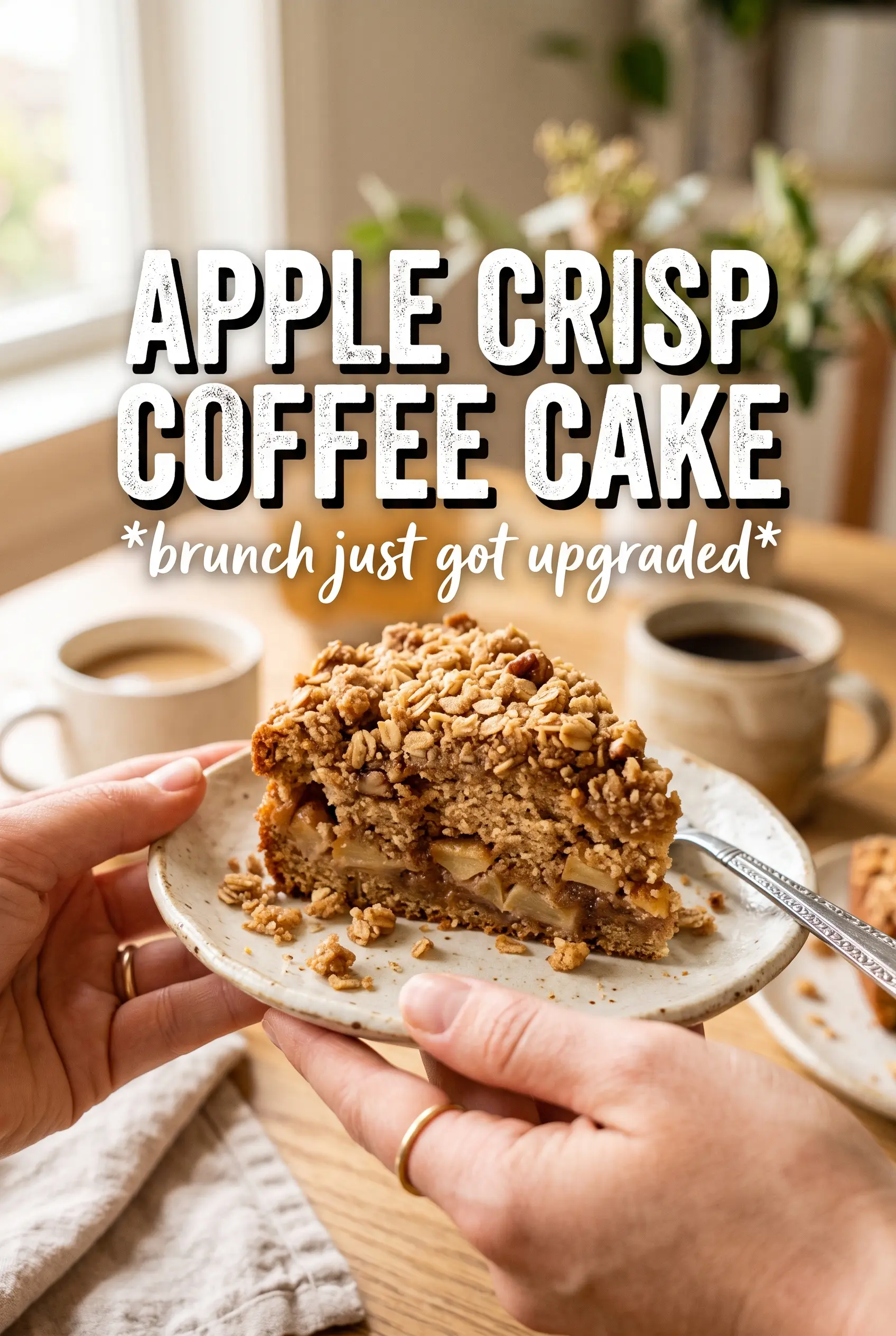
Apple Crisp Coffee Cake
Ingredients
Equipment
Method
- Preheat oven to 350F and grease a 9x13 baking dish, keeping the pan ready for batter. Grease thoroughly so the crumble and cake release cleanly.
- Combine rolled oats, all-purpose flour, brown sugar, cinnamon, and salt in a bowl. Cut in the cold cubed butter until the mixture forms clumps like damp sand.
- Refrigerate the oat crumble while you mix the cake batter. You should see distinct clumps when you take it out.
- Whisk all-purpose flour, baking powder, baking soda, cinnamon, and salt together until evenly combined. The dry mix should look uniform in color.
- Beat the softened unsalted butter and granulated sugar until fluffy. The mixture should lighten and look aerated before adding eggs.
- Add eggs and vanilla to the butter-sugar mixture and beat until smooth. Scrape down the bowl so no egg streaks remain.
- Mix in sour cream until the batter looks cohesive and glossy. Use gentle stirring so the batter stays thick.
- Fold the flour mixture into the wet ingredients just until no dry streaks remain. Stop as soon as the batter is combined.
- Fold in diced apples until evenly distributed. You should see apple pieces throughout the batter.
- Spread the batter in the prepared pan and level the top. Make sure the apples are covered by batter rather than exposed at the edges.
- Scatter the oat crumble generously over the top. Leave some clumps intact so the crumble bakes into golden clusters.
- Bake at 350F for 50-55 minutes until a toothpick comes out clean and the crumble is golden. Look for a browned, crisp top with darker cinnamon-caramelized edges.
- Let the cake cool briefly, then dust with powdered sugar if desired. The topping should set as it cools so slices hold their shape.