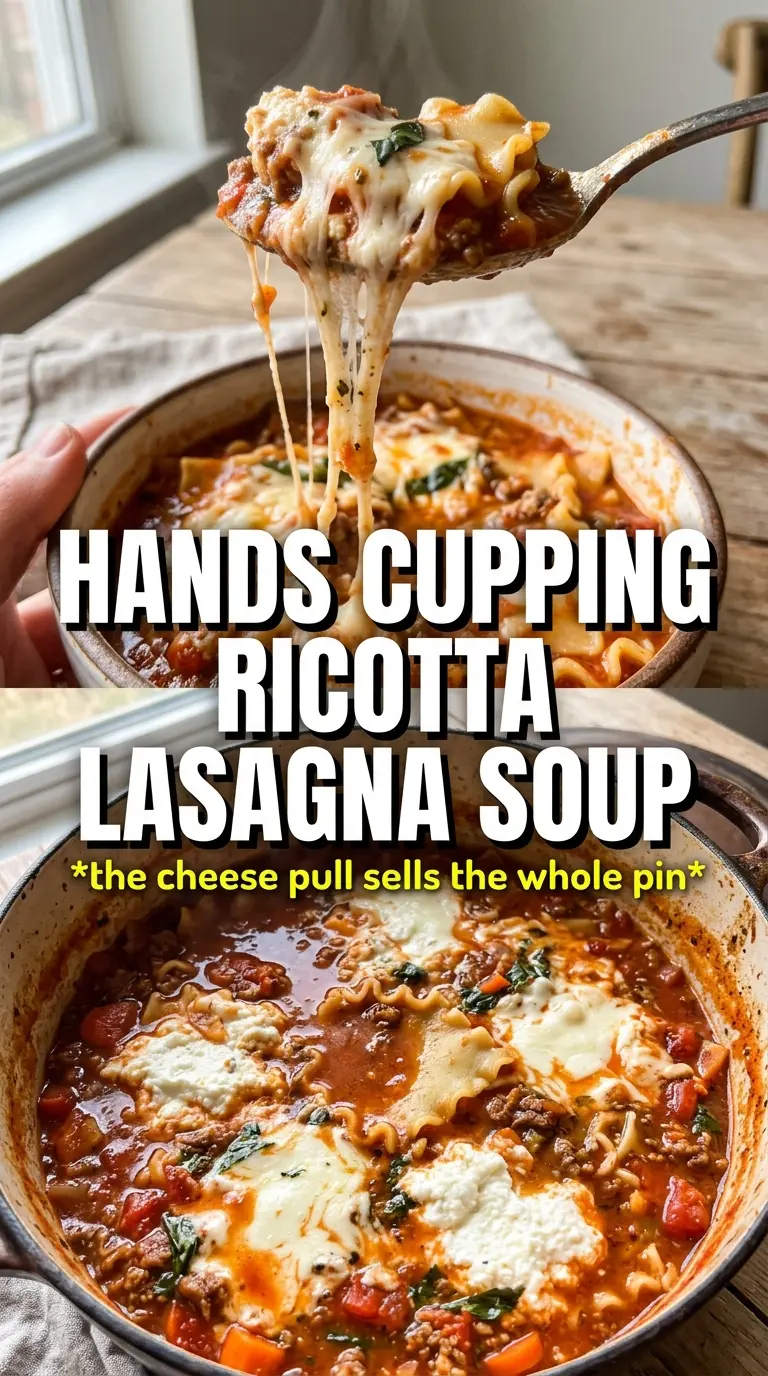
Lasagna soup gives you everything people love about a baked pan of lasagna without the layering, waiting, or wrestling with a casserole dish that needs to be cut into neat squares. The broth turns deep and tomato-rich, the sausage seasons the whole pot, and the noodles soften just enough to feel comforting without going mushy. The real payoff is the cheese topping: a cold, creamy scoop of ricotta, mozzarella, and parmesan that melts into the hot soup and makes every spoonful taste like the best part of lasagna.
This version works because the tomato paste cooks for a minute before the liquid goes in, which keeps the broth from tasting flat, and the noodles simmer right in the soup so they pick up flavor instead of getting boiled separately and drained clean. I also like the fire-roasted tomatoes here; they add a little charred depth that makes the broth taste like it simmered longer than it did.
Below, I’ve included the timing that keeps the noodles tender, not bloated, plus a few smart swaps if you want to make it a little lighter or stretch it for leftovers.
The noodles stayed perfectly tender in the soup, and the ricotta-mozzarella topping melted into little creamy pockets instead of disappearing. My husband went back for a second bowl before I even sat down.
Love the extra-creamy ricotta and mozzarella finish? Save this lasagna soup for the night you want all the comfort of lasagna without the layering.
The Reason the Noodles Stay Right Instead of Turning to Mush
The biggest mistake with lasagna soup is treating the noodles like a separate pasta boil. Once they go into the broth, they keep drinking liquid, which means the clock starts the moment they hit the pot. This recipe works because the noodles simmer in the soup just long enough to become tender while the broth still has enough body to carry them.
The second thing that matters is the cheese topping. If you stir ricotta straight into the whole pot, the soup can turn cloudy and lose that layered lasagna feeling. Keeping the ricotta mixture for the bowls gives you a creamy contrast against the hot broth, plus those stretchy mozzarella pockets that melt as soon as the soup hits them.
What the Sausage, Tomatoes, and Cheese Are Each Doing Here
The sausage gives the broth its backbone. Mild Italian sausage keeps the flavor round and savory, while hot sausage adds a little more bite if you want the soup to lean spicier. If you use turkey sausage, add a little extra olive oil in the pot because lean sausage doesn’t render enough fat to carry the onions the same way.
Tomato paste is not background filler here. Cooking it with the garlic for a minute or two deepens the tomato flavor and removes that raw, tinny edge. The fire-roasted tomatoes add a smoky note that makes the broth taste slower-cooked, even though the whole pot comes together fast.
- Crushed tomatoes — These thicken the broth and give it that body you want in a soup built to taste like lasagna. If you only have tomato sauce, use it, but the broth will be smoother and less textured.
- Lasagna noodles — Breaking them into rough pieces keeps the bowl casual and spoonable. Don’t break them too small or they’ll vanish into the broth.
- Whole milk ricotta — This is what gives you the creamy, plush topping. Part-skim ricotta works in a pinch, but it won’t melt as luxuriously.
- Mozzarella and parmesan — Mozzarella brings the melt, parmesan brings the salty edge. Pre-shredded mozzarella works, but freshly shredded melts smoother and less rubbery.
Building the Pot So the Broth Tastes Like It Simmered All Afternoon
Brown the sausage first
Start the sausage in a Dutch oven over medium-high heat and break it into crumbles as it cooks. You want browned edges, not pale steaming meat, because those browned bits are the first layer of flavor in the broth. If the pan fills with a lot of fat, drain off the excess, but leave a thin slick behind so the onion can pick up the sausage drippings.
Cook the tomato paste with the garlic
Once the onion has softened, add the garlic and tomato paste and let them cook for about two minutes. The paste should darken a shade and smell sweet, not sharp. If you rush this stage, the broth can taste flat and the garlic can read harsh instead of mellow.
Simmer the noodles in the broth
Pour in the tomatoes, broth, and dried herbs, then bring everything to a boil before adding the broken noodles. The soup should settle into a steady simmer, not a hard boil, or the noodles can break down before the center softens. Stir once or twice so the pasta doesn’t clump at the bottom, then stop stirring and let the heat do the work.
Finish with the cheese bowls
Mix the ricotta, mozzarella, parmesan, basil, nutmeg, salt, and pepper until it looks thick and spoonable. Ladle the soup into bowls first, then drop a generous scoop of the cheese mixture on top. The heat from the broth should soften the edges right away, but the center will stay creamy, which is exactly what makes each bowl taste rich without turning heavy.
How to Change the Bowl Without Losing What Makes It Work
Use ground turkey instead of sausage
Ground turkey works if you want a lighter soup, but it needs help. Add an extra tablespoon of olive oil and season it more aggressively with salt, pepper, and a pinch of fennel if you want to mimic sausage more closely. You’ll lose some richness, but the broth still tastes layered and satisfying.
Make it gluten-free with sturdy pasta
Use a gluten-free lasagna noodle or another sturdy short pasta, but keep a close eye on the simmer time. Gluten-free pasta can go soft fast, especially once it sits in hot broth, so pull the pot from the heat as soon as the noodles are tender. If the soup thickens too much on standing, loosen it with a splash of broth when reheating.
Make it meatless without making it bland
Swap the sausage for sautéed mushrooms and a little extra olive oil, then add a pinch more red pepper flakes and parmesan for depth. You won’t get the same savory richness from meat, so the tomato paste step matters even more. A splash of soy sauce can help build that missing umami if you want a deeper broth.
Storage and Reheating
- Refrigerator: Store the soup and cheese topping separately for up to 4 days. The noodles will keep absorbing broth, so expect a thicker bowl the next day.
- Freezer: The soup base freezes well for up to 3 months, but freeze it without the noodles for the best texture. Add freshly cooked noodles when you reheat if you want the closest result to day one.
- Reheating: Warm the soup gently on the stove over medium-low heat and add a splash of broth if it has tightened up. Reheat the cheese topping only as a topping; don’t boil it into the pot or the ricotta can turn grainy and the mozzarella can go stringy in a bad way.
Answers to the Questions Worth Asking

Lasagna Soup With Ricotta And Mozzarella
Ingredients
Equipment
Method
- Heat a Dutch oven over medium-high heat and brown the Italian sausage, breaking it into crumbles, then drain off excess fat.
- Sauté the onion in the same pot for 4 minutes, then add the garlic and tomato paste and cook for 2 minutes.
- Add the crushed tomatoes, diced fire-roasted tomatoes, beef broth, Italian seasoning, dried basil, dried oregano, and red pepper flakes, then bring to a boil.
- Stir in the broken lasagna noodles and simmer for 10-12 minutes until the noodles are cooked through.
- Season the soup generously with salt and black pepper.
- Mix the whole milk ricotta, shredded whole milk mozzarella, freshly grated parmesan, fresh basil, nutmeg, salt, and black pepper until well combined.
- Ladle the soup into bowls, then drop a very large dollop of the cheese mixture into each bowl so it melts on contact.


