Slow-cooked beef stew earns its place in the regular rotation because the beef turns fork-tender, the broth gets deep and savory, and the vegetables hold their shape instead of melting into the pot. It’s the kind of dinner that tastes like you paid attention all day, even though the slow cooker did most of the work.
This version leans on a few smart choices that matter: chuck roast for rich, shreddable beef; tomato paste and Worcestershire for a darker, rounder broth; and a cornstarch slurry at the end instead of the beginning. That last part keeps the stew from turning muddy or gluey while it cooks, which is where a lot of slow cooker versions go wrong.
Below you’ll find the small timing detail that keeps the vegetables from going soft, plus a few swaps for when you want to use what’s already in your pantry.
The broth thickened up beautifully at the end, and the beef was so tender it broke apart with a spoon. I used the red wine and the flavor was deep without tasting harsh.
Love a stew with tender beef and a rich slow-cooker broth? Save this Crock Pot Beef Stew for the next night you want a hands-off dinner that tastes like it simmered all day.
The Trick to Beef That Shreds Instead of Drying Out
The biggest difference between good slow cooker beef stew and stew that tastes flat is how the beef gets treated before the lid goes on. Chuck has enough fat and connective tissue to turn silky over long cooking, but it still needs a long, gentle cook. If you rush it on high heat or cut the cubes too small, the meat tightens up before the collagen has time to soften.
Putting the vegetables on the bottom does two things at once: it keeps the beef from sitting directly on the hot insert, and it lets the potatoes and carrots catch the seasoned broth as it drips down. The stew doesn’t need stirring during the cook. Stirring too often can break up the potatoes and turn the broth cloudy before the slurry ever goes in.
- Beef chuck — This is the cut that gives you tender, shreddable pieces without falling apart into strings. Leaner stew meat can work, but it usually turns dry before it gets tender enough.
- Red wine — It adds depth and a little acidity that keeps the broth from tasting heavy. If you skip it, use extra beef broth and a teaspoon of balsamic vinegar to give the stew some of that lift back.
- Tomato paste — This isn’t there for tomato flavor alone. It gives the broth body and a darker, more concentrated base that tastes like it cooked for hours.
- Cornstarch slurry — This is the cleanest way to thicken the stew at the end. Add it only after the beef is already tender, or the broth can thicken too early and mute the flavor.
Building the Stew So the Broth Stays Rich and Clean

- Baby potatoes — They hold their shape better than large starchy potatoes cut into random chunks. If you only have russets, peel them and cut them bigger than you think you need, or they’ll break down and thicken the stew in a less pleasant way.
- Worcestershire sauce — This is one of the quiet heavy hitters. It gives the broth that savory, long-cooked taste that makes people ask what else you added.
- Carrots and celery — Cut them thick enough to survive eight hours. Thin slices will soften too far and disappear into the broth.
- Diced tomatoes — They add moisture and a little brightness, but they don’t make this taste like tomato soup. If your canned tomatoes are very acidic, a pinch of sugar can smooth them out.
The Long Cook That Turns Everything Tender
Layering the Pot
Start with the potatoes, carrots, celery, and onion on the bottom, then set the beef over the top and pour the liquid around it. The goal is even heat and steady steaming, not browning. If the beef sits directly in a dense pile of vegetables, the center takes longer to soften and the edges can overcook before the middle catches up.
Letting the Slow Cooker Do Its Job
Cook on Low for 8 to 10 hours, or on High for 4 to 5 hours if you’re short on time. Low gives the best texture because the collagen breaks down gradually. The beef is ready when it pulls apart with almost no resistance and the potatoes are tender but still intact.
Thickening at the End
Remove the bay leaves before you add the slurry. Stir the cornstarch and water together until smooth, then pour it in while the stew is hot and set the cooker to High for 20 to 30 minutes. If the broth still looks thin at first, give it time; cornstarch needs heat to activate, and stirring too early can keep it from fully thickening.
How to Adapt This Pot Roast-Style Stew for Different Kitchens
Skip the Wine Without Losing Depth
Use extra beef broth instead of wine and add 1 teaspoon balsamic vinegar. You’ll lose a little of the rounded richness wine brings, but the vinegar restores enough acidity to keep the broth from tasting one-note.
Gluten-Free Without Changing the Stew
This recipe is already close to gluten-free, but check your Worcestershire sauce and beef broth labels. A certified gluten-free version of both keeps the flavor the same and avoids a surprise from hidden wheat.
Add More Vegetables for a Bigger Batch
You can add parsnips, mushrooms, or green beans, but keep the extra vegetables in larger pieces and add the delicate ones during the last 1 to 2 hours. Mushrooms and green beans go soft if they sit in the pot the entire time.
Make It Dairy-Free and Pantry-Friendly
There’s no dairy in the base recipe, so the main thing to watch is the broth and seasonings. If you want a smoother finish, stir in a little olive oil at the end instead of butter. It won’t make the stew creamy, but it does give the broth a softer mouthfeel.
Storage and Reheating
- Refrigerator: Store in an airtight container for up to 4 days. The broth thickens as it chills, and the flavor deepens overnight.
- Freezer: It freezes well for up to 3 months. Cool it completely first and leave a little headspace in the container because the liquid expands.
- Reheating: Warm gently on the stove over medium-low heat or in the microwave in short bursts, stirring between intervals. If it gets too thick, add a splash of broth or water instead of cranking up the heat, which can toughen the beef.
Answers to the Questions Worth Asking
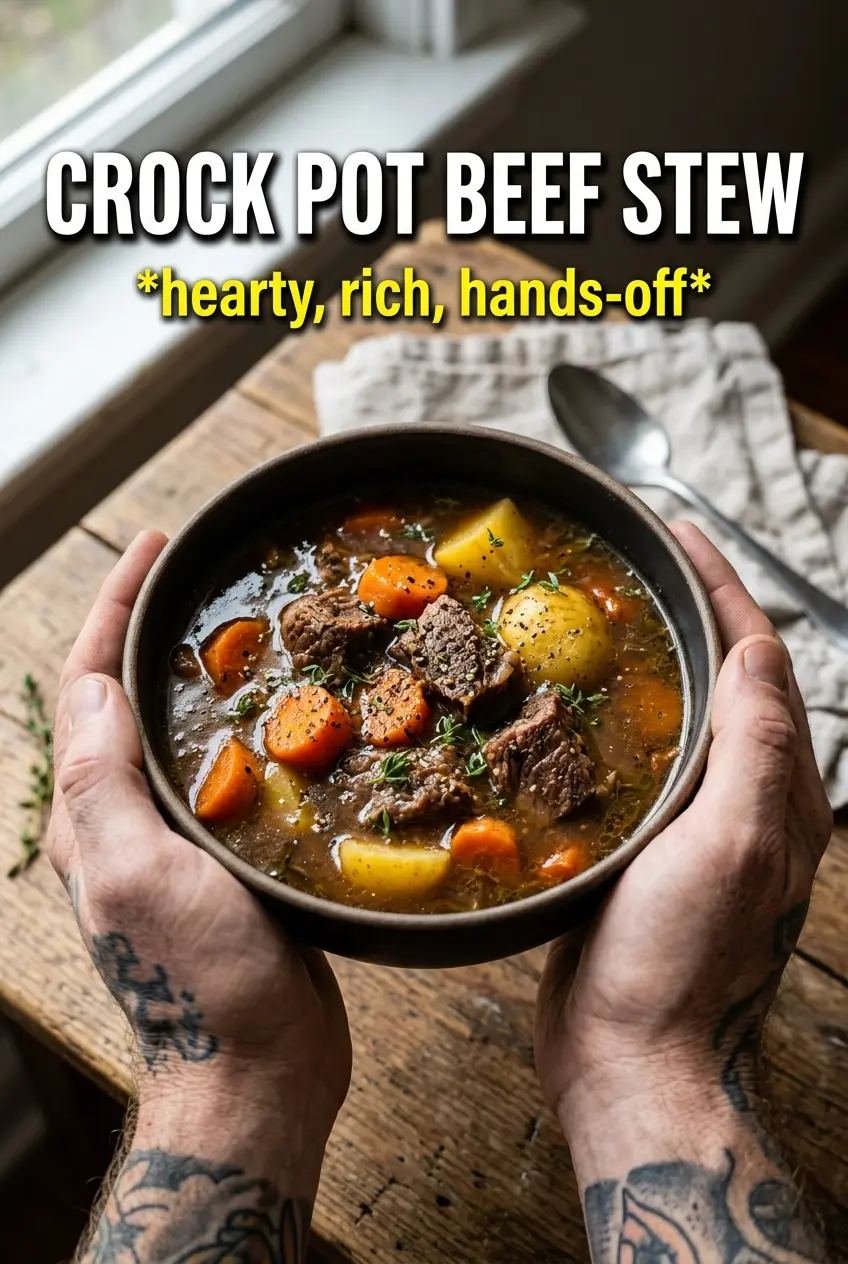
Crock Pot Beef Stew
Ingredients
Equipment
Method
- Season the beef generously with salt and pepper, making sure every surface is coated.
- Add the potatoes, carrots, celery, and onion to the bottom of the slow cooker.
- Nestle the beef on top, then add garlic, beef broth, red wine, diced tomatoes, tomato paste, Worcestershire sauce, dried thyme, dried rosemary, and bay leaves.
- Cover and cook on LOW for 8-10 hours, or on High for 4-5 hours, until the beef is fall-apart tender.
- Remove the bay leaves, then stir the cornstarch slurry (cornstarch mixed with water) into the stew.
- Cook on HIGH for 20-30 minutes until the broth thickens and looks glossy.
- Season with salt and pepper to taste, then serve hot.


