Golden broth, tender chicken, and soft noodles make this soup the kind of meal you want when you need something comforting that still feels light and clean. The turmeric turns the broth a deep sunny color, while ginger, garlic, lemon, and thyme keep every spoonful bright instead of heavy. It eats like a classic chicken noodle soup, but with enough depth and freshness to keep it interesting all the way to the last bowl.
The trick is building the flavor right in the broth instead of relying on a long simmer at the end. Chicken poaches gently with the vegetables and aromatics, so the meat stays tender and the broth picks up all that savory sweetness. Mushrooms go in after the chicken comes out, which keeps them meaty instead of mushy, and the lemon waits until the end so it lifts the soup without dulling the turmeric.
Below, I’ve included the little timing details that keep the noodles from going soft and the greens from turning limp. If you’ve ever had chicken noodle soup taste flat, this version fixes that with a few small moves that matter.
The broth had such a beautiful color, and the lemon at the end kept it tasting fresh. My noodles stayed perfectly tender and the chicken shredded up juicy instead of stringy.
Save this turmeric chicken noodle soup for the nights when you want a bright broth, tender chicken, and a bowl that actually tastes like it has some life in it.
The Reason This Soup Stays Bright Instead of Tasting Flat
A lot of chicken noodle soups lean too hard on the broth and never get enough support from the aromatics. Here, the ginger, garlic, turmeric, and thyme simmer with the chicken from the start, so the broth picks up depth before the noodles ever go in. That early seasoning matters because noodles soak up flavor fast; if the broth is underbuilt, the whole pot tastes thin by the time it hits the bowl.
The other thing that keeps this soup from falling apart is the order of the add-ins. Chicken comes out before the noodles overcook it, mushrooms go in after so they keep their texture, and the kale waits until the end so it stays green and a little toothsome. If your soup usually turns muddy or soft, the issue is almost always timing, not the ingredients.
What Each Ingredient Is Doing in the Pot

- Chicken breast or thighs — Thighs stay juicier and give the broth a little more body, while breasts keep the soup lighter. Either works, but don’t boil the chicken hard or it turns stringy before it has a chance to shred cleanly.
- Fresh ginger and garlic — These are what make the soup taste alive. Powder won’t give you the same sharp, fresh lift, and the ginger especially needs to be grated so it melts into the broth instead of floating around in bits.
- Turmeric and black pepper — Turmeric gives the broth its color and earthy warmth, and the pepper helps you taste it more clearly. If you skip the pepper, the soup doesn’t fall apart, but it loses some of the depth that makes this version work.
- Shiitake or cremini mushrooms — Shiitakes bring a deeper, almost brothy flavor; cremini are milder and still add good texture. Slice them evenly so they cook at the same pace and keep their bite.
- Kale or spinach — Kale holds up better if you want leftovers, while spinach softens fast and disappears into the broth. Use spinach if that’s what you have, but add it only at the very end so it doesn’t turn dull and swampy.
- Lemon juice — This is the last-minute brightness that keeps the soup from tasting heavy. Add it after the heat has done its work; if it goes in too early, the flavor cooks off and you lose the sharp finish.
Building the Broth in the Right Order
Poaching the Chicken and Aromatics Together
Start with the broth, chicken, carrots, celery, onion, garlic, ginger, turmeric, thyme, and black pepper in one pot. Bring it up to a gentle simmer, not a rolling boil, because hard boiling makes the chicken tough and clouds the broth. The chicken is ready when it’s opaque all the way through and pulls apart easily with a fork, usually around 20 minutes depending on thickness.
Pulling the Chicken Before the Noodles
Lift the chicken out and shred it while it’s still warm. Returning it shredded instead of leaving the pieces whole helps it absorb more broth later and keeps every bite soft. If you leave it in while the noodles cook, the chicken keeps cooking and can dry out by the time the soup is done.
Cooking the Mushrooms and Noodles
Add the mushrooms and let them simmer until they soften and release a little of their own flavor into the pot. Then add the noodles and cook until just tender, usually 6 to 8 minutes, because they’ll keep softening in the hot broth after the heat is off. If the noodles are cooked too long, they’ll swell and steal broth from the soup.
Finishing with Greens and Lemon
Stir in the kale and lemon juice at the end and cook just until the greens wilt. That last short simmer keeps the kale bright and prevents the lemon from going dull. Taste before serving and add salt at the end, since broth brands vary a lot and the noodles will change how salty the pot tastes once they’re in.
How to Adapt This Soup for What’s in Your Kitchen
Make It Gluten-Free
Swap the egg noodles for a gluten-free noodle that can handle simmering, or cook your favorite rice noodle separately and add it to each bowl. Gluten-free noodles can go soft fast in broth, so they’re better added at the very end or kept separate until serving.
Use Spinach Instead of Kale
Spinach works if that’s what you’ve got, but it softens almost immediately. Stir it in right before serving and take the pot off the heat once it wilts, or it will disappear into the broth and lose its color.
Swap in Thighs for a Richer Bowl
Chicken thighs make the soup a little more forgiving and add a deeper savory note. They also stay tender if the soup simmers a bit longer, which is handy if you’re cooking around interruptions.
Storage and Reheating
- Refrigerator: Store for up to 4 days. The noodles will keep soaking up broth, so expect the soup to thicken a bit.
- Freezer: It freezes well if you leave out the noodles and add fresh ones after reheating. If you freeze it fully assembled, the noodles turn soft and swollen.
- Reheating: Warm it gently on the stove over medium-low heat until steaming. Don’t boil it hard, or the chicken tightens up and the noodles break apart.
Answers to the Questions Worth Asking
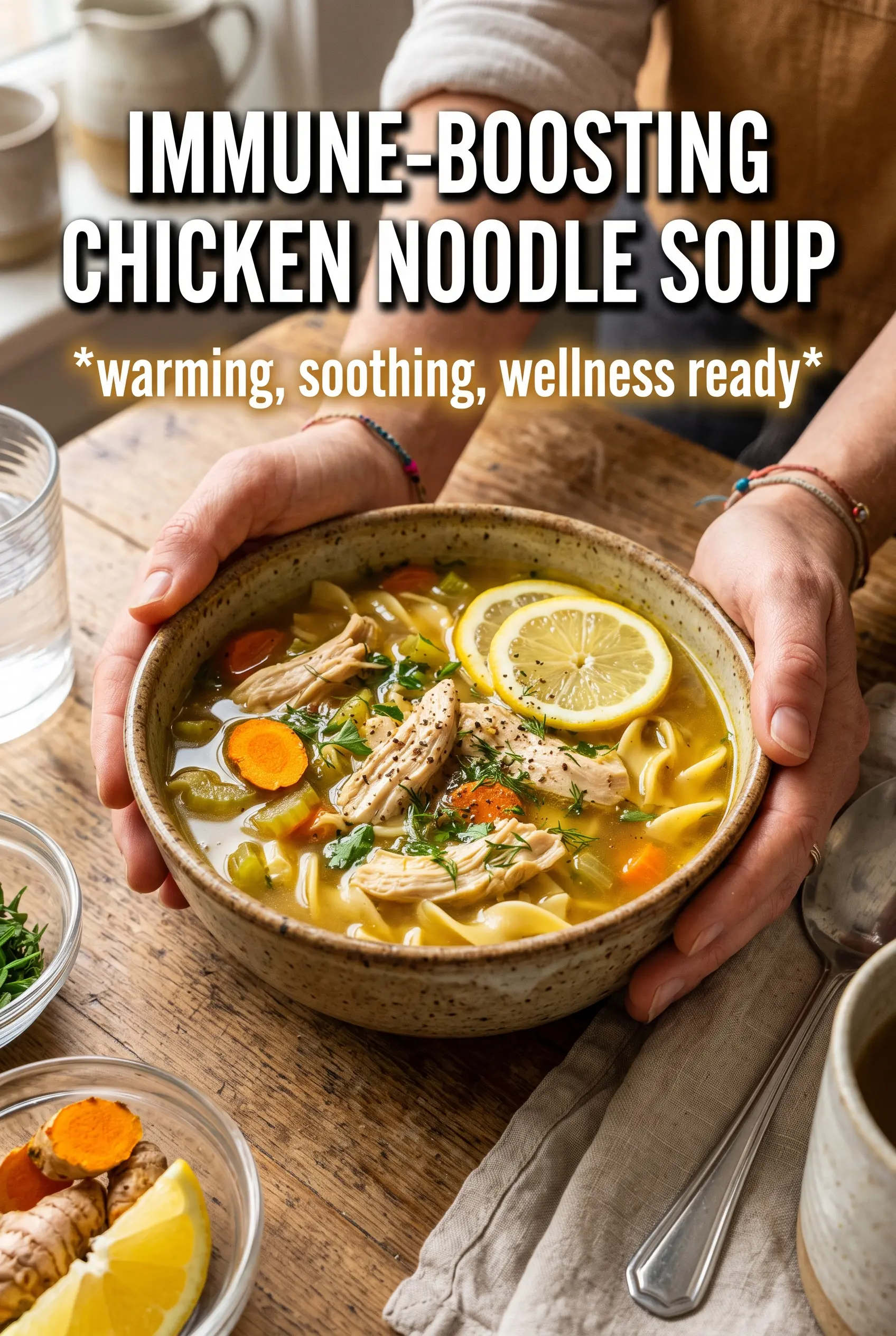
Immune-Boosting Chicken Noodle Soup
Ingredients
Equipment
Method
- Bring the chicken broth to a simmer in a Dutch oven over medium-high heat and add the chicken, carrots, celery, onion, garlic, ginger, turmeric, dried thyme, and black pepper. Simmer for 20 minutes, stirring occasionally, until the chicken is cooked through and the vegetables are slightly tender (steam and active bubbling in the pot).
- Remove the chicken from the pot and shred it with a fork or hands, then return the shredded chicken to the broth. Stir until evenly distributed (you should see chicken strands throughout the golden-orange liquid).
- Add the sliced mushrooms to the soup and simmer for 5 minutes. Cook until the mushrooms are tender and you can smell their aroma (bubbles around the mushroom edges).
- Add the egg noodles to the pot and cook for 6-8 minutes, stirring occasionally, until tender. Watch for the noodles to soften and bloom slightly in the broth (bubbling with noodles suspended).
- Stir in the chopped kale or spinach and lemon juice, then cook for 3 minutes until the greens are wilted. Keep the soup at a gentle simmer and look for the leaves to turn deep green and glossy (steam rising quickly).
- Season the soup with salt to taste and serve hot with fresh parsley and lemon wedges. The final bowl should look bright and vibrant with visible greens, noodles, and chicken strands.