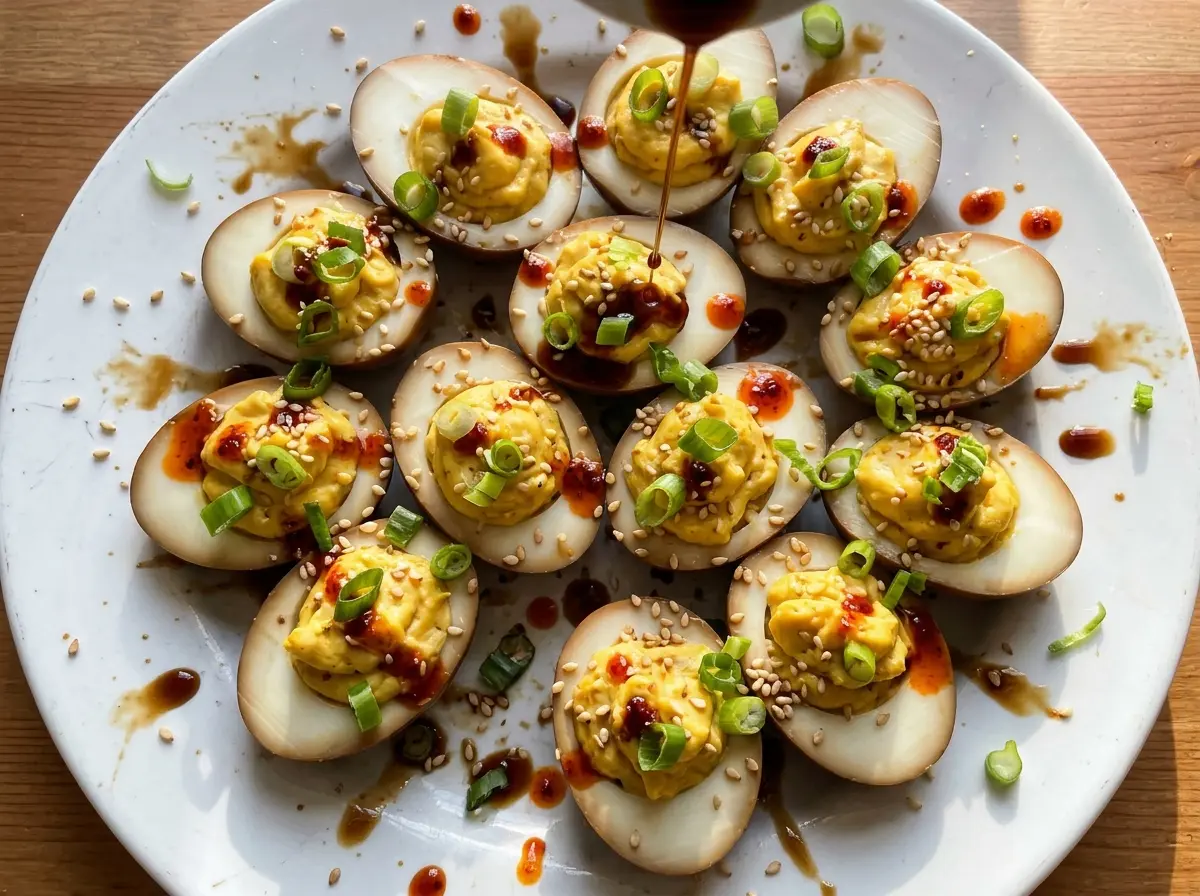
The soy-marinated whites come out of the bag with a warm brown edge, while the yolks stay pale and creamy inside. Then the ramen hits the skillet and turns golden in just a couple of minutes; that little crunch is what makes these soy sauce ramen deviled eggs feel different from the usual platter.
I keep the marinade simple: low-sodium soy sauce, water, rice vinegar, and a touch of sugar. A resealable bag lets the liquid sit close against the eggs, so they pick up savory flavor without needing an overnight soak. Turn the bag once during the chill and the color stays even.
The finished eggs balance that salty-sour bite with a smooth sesame-scented filling and crisp noodles. They’re a cold appetizer with a topping worth adding at the last minute.
Kitchen Note
Pat the marinated eggs dry before you cut them. A wet surface makes the filling harder to spoon neatly into the whites, and a quick blot keeps the finished halves tidy.
Save these soy sauce ramen deviled eggs for a party spread—the savory marinated whites and crisp noodle topping make each bite a little different.
Why These Eggs Marinate for Hours, Not Overnight
The soy mixture seasons the outside of each egg first. That’s a good thing here: the white gets a savory, lightly tangy edge, but the yolk filling remains creamy rather than tasting like soy sauce from the first bite to the last. The short marinating window gives you contrast instead of an egg that tastes uniformly salty.
Keeping the eggs in a sealed bag helps the marinade stay in contact with their curved surfaces without using a large volume of liquid. Press out the extra air before sealing, then turn the bag once while it chills so the eggs aren’t sitting against the same patch of marinade the whole time. The rice vinegar brightens the soy, and the small amount of sugar rounds off its sharper edge without making the eggs sweet.
Give them the full two hours if you want a gentler soy note; the longer end of the two-to-four-hour window brings a deeper color and stronger seasoning. I stop there rather than letting them sit overnight, because the outside can become saltier than the creamy center needs.
How Soy, Sesame, and Crisp Ramen Build the Ramen-Egg Effect

- Large eggs give you sturdy whites that can hold the filling after they’re halved. Older eggs are often easier to peel than very fresh ones, though careful cooling and peeling still matter more than chasing a particular brand.
- Low-sodium soy sauce supplies the marinade’s main savory taste. It’s worth keeping the low-sodium version because the eggs sit in the mixture for hours; a basic grocery-store bottle works well, while regular soy sauce makes the outside saltier.
- Rice vinegar and granulated sugar keep the marinade from tasting one-note. Rice vinegar has a mild, clean acidity that suits the eggs; a seasoned rice vinegar is less predictable because it may already contain sugar and salt.
- Mayonnaise, Dijon, and toasted sesame oil turn the yolks into a smooth, tangy filling with a nutty finish. Use a mayonnaise you like, since it makes up the creamy base, and keep the sesame oil toasted rather than plain for its fuller aroma. Dijon adds a gentle sharpness without overwhelming the soy-marinated whites.
- Instant ramen noodles, scallions, and sesame seeds bring the crisp, fresh finish. Use the noodles themselves for this topping; the seasoning packet isn’t needed. Thinly sliced scallions give a fresh counterpoint, while sesame seeds echo the toasted sesame oil.
How to Cook, Marinate, and Top the Eggs Without Losing the Crunch
Cook the eggs gently after the boil
Set the eggs in a single layer in a medium saucepan and cover them with an inch of cold water. Bring the water to a boil over high heat, which takes about eight to ten minutes, then cover the pan and take it off the heat. Let the eggs stand for 12 minutes; don’t keep the pan over the burner during this rest. Move them to a bowl of cold water for 10 minutes, drain, and peel once they’re cool.
Let the marinade season the whites
Put the peeled eggs in a quart-size resealable bag with the soy sauce, water, rice vinegar, and sugar. Press out excess air before sealing, then refrigerate the bag for two to four hours and turn it once during that time. If the bag has a large air pocket, the marinade won’t sit as evenly against the eggs. When the marinating time is up, remove the eggs and pat them dry before cutting them lengthwise.
Mash a smooth, sesame-scented filling
Lift out the yolks and place them in a small bowl. Mash them with the mayonnaise, Dijon mustard, toasted sesame oil, and black pepper until the mixture looks smooth, with no large dry crumbs. If the yolks are still lumpy, keep mashing rather than leaving firm bits in the filling. A smooth mixture is easier to spoon into the egg white halves.
Fry the ramen until golden
Heat the vegetable oil in an 8-inch skillet over medium heat, then add the ramen broken into half-inch pieces. Toss often as the noodles cook for one to two minutes; they should turn golden and crisp, not dark brown. They move from pale to toasted quickly, so stay by the skillet. Transfer them to a paper towel-lined plate and let them cool before topping the eggs.
Fill and garnish just before serving
Spoon the yolk mixture into the halved whites, dividing it among the six eggs. Add the cooled crispy ramen, thinly sliced scallions, and sesame seeds on top. Keep the noodles off the filling until you’re close to serving, because contact with the moist filling softens their crunch. The scallions and sesame seeds finish the eggs without hiding the soy flavor.
Two Smart Ways to Adapt the Ramen Topping
Make a gluten-free version
Replace the soy sauce with gluten-free tamari and use gluten-free instant ramen noodles in place of the regular noodles. Choose gluten-free mayonnaise and Dijon as well. The topping will still bring crunch, though the noodle pieces may look a little different depending on the brand.
Keep the eggs lower in carbs
Leave off the fried ramen and vegetable oil, then finish the filled eggs with the scallions and sesame seeds. You’ll lose the crunchy, toasted layer, but the soy-marinated whites and sesame filling still carry the flavor of the dish.
Make-Ahead and Storage
- Refrigerator: Store assembled eggs covered in the refrigerator and use within 3 to 4 days of cooking the eggs. The ramen topping softens as it sits on the filling.
- Freezer: Freezing isn’t a good fit. The whites turn watery and rubbery after thawing, and the creamy filling can lose its smooth texture.
- Serving: For the best crunch, keep the cooled ramen separate and add it just before serving. You can prepare the egg halves and filling ahead, then garnish close to serving time.
Questions I Get Asked About These Soy Sauce Ramen Deviled Eggs
Soy Sauce Ramen Deviled Eggs
Ingredients
Equipment
Method
- Place the eggs in a medium saucepan in a single layer and cover with 1 inch of cold water.
- Bring to a boil over high heat, about 8 to 10 minutes.
- Cover the saucepan and remove it from the heat.
- Let the eggs stand for 12 minutes.
- Transfer the eggs to a bowl of cold water and cool for 10 minutes.
- Drain and peel the eggs.
- Put the peeled eggs in a quart-size resealable bag with the soy sauce, water, rice vinegar, and sugar.
- Press out excess air, seal, and refrigerate for 2 to 4 hours, turning the bag once.
- Remove the eggs from the marinade and pat them dry.
- Halve them lengthwise and put the yolks in a small bowl.
- Mash the yolks with the mayonnaise, Dijon mustard, sesame oil, and black pepper until smooth.
- Heat the vegetable oil in an 8-inch skillet over medium heat.
- Add the ramen noodles and cook, tossing often, for 1 to 2 minutes until golden and crisp.
- Transfer the noodles to a paper towel-lined plate and let them cool.
- Spoon the yolk mixture into the egg white halves.
- Top with the crispy ramen, scallions, and sesame seeds.