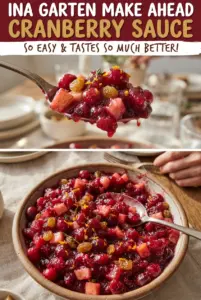
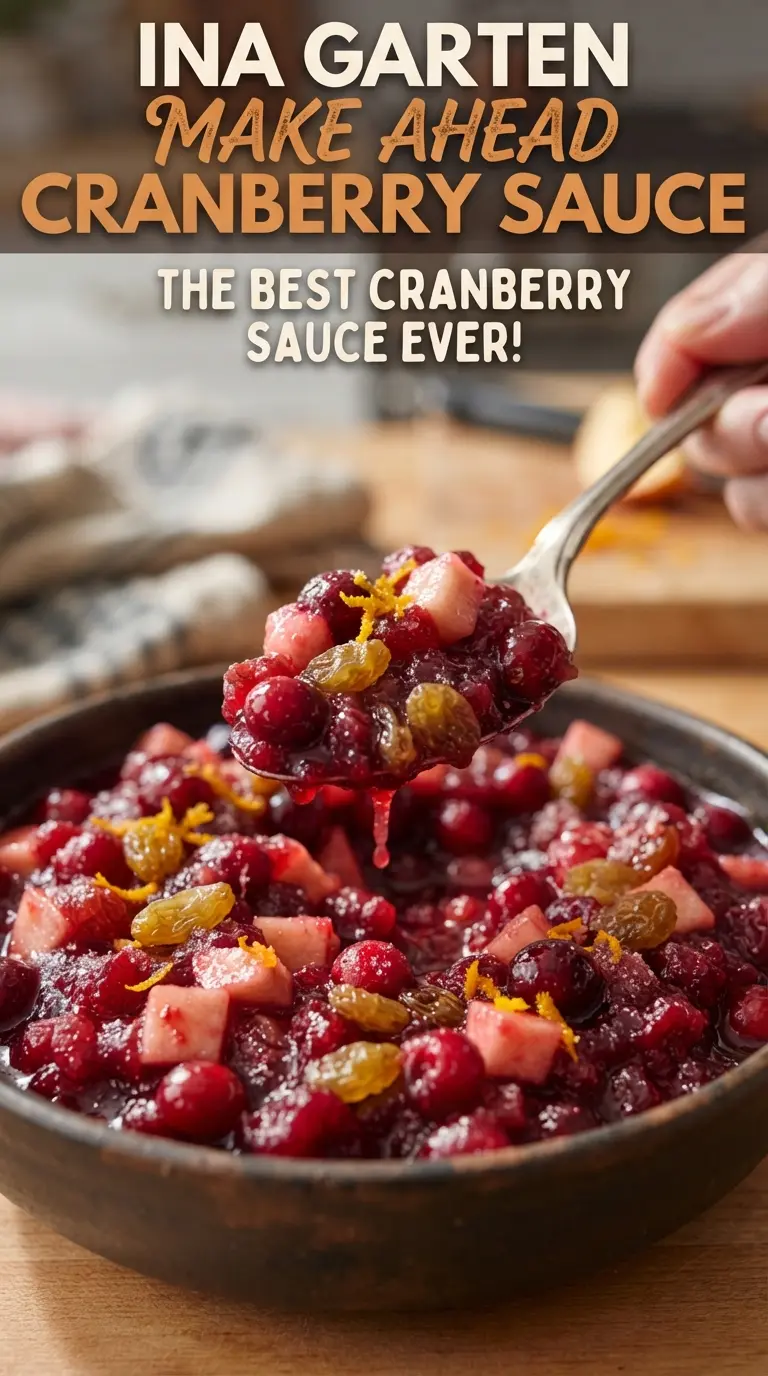
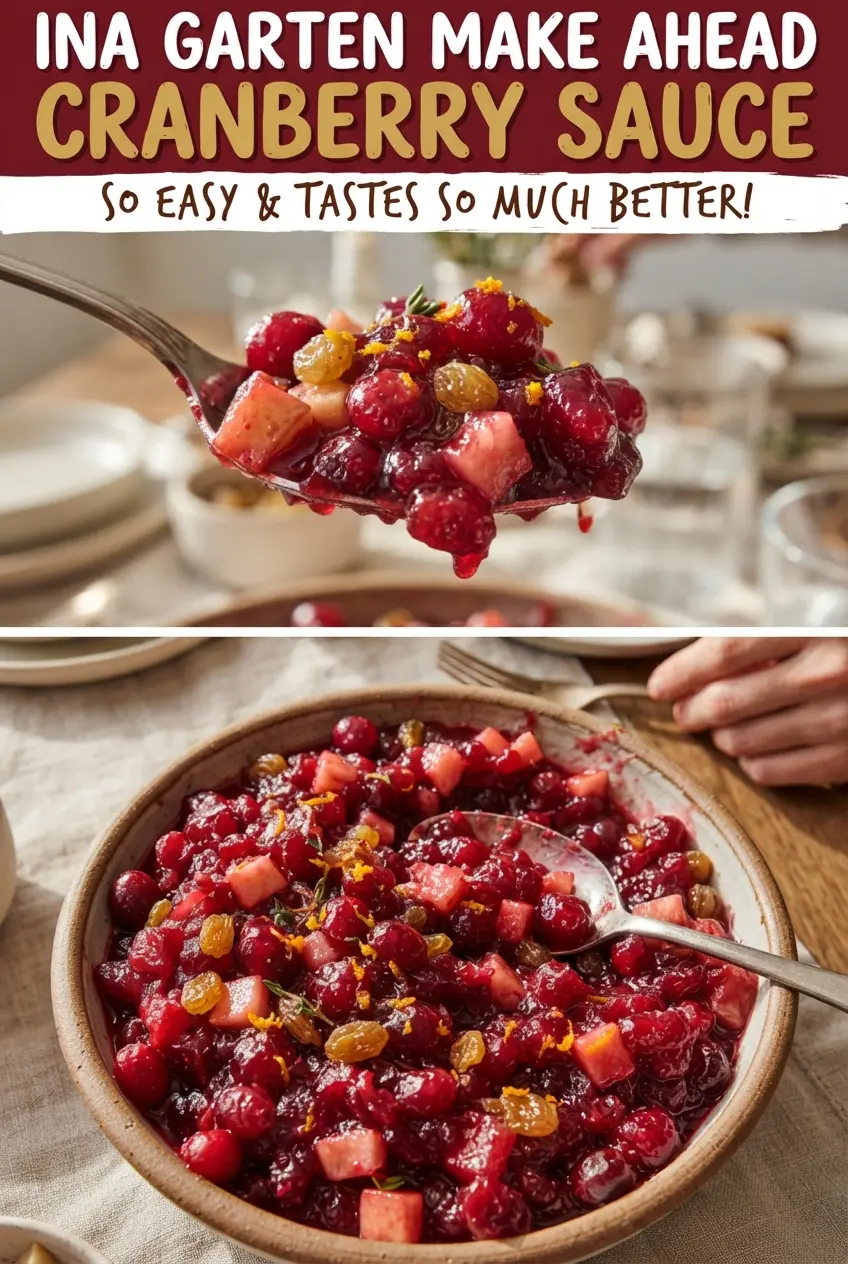
Bright, chunky cranberry sauce with apple, citrus, raisins, and toasted nuts earns a permanent place on the table because it gives you more than sweetness. The cranberries cook down into a glossy base, but they still hold enough shape to give each spoonful texture. The apple softens into little tender pieces, the citrus keeps everything lively, and the raisins and nuts make it feel finished instead of one-note.
This version works because the sugar and water build a quick syrup before the fruit goes in, which keeps the cranberries from scorching and helps the sauce thicken evenly. The apple goes in after the first simmer so it stays distinct instead of turning to mush. Stirring in the raisins and nuts off the heat keeps the nuts crisp and the raisins plump instead of overcooked.
Below, I’ve included the one timing detail that keeps the texture right, plus a few smart swaps for when you want to adjust the mix without losing the balance of tart, sweet, and crunchy.
The cranberries broke down into a thick, spoonable sauce and the apple still had a little bite. I made it two days ahead and it tasted even better after the citrus settled in.
Like this chunky cranberry sauce? Save it to Pinterest for a make-ahead side with citrus, apple, and toasted nuts that tastes even better the next day.
The Reason This Cranberry Sauce Stays Chunky Instead of Turning Jammy
The biggest mistake with cranberry sauce is letting it cook until every berry collapses into the same soft paste. That can happen fast once the cranberries pop, especially if the heat is too high or you keep cooking after the sauce has already thickened. Here, the first five-minute simmer opens the berries just enough, then the apple and citrus finish the job without pushing it into puree territory.
The other thing that matters is the order. Sugar and water need a head start so the cranberries cook in a controlled syrup instead of on a dry pan bottom. Once the apple goes in, you only want enough simmer time to soften it and reduce the liquid slightly. Pull it off the heat as soon as the sauce looks glossy and spoonable, because it thickens more as it cools.
- Cranberries — Fresh cranberries give the sharp, clean tartness that defines the sauce. Frozen cranberries work too; use them straight from the freezer and expect a minute or two of extra cook time.
- Granny Smith apple — This is what gives you those tender chunks that hold their shape. A softer apple will disappear into the sauce, which changes the texture more than the flavor.
- Orange and lemon — The zest carries the most aroma, while the juice keeps the sauce bright. If you only have one citrus fruit, use it, but the mix of orange and lemon gives the sauce a fuller edge.
- Golden raisins and nuts — Stir these in after cooking so the raisins stay plump and the nuts keep some crunch. Skip the nuts if you need a softer texture, but keep the raisins if you want the sauce to taste rounded instead of sharp.
What Each Ingredient Is Actually Doing in This Recipe
- Primary ingredient (the star) — Quality matters most. Choose the best you can find.
- Cooking medium (oil, butter, or broth) — This carries flavors and prevents dryness.
- Seasonings (salt, pepper, spices, herbs) — Layer flavors so nothing overpowers. Build depth gradually.
- Aromatics (garlic, onion, herbs) — Cook with fat to bloom flavors. Become the foundation.
- Supporting ingredients — Complement the main ingredient without overpowering it.
- Sauce or liquid (if applicable) — Brings flavors together. Balance richness with acid.
- Acid (lemon, vinegar, wine, or other) — Brightens and prevents flat-tasting results.
- Final finish (garnish, glaze, or sauce) — Prevents one-dimensional taste and adds visual appeal.
How to Cook the Fruit So the Flavor Stays Bright
Building the Syrup First
Bring the cranberries, sugar, and water to a full boil before lowering the heat. That first hard bubble is what starts the thickening process and dissolves the sugar evenly, so you don’t end up with gritty spots at the bottom. The cranberries will begin to pop and split; that’s what you want. If the mixture looks sticky before the berries have burst, the heat is too low.
Cooking in Two Stages
After the first simmer, add the apple, zest, and juice and cook for another 15 minutes. The fruit should soften and the liquid should reduce until the sauce looks glossy and slightly loose in the pan, not watery. Don’t chase a fully thick consistency while it’s hot. Cranberry sauce tightens a lot as it cools, and overcooking is how you end up with a dry, overly thick result.
Finishing for Texture
Take the pan off the heat before stirring in the raisins and nuts. The residual warmth plumps the raisins without turning them heavy, and it protects the nuts from going soft. Let the sauce cool completely before covering it, then refrigerate it so the flavors can settle and the texture sets properly. Served chilled, it slices cleanly; served at room temperature, it softens just enough to spoon easily.
How to Adapt This Cranberry Sauce Without Losing the Balance
Dairy-Free and Naturally Gluten-Free
This recipe already lands in both camps as written, which is part of why it works so well for a holiday table. Just check your nuts for cross-contact if that matters for your kitchen, and you’re set.
No-Nut Version
Leave out the walnuts or pecans and add an extra 2 to 3 tablespoons of golden raisins if you want a little more body. The sauce will be softer and less crunchy, but the citrus and apple still give it enough structure to feel complete.
Less Sweet, Sharper Finish
Drop the sugar by up to 1/4 cup if you like a more tart sauce, especially if your cranberries are very ripe and the orange is sweet. Don’t cut much more than that unless you’re prepared for a looser sauce, because the sugar helps the fruit gel as it cools.
Storage and Reheating
- Refrigerator: Store covered for up to 1 week. It firms up as it chills, and the flavors get deeper after a day.
- Freezer: It freezes well for up to 2 months. Cool it completely first, then freeze in an airtight container with a little headspace for expansion.
- Reheating: Serve it cold or let it sit at room temperature for 20 to 30 minutes. If you want it warm, heat it gently over low heat with a splash of water; high heat can make the texture loose and push the fruit past the point where it still tastes fresh.
Questions I Get Asked About This Cranberry Sauce
Make Ahead Cranberry Sauce
Ingredients
Equipment
Method
- Bring fresh cranberries, sugar, and water to a boil in a saucepan over medium-high heat, stirring to dissolve the sugar. Simmer for 5 minutes until the skins pop.
- Add Granny Smith apple, orange zest, orange juice, lemon zest, and lemon juice to the saucepan. Simmer for 15 minutes, stirring occasionally, until the mixture turns thick and saucy.
- Remove the saucepan from the heat and stir in golden raisins and walnuts or pecans. Continue stirring just until evenly distributed.
- Cool the cranberry sauce completely, uncovered, until no longer steaming. This prevents condensation in the container.
- Cover and refrigerate the cranberry sauce until ready to serve, up to 1 week. Stir once after chilling if you want a more even texture.
- Serve the cranberry sauce chilled or at room temperature. Spoon it into a serving bowl for a chunky, glossy finish.