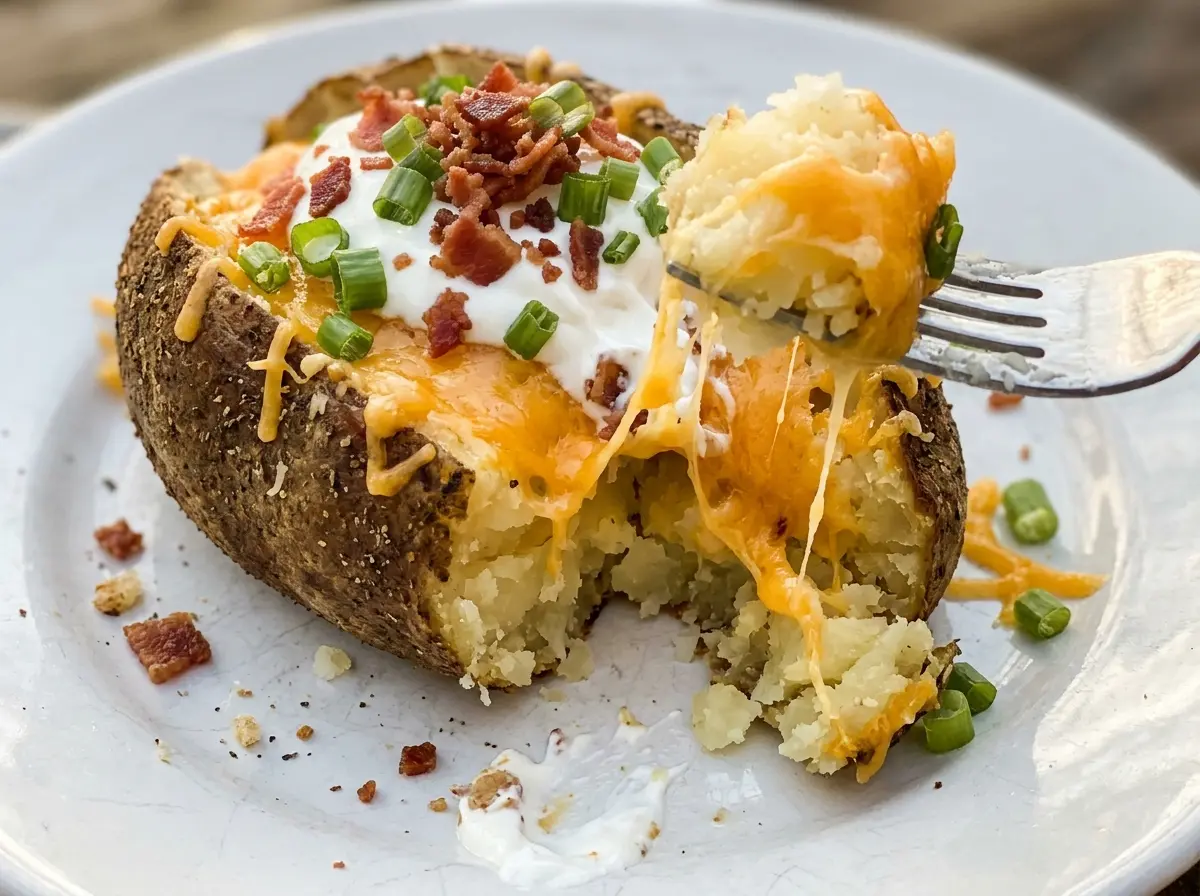
When a fork breaks through a crisp russet skin and meets a soft, steamy center, you know the potato is ready for its toppings. I like the way the butter melts right into the fluffy middle, then the cheddar softens around it before the cool sour cream goes on. Each bite has a little of everything without needing a separate side dish.
For these loaded baked potatoes, the toppings stay familiar and the potato does the work: russets bake until tender, then bacon, cheddar, sour cream, and scallions turn them into a full meal. I prep the bacon while the potatoes are in the oven, so everything is ready to pile on while the potatoes are still hot. That warmth matters; it helps the butter and cheese settle into the center instead of sitting on top.
Kitchen Note
Bacon firms a little as it rests, so I take it off the heat once it’s crisp rather than waiting for it to turn brittle. A few minutes on paper towels makes it easier to crumble into pieces that scatter across the potato.
Save these loaded baked potatoes for a dinner with crisp skins, fluffy centers, and all the classic bacon-cheddar toppings.
Why Russet Skins Turn Crisp Instead of Steamy
A baked potato’s skin can turn soft when moisture gets trapped around it. Wrapping a potato in foil, for example, holds steam against the skin; that’s a different result from the dry, crisp exterior I want here. These potatoes go straight onto the oven rack, where hot air can move around them rather than leaving one side sitting in a pan.
Starting with scrubbed, dry potatoes helps, too. The olive oil makes a thin coating, while the kosher salt clings to the surface and seasons the skin. Pricking each potato several times gives steam a way to escape as the inside heats. None of those choices replaces the others: the dry surface, open-air baking, and fork pricks each help the potato cook as intended.
There’s a useful contrast in the finished potato. The outside has enough structure to hold the toppings, while the inside stays soft enough to fluff with a fork. That balance is what makes a russet a better fit here than a potato chosen for a waxier, firmer texture.
Why Russets, Butter, and Cheddar Matter in a Loaded Potato

- Russet potatoes — Their starchy flesh turns light and fluffy when baked, giving the toppings somewhere to sink in. Choose large potatoes that feel firm, with no soft spots; scrub them well and dry the skins before oiling.
- Olive oil and kosher salt — The oil helps the skin brown and gives the salt something to cling to. A basic olive oil is fine here; save a special finishing oil for another dish. Kosher salt’s larger grains are easy to distribute over the outside.
- Bacon — The salty, crisp pieces bring a savory contrast to the soft potato and creamy toppings. Regular bacon works well; cook it until crisp enough to crumble, then let the paper towels absorb the excess grease.
- Unsalted butter and cheddar — Butter melts into the freshly fluffed potato, and cheddar brings the familiar savory, gently sharp finish. Unsalted butter lets the bacon and salted skin stay in balance. A cheddar with more sharpness will taste more pronounced than a mild one.
- Sour cream and scallions — Sour cream cools the hot, buttery center with a tangy finish, while thinly sliced scallions add a fresh bite. Keep the scallions thin so they’re easy to eat with the soft potato and crumbled bacon.
The Oven-to-Topping Timing for a Fully Loaded Potato
Get the Russets Ready for the Rack
Heat the oven to 425°F, then prick each scrubbed, dried potato several times with a fork. Rub the skins with olive oil and sprinkle them with kosher salt, coating the potatoes evenly rather than leaving bare patches. Set them directly on the oven rack. Bake for 50 to 65 minutes, until the skins feel crisp and a knife slides easily into the centers; larger potatoes may need the longer end of that window.
Cook the Bacon While the Potatoes Bake
Set a skillet over medium heat and cook the bacon, turning it as needed, until crisp. The cooking window is 8 to 12 minutes, depending on the slices and how your skillet heats. Transfer the bacon to paper towels to drain, then crumble it once it’s cool enough to handle. If the strips are still flexible in the middle, give them a little more time before taking them out of the skillet.
Fluff First, Then Add the Cold Toppings
Split each hot potato lengthwise and use a fork to fluff the inside without tearing through the skin. Divide the butter and cheddar among the potatoes while the centers are still hot, so the butter melts and the cheese begins to soften. Add sour cream, crumbled bacon, and sliced scallions on top, then serve. Keeping the potato open gives every topping a place to land instead of burying the fluffy center under a closed skin.
Three Ways to Change Up These Loaded Baked Potatoes
Give the Cheese a Little Heat
Use shredded pepper jack in place of the cheddar. It melts into the hot potato in the same way, with a mild chile kick that makes the finished topping livelier without changing the basic method.
Make a Vegetarian Loaded Potato
Leave off the bacon and keep the butter, cheddar, sour cream, and scallions. You’ll lose the smoky, salty crunch, but the potato still has a creamy, savory topping and works as a meatless main.
Use Plain Greek Yogurt for a Tangier Top
Replace the sour cream with plain Greek yogurt. It gives you a similar cool, creamy contrast with a slightly sharper tang; choose a thick, full-fat yogurt so it stays on the potato instead of running into the plate.
Storage and Reheating
- Refrigerator: Refrigerate leftovers within 2 hours and eat within 3 to 4 days. The skin softens in storage, and the sour cream may loosen a little.
- Freezer: Freezing assembled potatoes isn’t a good fit; the sour cream can separate and the potato texture may turn grainy after thawing.
- Reheating: Microwave a leftover potato in short bursts until the center reaches 165°F. Reheat only what you plan to eat, since repeated warming makes the potato drier and the toppings less creamy.
Questions That Come Up With Loaded Baked Potatoes
Loaded Baked Potato
Ingredients
Equipment
Method
- Preheat the oven to 425°F.
- Prick each potato several times with a fork.
- Rub the potatoes with olive oil and sprinkle with kosher salt.
- Bake directly on the oven rack for 50-65 minutes, until the skins are crisp and a knife slides easily into the centers.
- While the potatoes bake, cook the bacon in a skillet over medium heat for 8-12 minutes, turning as needed, until crisp.
- Drain the bacon on paper towels and crumble it.
- Split each hot potato lengthwise and fluff the insides with a fork.
- Divide the butter and cheddar among the potatoes.
- Top each potato with sour cream, crumbled bacon, and sliced scallions, then serve.