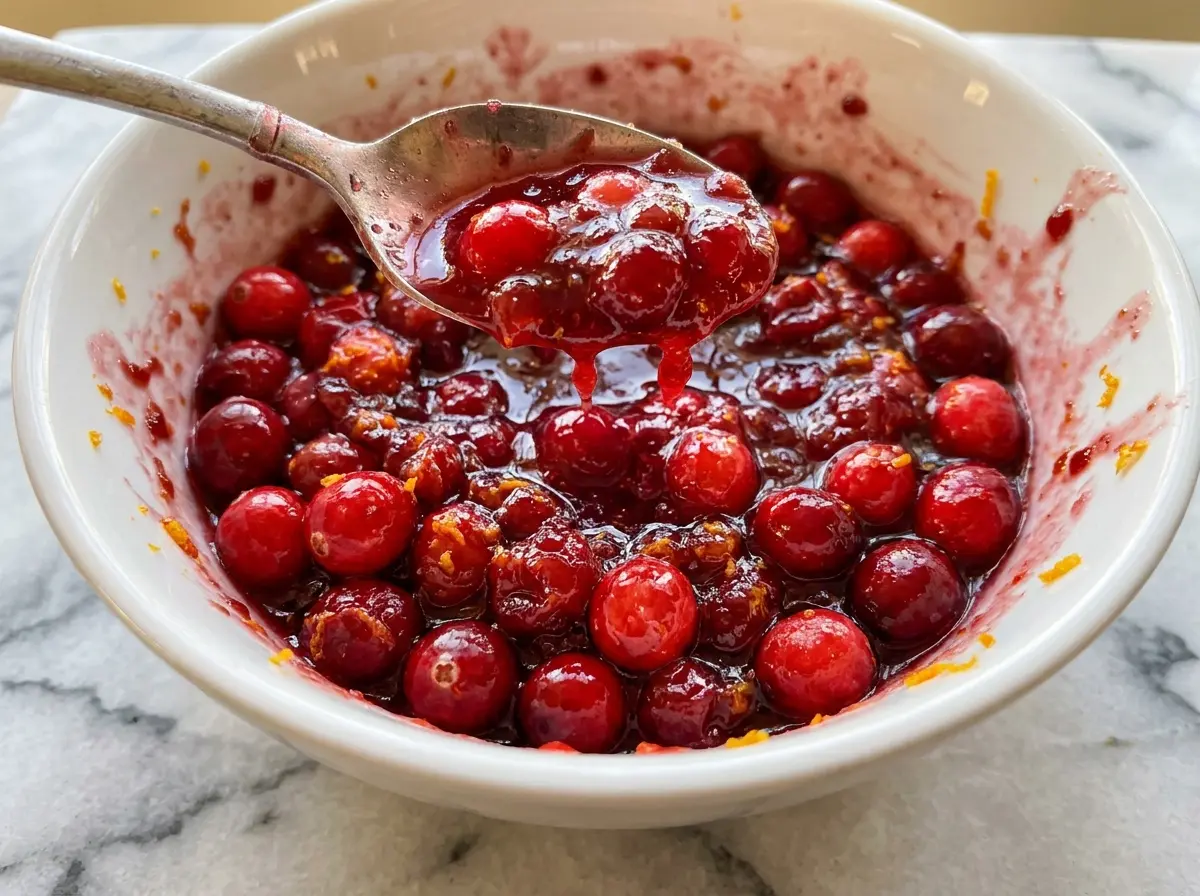
The sugar turns clear and glossy first, then the cranberries tumble in and the pan starts ticking and popping as their skins split. I like that this Joanna Gaines Holiday Cranberry Sauce needs only one saucepan and a short stretch of attention, yet it still tastes like a proper part of the holiday table. The orange comes through without burying the sharp, fresh cranberry flavor, and the finished sauce serves eight.
Orange juice and finely grated zest do different jobs here. The juice gives the syrup a rounded citrus note, while a little zest brings the brighter aroma you notice as soon as the sauce hits the table. Cook the berries until most have burst and the liquid looks thicker, then let the sauce cool before judging its final texture. It settles into a glossy, spoonable cranberry sauce with bright orange on the nose and a pleasantly tart finish.
Kitchen Note
Use the 3-quart saucepan called for here; the berries need room to bubble once they go in. A smaller pot can crowd the fruit and make stirring awkward as the sauce simmers.
Save Joanna Gaines Holiday Cranberry Sauce for a table-ready side with fresh cranberry tang and a clear, fragrant note of orange.
Why the Orange Comes Through Without Taking Over the Cranberries
Orange juice and orange zest can seem like two versions of the same ingredient, but they bring different kinds of citrus to the pot. The juice blends into the syrup, softening the berries’ sharpness and carrying sweetness throughout the sauce. Zest contributes fragrant orange oils, so the aroma feels lively even though the fruit itself is tart.
That balance matters because cranberries have a bold, direct flavor. A sauce made with juice alone tastes rounder, while zest alone gives a more perfumed citrus note without adding the juice’s liquid and sweetness. Here they work together, and neither needs to be pushed to the point where orange becomes the main event. The finished sauce should still taste unmistakably like cranberries, with the orange showing up around the edges.
The other useful distinction is between how the sauce looks in the pan and how it eats after cooling. The hot mixture remains loose enough to move when you stir it; it doesn’t need to look like a firm jelly before it comes off the heat. Cranberries naturally contain pectin, and the broken fruit helps the sauce thicken as it cools. If you cook until the pan looks stiff, the chilled sauce can end up much denser than you wanted.
How Orange Juice, Zest, and Fresh Berries Shape the Sauce

- Fresh cranberries — Choose berries that look firm and brightly colored, then rinse and pick over them before cooking. Soft or shriveled berries are easy to spot at the sink. Frozen berries can stand in if fresh ones aren’t available, though they may need a little extra time to return to a simmer and soften.
- Orange juice — The juice adds citrus flavor and liquid to the syrup. Fresh-squeezed or carton juice both work; a basic, pulp-free juice keeps the sauce texture smooth between the berries. If you want a less citrus-forward result, the variation below explains the water swap.
- Finely grated orange zest — The fine grate disperses the fragrant outer peel through the sauce instead of leaving chewy strips. Grate only the orange-colored surface; the white pith underneath tastes bitter. If you don’t have an orange for zest, leave it out rather than reaching for orange extract, which can dominate this small batch.
- Granulated sugar — White sugar dissolves cleanly into the liquid and gives the cranberries a straightforward sweetness. Light brown sugar can replace it in the same amount for a deeper, molasses-like note and a darker color, though the sauce will taste less bright.
- Water — Water helps form the syrup before the fruit goes in, without adding more citrus flavor. Tap water is fine; there’s no need to use anything special.
From Dissolved Sugar to a Spoonable Cranberry Sauce
Dissolve the Sugar Before Adding the Berries
Put the sugar, water, orange juice, and finely grated zest in a 3-quart saucepan over medium heat. Stir for 2 to 3 minutes, watching for the sugar to disappear into the liquid and the mixture to reach a simmer. The syrup should look clear rather than gritty when you draw the spoon through it. Don’t add the fruit while sugar crystals are still visible along the bottom of the pan.
Let the Cranberries Burst at a Steady Simmer
Add the rinsed, picked-over cranberries and bring the pan back to a simmer. Reduce the heat to medium-low and cook for 10 to 15 minutes, stirring occasionally. The berries will pop as their skins split, and the liquid will gradually take on a thicker, more jammy look. Stop when most of the cranberries have burst and the sauce has thickened; a few whole berries are fine.
Give the Sauce Time to Settle
Take the saucepan off the heat and leave the sauce to cool for at least 30 minutes. It will continue to thicken as it sits, so don’t judge the final consistency while it’s still steaming hot. Once it has cooled, serve it at room temperature or refrigerate it until chilled. The berries should be tender, with some whole pieces still visible in the glossy sauce.
Two Easy Ways to Change the Citrus and Sweetness
Make It Less Sweet
For a lower-sugar version, use less granulated sugar than the listed amount. The cranberries will taste sharper and the sauce may set a little less firmly, so keep the tart fruit flavor in mind when you serve it.
Make the Citrus More Subtle
Replace the orange juice with an equal amount of water and keep the zest. This gives you a cranberry-forward sauce with a lighter orange aroma, though it loses some of the rounded citrus sweetness from the juice.
Storage and Reheating
- Refrigerator: Keep the cooled sauce covered in the refrigerator for 3 to 4 days. It will firm up as it chills, then loosen slightly as it comes back toward room temperature.
- Freezer: Freeze it in an airtight freezer-safe container for up to 2 months, leaving a little room at the top. Thaw it overnight in the refrigerator; the texture may be a touch softer after thawing.
- Reheating: This sauce is served at room temperature or chilled, so reheating isn’t necessary. If you prefer it warm, heat it gently in a saucepan over low heat, stirring often; a hard boil can reduce it too far and make it overly thick.
Questions That Come Up While the Cranberries Cook
Joanna Gaines Holiday Cranberry Sauce
Ingredients
Equipment
Method
- In a 3-quart saucepan, combine the sugar, water, orange juice, and orange zest over medium heat; stir for 2 to 3 minutes, until the sugar dissolves and the mixture comes to a simmer.
- Add the cranberries and bring the mixture back to a simmer, then reduce the heat to medium-low and cook for 10 to 15 minutes, stirring occasionally, until most of the cranberries have burst and the sauce has thickened.
- Remove the saucepan from the heat and let the sauce cool for at least 30 minutes; serve at room temperature or refrigerate until chilled.