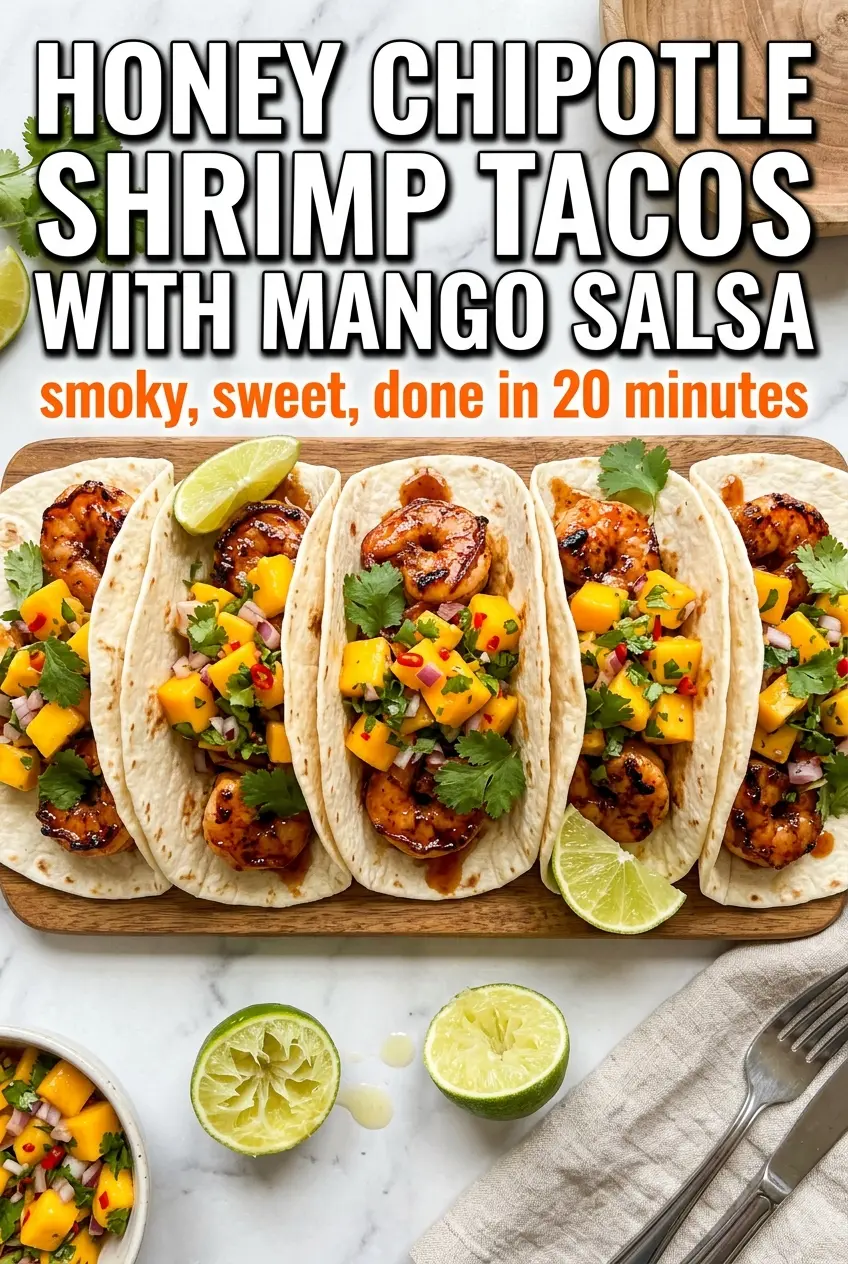
Glossy shrimp, a sticky chipotle-honey glaze, and bright mango salsa make these tacos the kind of dinner that disappears fast. The shrimp stay juicy, the sauce clings to every curve, and the sweet heat lands just right against warm corn tortillas and a squeeze of lime.
What makes this version work is timing. Shrimp cook fast, and the glaze goes on near the end so the honey doesn’t scorch before the shrimp are done. The mango salsa is kept fresh and uncooked, which gives the tacos a clean, juicy contrast instead of another heavy layer of sauce.
Below, I’ve included the one thing that matters most when you’re cooking the shrimp, plus the swaps that still keep the balance of sweet, smoky, and bright.
The shrimp stayed tender and the glaze thickened just enough to coat everything without turning sticky or burnt. My husband kept piling on the mango salsa because the sweet heat balance was perfect.
Save these honey chipotle shrimp tacos for a fast dinner with smoky glaze and fresh mango salsa.
The Trickiest Part Is Not Overcooking the Shrimp
Shrimp are forgiving right up until they aren’t. The moment they curl into tight little C-shapes and turn opaque all the way through, they’re done. Leave them on the heat after that and they go from juicy to rubbery fast, especially once the honey-chipotle glaze hits the pan.
The other thing people get wrong here is adding the glaze too early. Honey can burn before the shrimp finish cooking, which leaves you with bitter edges instead of a shiny coating. Cook the shrimp first, then toss in the glaze for the last minute or two so it thickens around the seafood instead of caramelizing onto the skillet.
What Each Ingredient Is Actually Doing in This Dish
The shrimp need to be large enough to stay plump while they cook. Smaller shrimp can work, but they overcook in a blink and don’t hold the glaze as nicely.
- Honey — This gives the glaze its body and shine. There isn’t a perfect substitute if you want the same sticky finish, but maple syrup will work in a pinch. It tastes a little deeper and less floral, and it won’t cling quite as thickly.
- Chipotle peppers in adobo — These bring smoke, heat, and a little tang from the sauce around the peppers. If you only have chipotle powder, use a smaller amount and add a teaspoon of tomato paste or a splash of adobo sauce if you have it, since the wet pepper puree is what helps the glaze coat the shrimp.
- Fresh lime juice — This keeps the glaze from tasting flat. Bottled lime juice works if that’s what you have, but fresh gives a cleaner bite that stands up to the mango.
- Mangoes — Use ripe mangoes that give slightly when pressed. Underripe mango tastes sharp and fibrous, which throws off the taco. If you can’t find good mango, diced pineapple is the closest swap because it gives the same bright sweetness and juicy crunch.
- Corn tortillas — They fit the flavors here better than flour tortillas and give the tacos a little toasty edge when warmed properly. Heat them on a dry skillet or griddle until they soften and pick up a few brown spots. That little bit of char matters.
Building the Glaze, Then Finishing Fast
Mix the Sauce Before the Pan Gets Hot
Stir the honey, minced chipotle, lime juice, and cumin together in a small bowl first. Once the shrimp are in the skillet, things move quickly, and you don’t want to be chopping or measuring while garlic is browning. The glaze should look loose and glossy at this stage; it thickens later when it meets the heat.
Cook the Garlic Briefly, Then Add the Shrimp
Warm the olive oil over medium-high heat and add the garlic for just 30 seconds. You want it fragrant, not browned. Burnt garlic turns the whole dish bitter, and because shrimp cook so fast, there’s no time to rescue it once it goes too far. Add the shrimp in a single layer and let them sear before stirring so they pick up a little color instead of steaming.
Coat the Shrimp at the End
Pour the glaze over the shrimp once they’re nearly cooked through and toss them gently. The sauce should bubble and get a little thicker in 1 to 2 minutes, clinging to the shrimp in a shiny coat. If the pan looks dry before that happens, the heat is too high; lower it so the honey doesn’t stick and scorch before it finishes.
Build the Tacos While Everything Is Still Warm
Warm the tortillas on a griddle until they’re flexible and lightly speckled, then fill them right away. Spoon the shrimp in first so the glaze stays on the tortilla instead of sliding off the board, then add the mango salsa on top. A final squeeze of lime wakes up the chipotle and keeps the tacos from tasting heavy.
How to Adapt These Shrimp Tacos Without Losing the Balance
Make Them Gluten-Free as Written
These tacos are naturally gluten-free if you use corn tortillas and check that your adobo sauce doesn’t include any wheat-based fillers. That matters more than people think, because a lot of packaged sauces sneak in thickeners that can muddy the glaze.
Use Pineapple When Mango Isn’t Good Enough
Diced pineapple gives you the same sweet-acid pop and a little more bite. It won’t taste as silky as ripe mango, but it works well with chipotle because the sharper fruit stands up to the smoke.
Dial the Heat Up or Down
Use both chipotle peppers for a noticeable kick, or start with one pepper if you want the tacos smoky without much burn. If you need more heat after cooking, add extra minced chipotle to the mango salsa rather than loading the shrimp with it. That keeps the glaze balanced and avoids burning the sauce.
Storage and Reheating
- Refrigerator: Store the shrimp and mango salsa separately for up to 2 days. The salsa softens and releases juice, but it still tastes good.
- Freezer: The cooked shrimp can be frozen for up to 1 month, though the texture softens a bit after thawing. Don’t freeze the mango salsa; the fruit turns watery.
- Reheating: Rewarm the shrimp gently in a skillet over low heat with a splash of water, just until heated through. High heat will overcook them before the glaze loosens up again.