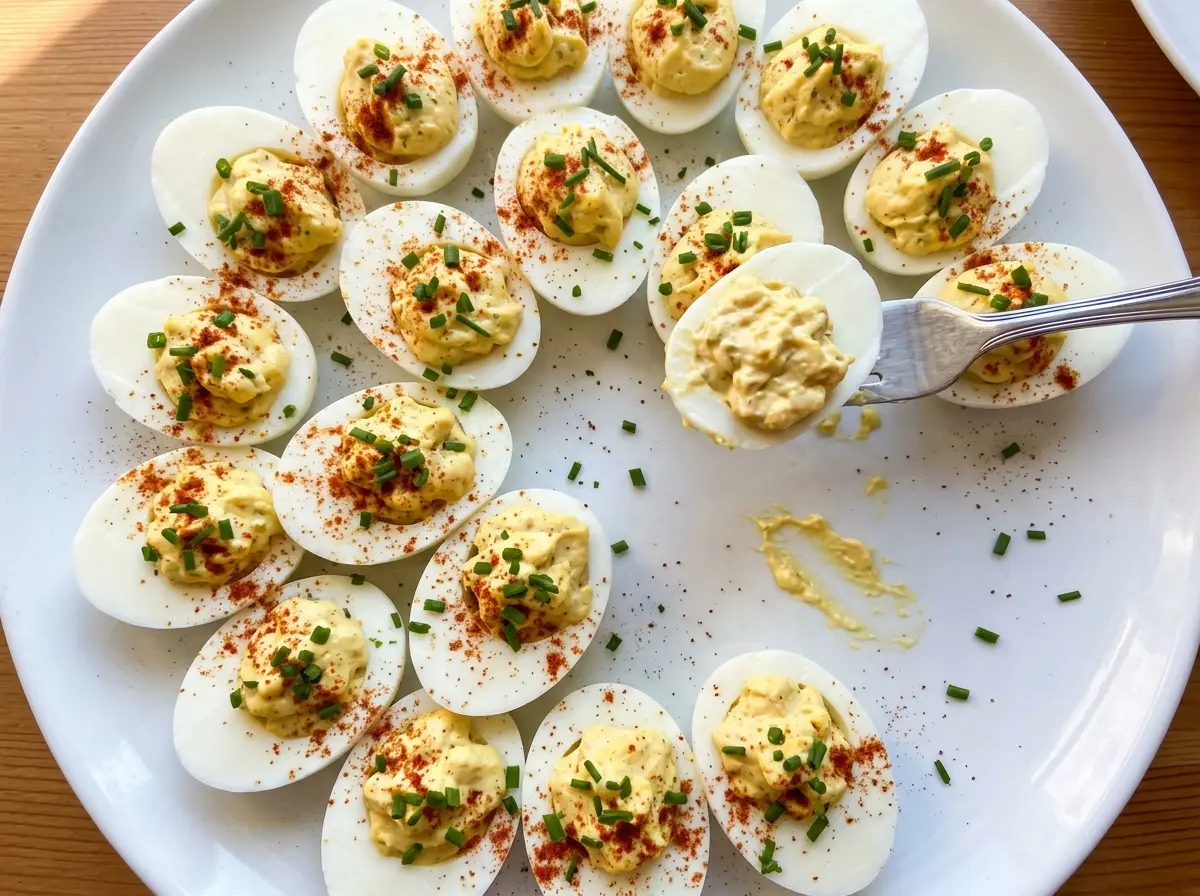
The saucepan comes off the burner, the lid goes on, and the eggs finish cooking in the heat already trapped inside. That small change keeps me from guessing at a hard-boil and gives these Healthy Deviled Eggs tender whites instead of the rubbery edges that can come from cooking eggs at a nonstop boil. After a quick ice bath, the yolks mash into a creamy filling with plain nonfat Greek yogurt, Dijon, and apple cider vinegar.
I like this version when I want deviled eggs with a lighter, tangier filling than the usual mayonnaise-based one. The yogurt brings enough body to hold the yolks together, while the mustard and vinegar keep the mixture from tasting flat. Give the filled eggs at least 20 minutes in the refrigerator before serving; the filling settles, and the paprika stays perched neatly on top. Each egg makes two halves, so the six eggs make a generous platter of twelve.
Kitchen Note
Pat the peeled eggs dry before you cut and fill them. Water clinging to the whites can make the filling slide around instead of sitting neatly in each half.
Save these Healthy Deviled Eggs for an appetizer with a tangy Greek yogurt filling and a paprika finish.
Why These Eggs Come Off the Heat Before the Timer Starts
Hard-boiled eggs can turn tough when they keep bubbling away on the stove. Here, the water reaches a full boil first, then the covered pan leaves the burner for the standing time. The eggs cook gently in the hot water without the constant agitation of a rolling boil. That makes the whites less likely to get rubbery and helps the yolks stay tender rather than chalky.
It’s a useful approach because you don’t need to keep adjusting the burner or watch the pot while the eggs finish. Use a saucepan that holds the eggs in one layer, and add enough cold water to cover them by about an inch. Once the water boils, put the lid on and move the pan off the heat for the full 12 minutes. That covered rest is part of the cooking, not an optional pause.
What the Yogurt, Mustard, and Vinegar Bring to the Filling

- Large eggs — The whites become the little cups for the filling, and large eggs give you a good balance between the white and yolk in each half. Eggs that aren’t at their freshest often peel more easily, but use eggs that have been stored safely and are in good condition.
- Plain nonfat Greek yogurt — Thick Greek yogurt gives the mashed yolks moisture and a light tang without making the filling loose. Use plain yogurt rather than a sweetened or flavored one; the latter will bring an unwanted taste. For a dairy-free version, mayonnaise can replace the yogurt in the same amount, though the filling will taste richer and less tangy.
- Dijon mustard — Dijon has a sharper, more rounded bite than yellow mustard, so a small amount seasons the yolks without taking over. If Dijon isn’t available, yellow mustard works in its place, with a milder, more familiar mustard flavor.
- Apple cider vinegar — A little acidity balances the yolk and yogurt. White wine vinegar is a close substitute if that’s what you have; it keeps the filling bright without adding a noticeably different texture.
- Paprika — Sprinkling it over the filled whites gives each half a warm color and a gentle peppery finish. Ground paprika loses its fragrance over time, so use a jar that still smells fresh when you open it.
The Four Stages That Keep the Whites Tender and the Filling Smooth
Start with a Single Layer of Eggs
Arrange the eggs in one layer in a 3-quart saucepan, then add 7 cups of cold water so they’re covered by about an inch. Starting with cold water lets the eggs heat gradually along with the pan. If they’re stacked on top of each other, they won’t have as much room to cook evenly. Keep the remaining 2 cups of cold water for the ice bath.
Let the Covered Pan Finish the Cooking
Bring the water to a full boil over high heat, then cover the pan and take it off the burner. Let the eggs stand for 12 minutes without lifting the lid; the covered pan holds the heat they need to cook through. Don’t leave the saucepan on the hot burner during this rest, since that keeps applying heat. Set a timer so the standing time stays consistent.
Cool Before Peeling and Halving
Put the remaining cold water and the ice in a medium bowl, then transfer the eggs to the bath for 5 minutes. The cold bath cools them enough to handle and makes the peeling stage more comfortable. Peel each egg, rinse off any shell fragments, and pat it dry before cutting it lengthwise. Transfer the yolks to a small bowl and keep the white halves intact.
Mash, Fill, and Give the Filling Time to Set
Mash the yolks with the Greek yogurt, Dijon, apple cider vinegar, salt, and black pepper until the mixture looks smooth. If you stop while there are still large yolk lumps, they’ll show up in the finished filling, so keep mashing until the texture is even. Spoon the mixture evenly into the egg whites, then sprinkle the paprika over the top. Cover the eggs and refrigerate them for at least 20 minutes before serving.
Simple Swaps for a Different Kind of Deviled Egg
Make the Filling Dairy-Free
Replace the Greek yogurt with the same amount of mayonnaise. The filling will be creamier and richer, with less of the yogurt’s tang, while keeping the same familiar deviled-egg texture.
Use Yellow Mustard for a Softer Bite
Swap the Dijon for yellow mustard. It makes the filling taste gentler and more classic, without changing the way the yolks mash or hold together.
Trade the Vinegar for White Wine Vinegar
Use white wine vinegar instead of apple cider vinegar for a clean, bright finish. The change is subtle, so the yogurt and mustard still define the filling.
Storage and Reheating
- Refrigerator: Keep the eggs covered and refrigerated at 40°F or below; use them within 3 to 4 days. The whites may soften a little as they sit, so they’re at their best soon after chilling.
- Freezer: Freezing isn’t a good fit. The egg whites turn watery and rubbery after thawing, and the filling can lose its smooth texture.
- Reheating: Serve these chilled; reheating makes the filling soft and the whites less pleasant to eat. Keep any platter you’re serving cold rather than letting the eggs sit out for an extended stretch.
Questions I Get Asked About Healthy Deviled Eggs
Healthy Deviled Eggs
Ingredients
Equipment
Method
- Place the eggs in a single layer in a 3-quart saucepan.
- Add 7 cups cold water, covering the eggs by about 1 inch.
- Bring to a full boil over high heat.
- Cover the pan and remove it from the heat.
- Let the eggs stand for 12 minutes.
- Put the remaining 2 cups cold water and the ice in a medium bowl.
- Transfer the eggs to the ice bath and let them cool for 5 minutes.
- Peel the eggs, rinse away any shell fragments, and pat them dry.
- Halve the eggs lengthwise and transfer the yolks to a small bowl.
- Mash the yolks with the Greek yogurt, Dijon mustard, vinegar, salt, and pepper until smooth.
- Spoon the filling evenly into the egg whites.
- Sprinkle with paprika.
- Cover and refrigerate for at least 20 minutes before serving.