Gyoza soup lands in that sweet spot between light and satisfying: tender dumplings floating in a savory broth with ginger, garlic, mushrooms, and bok choy in every spoonful. The dumplings stay intact, the greens keep a little bite, and the broth gets just enough body from the soy, mirin, and sesame oil to taste layered without feeling heavy.
The trick is treating the dumplings gently and building the broth in the right order. Garlic and ginger go in first so the base tastes cooked, not raw. Mushrooms need a few minutes to soften and release their flavor before the gyoza go in, and the bok choy only needs a brief simmer at the end so it stays bright instead of limp. That little bit of timing makes the whole bowl taste clean and balanced.
Below, you’ll find the exact moment to add each ingredient, plus the swaps that still keep the broth clear and the dumplings tender. There’s also a storage note for making the soup ahead without ending up with mushy gyoza.
The broth came out clear and savory, and the gyoza stayed plump instead of falling apart. I added a little extra chili oil at the table and my husband asked for seconds before he finished the first bowl.
Gyoza soup with ginger broth and tender dumplings is the kind of bowl that disappears fast.
The Part Most People Get Wrong About Gyoza Soup
The biggest mistake is boiling the dumplings hard. That turns the wrappers fragile and clouds the broth with starch. Keep the soup at a steady simmer, not a rolling boil, and add the gyoza only once the broth has already taken on the garlic, ginger, soy, and mirin.
Another easy misstep is putting the bok choy in too early. It only needs a couple of minutes, and the stems should still have some snap when the soup hits the bowl. If your greens turn dull and soft, they stayed in the pot too long.
- Frozen gyoza — Straight from the freezer is fine. There’s no need to thaw them first, and that actually helps them hold their shape in the broth.
- Shiitake mushrooms — Fresh shiitakes give the broth a deeper, earthier note than button mushrooms. If you use a substitute, cremini are the next best choice.
- Mirin — This is what softens the salty edges of the soy sauce and gives the broth a little roundness. If you skip it, the soup tastes flatter.
- Sesame oil — Add it at the end so the aroma stays noticeable. If it simmers too long, the flavor fades into the broth.
What Each Ingredient Is Actually Doing In This Bowl
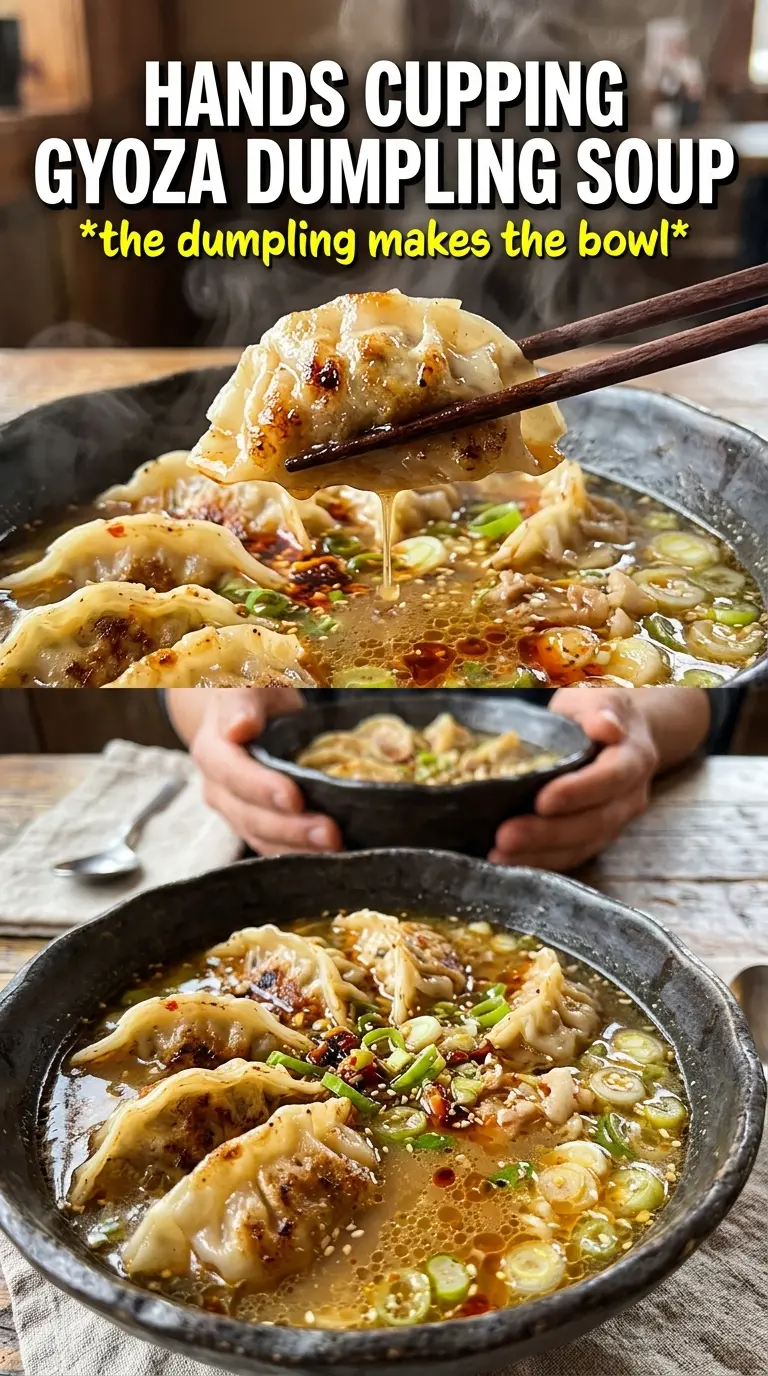
- Gyoza or potstickers — These are the meal. Use dumplings with a filling you already like, because the broth will amplify whatever is inside them. Pork, chicken, shrimp, or vegetable all work.
- Chicken broth — A good boxed broth is enough here, but it should taste clean, not overly salty. Since the soy sauce adds saltiness, a low-sodium broth gives you more control.
- Ginger and garlic — Fresh is worth it. Powdered versions won’t give you the same sharp, warming base, and this soup depends on that fresh first layer of flavor.
- Chili oil — This is the finishing move, not an afterthought. A spoonful on top adds heat and a little richness without muddying the broth.
Building The Broth So The Dumplings Stay Tender
Starting With The Aromatics
Bring the broth up to a simmer before anything else, then add the garlic, ginger, soy sauce, mirin, and rice vinegar. You want the broth hot enough to wake up the aromatics but not bubbling so hard that it cooks off their freshness. If the garlic starts to smell sharp or bitter, the heat is too high.
Softening The Mushrooms
Add the sliced shiitakes and let them cook for 3 to 4 minutes. They should soften and darken slightly while giving the broth a deeper savory note. If the pan looks dry or the mushrooms sit on top without moving, the heat is too low; if they shred apart, they went in too late and got overhandled.
Cooking The Gyoza
Lower the dumplings into the simmering broth and cook them according to the package directions, usually 5 to 7 minutes. Keep the simmer gentle and stir once or twice with a spoon so they don’t stick to the bottom. If you’re using fresh dumplings, watch the wrappers turn translucent and the filling firm up; frozen ones just need a little more time.
Finishing With The Greens And Oil
Add the bok choy near the end and cook just until the leaves wilt and the stems turn bright. Stir in the sesame oil after the heat is off or low, then taste and add salt only if the broth still needs it. Finish with green onions, sesame seeds, and chili oil so the top tastes fresh and the bowl has some contrast.
How To Adapt Gyoza Soup For What You Have On Hand
Make It Vegetarian
Use vegetable broth and vegetable gyoza. The broth will be lighter, so the mushrooms matter even more for depth. A splash more soy sauce at the end usually helps the soup taste complete.
Gluten-Free Adjustment
Use gluten-free dumplings and tamari instead of soy sauce. Check the broth label too, because some boxed broths contain wheat. The finished soup stays just as comforting, but the seasoning will taste a little cleaner and less sharp.
Swap The Greens
Baby spinach, napa cabbage, or choy sum all work if bok choy isn’t in the fridge. Add tender greens at the very end so they wilt without turning stringy. Heartier cabbage needs an extra minute or two.
Storage And Reheating
- Refrigerator: Store the broth and dumplings separately if you can. Combined leftovers keep for 2 days, but the gyoza soften as they sit.
- Freezer: The broth freezes well for up to 2 months. Freeze the dumplings separately if they’re uncooked; cooked dumplings don’t hold their texture well after thawing.
- Reheating: Warm the broth gently on the stove until steaming, then add fresh or leftover dumplings just long enough to heat through. Boiling leftovers hard is the fastest way to split the wrappers.
Questions I Get Asked About This Recipe
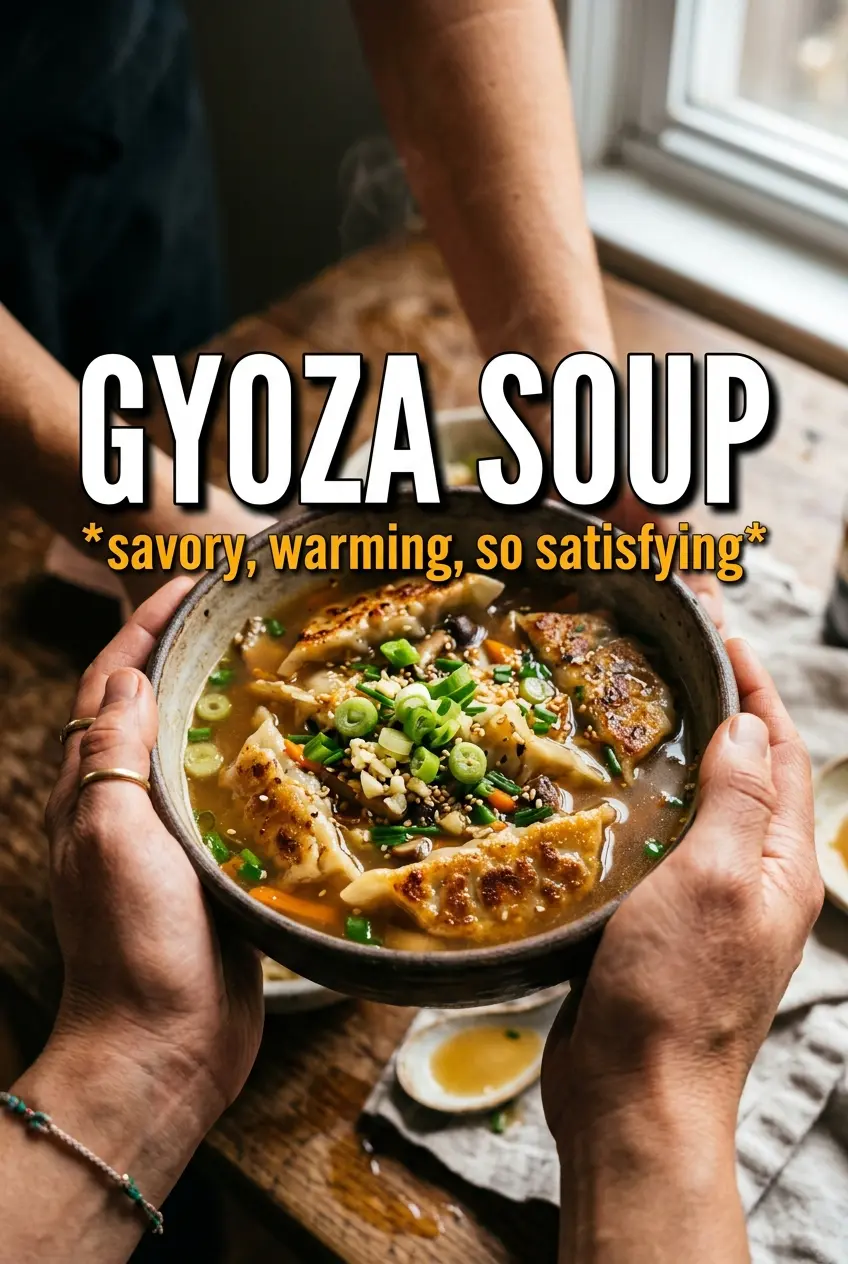
Gyoza Soup
Ingredients
Equipment
Method
- Bring chicken broth to a simmer in a large pot (about 190–205°F / 88–96°C), then add garlic, ginger, soy sauce, mirin, and rice vinegar. Keep it simmering so the flavors disperse, around 5 minutes total.
- Add shiitake mushrooms to the simmering broth and cook 3-4 minutes, until tender and fragrant. Keep the broth at a gentle simmer throughout.
- Add gyoza directly to the simmering broth and cook according to package directions, usually 5-7 minutes, until cooked through. You should see dumplings heated throughout without boiling violently.
- Add bok choy and cook 2-3 minutes, until wilted and bright green. Stir once or twice so the greens soften evenly.
- Stir in sesame oil and taste, then season with salt to adjust. The broth should taste balanced with warm ginger and salty soy.
- Serve hot, topped with green onions, sesame seeds, and chili oil. Add the toppings right before serving so they stay fresh and aromatic.