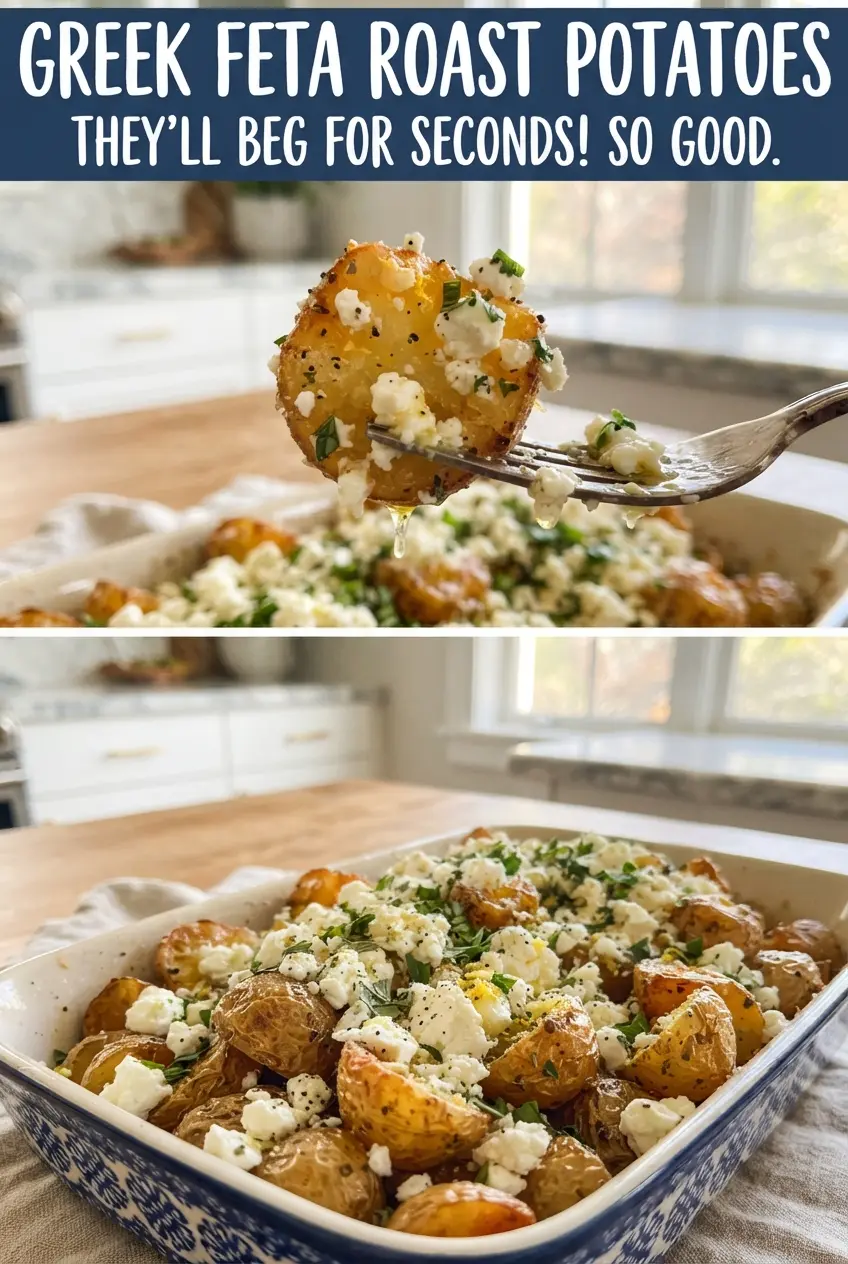
Crispy Greek feta roast potatoes hit that sweet spot between a side dish and the thing everyone keeps sneaking from the pan. The wedges turn deeply golden at the edges while the centers stay soft and creamy, and the lemon-garlic juices reduce into a savory glaze that clings to every piece. A final scatter of feta and herbs gives you salty, bright contrast right before serving.
What makes this version work is the way the potatoes roast in a shallow bath of olive oil, lemon juice, broth, garlic, and oregano instead of drying out on a bare sheet pan. The liquid cooks down as the potatoes soften, so you get flavor all the way through instead of seasoning only on the surface. Yukon golds are the right choice here because they hold their shape but still turn tender and buttery inside.
Below, I’ve included the timing cue that matters most, plus a few smart swaps if you need to change the herbs or make this dish dairy-free. The biggest mistake with potatoes like these is pulling them too early, before the liquid has fully absorbed and the edges have had time to crisp.
The potatoes came out with crispy edges and that lemon-oregano flavor got into every wedge. I was worried the feta would melt away, but it stayed on top just enough to give each bite a salty finish.
Save these Greek feta roast potatoes for the night you want crispy lemony wedges with salty feta and almost no hands-on work.
The Liquid Has to Cook Off Before the Potatoes Can Crisp
The part that makes this dish work is also the part people rush. If the potatoes go into the oven in too much liquid or in a crowded pan, they steam first and roast second, which leaves you with soft, pale edges instead of crisp ones. A roasting pan helps because it gives the wedges room to spread out and lets the lemony broth reduce in a shallow layer.
At 425°F, the potatoes need enough time for two things to happen at once: the centers turn tender and the surface dries out enough to brown. The halfway flip matters because it gets the underside exposed to the hot pan before the liquid disappears. If the pan still looks wet near the end, keep roasting until you can see dry, sizzling edges instead of bubbling liquid.
What the Feta, Lemon, and Oregano Are Doing Here

- Yukon gold potatoes — These hold their shape better than russets and still turn creamy inside. Russets will work, but they break down more and the edges can get a little shaggy instead of neatly crisp.
- Fresh lemon juice — Bottled lemon juice doesn’t taste the same here. Fresh juice gives you a cleaner, brighter finish and helps the pan juices taste balanced instead of flat.
- Chicken broth — This adds body and savory depth while the potatoes roast. Vegetable broth works if you want to keep the dish meat-free; just use one with good flavor, because weak broth makes the whole pan taste thin.
- Feta — Add it at the end so it stays crumbly and salty instead of melting into the pan. A good block-style feta usually tastes better than pre-crumbled, but either one works if you’re short on time.
- Fresh dill or parsley — Dill gives a more classic Greek finish, while parsley keeps things lighter and greener. Use whatever you have, but add it right before serving so it stays fresh and doesn’t turn dark in the oven.
Roasting the Potatoes Until the Edges Go Crisp
Coating the Wedges Evenly
Toss the potato wedges with the oil, lemon juice, broth, garlic, oregano, salt, and pepper directly in the roasting pan so every surface gets seasoned. The goal is a thin, glossy coating, not a puddle with potatoes sitting in it. If the wedges look dry in spots, they won’t brown evenly, so turn them a few times until the seasoning clings to all sides.
Giving the Pan Room to Roast
Spread the potatoes in a single layer with a little space between the wedges. If they’re piled up, the bottom ones trap steam and the tops dry out too fast. The pan should look crowded only in the way a good roast pan does, not packed solid like a casserole.
Knowing When They’re Done
Roast until the liquid is absorbed, the bottoms have taken on color, and the edges look crisp enough to lift cleanly with a spatula. You’re looking for deep golden spots, not just pale gold. If the potatoes are tender but still sitting in liquid, keep roasting; that last bit of evaporation is what turns this from braised potatoes into roasted potatoes.
Finishing With Feta and Herbs
Scatter the feta and chopped dill or parsley over the hot potatoes as soon as they come out of the oven. The heat softens the cheese just enough without making it disappear. Serve immediately, while the edges are still crisp and the lemony pan juices are still glossy.
Three Ways to Make These Potatoes Fit What’s in Your Kitchen
Dairy-Free With the Same Bright Finish
Leave off the feta and finish with extra herbs plus a small pinch of flaky salt. You’ll lose the salty creaminess, but the lemon, garlic, and oregano still carry the dish, and the potatoes keep their crisp edges just the same.
Vegetarian Version
Swap the chicken broth for vegetable broth. Use one that tastes full-bodied, because this recipe depends on the roasting liquid for flavor as much as texture. The result stays savory and works just as well alongside grilled vegetables, fish, or a simple salad.
Using Russet Potatoes Instead
Russets roast up drier and fluffier inside, with more dramatic crisping on the outside. They’re a fine substitute, but cut them a little more carefully so they don’t fall apart in the pan, and watch the liquid level because they can absorb and soften faster than Yukon golds.
Storage and Reheating
- Refrigerator: Store leftovers in an airtight container for up to 4 days. The potatoes soften as they sit, but the flavor stays strong.
- Freezer: Freezing isn’t ideal because the potatoes turn grainy and the feta loses its texture. If you must freeze them, do it without the cheese and expect a softer result after thawing.
- Reheating: Warm them on a sheet pan in a 400°F oven until the edges crisp back up, about 10 to 15 minutes. The mistake people make is microwaving them, which heats the centers but leaves the outside limp.
Questions I Get Asked About This Recipe
Greek Feta Roast Potatoes
Ingredients
Equipment
Method
- Preheat the oven to 425F and position a rack in the middle. This creates strong heat for crispy, golden edges.
- In a roasting pan, toss the Yukon gold potatoes with olive oil, lemon juice, chicken broth, garlic, dried oregano, salt, and black pepper until evenly coated. Make sure every wedge has a glossy coating from the liquid and seasonings.
- Spread the potatoes in a single layer in the roasting pan. Leave space between wedges so the edges can brown instead of steam.
- Roast for 45-50 minutes total, flipping the potatoes halfway through. Roast until the liquid is absorbed and the edges are crispy and golden, with visible browning on the corners.
- Top the hot roasted potatoes with crumbled feta and fresh dill or parsley. Scatter evenly so the feta softens slightly and the herbs stay bright.
- Serve hot. The potatoes are best right after roasting while the edges are still crisp.