The fork should slide through a russet chunk without catching, and the potato should break apart with a gentle press. That’s the texture I look for before mashing these cream cheese mashed potatoes; if the centers are still firm, the finished bowl won’t turn creamy no matter how much you mash.
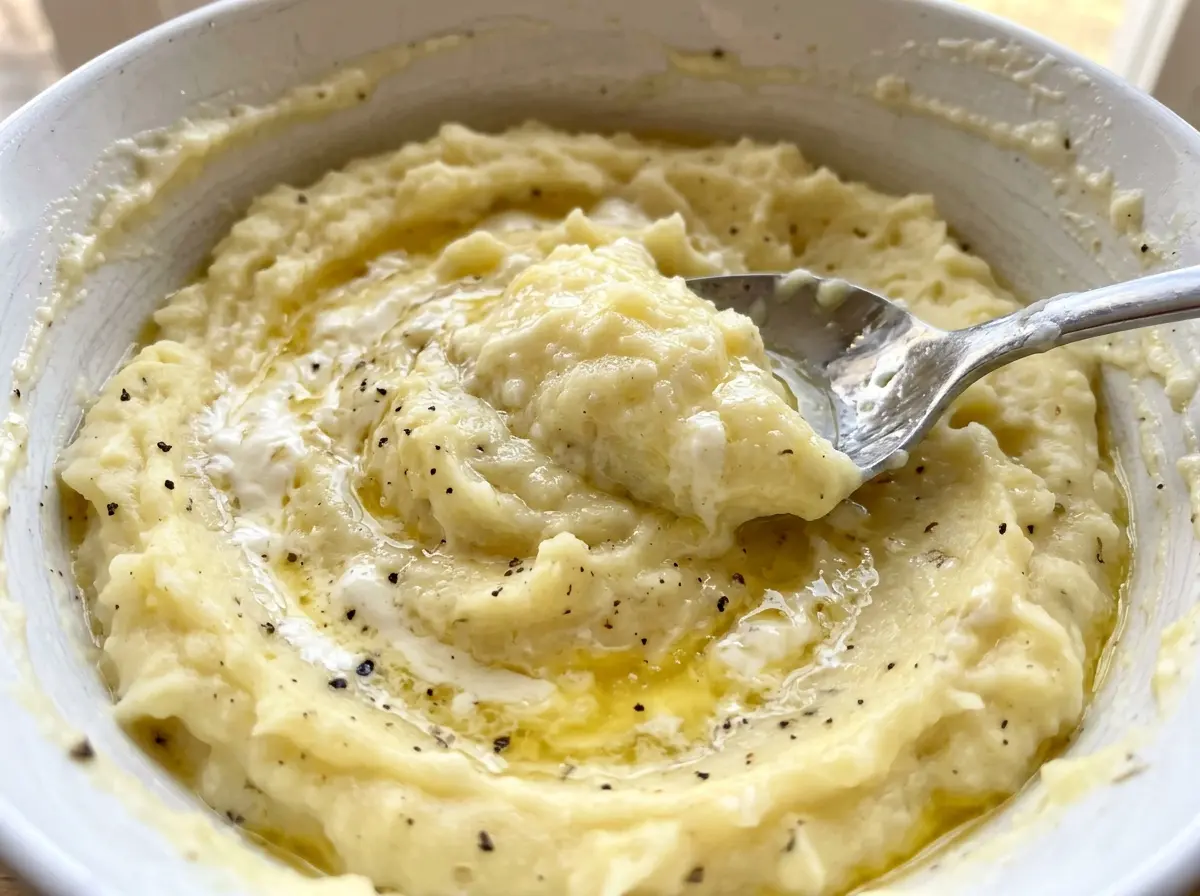
Softened cream cheese gives the potatoes a fuller, slightly tangy finish, while warm butter and milk blend in without cooling everything down. I keep the seasoning simple, then taste at the end so the potatoes stay rich without becoming too salty. The result is a soft, creamy mash with enough body to hold its shape on the plate.
Kitchen Note
Let the cream cheese soften before it goes into the pot, and cut it into pieces. It blends into the warm potatoes much more easily than a cold block, so you won’t have to keep mashing to chase down little lumps.
Save these cream cheese mashed potatoes for a meal that needs a smooth, buttery side with a little extra tang.
The Cold-Water Start Is What Keeps Russet Chunks Cooking Evenly
Putting potatoes straight into already-boiling water can cook the outsides faster than the centers. Starting the russet chunks in cold water gives the heat time to travel inward as the pot warms, so the pieces are more likely to become tender at about the same time. That matters here because the potatoes need to be very tender before they’ll mash into a smooth base.
Keep the chunks close to the same size and cover them with water by about an inch. If some pieces sit above the waterline, they won’t cook at the same pace as the rest. Russets are starchy, which is why they make a fluffy mash, but they can turn pasty if they’re worked too aggressively. Once they’re tender, mash just until the texture is mostly smooth, then add the dairy and finish gently. You get a creamy bowl without trying to beat the potatoes into submission.
Why Russets, Whole Milk, and Block Cream Cheese Matter

- Russet potatoes — Their high starch content makes a fluffy mash that readily absorbs the butter and milk. Choose firm potatoes without green patches; the inexpensive ones work well. Yukon Golds are a workable one-for-one swap, but they make a denser, more buttery-tasting mash.
- Unsalted butter — Butter rounds out the potatoes and gives the mash its rich finish. A basic store-brand butter is fine; unsalted butter gives you more control over the final seasoning. If salted butter is what you have, use the same amount and taste before adding all the remaining salt.
- Whole milk — Whole milk loosens the mash while keeping it soft rather than watery. Warm it with the butter so it blends in easily. Half-and-half can replace it in the same quantity for a richer, heavier result.
- Block cream cheese — The block gives the potatoes body and a gentle tang that plain milk or butter won’t provide. Full-fat cream cheese makes the richest mash; Neufchâtel works in the same quantity for a slightly less rich finish. Avoid whipped cream cheese, which has a looser texture.
- Black pepper — Ground pepper adds a mild warmth without competing with the cream cheese. Freshly ground pepper has a sharper aroma, but the standard ground kind is perfectly good here.
From a Cold Pot to Creamy Mash Without Waterlogging
Set Up the Potatoes Under Cold Water
Put the peeled, 1 1/2-inch potato chunks in a 6-quart pot with 8 cups of cold water and 1 teaspoon of the kosher salt. Add more water if needed so the potatoes are covered by 1 inch. Check the water level before turning on the heat; exposed pieces won’t cook evenly. Keep the remaining salt aside for the finish.
Simmer Until a Fork Slides Through
Bring the pot to a boil over high heat, then reduce the heat and simmer for 15 to 20 minutes. The potatoes are ready when a fork pierces a chunk very easily and the piece starts to split under gentle pressure. If the fork catches in the middle, give them more time rather than draining them early. Firm centers leave stubborn lumps in the finished mash.
Warm the Butter and Milk Gently
While the potatoes cook, put the butter and whole milk in a small saucepan over low heat. Let the butter melt, then take the pan off the heat; the mixture should be warm, not boiling. Keep an eye on it while the potatoes finish, since milk can bubble up quickly if left unattended. Warm dairy blends in more smoothly than cold dairy.
Mash, Enrich, and Season
Drain the potatoes well and return them to the pot. Mash until mostly smooth, then add the warm butter mixture and the softened cream cheese pieces. Continue mashing until creamy, without beating the mixture for a long time. Stir in the remaining 1/2 teaspoon kosher salt and the black pepper, taste, adjust the seasoning if needed, and serve hot.
Two Changes for a Different Texture or a Dairy-Free Pot
Make the Mash Dairy-Free
Replace the butter with plant-based butter, the whole milk with unsweetened plain oat milk, and the cream cheese with a firm, plain dairy-free cream cheese, using each in the same quantity. The potatoes will still mash up creamy, though the result may taste a little less rich and the oat milk can bring a faint sweetness. Check that the dairy-free cream cheese is softened before adding it.
Leave a More Rustic Texture
For a less uniform mash, stop mashing when a few small pieces of potato remain, then mix in the warm butter and milk and cream cheese with broad strokes. The potatoes will feel more substantial and less silky, while keeping the same creamy, tangy flavor. This works best when the chunks are tender all the way through before you start mashing.
Storage and Reheating
- Refrigerator: Store leftovers in an airtight container for 3 to 4 days. The potatoes will firm up as they chill.
- Freezer: Freeze in an airtight container for up to 1 month. The texture may look a little separated after thawing, but stirring as you reheat brings it back together.
- Reheating: Warm gently in a saucepan over low heat, stirring often with a splash of milk, until hot throughout and 165°F. Avoid high heat, which can make the dairy separate and the potatoes stick to the pan.
The Potato Problems Worth Sorting Out Before You Mash
Cream Cheese Mashed Potatoes
Ingredients
Equipment
Method
- Put the potatoes, 8 cups cold water, and 1 teaspoon of the salt in a 6-quart pot, adding more water if needed to cover the potatoes by 1 inch.
- Bring to a boil over high heat, then reduce the heat and simmer for 15 to 20 minutes, until the potatoes are very tender when pierced with a fork.
- While the potatoes cook, warm the butter and milk in a small saucepan over low heat until the butter is melted; do not boil.
- Drain the potatoes well and return them to the pot.
- Mash the potatoes until mostly smooth, then add the warm butter mixture and cream cheese and mash until creamy.
- Stir in the remaining 1/2 teaspoon salt and the black pepper, taste and adjust the seasoning if needed.
- Serve hot.