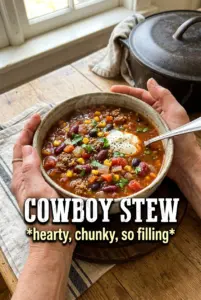
Cowboy stew earns its place in the regular rotation because it lands in that sweet spot between hearty and easy: thick broth, tender potatoes, smoky sausage, and beef that tastes like it cooked all afternoon even when it didn’t. Every spoonful has a little of everything, and the topping choices give it just enough lift at the end. It eats like a full meal, which is exactly why it disappears fast.
The key is building flavor in layers instead of dumping everything in at once. Browning the beef and sausage first gives the pot a deep savory base, and blooming the chili powder and smoked paprika in the fat wakes them up before the liquid goes in. The potatoes simmer in broth and tomatoes until they’re soft but not falling apart, so the stew stays chunky instead of turning mushy.
Below, I’m walking through the little details that keep the broth bold, the potatoes intact, and the whole pot balanced. If you’ve made bean-and-sausage soups before and they came out flat, this version fixes that.
The broth thickened up nicely and the potatoes held their shape instead of turning to mush. My husband went back for a second bowl before I even got mine plated.
Save this smoky cowboy stew for a one-pot dinner with beef, sausage, potatoes, and beans that stays hearty right to the last spoonful.
The Secret to Keeping the Potatoes Firm While the Stew Stays Thick
The biggest mistake with a stew like this is boiling it too hard after the potatoes go in. That turns the outside soft before the center has a chance to cook, and the starch leaks out fast enough to make the broth cloudy and heavy in the wrong way. A steady simmer gives you tender potatoes that still hold their shape, which matters because this recipe already has enough richness from the beef and sausage.
Another thing that helps is cutting the baby potatoes in half so they’re all close to the same size. Small pieces cook too fast and disappear into the broth; large uneven chunks leave you with some bites done and others still firm. The simmer time here is short on purpose, and that’s what keeps the stew looking like stew instead of mash with meat in it.
What the Beef, Sausage, and Seasonings Are Each Doing Here
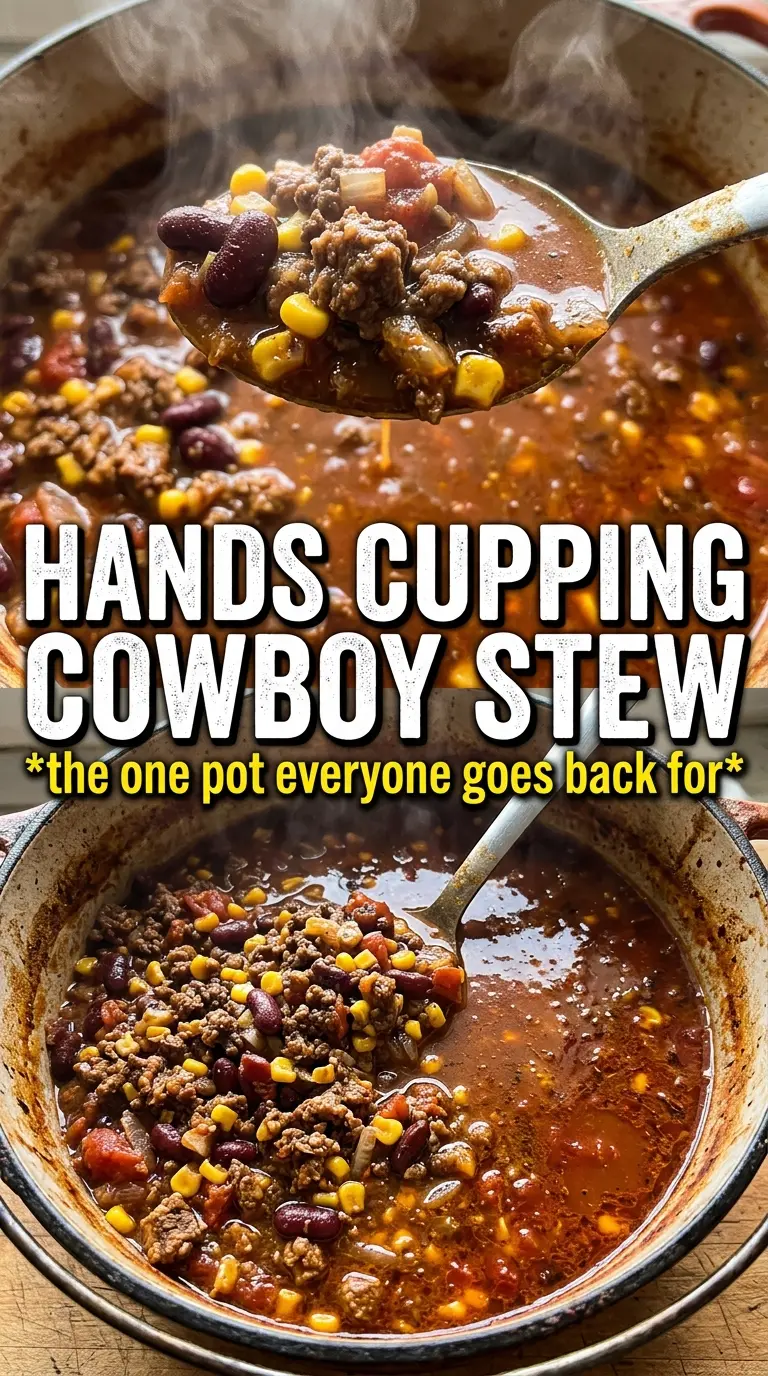
- Ground beef — This gives the stew its backbone and helps the broth taste fuller. Lean beef works fine, but if it’s very lean, don’t skip the browned bits in the pot; that’s where the flavor lives. Drain the fat after browning so the stew doesn’t turn greasy.
- Smoked sausage — This is where the smoky, campfire-style flavor comes from. Kielbasa or andouille both work well, though andouille brings more heat and kielbasa stays milder. Brown it briefly before adding it back in so the edges stay flavorful instead of just soft.
- Rotel tomatoes and diced tomatoes — Using both gives you brightness and body. The Rotel adds a little heat and acidity, while the plain diced tomatoes keep the broth balanced. If you only have plain diced tomatoes, add a small pinch of crushed red pepper or a few dashes of hot sauce for more kick.
- Ranch seasoning, chili powder, and smoked paprika — This is the seasoning combination that makes the broth taste complete without needing a long ingredient list. Ranch seasoning adds savory herbiness, chili powder gives warmth, and smoked paprika deepens the whole pot. Don’t swap in plain paprika here if you want the smoky edge.
- Pinto beans and corn — The beans make the stew feel hearty and help thicken the broth a little as it simmers. Corn adds sweetness so the smoky meat doesn’t take over. Black beans can work in a pinch, but they’ll shift the texture and make the stew less classic.
Building the Stew So the Broth Tastes Slow-Cooked in Under an Hour
Browning the Meat First
Start with the ground beef in a large pot and let it cook until it has real color, not just no longer pink. If you rush this part, the stew tastes flat because you’ve skipped the browned flavor that anchors the whole pot. Drain the excess fat before moving on, but leave the browned bits stuck to the bottom. Those bits dissolve into the broth later and do more work than any extra seasoning.
Softening the Onion and Toasting the Spices
Cook the onion until it turns translucent and starts to smell sweet, then add the garlic for just a minute. Garlic burns fast, and burnt garlic will make the whole pot bitter. Stir in the chili powder and smoked paprika while the pot is still hot enough to wake them up. That quick bloom deepens their flavor and keeps them from tasting dusty once the broth goes in.
Simmering Until the Potatoes Are Tender
Add the tomatoes, broth, ranch seasoning, potatoes, and beans, then bring everything to a boil before dropping it to a steady simmer. You want gentle bubbles, not a rolling boil. After 15 to 18 minutes, the potatoes should be fork-tender but not collapsing when you stir. Add the corn and sausage near the end so they keep their texture and the sausage stays meaty instead of overcooked.
Finishing With the Right Toppings
Season at the end with salt and pepper after the stew has simmered down. That’s the moment when the broth tells you what it needs, because the sausage, ranch packet, and canned tomatoes all bring salt of their own. Serve it hot with cheddar, jalapeños, and green onions for a sharp, fresh finish that cuts through the rich broth. If it tastes a little heavy, the jalapeños and green onions fix that fast.
How to Adapt Cowboy Stew Without Losing What Makes It Work
Make It Spicier
Use hot Rotel, add extra jalapeños on top, or stir in a pinch of cayenne with the chili powder. That pushes the stew from mild to bold without changing the texture. And if you use spicy sausage, hold back on the cayenne until you taste the broth at the end.
Gluten-Free Version
This stew is naturally close to gluten-free, but check the ranch seasoning and sausage label before you start. Some packets and smoked sausages use wheat-based fillers. The flavor and texture stay the same once you pick brands that are clearly labeled gluten-free.
Make It Lighter
Swap the ground beef for ground turkey and use turkey smoked sausage if that’s what you have. The stew will be a little less rich, so don’t skip the smoked paprika, and taste carefully at the end since turkey usually needs a touch more salt. The result is still hearty, just a little cleaner and leaner.
Storage and Reheating
- Refrigerator: Store in an airtight container for up to 4 days. The broth thickens a bit as it chills, and the potatoes soften slightly, but the flavor holds well.
- Freezer: It freezes well for up to 3 months, though the potatoes may soften more after thawing. Cool it completely before freezing, and leave a little room in the container for expansion.
- Reheating: Reheat gently on the stove over medium-low with a splash of broth or water. High heat can make the potatoes break down and can tighten the beef and sausage too much, so warm it slowly until hot through.
Questions I Get Asked About This Recipe
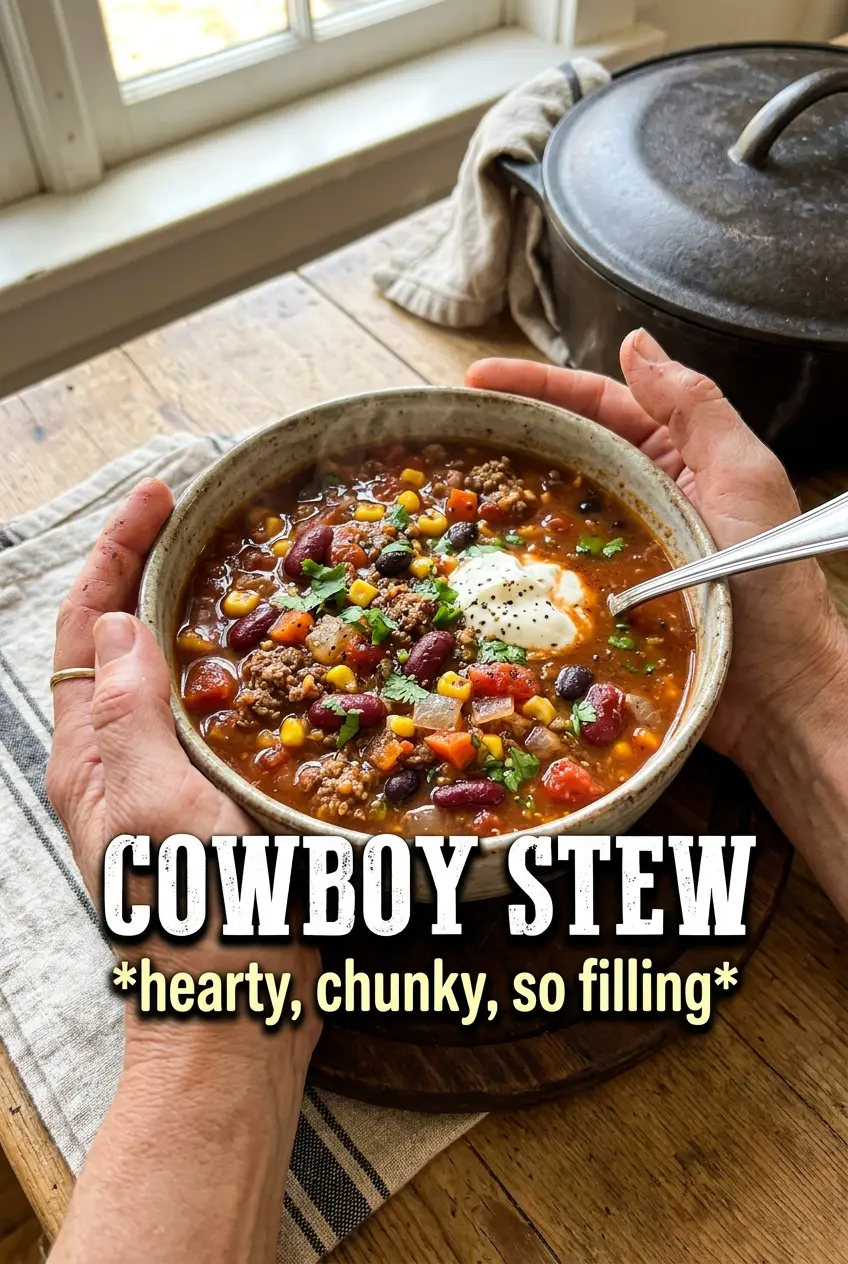
Cowboy Stew
Ingredients
Equipment
Method
- Brown the ground beef in a large pot until no longer pink, then drain the fat.
- Brown the sliced smoked sausage briefly, then remove it from the pot.
- Sauté the diced onion for 3 minutes.
- Add the minced garlic and cook for 1 minute.
- Stir in the chili powder and smoked paprika, then cook for 1 minute.
- Add the Rotel tomatoes, diced tomatoes, beef broth, ranch seasoning, baby potatoes, and pinto beans; bring everything to a boil.
- Simmer for 15-18 minutes until the potatoes are tender, then add the corn and browned sausage.
- Simmer for 5 more minutes and season with salt and pepper to taste.
- Ladle the cowboy stew into bowls and top with shredded cheddar, jalapeños, and green onions.