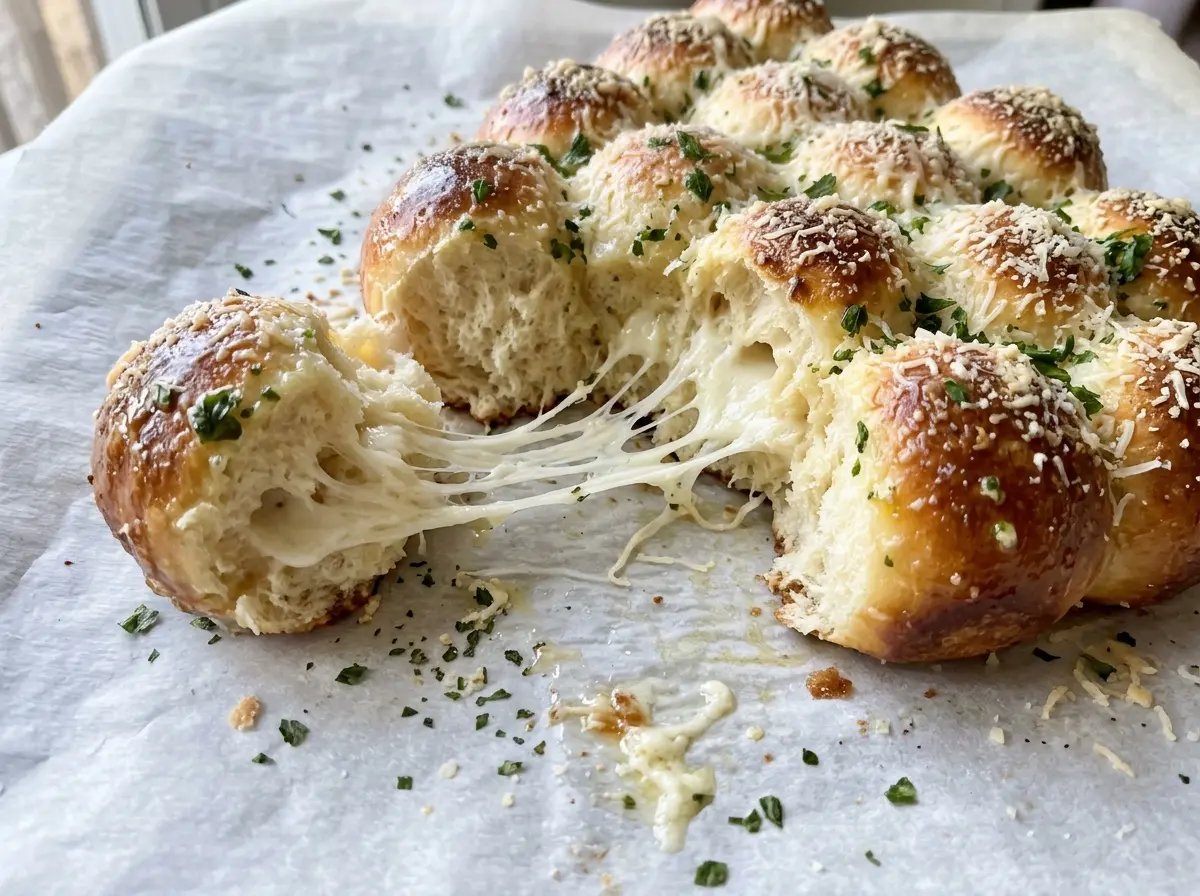
As the dough balls puff in the oven, the little gaps between them disappear and the tree starts to look like one connected piece of bread. That’s the part I like about this Cheesy Christmas Tree Bread: you get a festive shape without cutting or twisting dough, and every piece hides a cube of melted mozzarella. The first time I made it, I was tempted to fuss over perfectly round balls. Even pieces matter more than perfect ones, though, because they bake at the same pace when they’re close in size.
Low-moisture mozzarella is a good fit for the center because it melts into a stretchy pocket without bringing the extra moisture of fresh mozzarella. I keep the dough portions even, close each one around its cheese, and arrange the balls so they just touch. A quick egg wash helps them turn golden, and the warm garlic butter goes on right after baking, while the surface is still ready to soak it up. After a short rest, the bread pulls apart into tender, cheesy bites with a buttery finish.
Kitchen Note
Give the bread its full five-minute rest before pulling it apart. The cheese stays piping hot after baking, and that short pause helps the soft dough hold together as you serve it.
Save Cheesy Christmas Tree Bread for a gathering when you want warm, pull-apart mozzarella bites with garlic butter in every golden corner.
Why the 23-Ball Layout Makes This Tree Pull Apart Cleanly
The tree shape is built from rows of one, two, three, four, five, and six balls, with two more centered underneath as the trunk. That adds up to 23 portions, so each one has a place and the widest row anchors the shape. Arrange the balls seam-side down and close enough to just touch; the dough can expand into the neighboring pieces as it bakes, giving you a connected tree instead of separate rolls scattered across the pan.
There’s no need to force the outline into a perfect triangle. Follow the row counts and keep the trunk centered beneath the widest row. If the balls are noticeably different sizes, the smaller ones may finish sooner while the larger ones need more time, so dividing the dough evenly is more useful than adjusting the shape by eye. An 18×13-inch rimmed baking sheet gives the full arrangement room to fit while keeping the pieces together for serving.
What the Dough, Cheese, and Finish Each Bring to the Tree

- Refrigerated pizza dough — Its stretchy texture is easy to divide and wrap around a filling, and it bakes into a soft, bread-like bite. If you’re using fresh pizza dough instead, choose a similar dough and portion it the same way; biscuit dough has a different texture and is harder to seal neatly around the cheese.
- Low-moisture mozzarella — It gives you the familiar stretchy center without adding as much moisture as fresh mozzarella. Cut the cheese into compact cubes so each portion gets a centered filling. Low-moisture provolone is a workable swap if you want a slightly sharper, saltier taste, though the cheese flavor will be more pronounced.
- Egg and water — Whisking them together makes a wash that brushes over the dough and helps the surface brown. If you don’t have an egg, a light coating of milk is a practical stand-in; the crust will be less glossy. For an egg-free option, you can also leave the wash off, knowing the bread may look paler.
- Unsalted butter and garlic — Unsalted butter lets the Parmesan bring its own savory saltiness, while minced garlic gives the finish a fresh, fragrant bite. Olive oil can replace the butter in the same amount for a less rich, more savory finish, but it won’t have the same buttery feel.
- Parsley and finely grated Parmesan — Fresh parsley keeps the garlic butter bright, and finely grated Parmesan blends into it more evenly than coarse shreds. Dried parsley works in a pinch; use about one-third as much as fresh. Pecorino Romano can replace the Parmesan for a sharper, saltier finish.
How to Shape, Bake, and Finish the Stuffed Dough Balls
Portion the Dough Around the Mozzarella
Heat the oven to 400°F and line an 18×13-inch rimmed baking sheet with parchment paper. Divide the dough into 23 equal pieces, then flatten each piece into a small disk. Set one mozzarella cube in the center and pinch the dough closed around it, checking that the cheese is covered rather than peeking through. Uneven portions are the main reason some pieces bake faster than others, so keep the pieces close in size.
Set the Tree in Rows
Place the dough balls seam-side down on the prepared baking sheet. Make rows of one, two, three, four, five, and six balls, then center the remaining two balls below the widest row for the trunk. Let the balls just touch, rather than leaving visible gaps or pressing them tightly together. The seam-side-down placement also leaves the smoother side facing up for the egg wash.
Brush and Bake Until Golden
Whisk the large egg with the water and brush the mixture over the dough balls. Aim for an even coating across the tops, without leaving puddles between the pieces. Bake for 20 to 25 minutes, until the bread is golden brown and the dough is cooked through. If the surface has colored but the dough inside still looks gummy, give it more time in the oven rather than taking it out early.
Make the Garlic Butter While the Bread Bakes
Melt the butter in a small saucepan over low heat. Add the minced garlic and cook for about 30 seconds, until fragrant; keep the heat low so the garlic doesn’t brown. Stir in the parsley and finely grated Parmesan, then brush the mixture over the hot bread as soon as it comes out of the oven. Let the tree rest for five minutes before serving.
Two Easy Ways to Change the Cheese or Garlic Butter
Make the garlic butter dairy-free
Use plant-based butter, dairy-free mozzarella that can be cut into cubes, and a dairy-free Parmesan-style alternative. The bread will still have a savory, garlicky finish, but dairy-free mozzarella brands vary in how they melt, so expect a less stretchy center than with low-moisture mozzarella.
Give the butter a little heat
Add a pinch of red pepper flakes to the garlic butter while the garlic cooks. The flakes bring a gentle warmth that balances the mild mozzarella; add more only if you want the finished bread noticeably spicy.
Storage and Reheating
- Refrigerator: Refrigerate leftovers in an airtight container within 2 hours and use them within 3 to 4 days. The bread softens as it sits, but the cheese-filled pieces stay easy to reheat.
- Freezer: Freeze the cooled bread tightly wrapped for up to 2 months. Thaw it in the refrigerator before reheating; the cheese may be a little less stretchy than it was fresh from the oven.
- Reheating: Warm the pieces in a 350°F oven until the center reaches 165°F. Avoid reheating the whole tree in the microwave, which can make the dough chewy and heat the cheese unevenly.
Questions That Come Up When Making Cheesy Christmas Tree Bread
Cheesy Christmas Tree Bread
Ingredients
Equipment
Method
- Heat the oven to 400°F.
- Line an 18x13-inch rimmed baking sheet with parchment paper.
- Divide the dough into 23 equal pieces.
- Flatten each piece into a small disk and place a mozzarella cube in the center.
- Pinch the dough tightly closed around each mozzarella cube.
- Arrange the dough balls seam-side down on the baking sheet in a tree shape: make rows of 1, 2, 3, 4, 5, and 6 balls, then place the remaining 2 balls centered beneath the widest row for the trunk, with the balls just touching.
- Whisk the egg with the water.
- Brush the egg mixture over the dough balls.
- Bake for 20 to 25 minutes, until the bread is golden brown and the dough is cooked through.
- While the bread bakes, melt the butter in a small saucepan over low heat.
- Add the garlic and cook for about 30 seconds, until fragrant.
- Stir in the parsley and Parmesan.
- Brush the hot bread with the garlic butter.
- Let it rest for 5 minutes before serving.