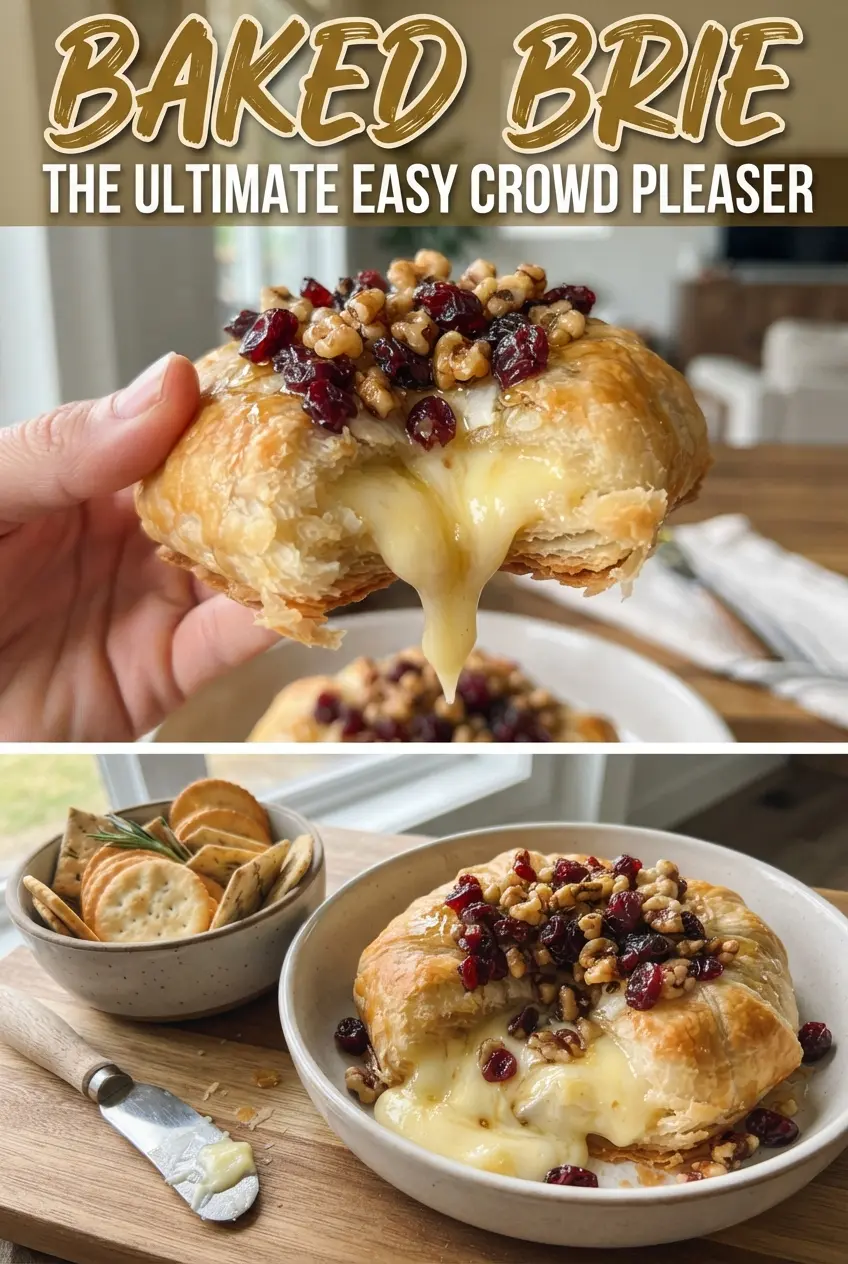
Golden baked brie in puff pastry is the kind of appetizer that disappears fast because it hits all the right notes at once: crisp, buttery pastry; warm, molten cheese; and a sweet-savory center that tastes much fancier than the effort it takes. When you cut into it and the brie starts to ooze, people stop talking and head straight for a cracker.
What makes this version work is the balance inside the pastry. The jam melts into the brie instead of running everywhere, the pecans add just enough crunch, and a little brown sugar deepens the sweetness without turning it cloying. Rolling the pastry slightly before wrapping helps it seal cleanly, and resting the baked brie after it comes out of the oven gives the cheese a moment to settle so it doesn’t flood the board the second you slice in.
Below you’ll find the small details that matter: how to keep the pastry crisp, when the brie is baked through, and which swaps still give you that glossy, melty center. If you’ve ever had baked brie leak out before serving, this version solves that problem.
The pastry baked up crisp all the way around and the brie stayed perfectly gooey after the 10-minute rest. The raspberry jam and pecans made it taste like something from a nice wine bar.
Love that molten baked brie center? Save this puff pastry appetizer for your next party spread.
The Part That Keeps Baked Brie From Turning Into a Cheese Puddle
The biggest mistake with baked brie is treating it like a filling instead of a whole little package. If the pastry is left too thick, the outside browns before the cheese warms through. If it’s stretched too thin, it can split and leak once the brie softens. A light roll gives you enough surface area to wrap cleanly without turning the crust fragile.
The other detail that matters is the rest after baking. Right out of the oven, the cheese inside is molten and eager to run. Ten minutes gives it just enough time to settle into a thick, scoopable center while the pastry stays crisp. Skip that rest and the first cut will flatten the whole thing.
What the Jam, Nuts, and Egg Wash Are Actually Doing

- Puff pastry — This gives you the flaky shell that makes the whole appetizer feel special. Thawed pastry works best when it’s still cold but pliable; if it gets too warm, it gets sticky and hard to seal. If you need a swap, crescent dough will work in a pinch, but it bakes up softer and less crisp.
- Brie — A small wheel in the 8-ounce range is ideal because it softens evenly without overwhelming the pastry. Trim off only obviously paper-thin rind edges if you want, but leave most of the rind on; it helps the cheese hold its shape while baking. Double-cream brie melts the smoothest.
- Raspberry or fig jam — This is the sweet layer that keeps every bite interesting. Raspberry brings a brighter, sharper finish, while fig tastes deeper and a little richer. Use a thick jam, not a runny spread, or it will escape from the pastry as soon as it heats up.
- Pecans and brown sugar — The pecans give the filling a little crunch, and the brown sugar deepens the jam so it tastes less one-note. Chop the nuts finely enough that they don’t poke through the dough. Walnuts work too, but pecans stay a little sweeter and softer in the finished bite.
- Egg wash — This is what gives the pastry that deep golden, shiny finish. Water alone won’t brown the same way. Brush it on lightly and evenly; too much pools in the seams and can make those spots gummy.
How to Wrap, Bake, and Keep the Cheese Inside
Building the Center
Place the brie in the middle of the rolled pastry and spread the jam directly on top before adding the pecans and brown sugar. That order helps the jam anchor the nuts instead of letting them slide around. Keep the filling centered; if it drifts toward the edges, it will leak when you fold the dough over. The brie should still look like a neat round package when you move on.
Sealing the Pastry
Bring the pastry up and over the brie, trimming any bulky excess so the seams don’t turn into thick doughy folds. Press the seams firmly together, then flip the whole bundle seam-side down so the sealed edge isn’t sitting on top where it can split. If the dough feels soft or warm, chill it for a few minutes before baking. Cold pastry keeps its shape better and puffs more cleanly.
Baking to a Deep Golden Crust
Bake at 400F until the pastry is a deep golden brown and the surface looks crisp, not pale and matte. The pastry should feel firm if you tap it lightly, and you may see a little cheese beginning to soften at the seams. If the outside is browning too fast, your oven is running hot; tent it loosely with foil near the end rather than pulling it early. Underbaked pastry turns soggy fast once the brie melts.
The Rest Before Serving
Let the baked brie sit for 10 minutes before cutting. That pause matters more than people think, because it lets the cheese thicken just enough to scoop instead of pour. Garnish with rosemary right before serving so it stays bright and fragrant. Serve it warm with crackers and apple slices for the best contrast of crisp, creamy, and fresh.
How to Adapt This for Different Tables and Pantry Situations
Dairy-Free Version
Use a plant-based wheel-style cheese that softens and holds its shape under heat, then wrap it the same way in puff pastry. The result won’t taste exactly like brie, but it will still give you that warm, melty center and flaky crust. Choose a brand that melts smoothly rather than one that stays rubbery.
Gluten-Free Serving Style
If you need to skip the pastry, bake the brie in a small oven-safe dish with the jam, pecans, and brown sugar on top. You’ll lose the flaky shell, but the center still tastes rich and scoopable, especially with crackers or apple slices on the side. This is the best route when you want the same flavor with less risk.
Swap the Jam
Apricot, cherry, or orange marmalade all work if you want a different edge. Apricot keeps the flavor gentle, cherry makes it brighter and fruitier, and marmalade adds a little bitterness that plays well with the cheese. Keep the layer thick enough to stay in place as the brie softens.
Storage and Reheating
- Refrigerator: Store leftovers tightly wrapped for up to 3 days. The pastry will soften, but the flavor stays good.
- Freezer: I don’t recommend freezing baked brie after it’s assembled and baked; the pastry loses its flaky texture and the cheese can separate.
- Reheating: Warm leftovers in a 325F oven until the center loosens again, about 10 to 12 minutes. The mistake is microwaving it, which makes the pastry soggy and can push the cheese out before the middle heats evenly.
Answers to the Questions Worth Asking
Baked Brie
Ingredients
Equipment
Method
- Preheat oven to 400F and line a sheet pan with parchment for easy release and clean-up.
- Roll the puff pastry slightly and place the brie wheel in the center, keeping it evenly placed so the pastry wraps uniformly.
- Spread the jam over the brie and sprinkle with chopped pecans and brown sugar for a sweet, crunchy center.
- Fold the pastry up over the brie, trim any excess, and press the seams to seal so the cheese won’t leak.
- Flip the brie seam-side down onto the baking sheet, then brush the pastry with egg wash for a glossy finish.
- Bake for 22-25 minutes at 400F until deep golden brown for a puffed, blistered crust.
- Rest for 10 minutes so the cheese sets slightly, making slices cleaner and easier to dip.
- Garnish with fresh rosemary and serve with crackers and apple slices for the final dipping platter.