Apple crumble lands in that perfect middle ground between rustic and comforting: tender cinnamon apples underneath a sandy, golden topping that turns crisp at the edges and stays a little nubbly in the middle. When it comes out of the oven bubbling at the sides, it smells like butter, baked fruit, and just enough spice to make the whole kitchen feel warmer.
The part that makes this version worth keeping is the balance. The apples get tossed with lemon juice so they stay bright instead of flat, and the topping uses both granulated and light brown sugar for crunch and a deeper caramel note. Cold butter matters here. If it starts melting before it hits the oven, you lose those little uneven clumps that turn into the best bits after baking.
Below you’ll find the timing cues that keep the topping from going past pale gold into dry, dusty territory, plus a few practical swaps for different apples and serving styles.
The topping turned out crisp and sandy, not greasy, and the apples were soft without falling apart. I served it with custard and everyone went back for seconds.
Love that crisp crumble topping and soft cinnamon apple filling? Save this apple crumble for the next time you want a simple British dessert that bakes up golden and bubbling.
The Reason the Topping Stays Crumbly Instead of Turning Pasty
The biggest mistake with crumble is working the butter too much. You want a mix that looks like coarse breadcrumbs with a few bigger pieces still hanging on, because those uneven bits bake into the crisp, craggy topping people actually want. If you keep rubbing until everything looks sandy and uniform, the result can end up dense and greasy instead of light and crisp.
The apples matter too, but not in the way most people expect. Cooking apples soften nicely without collapsing into applesauce, which gives the dessert a proper layered texture. The lemon juice is there for more than brightness; it keeps the filling from tasting dull once the sugar and cinnamon go in, especially after a long bake.
- Cooking apples — Use a firm, tart variety if you can. They hold their shape better than dessert apples and give the crumble some structure under the topping.
- Cold butter — This is what creates the crisp, uneven topping. If the butter is soft, chill the bowl for a few minutes before baking rather than forcing the mix into shape.
- Brown sugar — The light brown sugar deepens the flavor and helps the topping bake with a little caramel edge. Granulated sugar alone tastes flatter.
What Each Ingredient Is Doing in the Apple Crumble
- Cooking apples — These are the backbone of the filling. They soften into tender slices instead of turning mushy, which keeps each spoonful distinct.
- Granulated sugar — This sweetens the apples without making them syrupy. If your apples are very tart, add a spoonful more, but don’t push it so far that the filling turns watery.
- Lemon juice — This keeps the flavor sharp and fresh. It also helps the apples taste like apples after baking instead of just soft sweet fruit.
- Plain flour — This gives the topping its crumb structure. Self-raising flour makes the crumble puff more than crisp, which isn’t what you want here.
- Cold unsalted butter — The butter should stay in little pieces as you rub it in. Those pieces melt in the oven and create the sandy, crisp texture.
- Light brown sugar — This brings a deeper, almost toffee-like note. It also helps the topping bronze without needing a longer bake.
- Cinnamon — A small amount is enough. It should round out the apples, not take over the dish.
- Salt — Just enough to keep the topping from tasting flat. It sharpens the butter and sugar in the best way.
Building the Apples and Topping So They Bake Evenly
Coating the Apples First
Toss the sliced apples with sugar, cinnamon, and lemon juice until every piece looks lightly coated. The sugar starts pulling out a little juice, which is normal, and that liquid helps the filling turn glossy and soft in the oven. Spread the apples into the dish in an even layer so the top bakes at the same rate across the pan. If the fruit is piled too high in the middle, the edges overcook before the center is tender.
Rubbing in the Butter
Use your fingertips and work quickly when you rub the butter into the flour. Stop when you have coarse crumbs with a few larger bits, not a dough. If the mixture starts looking shiny or clumping into a paste, the butter has warmed too much. Pop the bowl into the fridge for a few minutes and keep going only when it feels cool again.
Baking Until the Edges Bubble
Spread the crumble over the apples without pressing it down. Packing it tight blocks steam and gives you a heavy top instead of a crisp one. Bake until the topping is pale gold and you can see the filling bubbling at the edges, which tells you the apples have softened and the sugar has turned into a proper sauce. If the top is browning fast before the fruit bubbles, lay a sheet of foil loosely over the dish for the last few minutes.
How to Adjust This Crumble Without Losing the Right Texture
Make it dairy-free
Swap the butter for a solid plant-based block butter, not a spread from a tub. The block style behaves much more like real butter and gives you a similar crumbly topping, while soft spreads can melt too quickly and go greasy.
Use pears with the apples
Replace up to half the apples with firm pears for a softer, more floral filling. Pears cook faster than apples, so keep the pieces thick and check the dish a few minutes early to avoid a filling that turns woolly.
Make it gluten-free
Use a good 1:1 gluten-free flour blend in place of the plain flour. The topping will still crumble nicely, though it may be a touch more delicate, so let it cool for 10 to 15 minutes before serving or it can fall apart too quickly.
Storage and Reheating
- Refrigerator: Keep covered for up to 4 days. The topping softens a little in the fridge, but the flavor stays good.
- Freezer: Freeze baked crumble in portions for up to 2 months. Wrap it well and thaw in the fridge before reheating.
- Reheating: Warm in a 180C (350F) oven until hot through and the topping crisps back up. The microwave makes the crumble soft, so use the oven if you want the texture back.
Answers to the Questions Worth Asking
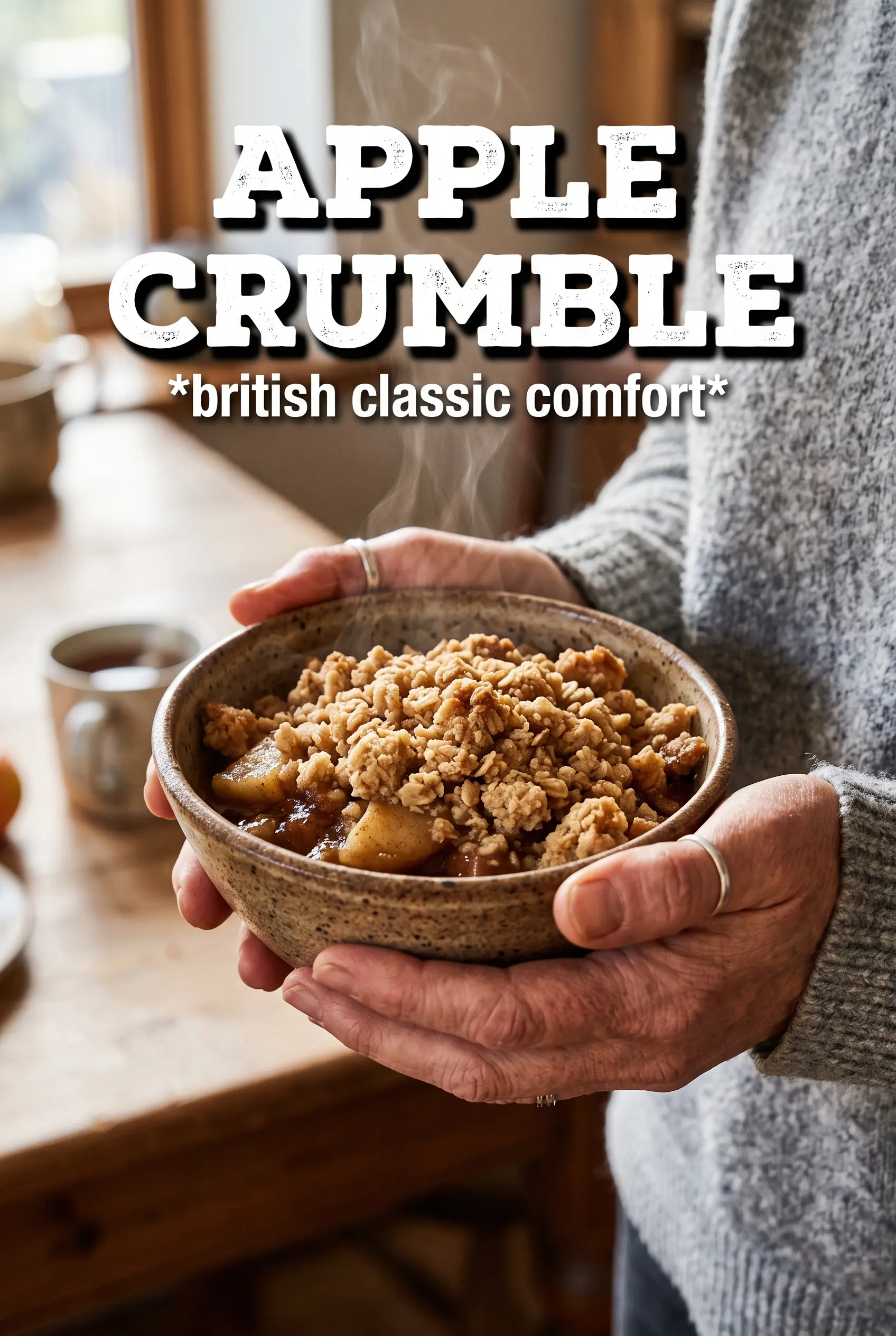
Apple Crumble
Ingredients
Equipment
Method
- Preheat the oven to 190C (375F) and grease a large baking dish.
- Toss the apple slices with granulated sugar, cinnamon, and lemon juice, then spread them in the prepared dish.
- Place flour and cold unsalted butter in a bowl, then rub with your fingertips until the mixture resembles coarse breadcrumbs with some larger pieces.
- Stir in both sugars, cinnamon, and salt.
- Spread the crumble evenly over the apples without packing it down.
- Bake for 35-40 minutes, until the topping is pale golden and the apple filling bubbles at the edges.
- Serve warm with custard, double cream, or vanilla ice cream.