The potatoes are tender, the butter has melted in, and then a few extra minutes of mashing can turn a creamy pot into a sticky one. I learned to stop as soon as the lumps are gone and the mixture looks smooth. These Amish mashed potatoes get their rich texture from Yukon Golds, butter, warm milk, and sour cream without needing a mixer.
I cut the potatoes into even pieces so they cook at the same pace, then mash them while they’re still hot. The order matters: butter goes in first, followed by the warm milk and sour cream. You get a soft, creamy mash with a little tang, and the potatoes stay the star of the bowl.
Kitchen Note
After draining, give the potatoes their full minute back in the hot pot before adding anything. That brief pause lets steam escape, so the dairy doesn’t have to compete with extra water for a creamy texture.
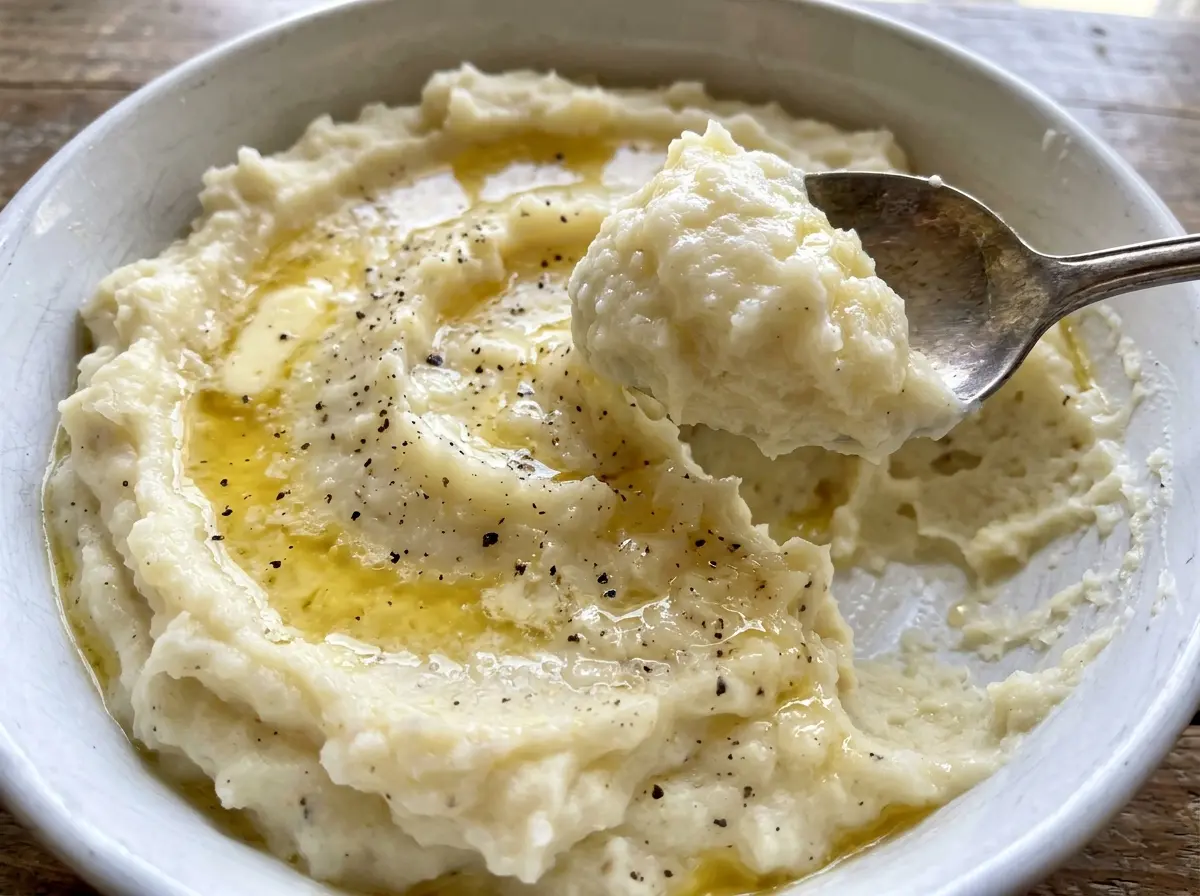
Save these Amish mashed potatoes for a cozy dinner table: creamy Yukon Golds, melted butter, warm milk, and just enough sour cream for a gentle tang.
Why Overworking Mashed Potatoes Turns Them Sticky
Potatoes hold a lot of starch, and aggressive mixing releases more of it into the mash. That starch is useful in moderation: it helps the potatoes feel creamy and cohesive. Keep crushing after the last lumps disappear, though, and the texture can turn stretchy or gluey instead of soft.
A hand masher gives you a little more control than a high-speed appliance. Press through the potatoes in steady strokes and stop when the butter and dairy are incorporated and the mash looks creamy. A few tiny, soft irregularities are preferable to chasing a perfectly whipped texture. The Yukon Golds already bring a naturally smooth, buttery quality, so they don’t need to be beaten into submission.
If the potatoes feel resistant under the masher, check that they’re fully tender rather than pushing harder. Firm centers take more force to break down, and that extra work can make the finished bowl heavy. Let tenderness do the work for you.
Why Yukon Golds and Sour Cream Make Such a Good Pair

- Yukon Gold potatoes — Their creamy texture makes a smooth mash without needing a lot of extra dairy. If you can’t find them, Russets work in the same quantity, though the result will be fluffier and less naturally buttery. Peel and cut either variety into even pieces.
- Unsalted butter — It melts into the hot potatoes and gives the mash its richness. Unsalted butter also lets you control the seasoning with the kosher salt. Salted butter changes that balance, so unsalted is the closest match.
- Warm whole milk — Whole milk loosens the potatoes while keeping the mash rich. Warming it helps it blend into the hot potatoes without cooling them down. Lower-fat milk will work, but the result won’t feel quite as full.
- Sour cream — This brings a gentle tang that keeps the butter and milk from tasting too heavy. Use fresh sour cream; its texture and flavor matter here. Leaving it out will make the potatoes less tangy and less creamy.
- Kosher salt and black pepper — Salt seasons both the cooking water and the finished mash, while pepper adds a mild savory bite. Keeping the salt divided gives the potatoes a more even seasoning than adding it all at the end.
From Cold Pot to Creamy Mash: The Stages That Matter
Cut Even Pieces and Start Them Cold
Peel the Yukon Golds and cut them into pieces about 1 1/2 inches across. Put them in an 8-quart pot with 3 quarts of cold water and 2 teaspoons of the kosher salt; add enough water to cover the potatoes by 1 inch. Starting in cold water gives the centers time to cook as the water heats, rather than leaving you with soft outsides and firm middles. Bring the pot to a boil over high heat, then lower the heat enough to maintain a steady boil.
Cook Until a Fork Meets No Resistance
Let the potatoes boil for 15 to 20 minutes. Pierce one of the larger pieces with a fork; it should feel very tender all the way through, with no firm center. If the fork still catches, keep cooking and check again rather than trying to mash them early. A steady boil is enough—an aggressively bubbling pot can knock the pieces against each other.
Drain Well Before Adding Dairy
Drain the potatoes thoroughly, then return them to the pot. Let them stand for 1 minute before mashing. Don’t skip the drain or leave water pooled in the bottom; excess water thins the mash and dulls the dairy’s richness. The potatoes should look dry on the surface, not glossy with cooking water.
Mash in the Butter, Then Finish the Creamy Base
Add the butter and mash until it’s melted and incorporated. Pour in the warm milk, then add the sour cream, remaining kosher salt, and black pepper. Mash until creamy, stopping once the ingredients are blended rather than continuing to whip the potatoes. Serve the mash hot, while the butter is still giving it a soft, silky finish.
Three Practical Ways to Adapt This Pot of Potatoes
Use Russets for a Fluffier Mash
Swap in the same amount of peeled Russet potatoes for Yukon Golds. The finished mash will be lighter and fluffier, with less of the buttery potato flavor Yukon Golds bring; keep the pieces even so they cook at the same pace.
Make a Lower-Sodium Version
Omit the kosher salt from both the cooking water and the mash. The potatoes will taste less seasoned and their flavor will seem a little softer, but the butter, sour cream, and black pepper still give the bowl plenty of character.
Keep the Skins for a More Rustic Texture
Scrub the Yukon Golds well and leave the skins on instead of peeling them. The mash will have more texture and visible flecks of skin, so use a masher and stop when the potatoes are creamy enough for your taste.
Storage and Reheating
- Refrigerator: Refrigerate leftovers within 2 hours and use them within 3 to 4 days. The mash firms up when cold.
- Freezer: Freeze in an airtight container for up to 1 month for best quality. Thaw overnight in the refrigerator; the texture may be a little less smooth after thawing.
- Reheating: Warm gently in a covered saucepan over low heat, stirring now and then, or use a covered microwave-safe dish and stir between intervals. Add a small splash of warm milk if the potatoes seem stiff, and heat leftovers to 165°F. High heat can scorch the bottom before the center warms.
Questions That Come Up When Making Amish Mashed Potatoes
Amish Mashed Potatoes
Ingredients
Equipment
Method
- Put the potatoes, 3 quarts cold water (adding more if needed to cover by 1 inch), and 2 teaspoons of the salt in an 8-quart pot.
- Bring to a boil over high heat.
- Adjust the heat to maintain a steady boil and cook for 15 to 20 minutes, until the potatoes are very tender when pierced with a fork.
- Drain the potatoes well and return them to the pot.
- Let them stand for 1 minute to release excess steam.
- Add the butter and mash the potatoes with a potato masher until the butter is melted and incorporated.
- Add the warm milk, sour cream, remaining 1 teaspoon salt, and pepper; mash until creamy, then serve hot.