Golden, smoky fried rice with beef and onion hits the table with the kind of savory depth that makes plain takeout rice feel thin by comparison. The grains stay separate, the beef picks up crisp edges, and the onions soften just enough to turn sweet without losing their bite. When the wok is hot enough, the soy sauce clings instead of soaking in, and that little bit of char on the rice is what makes the whole pan taste finished.
The trick here is using cold rice and giving it time to sit against the heat before you start tossing. That pause is what dries the surface of the rice and lets it fry instead of steaming. I also like cooking the beef until there are browned, slightly crisp bits before the onion goes in, because those browned bits carry the whole dish.
Below you’ll find the exact order that keeps the eggs fluffy, the rice from clumping, and the seasoning balanced. There’s also a simple swap if you want to stretch the pan a little further or make it work with what’s already in your fridge.
The rice got that perfect little char on the bottom, and the eggs stayed fluffy instead of disappearing into everything. My husband said it tasted like the best part of takeout, but better.
Save this savory onion beef fried rice for the nights when you want crispy rice, browned beef, and a one-pan dinner that tastes straight from the wok.
The Secret Is Letting the Rice Fry Before You Stir
The mistake most people make with fried rice is treating it like a quick stir. If you keep moving it too soon, the rice steams and turns soft instead of picking up those toasted edges that give the dish its signature texture. Cold, day-old rice matters because the grains are drier and sturdier, which helps them fry instead of clump.
High heat does the heavy lifting here, but only if the pan stays hot enough after each addition. Adding the rice in one layer and leaving it alone for a minute or two gives you those browned bits that taste smoky and savory. That little pause is the difference between a pan of mixed rice and fried rice that actually tastes fried.
What the Beef, Onion, and Sauces Each Bring to the Pan
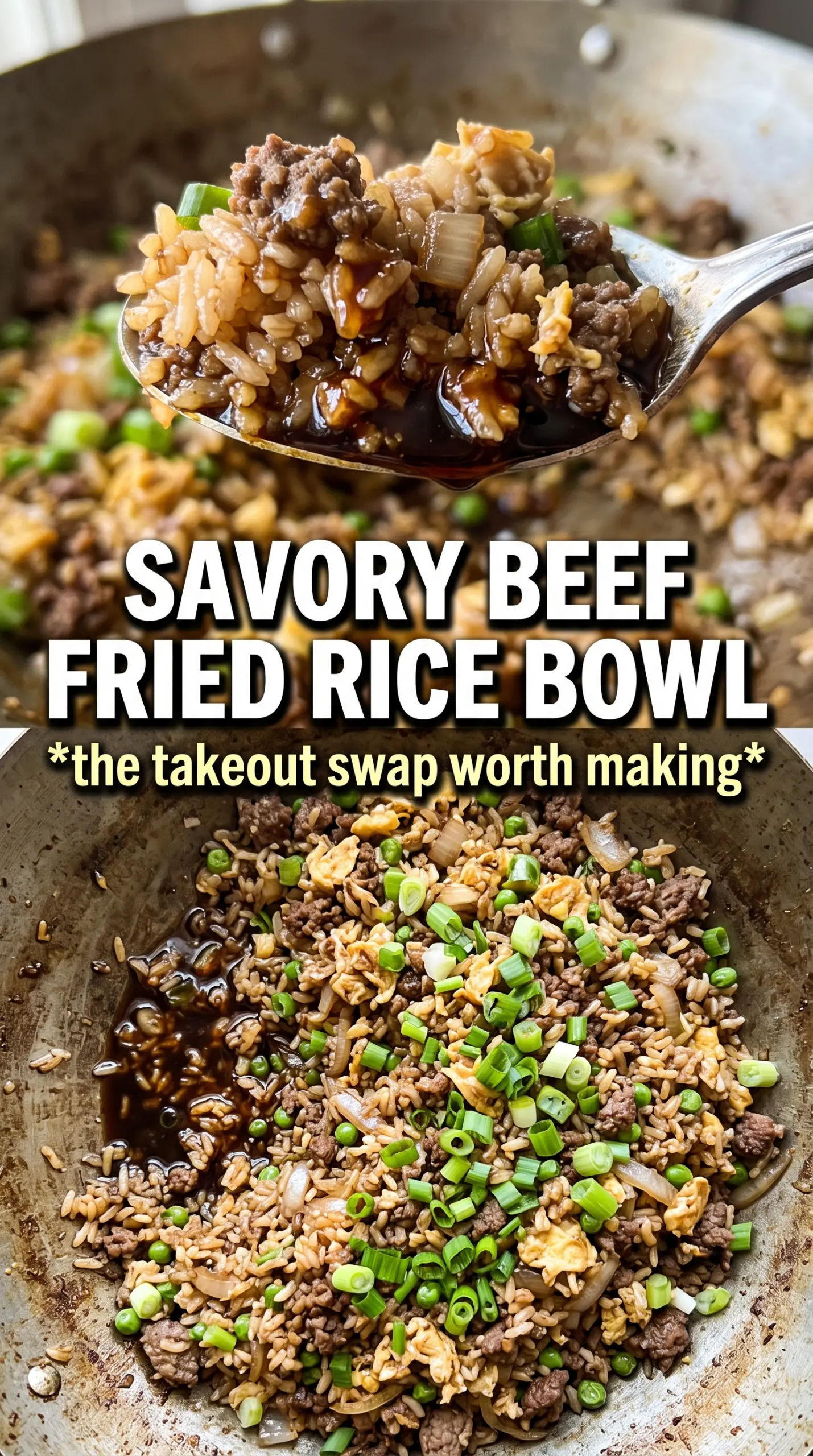
- Ground beef — This gives the dish its hearty base and leaves behind browned bits in the pan. An 80/20 blend has the best flavor, but lean beef works too if you don’t mind draining off less fat and adding a touch more oil.
- Day-old white rice — Long-grain rice stays the most separate, but any cooked white rice that’s been chilled works. Fresh rice is too soft and sticky, and no sauce can fully fix that texture once it starts steaming.
- Onion and garlic — The onion needs a few minutes to soften and pick up color from the beef drippings. Garlic goes in late because it burns fast in a hot wok, and burnt garlic will flatten the whole pan.
- Soy sauce and oyster sauce — Soy sauce seasons the rice and gives it that deep color, while oyster sauce adds a round, savory sweetness that makes the dish taste more finished. If you need a substitute for oyster sauce, use a little extra soy sauce plus a pinch of sugar, but expect a flatter, less glossy result.
- Sesame oil and white pepper — Sesame oil goes in at the end for aroma, not for cooking. White pepper gives this fried rice that classic takeout-style warmth without leaving visible black specks.
Building the Wok in the Right Order
Browning the Beef First
Heat the oil until it shimmers, then add the ground beef and break it up right away. You want it cooked through and starting to crisp at the edges, not gray and wet. If there’s a lot of fat in the pan, drain some of it before you move on, because too much fat will make the rice slick instead of fried.
Softening the Onion Without Losing the Heat
Add the diced onion to the beef and cook it until it turns translucent with a few browned spots. That usually takes about three minutes in a hot pan. Garlic goes in for only 30 seconds after that; once you smell it sharply, it’s ready. If the garlic starts to brown hard before the rice goes in, the pan is too hot or you waited too long between steps.
Scrambling the Eggs in the Empty Space
Push the beef and onion to one side and pour the beaten eggs into the cleared space. Let them set just enough to hold shape, then break them into soft curds and mix them through. Pull them off the heat before they look dry, because they’ll finish cooking when the rice goes in.
Frying the Rice and Finishing the Seasoning
Add the cold rice and press it into the wok so it makes full contact with the hot surface. Leave it alone long enough to catch a little color, then toss and repeat until the grains are hot and a few have crisped edges. Drizzle in the soy sauce, oyster sauce, sesame oil, and white pepper over the rice instead of over the beef only, so the seasoning coats every grain evenly. Finish with green onions and sesame seeds while the pan is still hot.
Ways to Work This Fried Rice Around What You Have
Make it gluten-free
Use a gluten-free soy sauce or tamari and check your oyster sauce label, since some brands include wheat. The texture stays the same, and the flavor stays deep and savory.
Swap in chicken or turkey
Ground chicken or turkey works if you want a lighter version, but both need a little extra oil and a careful eye so they don’t dry out. You’ll lose some of the beefy depth, so keep the browned bits in the pan and don’t skimp on the oyster sauce.
Add vegetables without muddying the rice
Frozen peas, diced carrots, or chopped bell pepper fit in well, but add them after the onion so they can lose their raw edge before the rice goes in. Keep the amount modest; too many vegetables crowd the pan and turn the dish soft.
Storage and Reheating
- Refrigerator: Store in an airtight container for up to 4 days. The rice will firm up a little, which actually helps it reheat with a better fried-rice texture.
- Freezer: It freezes well for up to 2 months. Pack it flat in portions and thaw overnight in the fridge for the best texture.
- Reheating: Reheat in a hot skillet with a small splash of oil, stirring just until steaming. The common mistake is microwaving it too long, which turns the rice soft and the eggs rubbery.
Questions I Get Asked About This Recipe
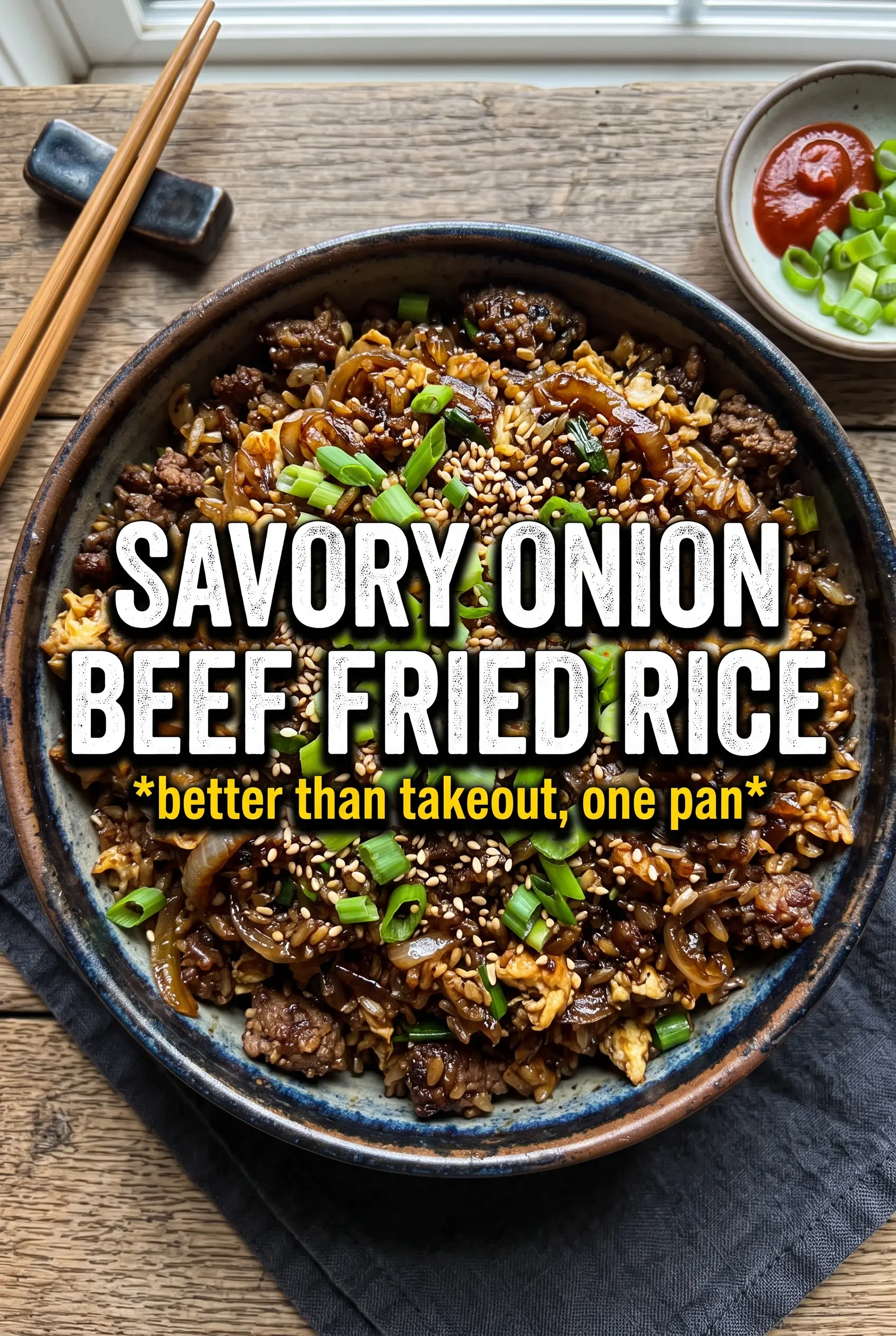
Savory Onion Beef Fried Rice
Ingredients
Equipment
Method
- Heat 2 tbsp vegetable oil in a wok or large skillet over high heat. Add ground beef and cook, breaking apart, until browned and slightly crispy, about 6–8 minutes.
- Drain the excess fat from the skillet. Keep the beef in the pan over high heat so the browned bits stay in contact with the surface.
- Add diced onion to the skillet and cook for 3 minutes. Stir occasionally until the onion softens and starts to look lightly caramelized.
- Add minced garlic and cook for 30 seconds. Stir constantly just until fragrant and slightly toasted.
- Push the beef and onion mixture to one side of the skillet. Scramble the beaten eggs in the empty space until just set, about 1–2 minutes, then mix into the beef.
- Add cold day-old cooked white rice to the skillet. Press the rice into an even layer and let it sit undisturbed for 1–2 minutes to get slightly charred.
- Toss the rice to break up the layer and mix with the beef and eggs. Spread everything back out briefly so hot spots form again.
- Drizzle soy sauce, oyster sauce, sesame oil, and white pepper over the rice. Toss everything together over high heat for 2 minutes until evenly coated and hot.
- Turn off the heat and garnish with green onions and sesame seeds for garnish. Serve right away for the best smoky char.