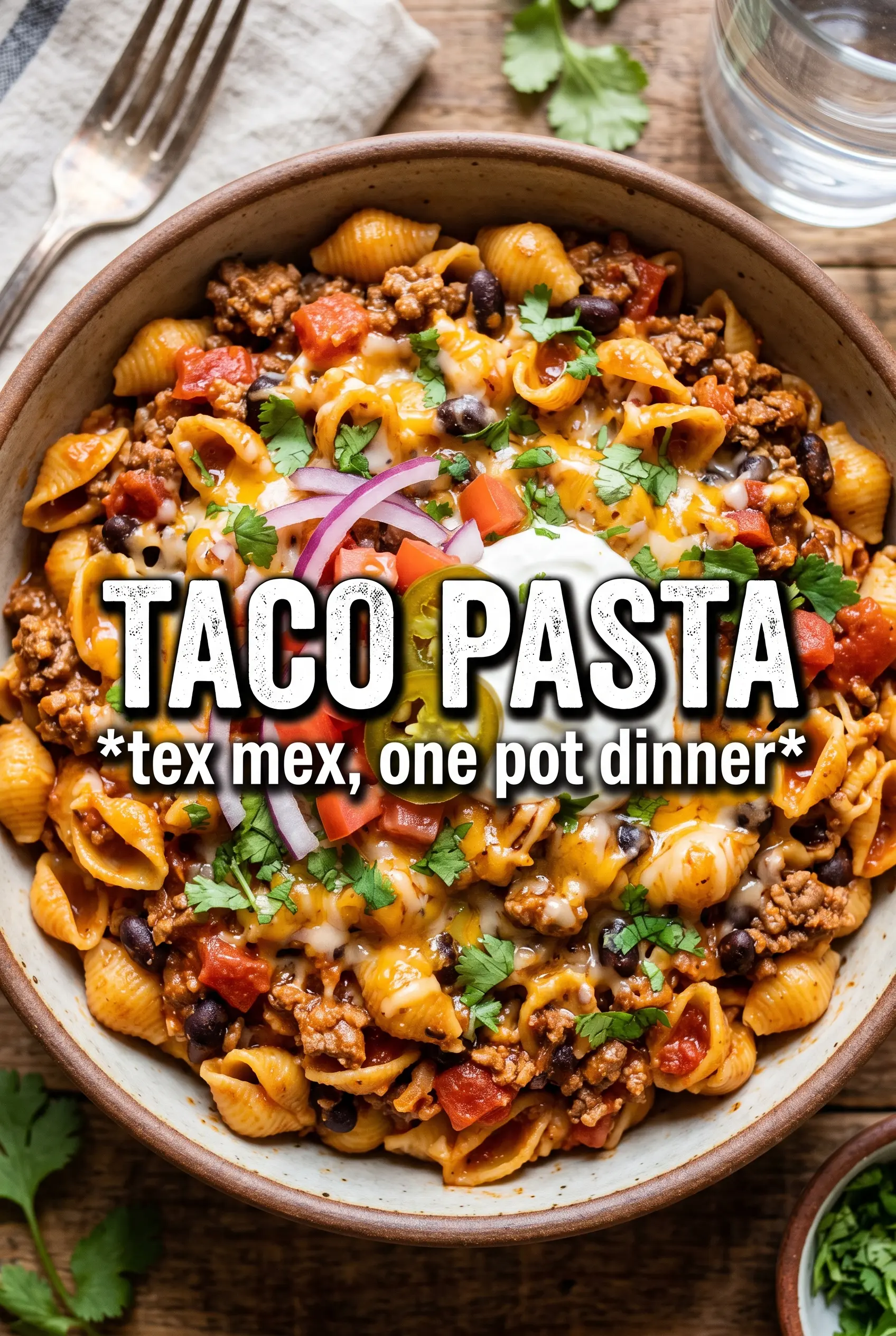
Pasta coated in a smoky taco-spiced tomato sauce is one of those dinners that disappears fast because it lands right between comfort food and taco night. The noodles soak up the seasoned broth, the beef gives it substance, and the cream cheese pulls everything into a sauce that clings instead of pooling at the bottom of the bowl. Finish it with cheddar and crunchy toppings, and it eats like something you put more effort into than you actually did.
What makes this version work is the order. The beef gets browned first so the onion softens in the fat and the taco seasoning has something to stick to before the liquid goes in. Then the pasta simmers directly in the sauce, which means the starch thickens everything naturally as it cooks. There’s no separate pot for noodles and no drained pasta that needs rescuing later.
Below, I’m walking through the small things that matter most here: when to stop the simmer so the pasta doesn’t turn mushy, how to melt the cream cheese without lumps, and which toppings give the best contrast against the creamy sauce.
The sauce coated every piece of pasta and didn’t turn watery like some one-pot recipes do. I added the cream cheese off the heat like you said, and it came out smooth with no lumps. My kids ate seconds before I even sat down.
Love the creamy, cheesy finish of this taco pasta? Save it to Pinterest for the nights when you want one-pot Tex-Mex comfort with almost no cleanup.
The Part Most One-Pot Taco Pastas Get Wrong
The biggest mistake is treating the pasta like a separate step instead of part of the sauce. If you boil the noodles first and add them later, they bring no starch to the pot, so the sauce stays thin and can slide right off. Cooking the pasta in the tomato broth lets it release just enough starch to thicken the liquid and bind the beef, cheese, and tomatoes into one cohesive skillet dinner.
The other problem is heat. A hard boil after the pasta goes in can beat the starch out of the sauce before it has a chance to thicken, and the noodles can go from tender to bloated fast. A steady simmer is what you want. You’ll know you’re on track when the liquid is bubbling gently around the edges and the pasta is still moving in the pot instead of churning.
- Rotel tomatoes — This is where the Tex-Mex flavor really starts. The peppers in Rotel bring heat and a little tang that plain diced tomatoes can’t match. If you need a milder pot, use regular diced tomatoes plus a small pinch of chili powder instead of swapping in something sweeter.
- Taco seasoning — A packet is perfectly fine here, and it gives you the right salt-spice balance without measuring five different jars. If you use a homemade blend, add it after the beef browns so the spices toast briefly in the fat before the broth goes in.
- Cream cheese — This is what turns the sauce from seasoned tomato broth into something rich and clingy. Full-fat cream cheese melts the smoothest; reduced-fat versions can work, but they’re a little more likely to look loose. Cube it first so it disappears faster with less stirring.
- Cheddar cheese — Sharp cheddar gives the finished pasta enough punch to stand up to the tomatoes and beef. Pre-shredded is convenient, but freshly grated melts smoother because it doesn’t have the anti-caking coating that can make cheese grainy.
What Each Ingredient Is Actually Doing in This Recipe
- Primary ingredient (the star) — Quality matters most. Choose the best you can find.
- Cooking medium (oil, butter, or broth) — This carries flavors and prevents dryness.
- Seasonings (salt, pepper, spices, herbs) — Layer flavors so nothing overpowers. Build depth gradually.
- Aromatics (garlic, onion, herbs) — Cook with fat to bloom flavors. Become the foundation.
- Supporting ingredients — Complement the main ingredient without overpowering it.
- Sauce or liquid (if applicable) — Brings flavors together. Balance richness with acid.
- Acid (lemon, vinegar, wine, or other) — Brightens and prevents flat-tasting results.
- Final finish (garnish, glaze, or sauce) — Prevents one-dimensional taste and adds visual appeal.
How to Keep the Sauce Creamy While the Pasta Finishes
Browning the Beef and Onion
Cook the beef and onion together over medium-high heat until the meat loses its pink color and the onion turns soft and translucent. You want a little browning in the pan, not gray steamed meat, because that browned fond gives the sauce its deeper savory base. Drain the excess fat if the pan looks greasy before you add garlic and seasoning. Garlic only needs about a minute; any longer and it can turn sharp and bitter.
Simmering the Pasta in the Sauce
Once the tomatoes, broth, water, and pasta go in, bring the pot to a boil just long enough to get everything moving, then drop it down to a gentle simmer and cover it. Stir once or twice during cooking so the pasta at the bottom doesn’t stick, but don’t keep lifting the lid every minute or the liquid will evaporate too quickly. The pasta should be tender with a slight bite and most of the liquid should be absorbed by the time you check it at 12 minutes. If it’s still soupy when the noodles are done, uncover the pot for a minute or two and let it tighten up.
Melting the Cream Cheese and Cheddar
Turn the heat down before the cream cheese goes in. That’s the difference between a smooth sauce and a slightly broken one with little soft lumps drifting through it. Stir until the cream cheese disappears completely, then add the cheddar and cover the pot for a minute so the residual heat melts it without making the sauce seize. If the cheese starts to clump, pull the pan off the burner and stir gently; high heat is usually the problem.
Make It Milder or Hotter
Use regular diced tomatoes instead of Rotel if you want less heat, then add jalapeños only at the table. For a spicier pot, choose hot Rotel and add a pinch of cayenne with the taco seasoning. That keeps the spice level controlled without muddying the tomato base.
Make It Lighter Without Losing the Texture
Use lean ground beef and drain it well, then reduce the cheddar a little and keep the cream cheese in the recipe so the sauce still feels finished. The dish will be less rich, but it will still cling to the pasta instead of tasting like plain seasoned noodles. Turkey works too, though it benefits from an extra pinch of salt and a splash more broth.
Gluten-Free Swap
Use a sturdy gluten-free short pasta and watch the simmer closely, because gluten-free noodles can go from firm to soft faster than wheat pasta. Check them a minute early and add a splash of broth if the pot looks dry before the pasta is tender. The sauce still works well because the cream cheese and cheddar carry the same creamy finish.
Storage and Reheating
- Refrigerator: Store leftovers in an airtight container for up to 4 days. The pasta will keep absorbing sauce, so it thickens as it sits.
- Freezer: It freezes, but the pasta softens after thawing and the sauce won’t be quite as creamy. Freeze in portions for up to 2 months if you don’t mind a softer texture.
- Reheating: Reheat gently on the stove or in the microwave with a splash of broth or water. The common mistake is blasting it on high heat, which tightens the cheese sauce and dries out the pasta before the center is hot.