Ground beef orzo turns into a one-pan dinner with a spoon-coating tomato cream sauce, tender pasta, and browned beef in every bite. The orzo cooks right in the skillet, so it picks up the savory base from the meat and broth instead of tasting like separate parts tossed together at the end.
What makes this version work is the order. Toasting the dry orzo for a minute gives it a little nuttiness and helps it hold its shape in the sauce. Then the cream goes in at the end, after the pasta is tender, so the sauce stays silky instead of turning dull or grainy. Parmesan finishes it with salt and body, and the basil keeps the whole pan from feeling heavy.
Below, I’ve included the little details that matter most: how to keep the orzo from sticking, what to do if the sauce tightens up too fast, and the best swap if you want to make it a little lighter without losing that creamy finish.
The orzo stayed perfectly tender and the sauce thickened just enough after the cream went in. I added a little extra parmesan at the end and my husband went back for seconds before I even sat down.
Save this ground beef orzo with tomato cream sauce for the nights when you want a creamy skillet dinner that comes together in one pan.
The Trick to Keeping Orzo Creamy Instead of Gummy
Orzo is small enough to go from tender to overdone fast, and that’s where a lot of skillet pasta recipes go sideways. The broth needs to stay at a steady simmer, not a hard boil, so the pasta cooks through without breaking down and turning soft around the edges. Stirring every so often keeps the orzo from settling on the bottom and scorching.
The other mistake is adding the cream too early. Dairy can handle the warm pan, but it doesn’t love a rolling boil. If the sauce is still boiling when the cream goes in, the texture can get loose and separate instead of turning glossy. Pulling it back to a gentle simmer gives you a sauce that clings to the pasta and beef.
What the Main Ingredients Are Doing in the Pan
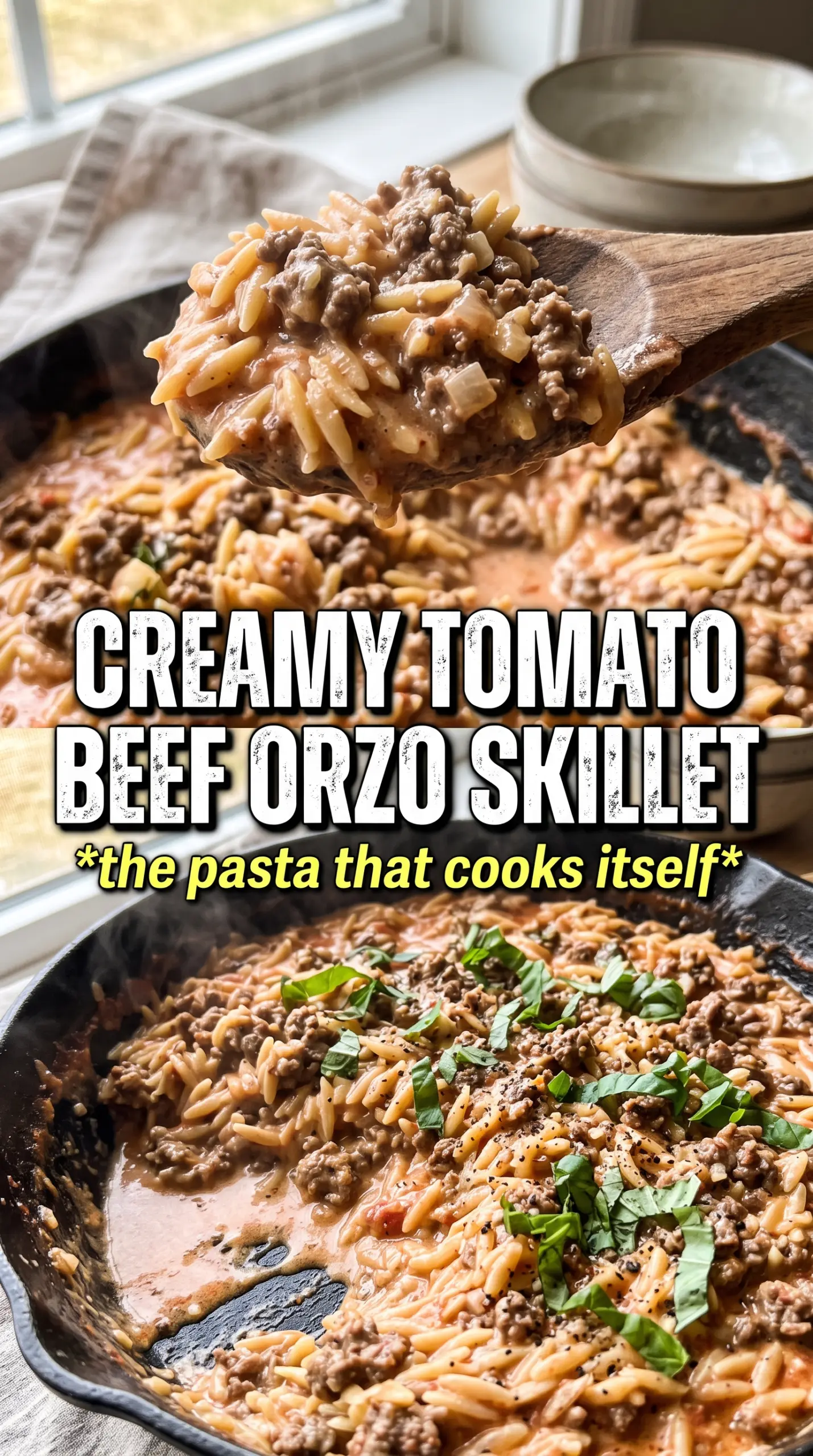
- Ground beef — This builds the savory backbone of the dish. A regular 80/20 beef gives the best flavor, but you can use leaner beef if you drain it well and keep an eye on seasoning, since there’ll be less fat carrying flavor through the sauce.
- Orzo — This is what makes the dish feel rich and cozy without needing a separate pasta pot. Toasting it for a minute before adding liquid gives it a firmer texture and keeps it from tasting boiled.
- Crushed tomatoes — These give you a sauce with body instead of a thin, bright tomato broth. Tomato paste isn’t a full substitute here unless you thin it out and adjust carefully; crushed tomatoes bring enough moisture and acidity at the same time.
- Heavy cream — This is what softens the tomatoes into that pink, velvety sauce. Half-and-half can work in a pinch, but it won’t coat the pasta quite as well and it’s more likely to look thinner at the end.
- Parmesan — Parmesan thickens the sauce and adds a salty finish that makes the whole skillet taste finished. Grate it fresh if you can; pre-shredded cheese doesn’t melt as smoothly and can leave the sauce a little sandy.
- Fresh basil — The basil goes in at the end so it stays fragrant and bright. If you skip it, the dish still works, but it loses that fresh edge that keeps the cream and beef from feeling too heavy.
Building the Skillet So the Sauce Stays Smooth
Brown the Beef First
Start with the ground beef in a wide, deep skillet and let it actually brown before you stir too much. If you keep breaking it up too early, it steams instead of browns, and you lose the savory bits that give the sauce depth. Drain off extra fat if the pan looks greasy, but leave a little behind so the onion and garlic have something to cook in.
Toast the Orzo Before the Liquid Goes In
Once the onion and garlic are softened, stir in the dry orzo and let it cook for about a minute. It should smell nutty and look slightly more golden, not dark. That quick toast helps the pasta hold its texture in the sauce and keeps the final dish from tasting flat.
Cook the Pasta in a Gentle Simmer
Add the tomatoes, broth, and seasonings, then bring everything up to a boil before dropping it to medium-low and covering the pan. The goal is a steady simmer where you can still see gentle movement under the lid. If the heat is too high, the liquid evaporates too fast and the orzo can stick before it’s tender.
Finish with Cream and Parmesan Off the Heat
When the orzo is tender, stir in the cream and let the sauce bubble uncovered for a couple of minutes until it thickens. Remove the skillet from the burner before adding parmesan, then stir until it melts in smoothly. That last move keeps the cheese from clumping and gives you a glossy sauce instead of a grainy one.
How to Change It Without Losing the Comfort Factor
Make It Lighter with Half-and-Half
Swap the heavy cream for half-and-half if you want a lighter sauce. It still softens the tomatoes, but the finish will be a little thinner and less luxurious, so let it simmer an extra minute or two before adding the parmesan.
Use Ground Turkey for a Leaner Skillet
Ground turkey works well here, especially if you season it generously and keep the smoked paprika. You’ll lose some of the beefy depth, so the broth and parmesan matter more for building flavor.
Make It Gluten-Free with Rice Pasta or a Different Grain
Orzo is wheat pasta, so it won’t work for a gluten-free version. Small rice-shaped gluten-free pasta can stand in, but check it early because some brands soften faster and can go mushy if you cook them the full time here.
Add Spinach at the End for More Greens
Stir in a few handfuls of baby spinach right after the cream goes in. It wilts fast in the hot sauce and gives you a little freshness without changing the texture of the dish.
Storage and Reheating
- Refrigerator: Store in an airtight container for up to 4 days. The orzo will keep soaking up sauce, so it’ll be thicker the next day.
- Freezer: It freezes, but the cream sauce can turn a little grainy after thawing. If you freeze it, cool it completely first and reheat gently with a splash of broth or cream.
- Reheating: Warm it on the stove over low heat with a small splash of broth, stirring often. Microwaving it hard and fast tends to dry out the pasta and can make the sauce split around the edges.
Answers to the Questions Worth Asking
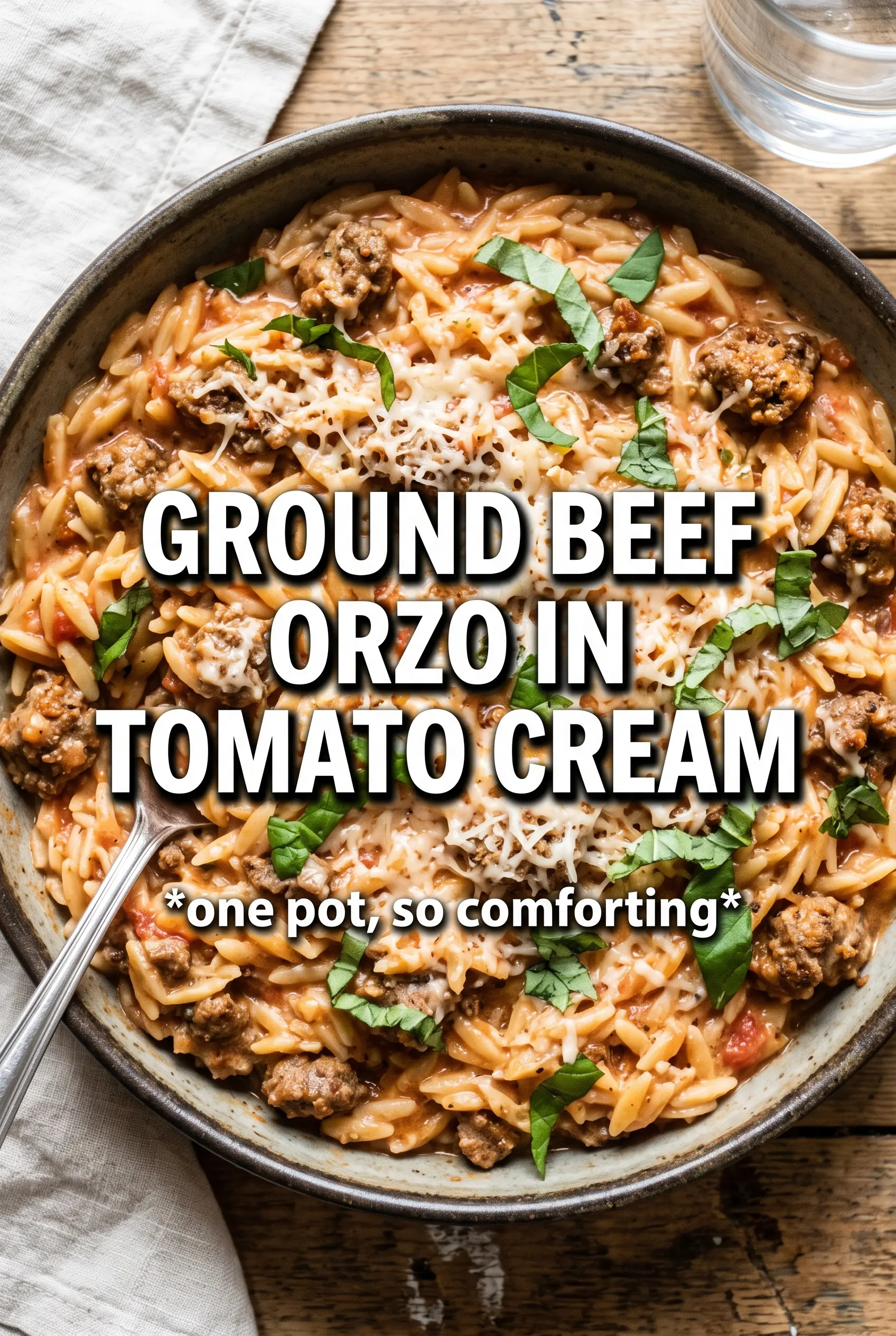
Ground Beef Orzo with Tomato Cream Sauce
Ingredients
Equipment
Method
- Brown ground beef in a large deep skillet over medium-high heat, breaking it apart, then drain excess fat. Cook until no longer pink and the meat edges look browned.
- Add onion and cook 3 minutes until softened, stirring occasionally. Look for translucent, slightly golden onion.
- Add garlic and cook 1 more minute, stirring, until fragrant. Avoid browning so it stays mild.
- Stir in orzo and toast 1 minute. You should see the orzo lightly dry and get a faint toasted aroma.
- Pour in crushed tomatoes and beef broth, scraping up any browned bits from the skillet. Keep everything evenly mixed.
- Add Italian seasoning, smoked paprika, salt, and black pepper, then bring to a boil. You should see active bubbling across the surface.
- Reduce to medium-low, cover, and cook 12 minutes, stirring occasionally, until orzo is tender. The liquid should be absorbed and the orzo should feel soft when tested.
- Stir in heavy cream and simmer uncovered 2–3 minutes until the sauce thickens. Watch for a glossy, creamy coating on the orzo.
- Remove from heat, then stir in parmesan until melted and smooth. The sauce should look creamy and slightly thickened.
- Garnish with fresh basil before serving. Scatter it on top for a fresh green pop.