Moist, light, and soaked all the way through, tres leches cake has a way of disappearing fast once it hits the table. This version keeps the sponge tender enough to drink in the three-milk mixture without collapsing, then finishes with a cool whipped topping and fresh berries that cut through the richness. Every bite lands soft, creamy, and clean on the finish.
What makes this cake work is the structure. The eggs are separated, the whites are whipped to stiff peaks, and the batter stays airy enough to handle a generous soak later. The milk mixture uses sweetened condensed milk for sweetness, evaporated milk for body, and heavy cream or Media Crema for a rounder, silkier texture. That balance matters. Too much sugar or too heavy a hand with mixing, and you lose the delicate crumb that lets the cake hold all that moisture.
Below, you’ll find the small details that keep the cake from turning soggy, plus the topping choice that gives each slice a little lift instead of turning it heavy.
The cake soaked up the milk mixture perfectly and still sliced cleanly after chilling. The whipped topping stayed fluffy, and the berries gave it just enough freshness to balance the sweetness.
Save this tres leches cake for celebrations when you want a soft sponge, a creamy soak, and a berry-topped finish that slices beautifully.
The Secret to Keeping Tres Leches Cake Tender Instead of Heavy
The biggest mistake with tres leches cake is treating the batter like a regular butter cake. It isn’t one. This cake depends on whipped egg whites for lift, which gives the crumb enough open structure to absorb the milk mixture without turning dense or gluey. If you beat the batter hard after the flour goes in, you knock out that air and the cake bakes up tighter than it should.
The other failure point is the soak. Pour the milk mixture slowly and evenly over the cake after it’s had a few minutes to cool and you’ve pierced it all over with a fork. If the cake is piping hot, the liquid can pool on top instead of settling in. If it’s too cold, it still soaks, just more slowly, so give it time in the refrigerator before you judge the texture.
- Whipped egg whites — These are what keep the cake light enough to absorb the milk mixture. Stiff peaks matter here; soft peaks won’t hold the structure long enough in the oven.
- Fork holes — They aren’t decorative. They give the milk a path to sink in evenly, which keeps the slices moist from edge to center.
- Chill time — The cake needs those two hours, and longer is even better. That resting time lets the crumb finish soaking and firms everything up for cleaner slices.
What Each Milk Is Doing in the Soak
- Sweetened condensed milk — This is the sweetness and the thick, dessert-like body. There isn’t a true substitute that behaves the same way, but if you must reduce the sweetness, use a little less and replace the volume with more evaporated milk and cream.
- Evaporated milk — This adds milk flavor without making the soak thin. Whole milk won’t give you the same richness or the same balanced texture.
- Heavy cream or Media Crema — This rounds out the soak and softens the sweetness. Media Crema gives a slightly more traditional, subtle tang and a silkier feel, while heavy cream makes the mixture richer.
- Powdered sugar in the topping — It sweetens the whipped cream without graininess. Granulated sugar can leave the topping a little sandy if it doesn’t fully dissolve.
- Fresh berries — They’re not just decoration. Their acidity keeps each bite from feeling flat and overly sweet.
Building the Sponge, Soaking It Slowly, and Finishing Clean
Whipping the Egg Whites
Beat the egg whites until they hold stiff peaks and look glossy, not dry. If they turn clumpy or start to look grainy, they’ve gone too far and won’t fold in cleanly. Set them aside while you build the yolk base so they stay airy and ready to lift the batter.
Mixing the Batter Without Deflating It
Beat the yolks and sugar until pale, then add the dry ingredients and milk alternately. Stir just until the flour disappears. The batter should look smooth and a little thick, not fluffy like cake batter from a box. Fold in the whites in two additions, using a gentle motion from the bottom of the bowl, or you’ll lose the air you just worked to build.
Baking Until the Crumb Is Set
Bake until the top is lightly golden and a toothpick comes out clean, about 22 to 25 minutes. The cake should spring back when touched lightly in the center. If it bakes too long, the crumb gets drier and less willing to absorb the milk mixture without falling apart at the edges.
Soaking and Topping the Cake
Cool the cake for about 10 minutes, then pierce it all over with a fork and pour on the milk mixture slowly. Don’t rush this part; let the liquid settle in before adding more. After it chills, whip the cream just until soft, spread it over the cake, and finish with berries and mint right before serving so the top stays fresh and the slices keep their clean look.
How to Adapt This Cake for Different Tables
Dairy-Free Version with Coconut Cream
Use a thick dairy-free condensed milk alternative, unsweetened evaporated coconut milk, and coconut cream in place of the three-milk soak. The cake still needs the egg structure, but the finish will taste more coconut-forward and a little less classic. Whip a chilled dairy-free topping for the crown so the texture stays light.
Less Sweet Tres Leches Cake
Cut the condensed milk slightly and replace the missing volume with more evaporated milk and cream. You’ll lose a little sweetness, but the cake will taste cleaner and let the berries stand out more. This is the version I make when the dessert is going on after a heavy meal.
Make-Ahead for a Party
Bake the cake a day ahead, soak it, and chill it overnight. Hold the whipped cream and berries until a few hours before serving so the topping stays fluffy and the fruit doesn’t bleed. The flavor gets even better after a long chill, and the slices cut more cleanly.
Storage and Reheating
- Refrigerator: Store covered for up to 4 days. The cake stays moist, though the whipped topping softens a bit after day one.
- Freezer: Freeze the unfrosted, soaked cake in tight wrapping for up to 1 month. Thaw in the refrigerator, then add the whipped cream and berries after it’s fully cold.
- Reheating: This cake is meant to be served cold. Warming it changes the texture and can make the soak separate, so don’t microwave individual slices.
Answers to the Questions Worth Asking
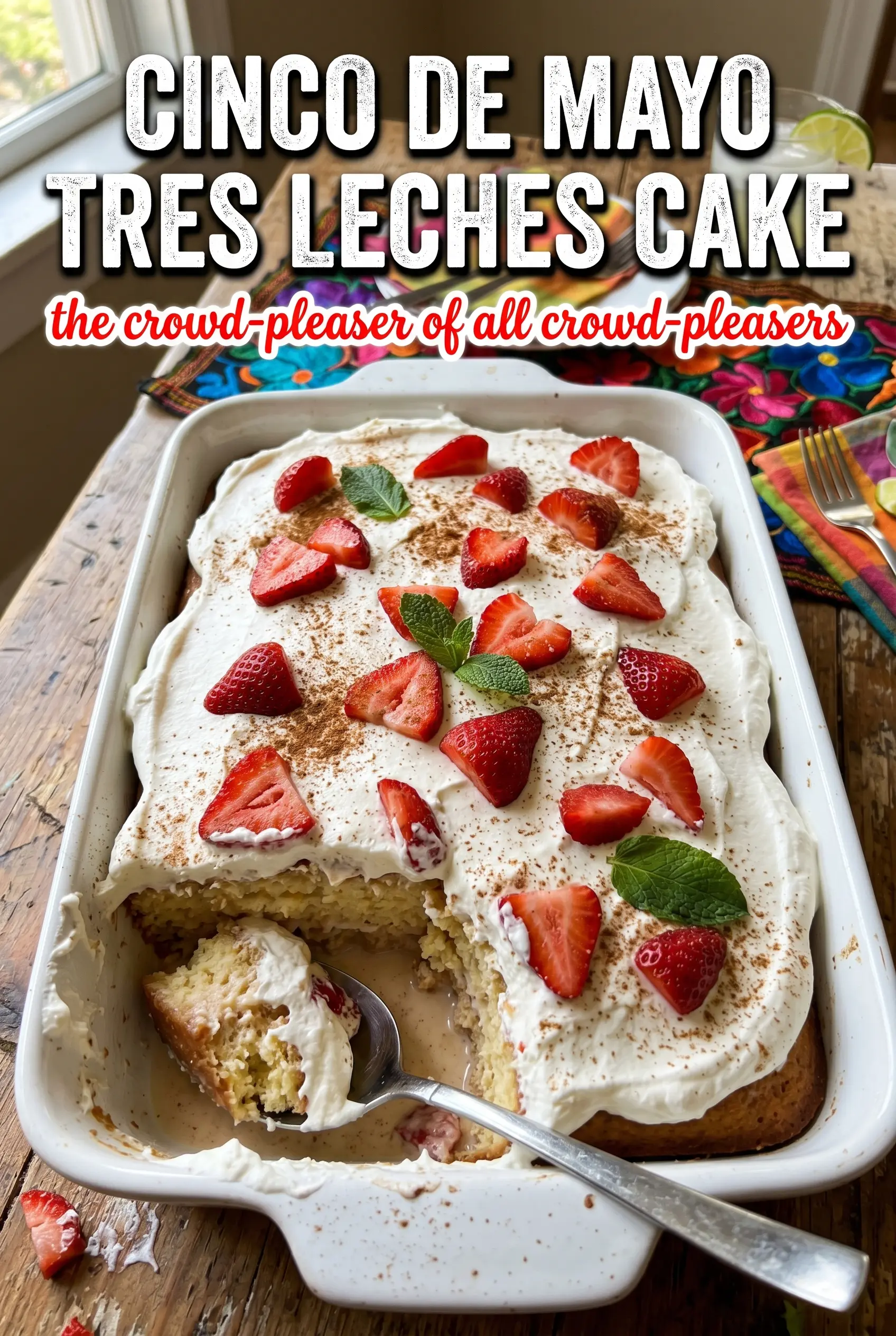
Cinco de Mayo Tres Leches Cake
Ingredients
Equipment
Method
- Preheat oven to 350°F and grease a 9x13 inch baking pan, so the cake releases cleanly after baking.
- Whisk together all-purpose flour, baking powder, and salt until evenly combined.
- Beat the egg whites until stiff peaks form, then set aside.
- Beat the egg yolks with granulated sugar until pale.
- Add the flour mixture and whole milk alternately, stirring gently just until smooth.
- Fold in vanilla, then fold in the egg whites in two additions for a light batter with minimal deflating.
- Pour batter into the prepared pan and bake for 22-25 minutes until a toothpick comes out clean, with the top lightly set and springy.
- Cool for 10 minutes, then pierce all over with a fork to create channels for soaking.
- Combine sweetened condensed milk, evaporated milk, and heavy cream, then whisk until blended and pour evenly over the cake.
- Refrigerate and let soak for at least 2 hours, until the center looks saturated and the cake feels soft when pressed.
- Whip heavy whipping cream with powdered sugar and vanilla until it holds soft peaks, with a thick, spreadable texture.
- Spread whipped cream over the cake and top with fresh strawberries and raspberries, then finish with fresh mint for garnish.