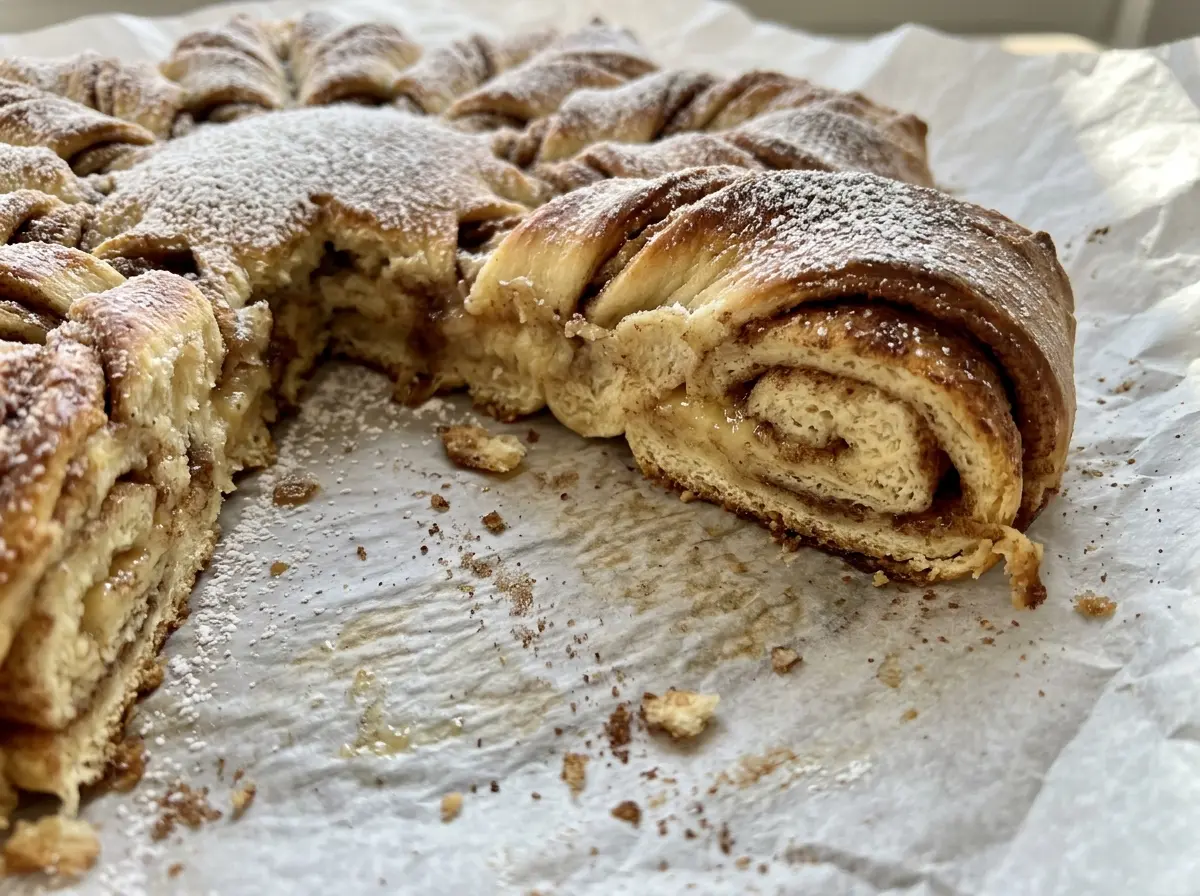
The first time I shaped a cinnamon star, I worried the cut strips would come apart as soon as I started twisting. The dough held together better than I expected; the trick was keeping the center intact and pinching each pair of points firmly at the end. Cinnamon star bread comes out of the oven golden, with sweet cinnamon tucked between its soft layers.
I make the dough with warm milk, active dry yeast, and softened butter, then give it time to rise until it’s doubled. Four rolled circles build the star, with butter and cinnamon sugar between the layers. Once you’ve made the first pair of twists, the rest follow the same simple motion, and the finished bread pulls apart into tender, cinnamon-swirled pieces.
Kitchen Note
Twist each neighboring pair away from each other for two full turns, then pinch the tips together. If you stop after one turn, the points look less defined; keep the motion even and the star will hold its shape.
Save this Cinnamon Star Bread for a baking day when you want soft, buttery layers and a cinnamon-sugar center in every pull-apart point.
Why the Cinnamon Filling Needs a Border Before You Twist
The half-inch border around each circle isn’t wasted dough. It gives the layers a clean edge to press against, so the butter and cinnamon sugar stay tucked between the circles instead of squeezing onto the baking sheet as you handle the star. A little filling at the edges can burn during baking, and too much escaped filling makes the points harder to pinch together.
There are three filling layers and four dough circles, so spread the butter and cinnamon sugar over each circle evenly rather than piling it into the middle. Keep the border uncovered on every layer. When the final circle goes on top, you’ll have a neat stack that’s easier to cut into strips and twist without dragging filling across the surface.
The 2-inch cutter is a guide for the center, not a cutter you press through the dough. Set it lightly in place, cut the strips from the outside edge toward that circle, and lift the guide away before twisting. The uncut center keeps the strips connected while you shape the points.
What the Milk, Butter, and Flour Each Contribute
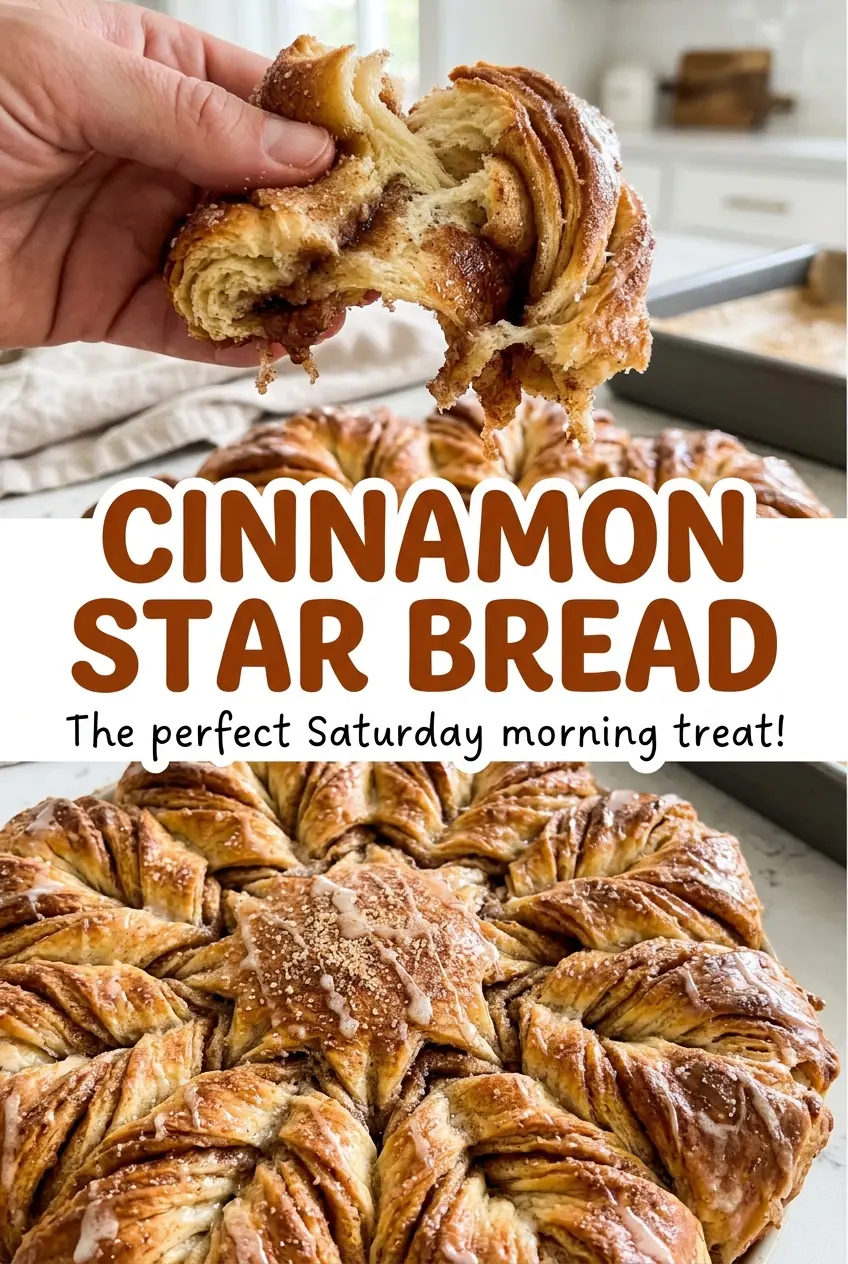
- Whole milk — Warmed to the stated range, it gives the yeast a comfortable start and adds tenderness to the dough. Two-percent milk works measure for measure, though the bread will be a little less rich. Avoid overheating the milk; too much heat can keep the yeast from foaming.
- Active dry yeast — This yeast is dissolved in the warm milk mixture before the flour goes in, so you can see it foam before committing the rest of the ingredients. Check that it’s fresh; inactive yeast won’t raise the dough, and there isn’t a useful ingredient swap that gives this same rise.
- All-purpose flour — It gives the dough enough structure to roll into circles and hold the filling without making the baked layers overly chewy. The regular store-brand bag is fine. A straight swap for whole-wheat flour would make the dough denser and change how it handles.
- Unsalted butter — Softened butter mixes into the dough smoothly and spreads across the circles without tearing them. It also helps the cinnamon sugar cling between the layers. For the dairy-free version below, use a softened plant-based butter stick rather than a soft tub spread.
- Egg — The room-temperature egg blends more easily into the dough and contributes to its soft, rich texture. Bring it out ahead of mixing; a cold egg can firm up the softened butter and make the dough less cohesive.
- Cinnamon and granulated sugar — The sugar makes a crisp, sweet seam between the layers, while ground cinnamon gives the filling its familiar warmth. Use cinnamon that smells fragrant when you open the jar. Granulated sugar is the reliable choice for a dry, even filling; brown sugar makes a softer, slightly stickier variation.
Building Four Even Layers Without Losing the Star Shape
Wake Up the Yeast and Knead the Dough
Whisk the warm milk with the active dry yeast and the portion of granulated sugar used for the dough. Let the mixture stand for 5–10 minutes, until foam forms across the surface; if it stays flat, the yeast may be old or the milk may have been outside the right temperature range. Mix in the flour, salt, egg, and softened dough butter until the dough looks shaggy. Knead on a lightly floured surface for 8–10 minutes, until smooth and elastic.
Let the Dough Double
Set the dough in a clean bowl, cover it, and let it rise at room temperature for 60–90 minutes, until doubled in size. The dough should look noticeably fuller, not just a little puffy. If your kitchen is cool, it may take longer to reach that visual cue, so judge the rise by its size as well as the clock. Keep it covered so the surface doesn’t dry out.
Stack and Cut the Circles
Stir the remaining granulated sugar with the cinnamon. Punch down the risen dough, divide it into four equal pieces, and roll each into a 10-inch circle on a lightly floured surface. Place the first circle on a parchment-lined 13×18-inch rimmed baking sheet, spread on one-third of the remaining softened butter and cinnamon sugar, and leave a half-inch border; repeat with two more circles and the remaining filling, then top with the final circle. Set a 2-inch round cutter lightly in the center and cut the layers into 16 equal strips from the outer edge to the guide.
Twist, Proof, and Bake Until Golden
Twist each adjacent pair outward for two full turns, then pinch the tips together to make eight points. Cover the shaped bread loosely and proof it for 30–45 minutes, until slightly puffy; during the last 15 minutes, preheat the oven to 350°F. Bake on the middle rack for 22–28 minutes, until golden brown and the center reaches 190°F. Transfer it to a wire rack, cool for at least 20 minutes, then dust with powdered sugar.
Three Useful Changes to Cinnamon Star Bread
A Dairy-Free Star
Replace the whole milk with unsweetened oat milk and use softened dairy-free baking sticks in place of the butter, keeping the same amounts and warming the milk to the same temperature. Choose a stick-style product that can be softened and spread; the crumb may be a little less buttery, but the dough still rolls and twists well.
A Softer Brown-Sugar Filling
Swap the granulated sugar used in the filling for the same volume of light brown sugar, leaving the sugar in the dough unchanged. Its molasses notes make the cinnamon filling taste deeper, and the layers will be a little softer and stickier than with granulated sugar.
A Cardamom-Scented Filling
For a gentler, more floral spice, replace the cinnamon with 1 teaspoon of ground cardamom. Keep the sugar and butter the same; the finished bread will have a lighter spice note rather than the familiar cinnamon-forward flavor.
Storage and Reheating
- Refrigerator: The bread doesn’t need refrigeration. Keep it covered at room temperature for up to 2 days for the softest crumb; if you do refrigerate it, seal it well and use it within 5 days, knowing it will stale faster.
- Freezer: Once completely cool, wrap the bread tightly and freeze it for up to 2 months. Thaw it before warming so the center heats evenly.
- Reheating: Warm thawed bread in a 300°F oven until just heated through. Skip the microwave, which can make the soft layers chewy.
Questions That Come Up While Shaping Cinnamon Star Bread
Cinnamon Star Bread
Ingredients
Equipment
Method
- Whisk the milk warmed to 105–110°F, yeast, and 1/4 cup granulated sugar in a large bowl.
- Let the mixture stand for 5–10 minutes, until foamy.
- Add the flour, salt, egg, and 4 tablespoons softened butter, then mix until a shaggy dough forms.
- Knead the dough on a lightly floured surface for 8–10 minutes, until smooth and elastic.
- Place the dough in a clean bowl, cover, and let rise at room temperature for 60–90 minutes, until doubled in size.
- Stir the remaining 1/2 cup granulated sugar with the cinnamon in a small bowl.
- Punch down the dough and divide it into 4 equal pieces.
- Roll each piece on a lightly floured surface into a 10-inch circle.
- Place one dough circle on a parchment-lined 13x18-inch rimmed baking sheet.
- Spread one-third of the remaining softened butter over the dough circle and sprinkle with one-third of the cinnamon-sugar, leaving a 1/2-inch border.
- Repeat with two more dough circles, butter, and cinnamon-sugar, then place the final dough circle on top.
- Set a 2-inch round cutter lightly in the center as a guide.
- Cut through all the layers from the outer edge to the guide in 16 equal strips, then remove the cutter.
- Twist each adjacent pair of strips outward, away from each other, for two full turns.
- Pinch the tips together to form 8 points.
- Cover loosely and proof for 30–45 minutes, until slightly puffy.
- Preheat the oven to 350°F during the last 15 minutes of proofing.
- Bake on the middle rack for 22–28 minutes, until golden brown and the center reaches 190°F.
- Transfer the bread to a wire rack and cool for at least 20 minutes.
- Dust the bread with powdered sugar.