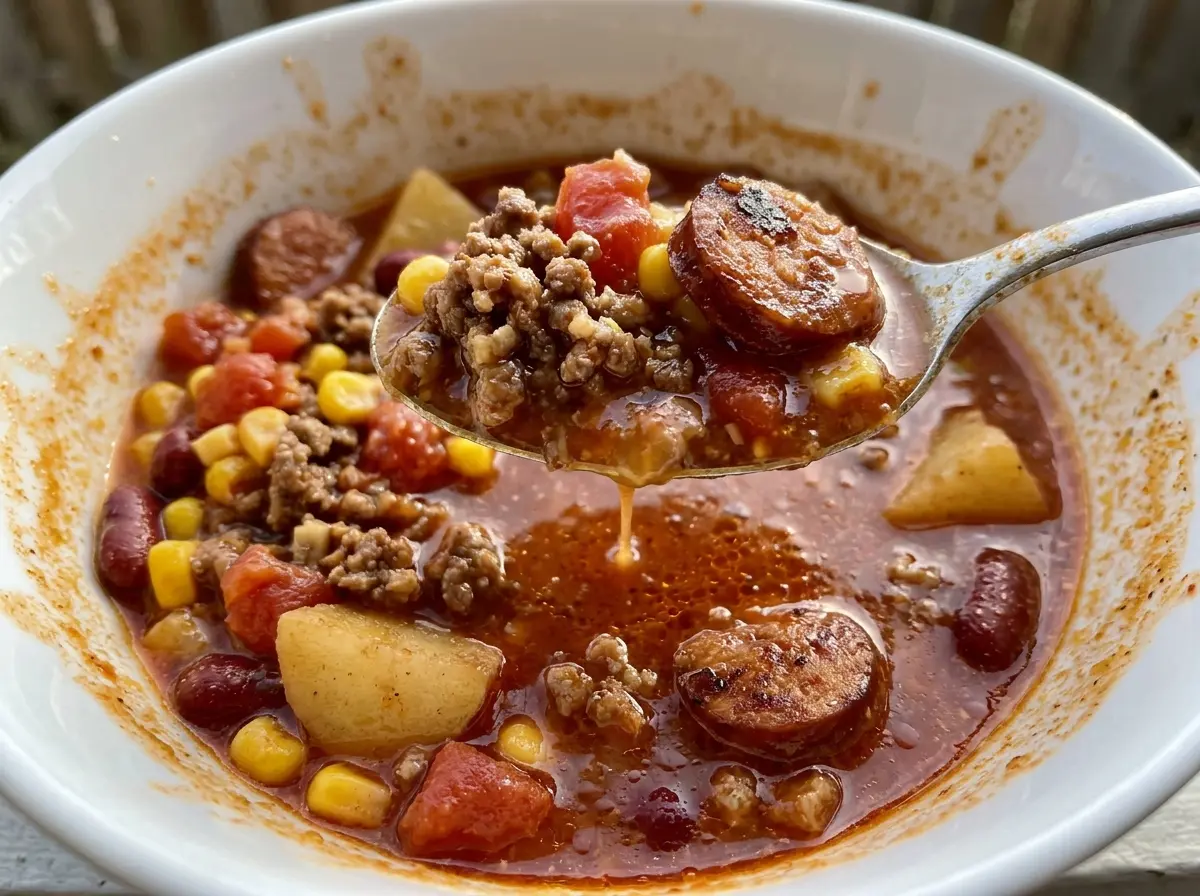
The sausage rounds start to brown at the edges while the ground beef breaks into little crumbles, and the pot smells smoky before the stew even has a chance to simmer. That early browning gives Cowboy Stew a deeper, more savory base than a pot where everything goes in at once. I keep the beef moving as it cooks so it browns evenly instead of forming big clumps.
Onion softens in the same pot, then garlic and chili powder hit the warm surface briefly before the broth goes in. Potatoes simmer with the tomatoes until they’re nearly tender; beans and corn join at the end, so they warm through without spending the whole cook in the broth. The finished stew is thick enough to cling to a spoon, with tender potatoes and smoky bites of sausage in every bowl.
Kitchen Note
Keep the potato cubes close to the same size. When they’re cut evenly, they soften at about the same pace, so you’re less likely to have some turn mushy while others are still firm.
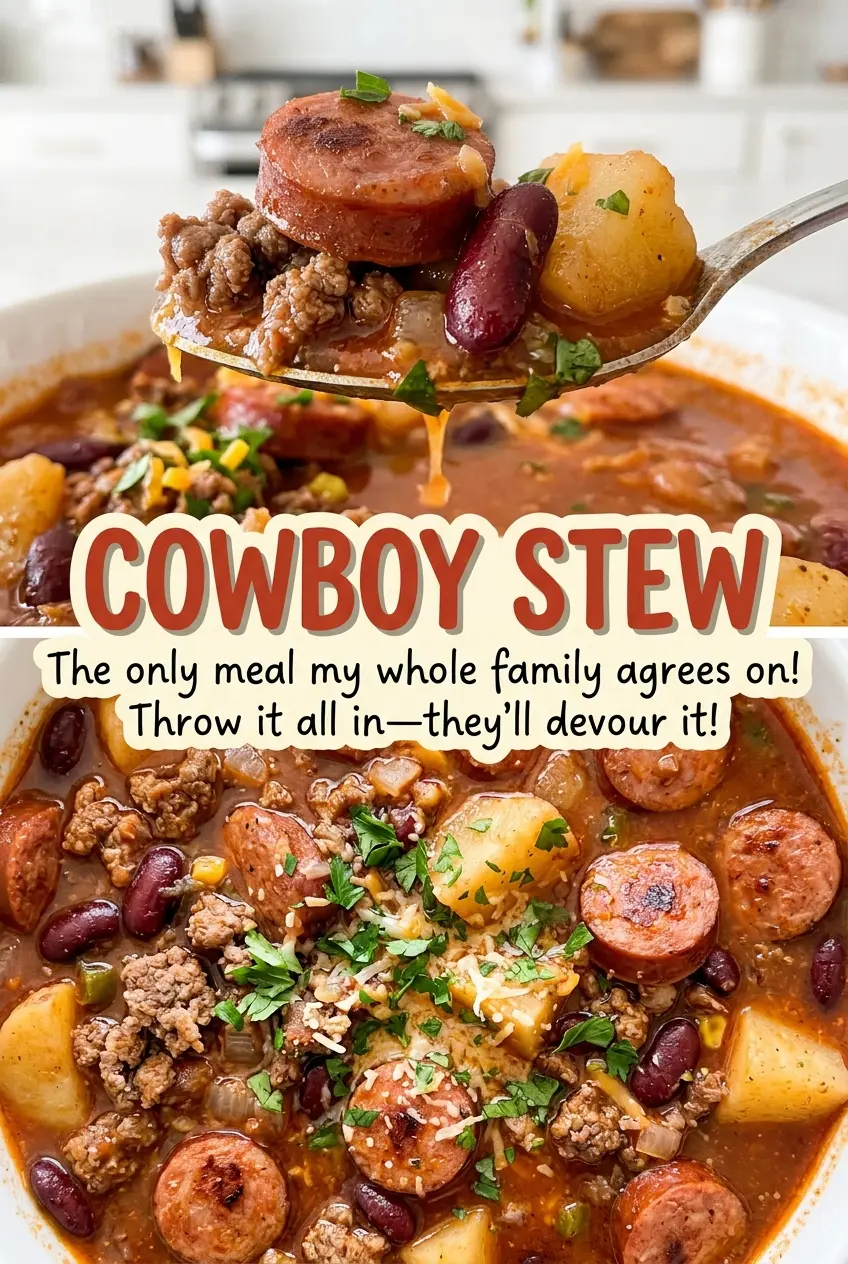
Save this Cowboy Stew for a filling one-pot dinner with browned sausage, tender potatoes, and a broth that thickens as it simmers.
Why This Stew Thickens Without a Roux
This pot gets its body from the potatoes and the uncovered finish, not flour or cornstarch. Russets soften in the broth and release some of their starch as they cook. That gives the liquid a little more substance while keeping the stew hearty rather than gravy-thick.
The timing of the last simmer matters, too. Once the potatoes are nearly tender, the beans and corn need only a short stretch in the pot; keeping the lid off lets a little liquid evaporate while those additions heat through. If you cover the pot for the whole cook, you’ll keep more steam trapped inside and the broth won’t reduce as much. The goal isn’t a sauce that coats the back of a spoon like gravy. Cowboy Stew should still ladle easily, with enough broth around the meat and vegetables to make each spoonful feel like stew.
That balance is also why I don’t add a thickener at the start. The potatoes need time to cook through, and the broth becomes more cohesive as they soften. Let the pot do that work on its own; adding flour would change the texture and make the smoky broth heavier than it needs to be.
What the Beef, Sausage, and Russets Bring to Cowboy Stew
- Ground beef — The 85% lean beef gives the broth a rich, meaty base without leaving quite as much fat as a fattier grind. If you only have leaner ground beef, it works; the finished stew will be a little less rich. Drain visible excess fat after browning, but you don’t need to chase every trace from the pot.
- Smoked sausage — This is where much of the stew’s smoky character comes from, so choose a sausage you like eating on its own. Kielbasa makes a good stand-in in the same amount, with a similar smoky, savory result. A spicy smoked sausage brings more heat without changing the method.
- Russet potatoes — Their starchy texture helps give the broth body as they cook. Yukon Gold potatoes are a workable swap and hold their shape a bit more, but the stew will be less naturally thick. Cut whichever potato you use into even cubes for consistent cooking.
- Beef broth — Broth carries the browned meat and chili powder through the whole pot. A lower-sodium beef broth is useful if your sausage is especially salty; it lets you control the saltiness without losing the beefy base. Chicken broth works in a pinch, though the stew’s flavor will be less robust.
- Diced tomatoes, pinto beans, and corn — Keep the tomato juices; they add liquid and a little acidity to balance the meat. Canned pinto beans and corn are convenient here, but drain and rinse the beans and drain the corn so their canning liquid doesn’t change the broth. Black beans can replace pinto beans if you prefer a firmer, earthier bite.
- Chili powder, onion, and garlic — These build the savory, gently spiced background without turning the stew into a hot chili. Fresh garlic has the clearest aroma, but dried chili powder is fine as long as it still smells fragrant when you open the jar. If your chili powder has been sitting in the cupboard for years, its flavor may be muted.
Building the Pot in Four Stages
Brown the Beef and Sausage
Set a 6-quart Dutch oven over medium-high heat and add the ground beef and sliced smoked sausage. Cook for 7–9 minutes, breaking the beef into small pieces as it browns. The beef should reach 160°F, and the sausage should have browned edges. Drain excess fat if there’s a pool in the pot.
Soften the Onion and Wake Up the Spices
Add the chopped onion and cook for 4 minutes, stirring occasionally, until it starts to soften. Stir in the minced garlic, chili powder, kosher salt, and black pepper. Give them 30 seconds in the hot pot; garlic should smell fragrant, not scorched. If the garlic darkens quickly, move straight to the next step so it doesn’t turn bitter.
Simmer the Potatoes Until Nearly Tender
Pour in the beef broth, then add the potatoes and diced tomatoes with their juices. Scrape the bottom of the Dutch oven as you stir, lifting the browned bits into the liquid. Bring the pot to a boil, cover it, and lower the heat to medium-low for a 15–20 minute simmer. The potatoes should be close to tender when pierced, but not falling apart yet.
Finish with the Beans and Corn
Stir in the drained, rinsed pinto beans and drained corn. Leave the pot uncovered and simmer for 8–10 minutes, until the potatoes are fork-tender and the broth has thickened slightly. Stir gently so the softened potatoes keep their shape. The stew is ready when the potato centers yield easily to a fork.
Easy Changes That Keep the Stew Hearty
Make the pot gluten-free
Replace the smoked sausage and beef broth with gluten-free versions of those same ingredients. The stew keeps its smoky, beefy character, though the exact seasoning will vary with the sausage you choose.
Turn up the smoky heat
Use spicy smoked sausage in place of the regular smoked sausage. It adds a more noticeable kick while keeping the same one-pot method; the heat level depends on the sausage, so the finished stew may taste bolder than the original.
Use ground turkey for a lighter base
Swap the ground beef for the same amount of ground turkey and brown it with the sausage. The stew will taste a little lighter and less beef-forward, while the smoked sausage still gives the broth plenty of savory depth.
Storage and Reheating
- Refrigerator: Store in a covered container for 3–4 days. The potatoes soften a little as they sit in the broth.
- Freezer: Freeze in airtight containers for up to 2–3 months. The potatoes may become softer or slightly grainy after thawing, but the stew is still good to eat.
- Reheating: Warm gently in a saucepan, stirring occasionally, until the stew reaches 165°F. Avoid a hard boil, which can break the potatoes apart; microwave individual portions in short intervals, stirring between them.
Questions That Come Up While Making Cowboy Stew
Cowboy Stew
Ingredients
Equipment
Method
- In a 6-quart Dutch oven over medium-high heat, cook the ground beef and smoked sausage for 7–9 minutes, breaking up the beef, until the beef reaches 160°F and the sausage is browned. Drain excess fat if needed.
- Add the onion and cook for 4 minutes, stirring occasionally.
- Stir in the garlic, chili powder, kosher salt, and black pepper and cook for 30 seconds.
- Add the beef broth, potatoes, and diced tomatoes with their juices, scraping the bottom of the pot.
- Bring to a boil, then cover and simmer over medium-low heat for 15–20 minutes, until the potatoes are nearly tender.
- Stir in the pinto beans and corn and simmer uncovered for 8–10 minutes, until the potatoes are fork-tender and the stew has thickened slightly.