The edges are the first place I watch when a pan of gingerbread comes out of the oven. They should look set and lightly browned while the middle has lost its raw shine; waiting for the center to look deeply browned can leave the whole pan drier than it needs to be. These gingerbread cookie bars bake in one 9×13-inch pan, so you get a full batch without portioning individual cookies.
The dough is thick enough to press into the pan, and that simple change in shape makes the bake easier to manage. I focus on an even layer before it goes into the oven, then use the edges and center together to judge when it’s ready. Brown sugar and unsulphured molasses give the bars their familiar gingerbread depth, with ginger, cinnamon, and cloves bringing the warm spice. Once cooled, they lift out in one piece and cut into neat bars.
Kitchen Note
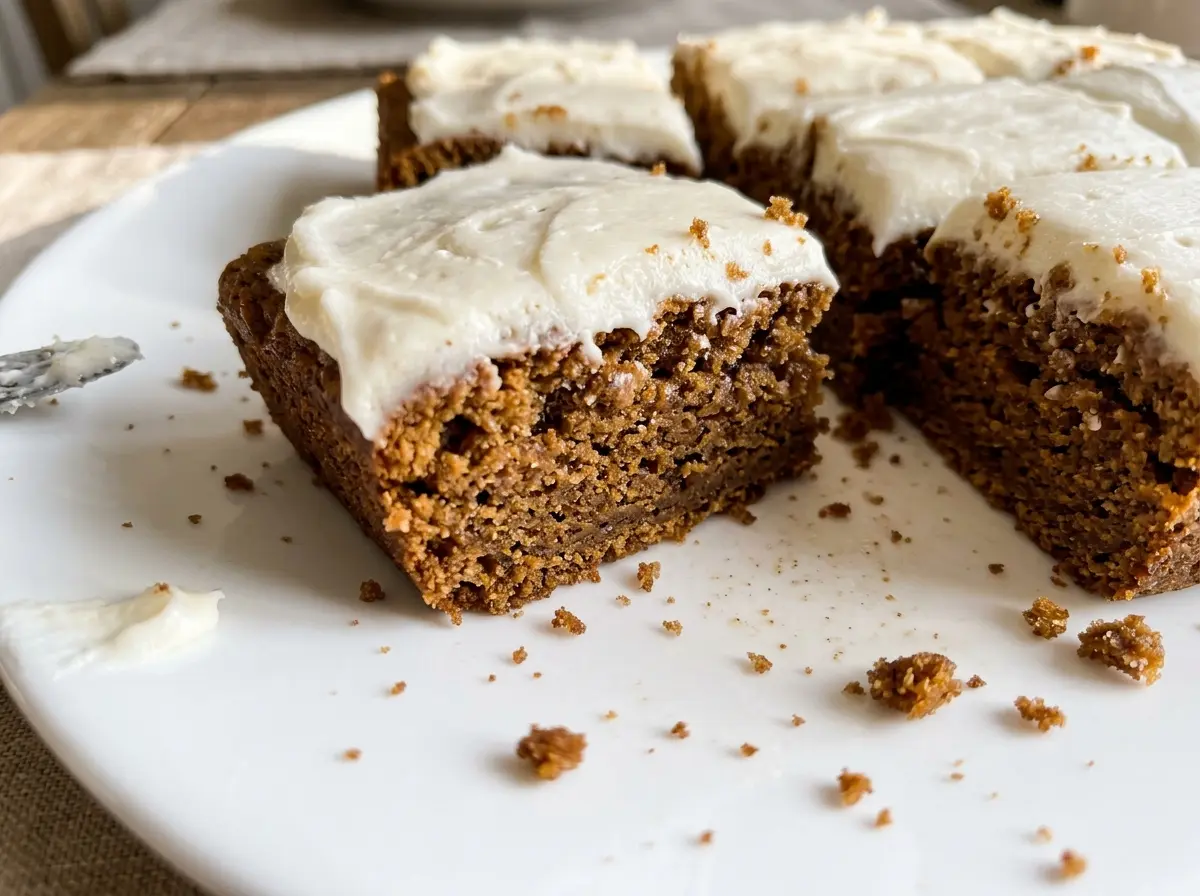
Let the bars cool completely in the pan before lifting them by the parchment. They’re much easier to handle once the center has had time to firm up.
Save these gingerbread cookie bars for a spiced, easy-to-cut bake that comes together in one pan.
Why One Pressed Layer Makes These Easier Than Individual Gingerbread Cookies
These bars skip the part of cookie baking that can slow you down: scooping each portion and keeping several rounds moving through the oven. The dough is pressed into one pan, which gives you a single bake and makes the finished batch easy to portion after it cools. That format also means the center and edges won’t look identical at the same moment, so I look for both cues rather than waiting for every part to brown evenly.
The layer needs to be even from corner to corner. A thicker patch in the middle takes longer to set, while a thinner patch near an edge can brown first. Take a moment to smooth the dough into a level layer before baking; it gives the pan a fair chance to bake at a consistent pace. The bars are ready when the edges are set and lightly browned and the center looks set, not when the entire top is dark. This is a useful distinction with molasses-based dough, which starts out dark and can make browning harder to judge.
What Brown Sugar, Molasses, and the Spice Blend Each Bring
- Unsulphured molasses — It brings the deep, slightly bittersweet gingerbread taste and contributes moisture to the dough. Choose unsulphured molasses for its balanced flavor; blackstrap is much more intense and can make the bars taste bitter. There isn’t a close replacement that keeps the same character.
- Packed light brown sugar — The sugar sweetens the bars and works with the butter to make a smooth, creamy base. Dark brown sugar can stand in at the same volume for a deeper, more molasses-forward taste, though it will shift the flavor slightly.
- Softened unsalted butter — Soft butter creams smoothly with the brown sugar, so it should give slightly when pressed but not look melted or oily. If salted butter is what you have, use it in place of the unsalted butter and leave out the kosher salt; the salt level in salted butter varies by brand.
- Ground ginger, cinnamon, and cloves — Ginger gives the bars their defining bite, cinnamon rounds it out, and cloves add a concentrated warm note. Fresh, fragrant spices make a noticeable difference here, while there’s no need to buy a premium brand if your spices still smell lively when you open the jars.
- All-purpose flour — It gives the dough enough structure to hold its bar shape after baking and cutting. Spoon the flour into the measuring cup and level it rather than packing it down; too much flour can make the dough stiff and the bars dry.
Mixing and Baking the Bars Without Guesswork
Set Up the Pan for an Easy Lift
Heat the oven to 350°F. Grease a 9×13-inch baking pan, line it with parchment paper so the edges overhang, then lightly grease the parchment. Those overhanging edges give you something to hold when the bars are completely cool. Pressing the parchment into a greased pan helps keep it from shifting while you add the dough.
Cream the Butter and Brown Sugar Until Smooth
Beat the softened butter and packed light brown sugar in a large bowl with an electric mixer on medium speed for about 2 minutes. The mixture should look smooth and creamy, without large hard clumps of brown sugar. If the butter is cold, it won’t blend evenly; if it’s melted, the mixture won’t cream in the same way. Scrape down the bowl as needed once you add the molasses, egg, and vanilla.
Bring the Wet and Dry Mixtures Together Gently
Beat in the molasses, egg, and vanilla until combined, scraping the bowl so no streaks of molasses or butter are left behind. In a separate medium bowl, whisk together the flour, baking soda, ginger, cinnamon, cloves, and salt. Add that dry mixture to the butter mixture and mix on low just until no dry streaks remain. Stop there; mixing longer than needed can make the bars tougher.
Press the Dough Into a Level Layer
Transfer the dough to the prepared pan and press it evenly across the bottom. Work it into the corners and smooth any high spots, since uneven thickness can lead to noticeably different doneness from one part of the pan to another. The dough is thick, so press it rather than expecting it to spread into place in the oven. Check the surface from the side of the pan before baking.
Use the Edges and Center to Judge Doneness
Bake for 20 to 24 minutes, until the edges are set and lightly browned and the center looks set. The edges should no longer look wet, and the middle shouldn’t have a raw-looking sheen. Since molasses gives the dough a dark color before it bakes, don’t rely on the top turning golden all over. Cool the pan completely on a wire rack, then lift the bars out with the parchment and cut them.
Easy Ways to Adjust These Gingerbread Cookie Bars
Make Them Gluten-Free
Replace the all-purpose flour with the same volume of a cup-for-cup gluten-free baking blend made for cookies. The bars may be a little more tender or crumbly, so let them cool completely before lifting and cutting.
Lean Into the Ginger
For a sharper ginger note, replace some of the cinnamon with an equal amount of the ground ginger already in the spice blend. The bars will taste more peppery and less cinnamon-forward, while keeping the same basic dough and pan method.
Storage and Reheating
- Refrigerator: Keep the cooled bars in an airtight container for up to 5 days. Chilling firms them up, so bring a portion to room temperature before serving if you prefer a softer bite.
- Freezer: Freeze cut bars in an airtight container, separating layers with parchment, for up to 2 months. Thaw at room temperature while covered to keep the edges from drying out.
- Reheating: These bars are best at room temperature, so reheating isn’t necessary. If you like them warm, microwave one bar for about 5 seconds; longer heating can soften the butter and make the texture greasy.
Questions That Come Up When Baking Gingerbread Bars
Gingerbread Cookie Bars
Ingredients
Equipment
Method
- Heat the oven to 350°F.
- Grease a 9x13-inch baking pan.
- Line the pan with parchment paper with overhanging edges.
- Lightly grease the parchment.
- In a large bowl, beat the butter and brown sugar with an electric mixer on medium speed until smooth and creamy, about 2 minutes.
- Beat in the molasses, egg, and vanilla until combined, scraping down the bowl as needed.
- In a medium bowl, whisk together the flour, baking soda, ginger, cinnamon, cloves, and salt.
- Add the dry mixture to the butter mixture and mix on low just until no dry streaks remain.
- Press the dough evenly into the prepared pan.
- Bake for 20 to 24 minutes, until the edges are set and lightly browned and the center looks set.
- Cool completely in the pan on a wire rack.
- Lift the bars out using the parchment.
- Cut into bars.