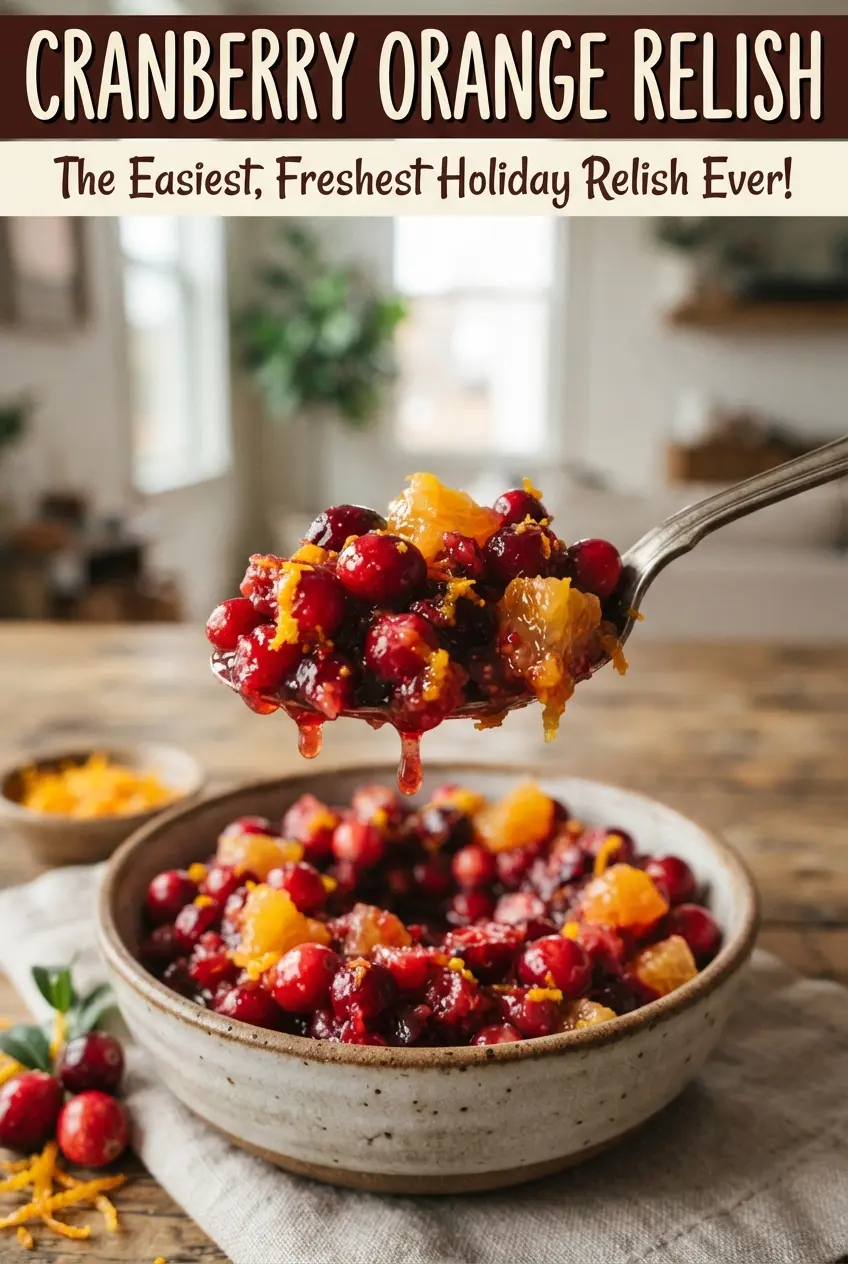
Cranberry orange relish brings a sharp, bright bite that cuts through rich holiday food better than most sauces on the table. It tastes fresh instead of heavy, with sweet citrus, tart cranberries, and just enough sugar to round the edges without flattening the flavor. The texture matters here too: finely chopped, not puréed, so every spoonful stays lively and a little rustic.
The trick is using the whole orange, peel and all. That’s where the fragrance lives, and once it sits with the cranberries and sugar, the peel softens and the bitterness settles into something pleasantly marmalade-like. A small splash of orange liqueur deepens the citrus note, but orange juice works cleanly if that’s what you have.
Below, I’ve included the texture cue I use so the food processor doesn’t turn this into paste, plus a few ways to adapt it if you want it a little sweeter, a little more citrusy, or fully alcohol-free.
I used orange juice instead of the liqueur and it still had that bright, fresh pop. Chopping it just until the cranberries were finely broken up gave it the perfect spoonable texture after chilling.
Save this cranberry orange relish for the bright, chunky side that wakes up every rich holiday plate.
The Texture Trap That Ruins Cranberry Relish
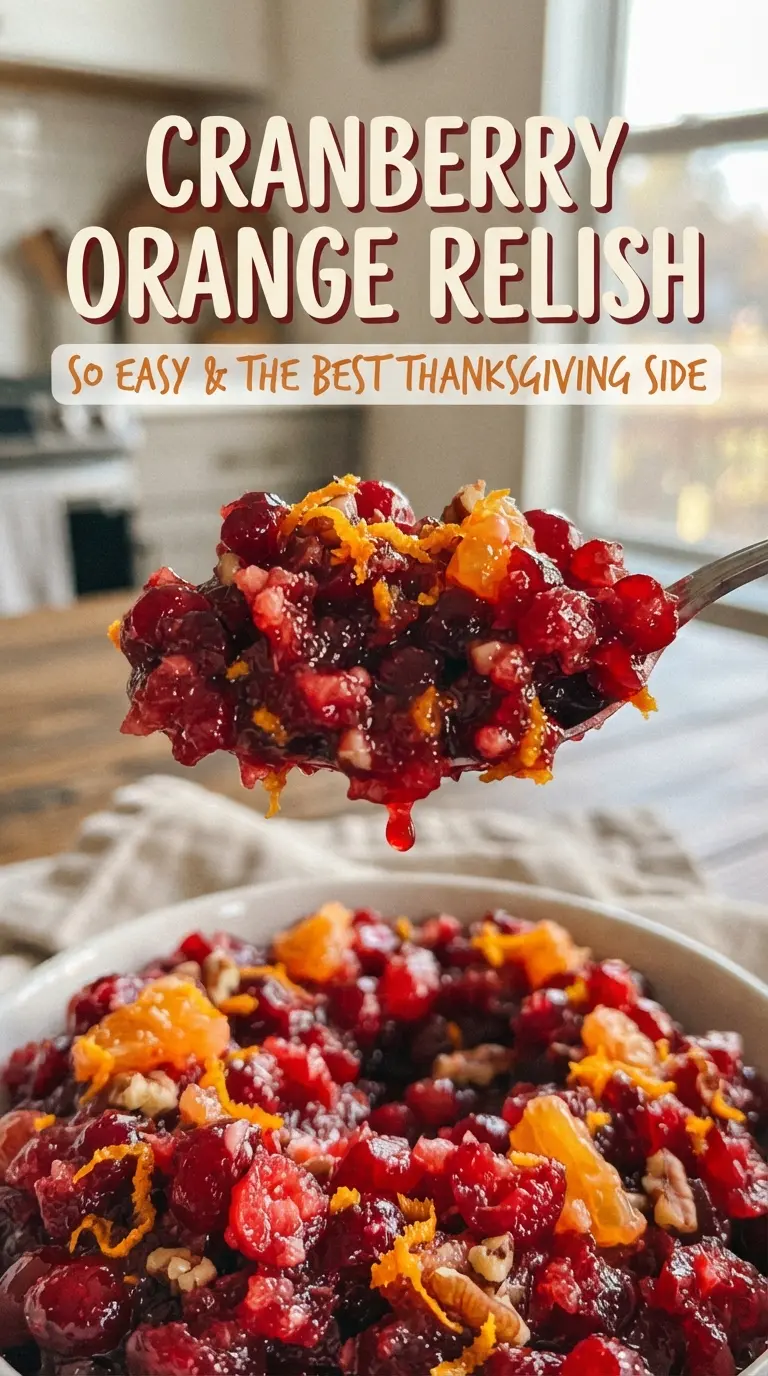
The biggest mistake with cranberry orange relish is overprocessing it. You want the berries broken down and the orange distributed evenly, but you still need tiny pieces with some shape left. If you keep pulsing until it looks smooth, the finished relish turns slumpy instead of bright and fresh, and the cranberries lose the clean pop that makes this side dish worth serving.
Sugar does more than sweeten here. It pulls juice from the cranberries and orange as the relish chills, which is why the mixture looks a little dry at first and then loosens into a glossy spoonable relish after a few hours. That resting time isn’t optional; it changes the texture and softens the orange peel just enough to make it taste balanced instead of sharp.
What the Orange Peel, Sugar, and Liqueur Are Really Doing
- Fresh cranberries — They bring the tart backbone and the color. Fresh is best for this recipe because they chop cleanly and hold their shape better than thawed frozen berries, which can get wetter and softer.
- Navel orange — The peel gives the relish its perfume and a little bitterness that keeps the sugar from making it one-note. Use a seedless or well-seeded orange and remove the seeds before chopping, or the flavor turns harsh.
- Sugar — This is what turns the chopped fruit into relish instead of salad. Granulated sugar works best because it dissolves cleanly during the chill time and pulls out enough juice to bind everything together.
- Orange liqueur or orange juice — The liqueur adds a deeper, rounder citrus note, but orange juice keeps it bright and family-friendly. If you use juice, the relish will taste a little lighter and less boozy, which is honestly great with turkey or ham.
- Fresh mint — This is garnish, but it earns its place. A few torn leaves on top make the bowl smell fresher and keep the relish from looking flat on the table.
Building the Relish So It Stays Bright, Not Mushy
Pulse, Don’t Purée
Pulse the cranberries and orange in short bursts until everything is finely chopped and evenly mixed. Stop often and scrape the bowl if your processor leaves big orange pieces behind. The right texture looks like tiny confetti, not jam, and you should still see distinct bits of cranberry skin.
Let the Sugar Pull Out the Juice
Once the sugar, liqueur or juice, and salt go in, stir until the mixture starts to look glossy. It may seem a little dry at first, but the fruit will release liquid as it chills. Cover it and give it at least four hours so the sugar can soften the peel and draw the flavors together.
Stir Before Serving
After chilling, the relish usually settles with a little liquid at the bottom. Stir it well before spooning it into a serving bowl so the texture is even from top to bottom. That final stir is where the flavor wakes up again, especially if it spent the night in the fridge.
Three Ways to Adjust Cranberry Orange Relish Without Losing Its Bite
Alcohol-Free and Brighter
Use orange juice instead of orange liqueur. The relish stays fresh and citrusy, but the flavor is a little lighter and less rounded, so I like to let it chill the full overnight when I go this route.
Less Sweet, More Tart
Cut the sugar back to 1/2 cup if you like a sharper relish. The result will be brighter and more cranberry-forward, but the texture will also be a little looser because sugar helps draw out the juices that bind everything together.
Make-Ahead for a Crowd
This relish holds well in the refrigerator for up to 4 days, and the flavor gets a little softer and more integrated by day two. It doesn’t need reheating; just stir before serving and add the mint at the last minute so it stays fresh and bright.
Storage and Reheating
- Refrigerator: Store covered for up to 4 days. The texture softens slightly as it sits, which is normal.
- Freezer: It freezes, but the texture turns softer after thawing. Freeze in a tightly sealed container for up to 1 month if you don’t mind a looser result.
- Reheating: No reheating needed. Serve it cold or cool; heating dulls the citrus and breaks down the fresh texture you worked to keep.
Answers to the Questions Worth Asking
Cranberry Orange Relish
Ingredients
Equipment
Method
- Pulse the fresh cranberries and orange chunks in a food processor until finely chopped but not pureed. Stop and scrape down the processor sides if the mixture looks uneven.
- Transfer the chopped cranberry-orange mixture to a bowl and stir in the sugar, orange liqueur (or orange juice), and salt until the sugar looks mostly dissolved. The mixture should look evenly glossy and speckled with orange.
- Cover and chill in the refrigerator at 40°F for at least 4 hours or overnight. Visual cue: it will thicken slightly and the flavors will look more cohesive.
- Stir well before serving to redistribute juices and zest flecks. Visual cue: the relish should look bright and evenly mixed again.
- Garnish with fresh mint right before serving. Visual cue: scatter small mint leaves on top for a fresh green contrast.