Southern fried cabbage turns tender and sweet in the skillet, with crisp bacon running through every bite and just enough butter to give the edges a glossy finish. When it’s cooked right, the cabbage doesn’t go mushy. It softens, picks up color, and keeps a little bite in the thicker stems while the onions melt into the bacon drippings.
The trick is giving the cabbage time in the pan without crowding it or rushing the heat. Bacon drippings do the heavy lifting here, but the butter adds richness and helps the cabbage brown instead of drying out. A small hit of sugar nudges the edges toward caramelized, and the vinegar at the end keeps the whole dish from tasting flat.
Below, I’ll walk through the one step that keeps the cabbage from steaming, plus the best way to balance the salty bacon with the sweet onion and tangy finish. If you’ve ever had fried cabbage turn watery, this version fixes that.
The cabbage got those caramelized edges I always hope for, and the vinegar at the end kept it from tasting heavy. My husband went back for seconds before I even sat down.
Love that sweet-savory bacon and cabbage skillet? Save it to Pinterest for an easy Southern side with caramelized edges and a tangy finish.
The Part That Keeps Fried Cabbage From Turning Watery
Cabbage gives off a lot of moisture as it cooks, and that’s where most skillet versions go wrong. If the pan is crowded or the heat is too low, the cabbage steams in its own liquid and stays pale and soft instead of picking up those golden edges. The fix is simple: give the bacon time to render, keep the heat at a steady medium, and stir just often enough to move the cabbage around without trapping steam.
The other thing that matters is the order of the seasonings. Salt early pulls moisture out, sugar helps encourage browning, and vinegar goes in at the end so the cabbage keeps its shape and the flavor stays bright. Add the vinegar too soon and it gets muted. Add it at the end and the whole pan wakes up.
What Each Ingredient Is Doing in the Skillet
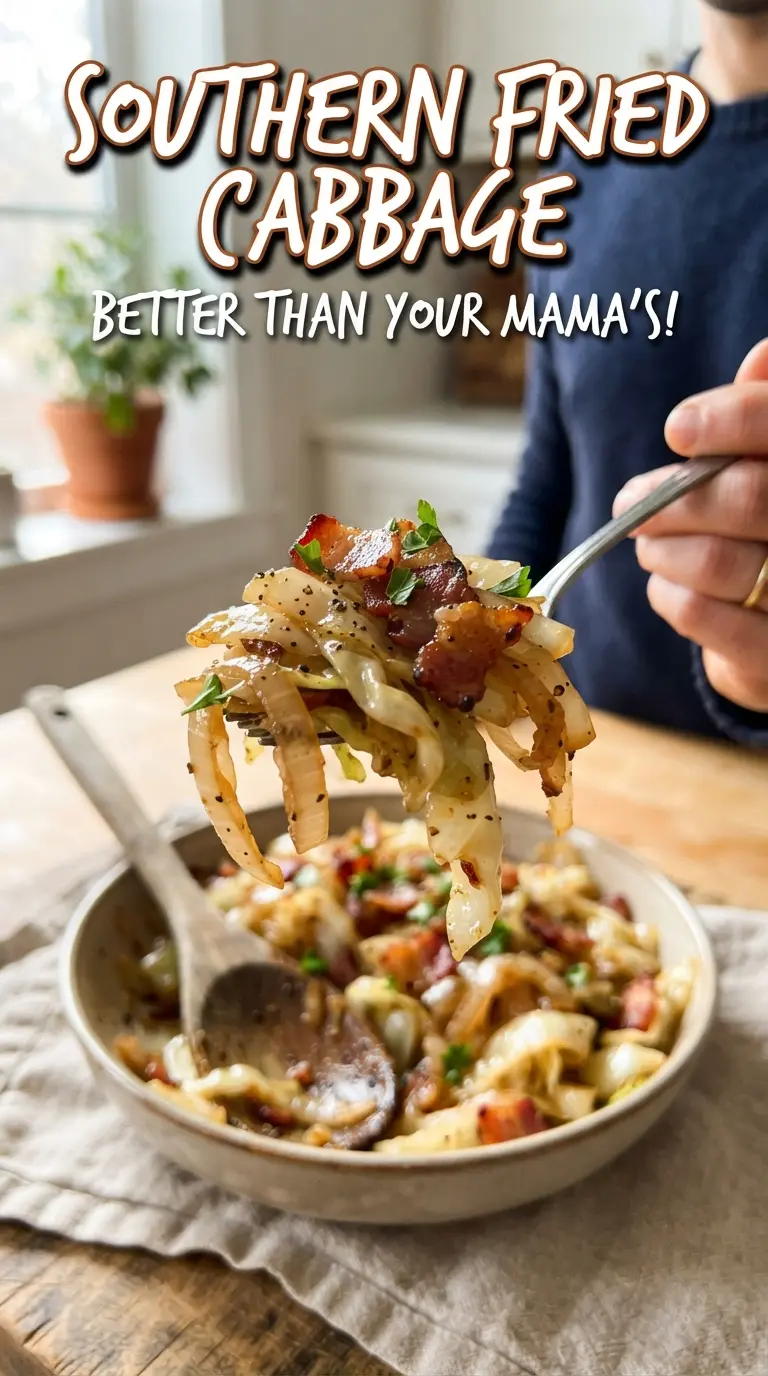
- Bacon — This is the backbone of the dish. The rendered fat carries the onion and cabbage, and the crispy pieces stirred back in at the end give you salty crunch in the finished skillet.
- Yellow onion — A sweet onion works best because it softens into the bacon drippings and adds enough sweetness to balance the cabbage. Slice it thin so it melts into the pan instead of staying sharp.
- Green cabbage — Use a fresh, firm head with tight leaves. Older cabbage gets limp and dull-tasting. Chop it into bite-size pieces so it wilts evenly but still keeps some texture.
- Butter — Bacon drippings bring flavor, but butter gives the pan a richer finish and helps the edges of the cabbage brown instead of drying out. If you need a dairy-free version, use extra bacon fat or a neutral oil.
- Apple cider vinegar — Don’t skip this. It cuts through the richness and keeps the dish from tasting heavy. Lemon juice can work in a pinch, but vinegar gives the most classic Southern finish.
- Sugar — This isn’t for sweetness in the dessert sense. It helps the cabbage and onions caramelize a little faster and balances the pepper and vinegar.
Building the Skillet in the Right Order
Render the Bacon First
Cook the chopped bacon over medium heat until the fat has rendered and the pieces are crisp at the edges. Pull the bacon out with a slotted spoon and leave the drippings in the skillet. If the bacon starts to scorch before it crisps, the heat is too high; lower it and let the fat do its job slowly.
Softening the Onion and Garlic
Add the sliced onion to the hot drippings and cook until it turns soft and translucent, about 5 minutes. Stir in the garlic only for the last 30 seconds so it smells fragrant but doesn’t brown. Burnt garlic turns bitter fast, and there’s no saving that flavor once it happens.
Cooking the Cabbage Until It Catches Color
Add the cabbage, butter, salt, pepper, red pepper flakes, and sugar. Stir enough to coat everything, then let the cabbage sit in the skillet between stirs so it can take on color at the edges. If the pan looks dry, the cabbage may have been chopped too large or the heat may be too low; raise the heat slightly and keep cooking until the thicker pieces are tender but not limp.
Finishing With Vinegar and Bacon
Once the cabbage is tender and caramelized, stir in the apple cider vinegar and the crispy bacon. The vinegar should hit the pan at the end, where it sharpens the flavor without steaming off. Taste it right away; if it needs more lift, another small splash of vinegar works better than more salt.
How to Adapt This Skillet Cabbage for Different Tables
Make it meat-free
Leave out the bacon and cook the onion in butter and a little olive oil instead. You’ll lose the smoky depth, but the vinegar, pepper, and caramelized cabbage still carry the dish well. A pinch of smoked paprika can help replace some of that bacon-style savoriness.
Make it dairy-free
Swap the butter for extra bacon drippings or a neutral oil. The dish will be a little less rich, but the texture stays the same as long as you keep the cabbage moving in the pan and don’t let it dry out.
Skip the sugar for a lower-carb version
The sugar helps browning, but you can leave it out if you want a more savory skillet. Cook the cabbage a few minutes longer so it gets those browned edges naturally from the onion and bacon fat.
Make it ahead for a holiday spread
Cook it all the way through, cool it, then reheat gently in a skillet with a spoonful of water or butter. The cabbage softens a little more after chilling, but the flavor holds up well and the vinegar keeps it from tasting flat the next day.
Storage and Reheating
- Refrigerator: Store leftovers in an airtight container for up to 4 days. The cabbage softens a bit more, but the flavor stays good.
- Freezer: It freezes, but the texture gets softer after thawing. Freeze in a sealed container for up to 2 months if you don’t mind a more tender result.
- Reheating: Warm it in a skillet over medium-low heat with a small splash of water or butter. Don’t blast it in the microwave for too long or the cabbage can turn limp and the bacon loses its texture.
Answers to the Questions Worth Asking
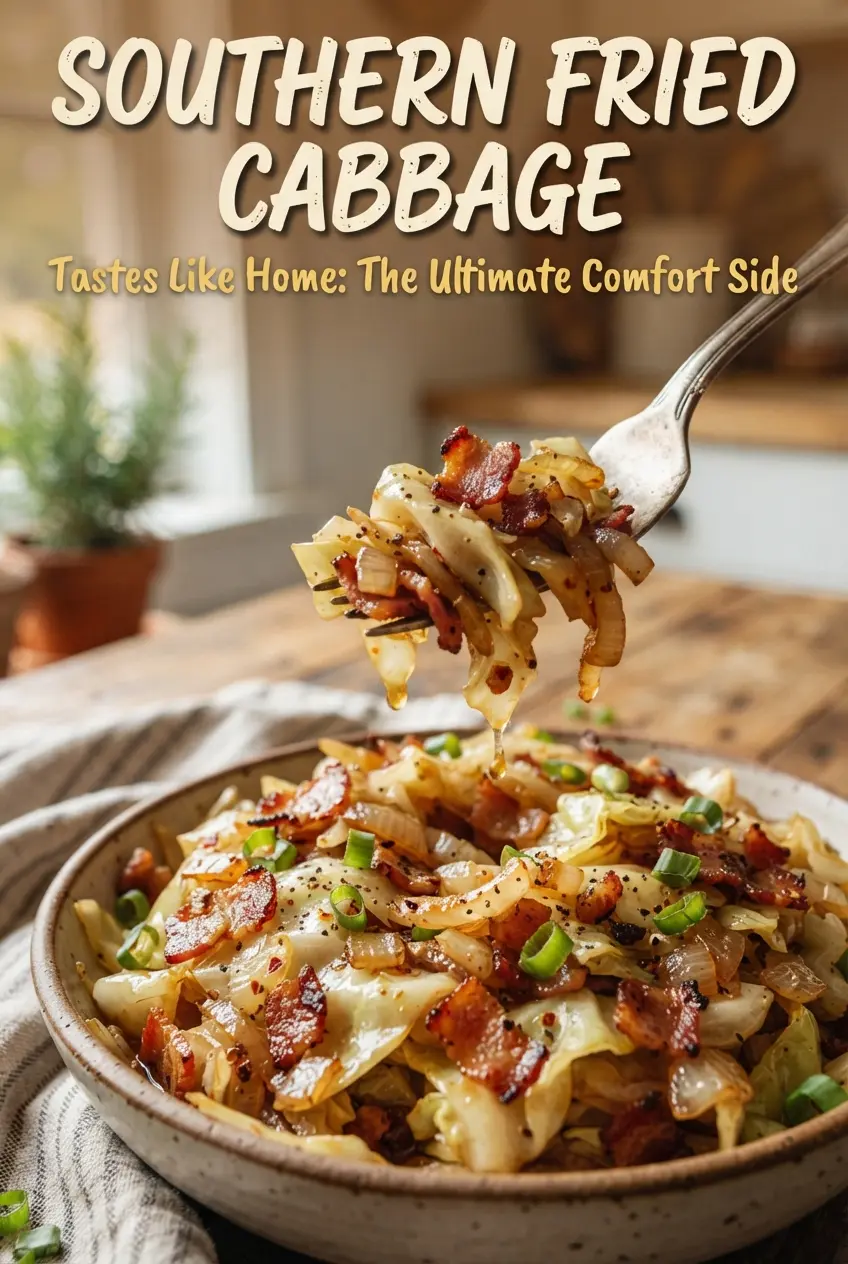
Southern Fried Cabbage
Ingredients
Equipment
Method
- Cook the bacon in a large cast iron skillet over medium heat for 8 minutes, stirring until crisp. Remove the bacon and leave the drippings in the skillet.
- Add the onion to the skillet and cook for 5 minutes, stirring occasionally, until softened. Stir in the garlic and cook for 30 seconds.
- Add the cabbage, butter, salt, black pepper, red pepper flakes, and sugar to the skillet and toss to coat. Cook for 12-15 minutes, stirring occasionally, until the cabbage is tender and caramelized at the edges.
- Stir in the apple cider vinegar and the crispy bacon until evenly combined. Serve warm.