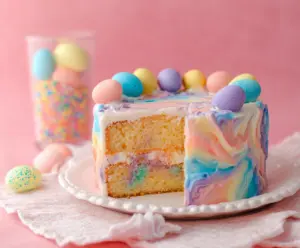
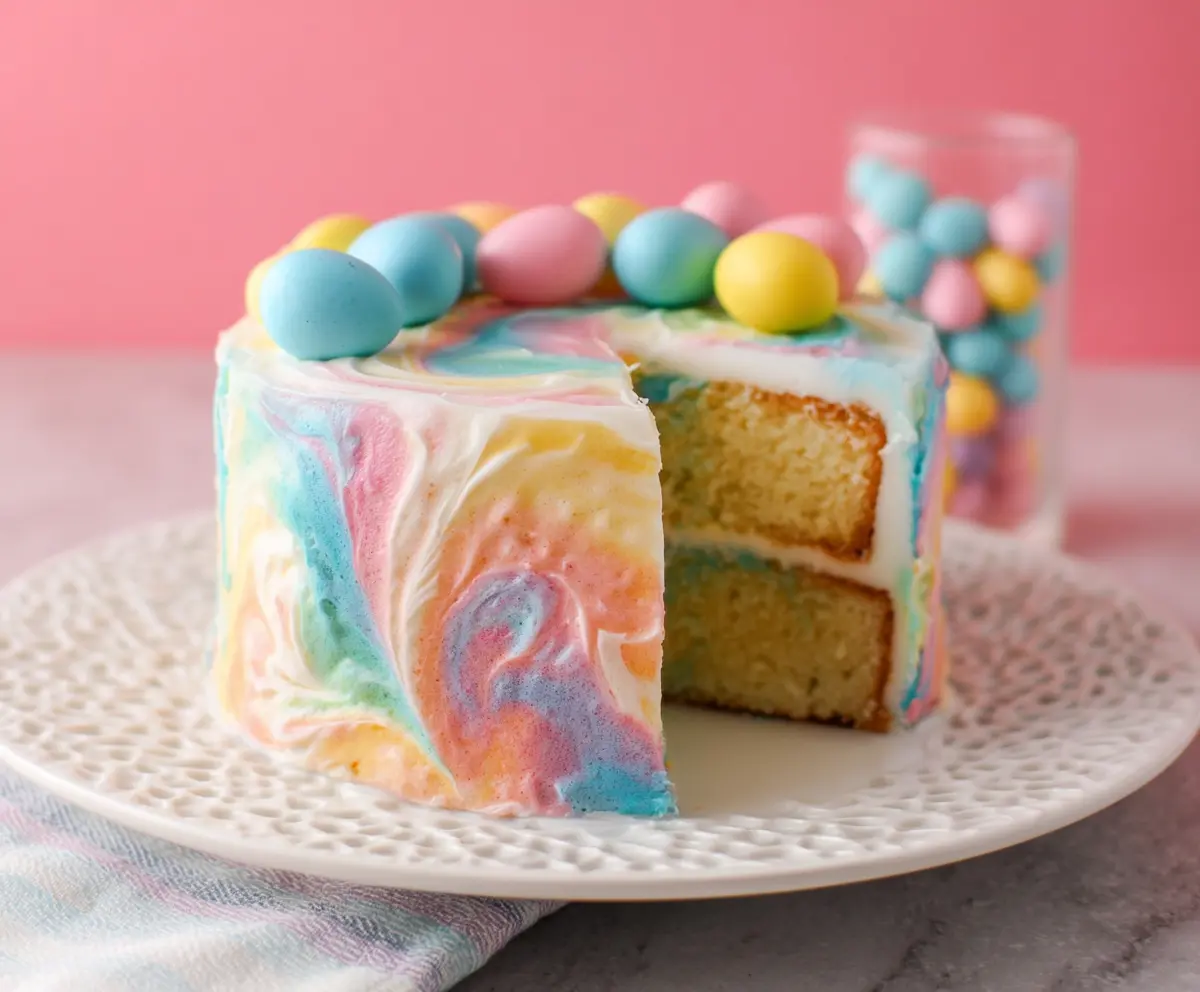
This bright and fun Swirled Easter Cake is perfect for celebrating! With colorful layers of cake and fluffy frosting, it brings joy to any gathering.
The best part? You can let your creativity shine with the swirls! I love to watch everyone smile when they see those cheerful colors on their plates. 🐰🎂
Key Ingredients & Substitutions
All-Purpose Flour: This is the base for the cake. If you want to make a gluten-free version, you can try a gluten-free all-purpose blend. I’ve had great results with blends that contain xanthan gum.
Unsalted Butter: It’s important for a creamy texture. If you need a dairy-free option, use a plant-based butter or vegan margarine. Just ensure it’s softened for easy mixing!
Granulated Sugar: This adds sweetness. You can replace it with coconut sugar for a slightly different flavor, or use a sugar substitute if you’re looking for something lower in calories.
Whole Milk: This adds moisture. You can substitute with almond milk, soy milk, or oat milk for a dairy-free alternative, but keep in mind it might change the cake’s texture slightly.
How Do I Create a Beautiful Swirled Effect with the Frosting?
The swirled effect on the frosting can be tricky, but here are some tips to get it just right. You want to create beautiful colored swirls without mixing them too much.
- Start with a base layer of plain frosting on the cake. This acts as a glue for the colored frosting.
- Dip a small spatula into each colored frosting and place dollops around the cake. Try to space them out so they don’t blend too much.
- Gently swirl the spatula through the colors, being careful not to over-mix. You want to maintain the distinct colors.
- If you find it’s getting too mixed, wipe off the spatula and start again in that area.
Practice makes perfect, so don’t worry if it doesn’t look perfect the first time! Enjoy the process.
How to Make a Swirled Easter Cake
Ingredients You’ll Need:
For the Cake:
- 2 ½ cups all-purpose flour
- 2 ½ tsp baking powder
- ½ tsp salt
- 1 cup unsalted butter, softened
- 1 ¾ cups granulated sugar
- 4 large eggs
- 1 tbsp vanilla extract
- 1 cup whole milk
- Pastel candy-coated chocolate eggs (for inside the cake and decoration)
For the Buttercream Frosting:
- 1 cup unsalted butter, softened
- 4 cups powdered sugar, sifted
- 2-4 tbsp milk or heavy cream
- 1 tsp vanilla extract
- Gel food coloring in pastel colors (pink, blue, purple, yellow)
How Much Time Will You Need?
This delightful Easter cake will take about 45 minutes of active preparation time, plus an additional 20 minutes to chill the crumb coat. Don’t forget to allow 28-33 minutes for baking, and perhaps an hour for cooling completely before frosting. Overall, it’s not too time-consuming for a festive treat!
Step-by-Step Instructions:
1. Preheat and Prepare Pans:
Start by preheating your oven to 350°F (175°C). Get your two 8-inch round cake pans ready by greasing and flouring them, or you can line them with parchment paper for easy removal later.
2. Prepare the Cake Batter:
In a medium bowl, whisk the flour, baking powder, and salt together. In a large mixing bowl, beat the softened butter with the granulated sugar using an electric mixer until it’s light and fluffy. Then, add the eggs one at a time, making sure to mix well after each addition. Stir in the vanilla extract. Now, gradually mix in the flour mixture and milk, starting and ending with the flour, until everything is just combined. Be careful not to overmix!
3. Add Colorful Candy Eggs:
Gently fold in some pastel candy-coated chocolate eggs into the cake batter. You want enough so that you can see some peeking through the slices of cake, but not so many that they overcrowd the batter.
4. Bake the Cakes:
Pour the batter evenly into the two prepared cake pans. Place them in the oven and bake for 28-33 minutes, or until a toothpick inserted into the center comes out clean. Let them cool in the pans for about 10 minutes before carefully transferring them to a wire rack to cool completely.
5. Prepare the Buttercream Frosting:
While the cakes are cooling, let’s make the frosting! Beat the softened butter in a mixing bowl until it’s creamy. Gradually add the powdered sugar, one cup at a time, and mix well after each addition. Stir in the vanilla extract. Add milk or heavy cream one tablespoon at a time until you reach your desired frosting consistency. Now, divide the frosting into four small bowls and tint each with a different pastel gel food coloring: pink, blue, purple, and yellow.
6. Create the Swirled Effect:
On a large plate or your cake board, spread some plain frosting as a base layer. Then, carefully dollop each color of frosting around the sides and top of the cake. With an offset spatula or knife, gently swirl the colors together to create a beautiful marbled effect. Just be careful not to overmix; you want to see those lovely pastel colors!
7. Assemble the Cake:
Place one layer of the cooled cake on your serving plate. Spread a layer of buttercream frosting evenly over the top of that layer. Carefully place the second cake layer on top. Now, frost the entire cake with a thin crumb coat, which helps seal in any crumbs. Chill the cake in the fridge for about 20 minutes to set that layer. After chilling, apply the swirled frosting to the outside, just like you did before!
8. Decorate:
Finish off your beautifully decorated cake by topping it with pastel candy-coated chocolate eggs. Arrange them evenly around the edge for a lovely festive touch.
9. Serve:
Once all your hard work is done, it’s time to slice the cake and enjoy this festive, colorful Easter treat with friends and family!
Can I Use Cake Flour Instead of All-Purpose Flour?
Yes, you can! Cake flour will give you a lighter and fluffier texture, which is perfect for a cake. Just remember to adjust the amount slightly, as cake flour is more absorbent. Use about 2 ¼ cups for this recipe.
How Do I Store Leftover Cake?
To store any leftover cake, wrap it tightly in plastic wrap or place it in an airtight container. Keep it in the fridge for up to 3 days. If you want to extend its freshness, you can freeze individual slices. Just make sure to wrap them well!
Can I Make This Cake Gluten-Free?
Absolutely! Simply substitute the all-purpose flour with a gluten-free all-purpose blend. Make sure the blend contains xanthan gum, which helps mimic the texture of regular flour.
Is There a Non-Dairy Alternative for the Buttercream Frosting?
Yes! You can use a dairy-free butter substitute or coconut oil instead of regular butter. For a lighter frosting, you can also try whipped coconut cream as a base. Just remember that the flavor and texture will differ slightly!