Sizzling skillet shrimp fajitas land fast, but they still need the right kind of heat to get that charred-edge sweetness on the peppers and the juicy snap from the shrimp. When the pan is hot enough, the vegetables blister instead of steaming, the spices bloom in the oil instead of tasting dusty, and the shrimp cook just long enough to stay tender.
The trick is building the whole dish in a cast iron skillet and keeping the cook time tight. Shrimp need only a few minutes, so the peppers and onions get a head start and the garlic goes in late, where it can perfume the pan without burning. A bright squeeze of lime at the end wakes everything up and keeps the skillet from tasting heavy.
Below you’ll find the little timing cues that keep the shrimp from turning rubbery, plus a few smart swaps if you want to change the heat level or make the fajitas work with what you already have on hand.
The peppers got those browned edges I was hoping for, and the shrimp stayed tender instead of getting tough. I also loved that the garlic only cooked for a few seconds before the shrimp went in, so nothing tasted burned.
Love those charred peppers and juicy shrimp? Save this skillet shrimp fajitas recipe for the nights when you want dinner on the table fast with almost no cleanup.
Why the Shrimp Go in After the Vegetables
Shrimp cook fast enough that they punish slow-moving pans. If they go in before the peppers and onions have picked up a little color, the whole skillet turns soft and watery before the shrimp even have a chance to sear. Starting with the vegetables gives them room to char, and pushing them to the sides creates a hot center for the garlic, spices, and shrimp.
The other important part is heat management. A cast iron skillet holds onto heat better than a thin pan, which is what helps the shrimp cook in short, sharp bursts instead of sitting in their own moisture. If your skillet isn’t hot enough, you’ll smell steaming vegetables instead of sizzling edges, and the shrimp will look pale and rubbery instead of pink and firm.
- High heat matters here because it drives off moisture quickly and builds the light char that makes fajitas taste like fajitas.
- The garlic goes in late so it perfumes the oil without scorching. Burnt garlic takes over the whole pan in seconds.
- The lime comes at the end to keep the citrus bright. If it cooks too long, it loses that fresh pop.
What Each Ingredient Is Actually Doing in This Skillet
- Large shrimp — Bigger shrimp stay juicy a little longer and are easier to sear without overcooking. Smaller shrimp work, but they need even less time in the pan, so watch them closely.
- Bell peppers and onion — This is the fajita backbone. Slice them into even strips so they soften at the same pace and pick up those browned edges instead of turning limp.
- Olive oil — You need enough to coat the pan and help the spices bloom. A neutral oil works too, but olive oil gives the skillet a little more depth.
- Chili powder, cumin, and paprika — This trio gives the dish its warm, smoky base. If you want a little extra heat, add a pinch of cayenne, but don’t swap out the cumin; it gives the fajitas their recognizable flavor.
- Lime juice — Fresh lime is worth it here. Bottled lime juice tastes flat, and this dish depends on that last sharp squeeze to pull everything together.
Building the Sizzle Without Overcooking the Shrimp
Bloom the spices in the hot center of the skillet
Let the oil get fully hot before anything hits the pan. The peppers and onions should sizzle the second they touch down, and after a few minutes they’ll start to soften at the edges and pick up some char. Push them to the sides and add the garlic and spice mix to the middle, where the oil is hottest. Stir just until the garlic smells fragrant, because if you let it sit too long it burns and turns bitter.
Cook the shrimp in a single layer
Add the shrimp directly to the hot center and spread them out so they make contact with the skillet. They should turn opaque on the first side before you flip them, and the second side only needs another minute or so. If the pan looks crowded or the shrimp are stacking on top of each other, they steam instead of sear, so work in batches if your skillet is on the smaller side.
Finish with lime and serve right away
Once the shrimp are pink and just cooked through, toss everything together so the spices coat the vegetables and shrimp evenly. Squeeze the lime over the top while the skillet is still hot; the steam helps the juice spread through the pan. Serve immediately with warm tortillas, because fajitas lose their best texture when they sit around too long.
How to Adapt These Fajitas for Different Nights
Dairy-Free and Naturally Gluten-Free
The skillet itself is already dairy-free, and it works perfectly with gluten-free corn tortillas instead of flour tortillas. Just check your toppings and skip any sour cream or salsa that contains thickeners if you’re serving someone who needs a stricter gluten-free setup.
More Heat Without Losing Balance
Add cayenne or a sliced jalapeño with the peppers if you want the fajitas to bite back a little harder. Keep the lime at the end, because the acid softens the heat and keeps the whole skillet from tasting one-note.
Swap the Shrimp for Chicken
Thinly sliced chicken breast or thigh works well if you want a sturdier filling. Chicken needs a longer cook time, so brown it before the vegetables soften too much, then finish it all together once the juices run clear. You lose the fast-cooking snap of shrimp, but you gain a richer, meatier skillet.
Make It a Lower-Carb Plate
Serve the fajita mixture over cauliflower rice, shredded lettuce, or a mix of greens instead of tortillas. The shrimp and peppers carry enough seasoning on their own, so you don’t need to change the spice mix; just add a little extra lime and cilantro to keep the plate bright.
Storage and Reheating
- Refrigerator: Store the shrimp and vegetables in an airtight container for up to 2 days. The peppers soften a bit, but the flavor stays good.
- Freezer: I don’t recommend freezing this one. Shrimp turn chewy after thawing, and the vegetables lose their texture.
- Reheating: Warm gently in a skillet over low heat just until heated through, or use short bursts in the microwave. High heat will overcook the shrimp fast, which is the easiest way to ruin leftovers.
Answers to the Questions Worth Asking
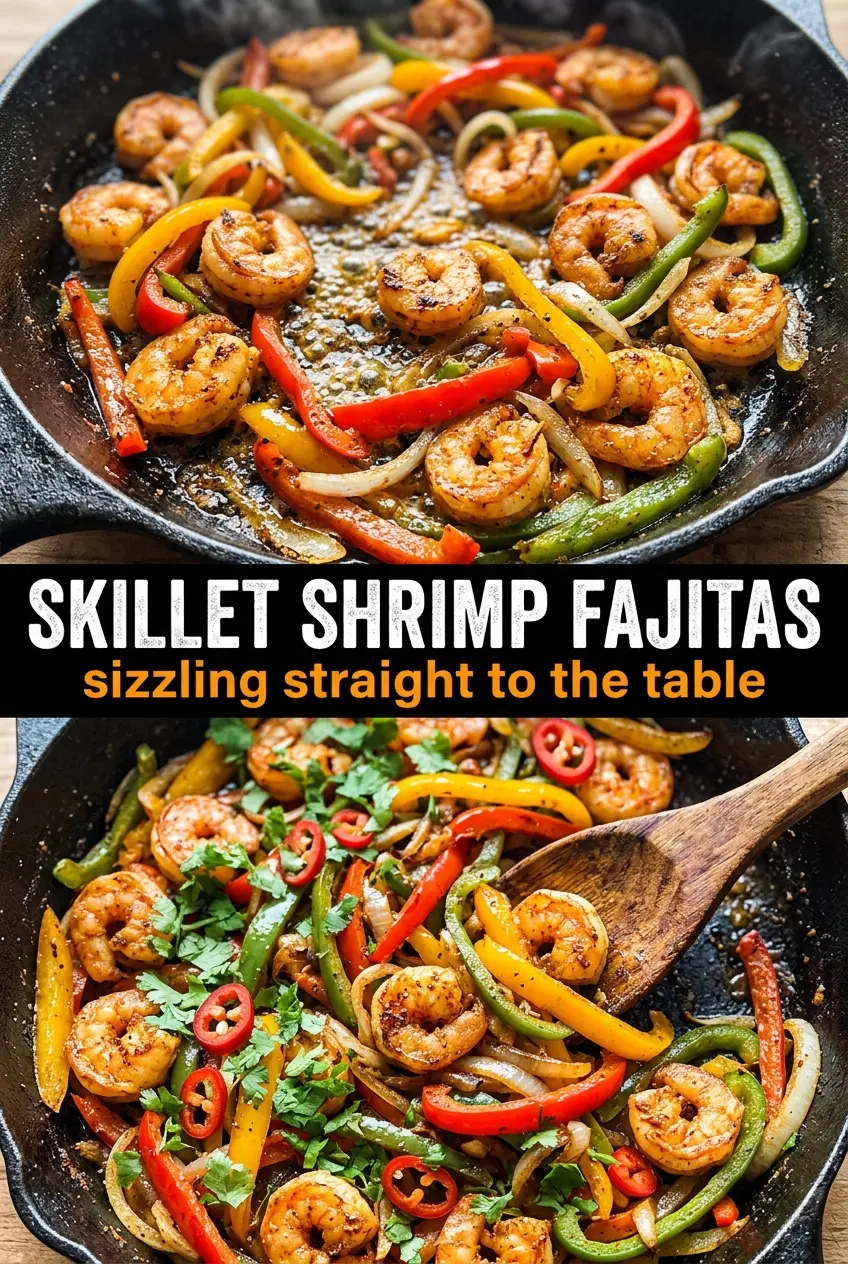
Skillet Shrimp Fajitas
Ingredients
Equipment
Method
- Combine chili powder, cumin, paprika, salt, and pepper in a small bowl, stirring until evenly mixed and looking uniform.
- Heat olive oil in a large cast iron skillet over high heat until very hot, with a shimmering surface and immediate sizzle when food hits.
- Add bell peppers and white onion, cook for 3-4 minutes until slightly charred, then push them to the sides of the skillet to create an open center.
- Add minced garlic and the spice mixture to the center, cook for 30 seconds until fragrant, releasing a noticeable aroma without burning.
- Add shrimp and cook for 2-3 minutes per side until pink and cooked through, turning once so both sides get brief contact with the hot pan.
- Toss everything together and squeeze fresh lime juice over the entire skillet, letting it sizzle on contact and coat the shrimp and vegetables.
- Serve immediately on a sizzling skillet with warm flour tortillas and toppings (sour cream, guacamole, salsa, and cilantro) on the side.