Shrimp fajitas work because the shrimp stay juicy while the peppers and onions keep a little bite, all tangled together in a skillet that picks up lime, garlic, and chili spice in every turn. The best versions don’t drown the shrimp in marinade or cook the vegetables until they collapse. You want pink, snappy shrimp with charred edges and vegetables that still taste like themselves.
What makes this version worth keeping in rotation is the order of the pan work. The peppers and onions get a head start so they can soften and take on a little color before the shrimp goes in. The spice mixture is added near the end instead of sitting on the seafood too long, which keeps the lime bright and the shrimp from turning mealy. That small shift changes the whole dish.
Below, I’ll walk through the one detail that keeps shrimp fajitas from going watery, plus the ingredient swap that helps if you’re cooking with what you already have on hand. There’s also a storage note, because leftovers can be just as good the next day if you reheat them the right way.
The shrimp stayed tender and the peppers still had a little crunch, which made the whole skillet taste fresh instead of soggy. I liked that the lime spice mixture went in at the end because it kept the flavor bright.
Save these shrimp fajitas for the nights when you want a fast skillet dinner with juicy shrimp, crisp peppers, and lime-spice flavor.
The Trick to Juicy Shrimp Is Not Marinating Longer
Shrimp go from perfect to rubbery fast, and a long soak in lime juice is part of the problem. Acid starts changing the texture before the skillet ever heats up, so this dish works better when the spice mixture is added close to the end and the shrimp spend only a few minutes in the pan. That keeps the seasoning bright without curing the seafood.
The other mistake is crowding the pan so the shrimp steam instead of sear. You want enough heat to hear a sharp sizzle when the shrimp hit the skillet. If the pan goes quiet, the vegetables probably gave off too much moisture or the burner is too low. Let the liquid cook off and keep the shrimp in a single layer as much as possible.
- Heat — Medium-high gives the peppers a little color and the shrimp a quick sear. Lower heat softens everything without building the fajita flavor you want.
- Timing — The shrimp only need a few minutes total. If they curl into tight little O-shapes, they’ve gone too far.
- Acid — Lime brightens the final dish, but it belongs near the end so it doesn’t start “cooking” the shrimp on the counter.
What Each Ingredient Is Actually Doing in the Skillet
The shrimp carry the dish, so buy the best you can find if there’s a choice between fresh-looking shrimp and a bargain bag that smells overly briny. Large shrimp hold up better in a hot skillet and are easier to cook evenly. Bell peppers and onion bring sweetness and texture, and they’re worth slicing evenly so the pan cooks in one rhythm instead of giving you some soft pieces and some raw ones.
Garlic goes in with the shrimp, not at the very beginning, because it burns quickly in a hot pan. The olive oil helps everything carry the spice mixture across the skillet, while the chili powder, cumin, and paprika build that classic fajita base without needing a long marinade. Flour tortillas are the best choice here because they stay soft and fold around the filling without breaking apart.
- Shrimp — Use large shrimp for the best texture. If you only have smaller shrimp, cut the final cooking time down and watch closely.
- Bell peppers and onion — Fresh, firm vegetables keep a little crunch. Frozen peppers will release too much water and soften the whole skillet.
- Lime juice — Fresh lime gives the cleanest finish. Bottled lime juice works in a pinch, but it tastes flatter and can make the dish feel sharper.
- Spices — Chili powder, cumin, and paprika bring warmth and color. Smoked paprika is a good swap if you want a deeper, slightly smoky finish.
Building the Fajita Skillet in the Right Order
Softening the Peppers First
Heat two tablespoons of oil in a large skillet over medium-high heat, then add the sliced peppers and onion. Cook until they’re slightly softened and you see a few browned edges, about 4 to 5 minutes. If they start sticking hard or scorching before they soften, the pan is too hot; pull the heat back a notch so they cook instead of burn. You’re looking for vegetables that still have shape, not a pile of limp strips.
Adding the Shrimp at the Right Moment
Push the vegetables to the side, add the remaining oil, then drop the shrimp and garlic into the center of the skillet. The garlic should smell fragrant within a minute, not dark and bitter. If the shrimp are still translucent on one side after a minute or two, give them a quick toss and spread them back out so they cook evenly. The goal is pink, opaque shrimp with just enough curl to hold their shape.
Finishing with the Lime-Spice Mixture
Pour the lime-spice mixture over everything and toss to coat. This is where the skillet comes together, and it’s also where people overcook the shrimp because they keep stirring for too long. Once the shrimp are pink and the vegetables are glossy and coated, stop. Carryover heat will finish the last little bit once the pan comes off the burner, and that’s how you keep the seafood tender.
How to Adapt These Shrimp Fajitas Without Losing the Point
Gluten-Free Serving Style
Skip the flour tortillas and serve the shrimp and vegetables in corn tortillas or over rice. Corn tortillas give you a more delicate bite and a little more rustic texture, while rice turns the skillet into a bowl meal that still carries the same lime and chili flavor.
Dairy-Free Finish
Leave off the sour cream and load up on guacamole, cilantro, and extra lime wedges. The fajitas still feel rich because the avocado gives you creaminess without changing the bright, smoky balance of the pan.
Make It Spicier
Add a pinch of cayenne or sliced jalapeños with the peppers and onions. That gives the heat a chance to soften into the vegetables instead of hitting you in one sharp burst at the end.
Storage and Reheating
- Refrigerator: Store leftovers for up to 2 days. The shrimp stay safe, but the vegetables soften a bit as they sit.
- Freezer: I don’t recommend freezing the finished skillet. Shrimp and peppers both lose their best texture after thawing.
- Reheating: Warm gently in a skillet over low heat just until the shrimp are heated through. Microwaving too long makes the shrimp tough and the vegetables watery, which is the quickest way to lose what makes this dish good.
Questions I Get Asked About This Recipe
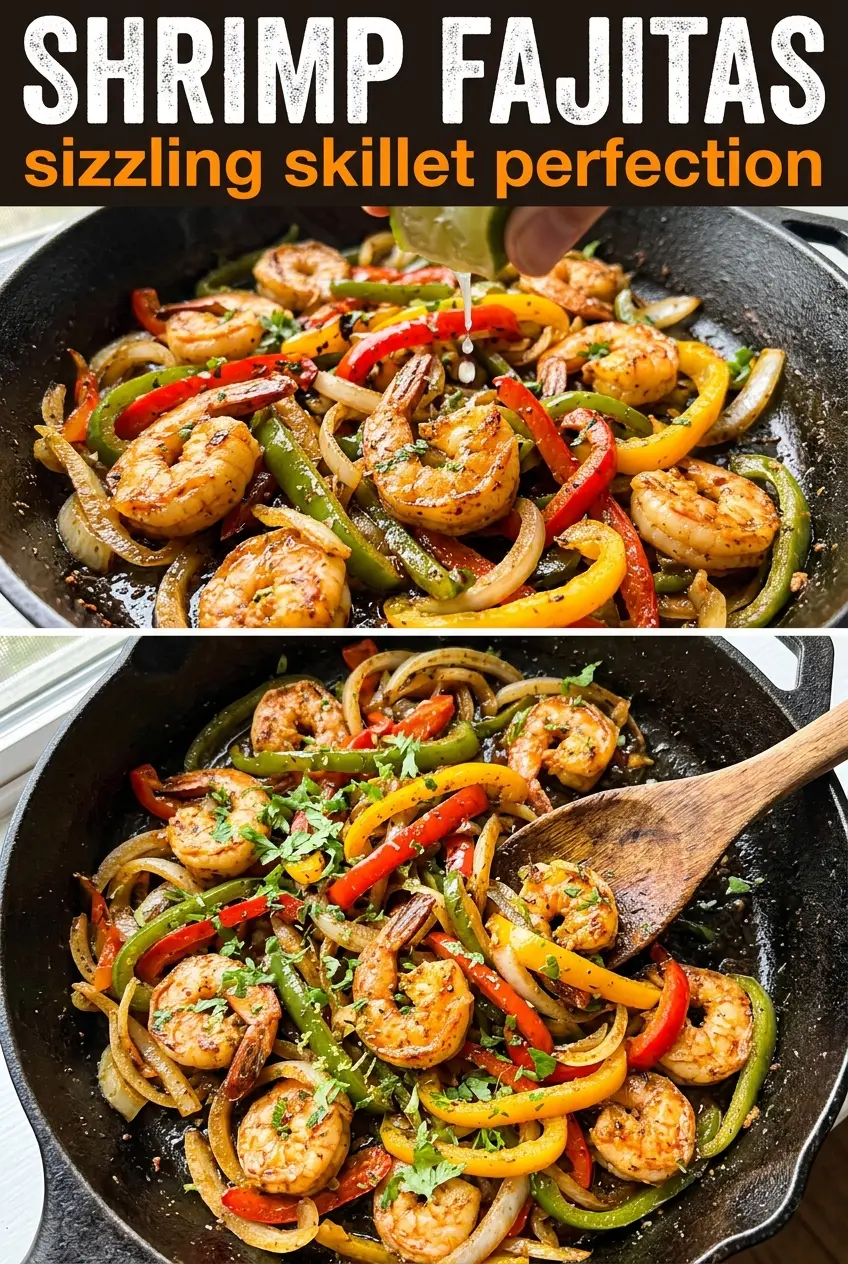
Shrimp Fajitas
Ingredients
Equipment
Method
- In a small bowl, combine lime juice, chili powder, ground cumin, paprika, salt, and pepper until evenly mixed.
- Heat 2 tablespoons olive oil in a large skillet over medium-high heat.
- Add bell peppers and onion and cook for 4-5 minutes, stirring occasionally, until slightly softened.
- Push the vegetables to the side and add the remaining 1 tablespoon olive oil to the open space of the skillet.
- Add shrimp and garlic to the center and cook for 1 minute, until fragrant, without over-stirring.
- Pour the lime-spice mixture over the shrimp and vegetables, tossing to coat evenly.
- Continue cooking for 5-6 minutes, stirring occasionally, until the shrimp are pink and cooked through.
- Serve immediately with warm flour tortillas and desired toppings, including sour cream, guacamole, cilantro, and lime wedges.