Rolled tortillas stuffed with tender shrimp and blanketed in jalapeño cream sauce hit that sweet spot between comforting and bright. The sauce stays silky, the shrimp stay juicy, and the melted cheese on top gives the whole dish enough richness to feel like a real dinner without weighing everything down.
What makes this version work is the balance in the sauce. Roasting the jalapeños takes the raw edge off and brings out a deeper pepper flavor, while blending them with onion, garlic, cream, broth, and lime keeps the finish fresh instead of heavy. Straining the sauce is worth the extra minute too; it gives you that smooth, spoonable texture that clings to each enchilada instead of turning grainy or chunky in the oven.
Below, you’ll find the small details that matter most: how to keep the shrimp from overcooking, why the sauce should be smooth before it goes in the pan, and which swaps still hold onto the same creamy, green heat.
The shrimp stayed tender and the jalapeño sauce baked up smooth instead of splitting. I loved that the lime kept it from tasting too rich, and my husband went back for a second helping.
Save these shrimp enchiladas with jalapeño cream sauce for the nights when you want creamy comfort with a little heat.
The Part That Keeps the Sauce Smooth Instead of Split
The biggest mistake with cream-based enchilada sauce is blasting it with heat after the dairy goes in. Heavy cream can handle some warmth, but once it starts simmering hard, the sauce can separate and lose that velvety finish. Blending the vegetables first, then straining the mixture before it hits the pan, gives you a smoother base that thickens more evenly in the oven.
Roasting the jalapeños matters too. Raw peppers can taste sharp and one-dimensional, while roasted peppers bring a rounder heat and a little sweetness. The lime juice adds brightness, but it also keeps the sauce from tasting flat once the cheese melts on top.
- Roasted jalapeños — Roasting softens the bite and deepens the pepper flavor. If you skip this step, the sauce tastes hotter and less balanced.
- Fine sieve — This is what gives the sauce its restaurant-style texture. It catches the onion and pepper fibers that would otherwise make the sauce look broken or rough.
- Shredded cheese — Use a cheese that melts cleanly, like Monterey Jack or a Mexican blend. Pre-shredded works in a pinch, but freshly shredded melts smoother.
What Each Ingredient Is Actually Doing in These Enchiladas
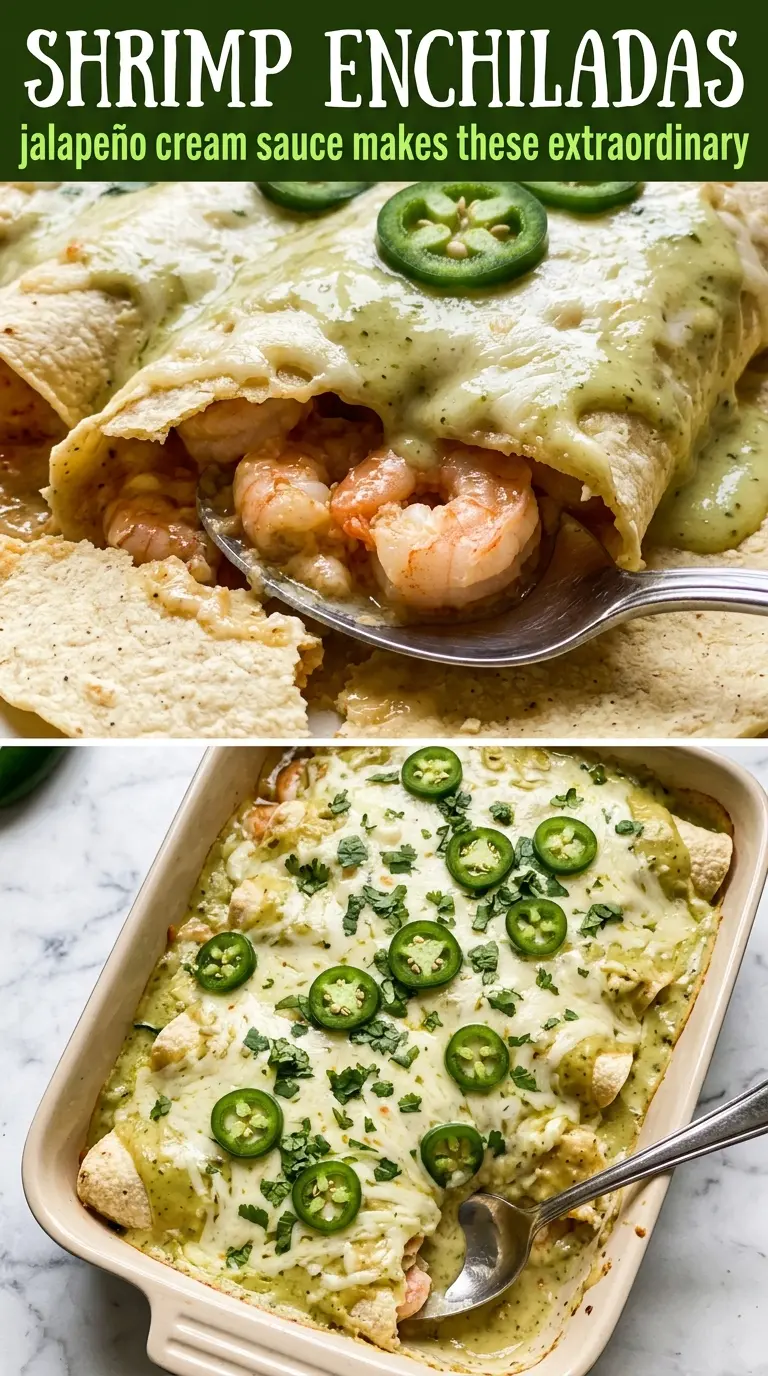
- Shrimp — Large shrimp hold up best here because they stay juicy after baking. Chop them after cooking so they tuck neatly into the tortillas without tearing them.
- Flour tortillas — These roll tightly and stay soft under the sauce. Corn tortillas can work, but they need to be warmed first or they’ll crack before you can fill them.
- Heavy cream — This is what gives the sauce its body. Half-and-half will work in a lighter version, but the sauce won’t coat the enchiladas as luxuriously.
- Chicken broth — It loosens the sauce without making it bland. Use a good-tasting broth here, since it carries the pepper and garlic flavor through the whole pan.
- Lime juice — Add it at the blending stage so the sauce tastes bright all the way through. Lemon changes the flavor more sharply, so lime is the better swap if you need one.
- Butter — A small amount in the skillet helps the shrimp cook fast and keeps them from sticking. Olive oil works too, but butter adds a little richness that fits the sauce.
Building the Pan So the Shrimp Stays Tender
Roasting and Blending the Sauce Base
Roast the jalapeños until the skins blister and darken in spots, then seed them before blending so the sauce has warmth without turning harsh. Blend them with the onion, garlic, cream, broth, and lime until the mixture looks completely smooth and pale green. If the blender leaves it a little foamy, let it sit for a minute before straining so the bubbles don’t make the sauce look airy instead of silky.
Straining for a Cleaner Finish
Push the sauce through a fine sieve into a saucepan. Don’t skip this if you want the enchiladas to look polished and spoon cleanly. The strained sauce should pour like a loose gravy; if it seems too thick, loosen it with a splash of broth before it goes over the rolled tortillas.
Cooking the Shrimp Just Until Opaque
Heat the butter in a skillet and cook the chopped shrimp over medium-high heat until they turn pink and opaque, about 3 to 4 minutes. Pull them off the heat as soon as the centers lose their translucent look. If they go into the oven raw, they can overcook while the enchiladas bake, so this quick pre-cook keeps them tender.
Rolling, Saucing, and Baking
Spoon the shrimp into each tortilla, roll them tight, and arrange them seam-side down so they don’t unroll under the sauce. Pour the jalapeño cream over the top until every tortilla is coated, then scatter the cheese evenly so it melts into one glossy layer. Bake until the sauce bubbles at the edges and the cheese turns golden in spots, not until it dries out.
Three Ways to Change the Heat, the Richness, or the Crowd Size
Make it milder for sensitive heat levels
Use only one jalapeño and remove every seed and membrane before roasting. The sauce will still taste peppery and bright, but the heat drops enough that it reads creamy first and spicy second.
Make it dairy-free without losing the sauce
Swap the heavy cream for full-fat coconut milk and use a dairy-free shredded cheese that melts well. The sauce will be a little less neutral and pick up a faint coconut note, but it still bakes into a creamy, spoonable topping.
Stretch it for a bigger pan
Add one extra cup of shredded cheese and another half cup of broth if you’re filling a second smaller dish or packing the tortillas tightly. The flavor stays the same, but the sauce needs that little extra liquid so it doesn’t bake down too quickly at the edges.
Use corn tortillas for a more classic texture
Warm the tortillas first so they don’t crack, then roll them gently because corn tortillas are less elastic than flour. You get a more traditional enchilada bite, but they won’t hold together as neatly once the sauce softens them in the oven.
Storage and Reheating
- Refrigerator: Store leftovers covered for up to 3 days. The tortillas will soften a bit more, but the flavor holds up well.
- Freezer: Freeze before baking for the best texture. Wrap the dish tightly, then thaw overnight in the fridge before baking as directed.
- Reheating: Reheat covered in a 325°F oven until hot in the center. The common mistake is microwaving too long, which makes the shrimp tough and the sauce separate.
Answers to the Questions Worth Asking
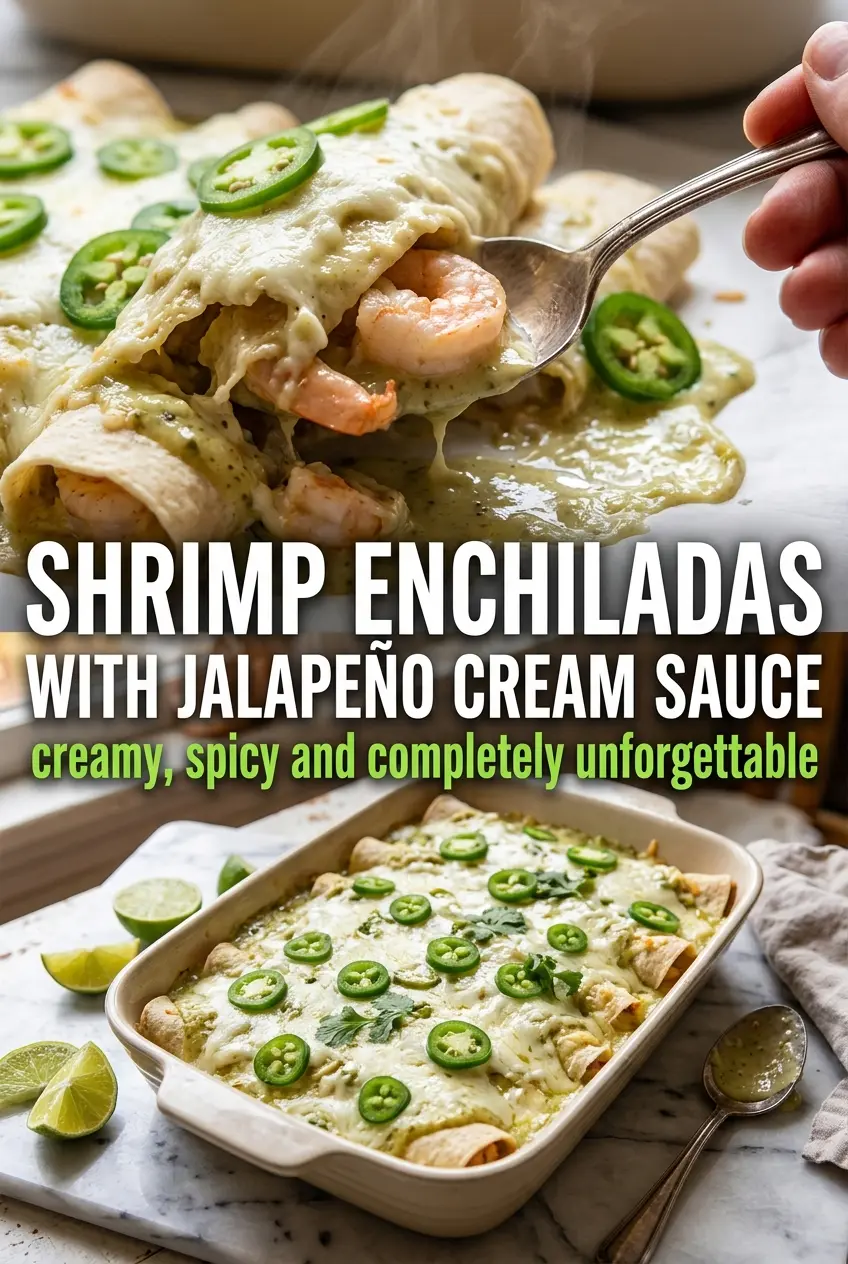
Shrimp Enchiladas with Jalapeño Cream Sauce
Ingredients
Equipment
Method
- Preheat oven to 375°F and lightly butter a 9x13 baking dish, then set it aside. The dish should look lightly coated so the enchiladas release easily.
- Blend roasted jalapeños, white onion, garlic, heavy cream, chicken broth, and lime juice until smooth. Blend until the sauce is fully uniform with no visible jalapeño pieces.
- Pour the jalapeño cream mixture through a fine sieve into a saucepan. Stop when only thicker bits remain in the sieve for a smoother texture.
- Heat butter in a large skillet over medium-high heat, then cook chopped shrimp until just cooked through, about 3-4 minutes. The shrimp should turn pink and opaque with no longer translucent spots.
- Spoon cooked shrimp into the center of each flour tortilla, roll tightly, and place seam-side down in the prepared baking dish. Arrange them snugly so they stay rolled.
- Pour jalapeño cream sauce evenly over the enchiladas and sprinkle shredded cheese on top. Make sure each roll is covered and the surface has an even cheese layer.
- Bake for 20-25 minutes at 375°F until bubbly and the edges are golden brown. Look for active bubbling in the sauce and browned edges around the tortillas.
- Garnish with fresh cilantro and lime wedge before serving. Add the herbs and citrus right before serving so the flavor stays bright.