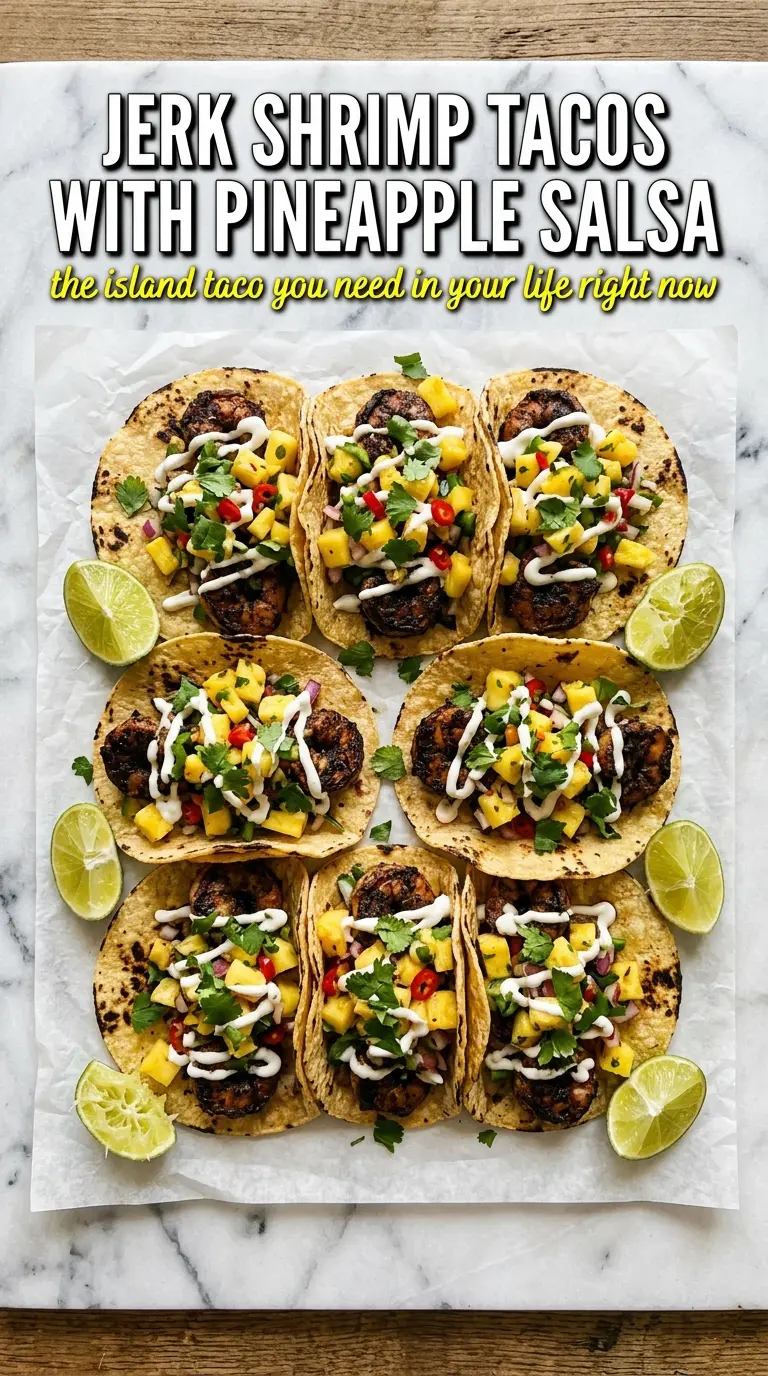
Smoky jerk shrimp and bright pineapple salsa make these tacos hit every note at once: spicy, sweet, juicy, and a little charred at the edges. The shrimp cook fast, the salsa stays crisp, and the warm corn tortillas pull everything together without getting in the way. It’s the kind of dinner that feels lively on the plate and still comes together in the time it takes to set the table.
What makes this version work is the balance. The jerk seasoning gets turned into a paste with lime juice and olive oil, which helps it cling to the shrimp instead of falling off in the pan. That means you get actual crust and browned spots, not just a vague layer of seasoning. The pineapple salsa is kept raw and simple so it cuts through the heat and gives each bite a clean, fresh finish.
Below you’ll find the little details that matter: how to keep the shrimp from overcooking, why the salsa tastes better after a few minutes of sitting, and what to do if you want to make the tacos milder or turn them into a bowl.
The jerk paste coated the shrimp evenly, and they got a nice sear in the skillet without turning rubbery. The pineapple salsa was the perfect cool-sweet contrast, and the tortillas held up great once everything was piled on.
Save these jerk shrimp tacos with pineapple salsa for a fast dinner with smoky heat and fresh tropical crunch.
The Trick to Getting Jerk Shrimp That Seared Instead of Steamed
Shrimp need heat, space, and a dry enough surface to pick up color fast. The biggest mistake is crowding the pan or leaving too much marinade on the shrimp, which turns the jerk mixture into a wet coating that softens instead of browns. A thin paste made with lime juice and olive oil helps the seasoning stick, but the skillet still needs to be hot before the shrimp go in.
Cook them in a single layer and leave them alone long enough to brown on the first side. If they’re moved too early, they’ll release and cling to the pan, which is how you end up with torn shrimp and pale edges. Pull them as soon as they turn pink and opaque with curled centers; shrimp keep cooking for a minute after they leave the heat.
What the Jerk Paste and Pineapple Salsa Are Each Doing Here
- Jerk seasoning — This is the backbone of the dish, bringing heat, spice, and that signature smoky depth. Different brands vary a lot, so use one you trust; if yours runs salty, ease up on added salt elsewhere. If you want to tame the heat, mix in a little brown sugar or extra lime juice, but don’t replace the seasoning entirely or you lose the character of the tacos.
- Lime juice — It brightens the jerk paste and helps it coat the shrimp. Fresh is worth using here because bottled lime juice can taste flat against the sweet pineapple and aromatic spices. If you only have bottled, use a little less so the marinade doesn’t become harsh.
- Fresh pineapple — The salsa needs fresh pineapple for its crisp bite and clean sweetness. Canned pineapple gets soft and a little syrupy, which makes the topping taste dull against the spicy shrimp. Dice it small so it sits neatly on the tortillas and gives you balanced bites instead of big slippery chunks.
- Corn tortillas — Corn tortillas fit the flavors here better than flour and stand up well to the juicy salsa. Warm them until they’re pliable and lightly toasted; cold tortillas crack, and over-heated ones dry out. If yours tear easily, stack them and wrap in a clean towel after warming so the steam softens them a bit.
- Jalapeño and red onion — These give the salsa its sharp edge. Mince them fine so they mix into the pineapple instead of poking out in big harsh pieces. If you want less heat, remove the jalapeño seeds and ribs before chopping.
Building the Tacos So the Shrimp Stay Juicy and the Salsa Stays Bright
Mixing the Jerk Paste
Stir the jerk seasoning, lime juice, and olive oil until it looks like a thick, sandy paste rather than a loose marinade. That texture matters because it grips the shrimp and helps the spices toast in the pan. If the mixture looks watery, the seasoning will slide off and burn in spots instead of coating the shrimp evenly.
Searing the Shrimp Fast
Heat the skillet over medium-high until it’s properly hot, then add the shrimp in a single layer. You should hear an immediate sizzle. Cook them for 2 to 3 minutes per side, just until pink and opaque; if they go long, they turn tight and chalky. A little char on the outside is a good sign, but dark black spots mean the heat was too high or the pan was left empty too long.
Stirring the Salsa Last
Combine the pineapple, red onion, jalapeño, and cilantro in a separate bowl while the shrimp cook. The salsa doesn’t need time on the stove, but it does benefit from a few minutes together so the onion softens just a touch and the pineapple juices start to mingle with the cilantro. Keep it raw and bright; cooking it would flatten the contrast that makes the tacos work.
Warming the Tortillas and Assembling
Warm the corn tortillas on a dry griddle or skillet until they’re soft and lightly marked. Fill them right away while they’re still flexible. Add the shrimp first, then spoon on the pineapple salsa so the juices fall over the shrimp instead of soaking the tortilla too quickly. Finish with lime and cilantro while everything is hot.
How to Tweak These Tacos Without Losing What Makes Them Work
Make it milder without losing the jerk flavor
Use a milder jerk seasoning or mix your seasoning with a little extra olive oil and lime juice so the spice spreads out more evenly. You’ll still get the warm, smoky notes, but the heat lands softer. This is the best move if you want the pineapple salsa to stay front and center.
Make it gluten-free
Use corn tortillas and check your jerk seasoning label, since some blends include additives or flour-based anti-caking agents. The rest of the recipe is naturally gluten-free. This version keeps the same texture and flavor balance without needing any special handling.
Turn it into shrimp bowls
Serve the shrimp and pineapple salsa over rice, quinoa, or shredded cabbage instead of tortillas. You’ll get a little more room for the juices and a less messy meal, which is handy for lunch. This works especially well if you want the same flavor with a lighter base.
Storage and Reheating
- Refrigerator: Store the shrimp and salsa separately for up to 2 days. The salsa will soften as it sits, but it still tastes good cold.
- Freezer: The shrimp can be frozen after cooking, though the texture is best fresh. The pineapple salsa does not freeze well because the fruit turns watery when thawed.
- Reheating: Reheat the shrimp gently in a skillet over low heat just until warm. Don’t blast them in the microwave or they’ll turn rubbery fast.
Questions I Get Asked About This Recipe
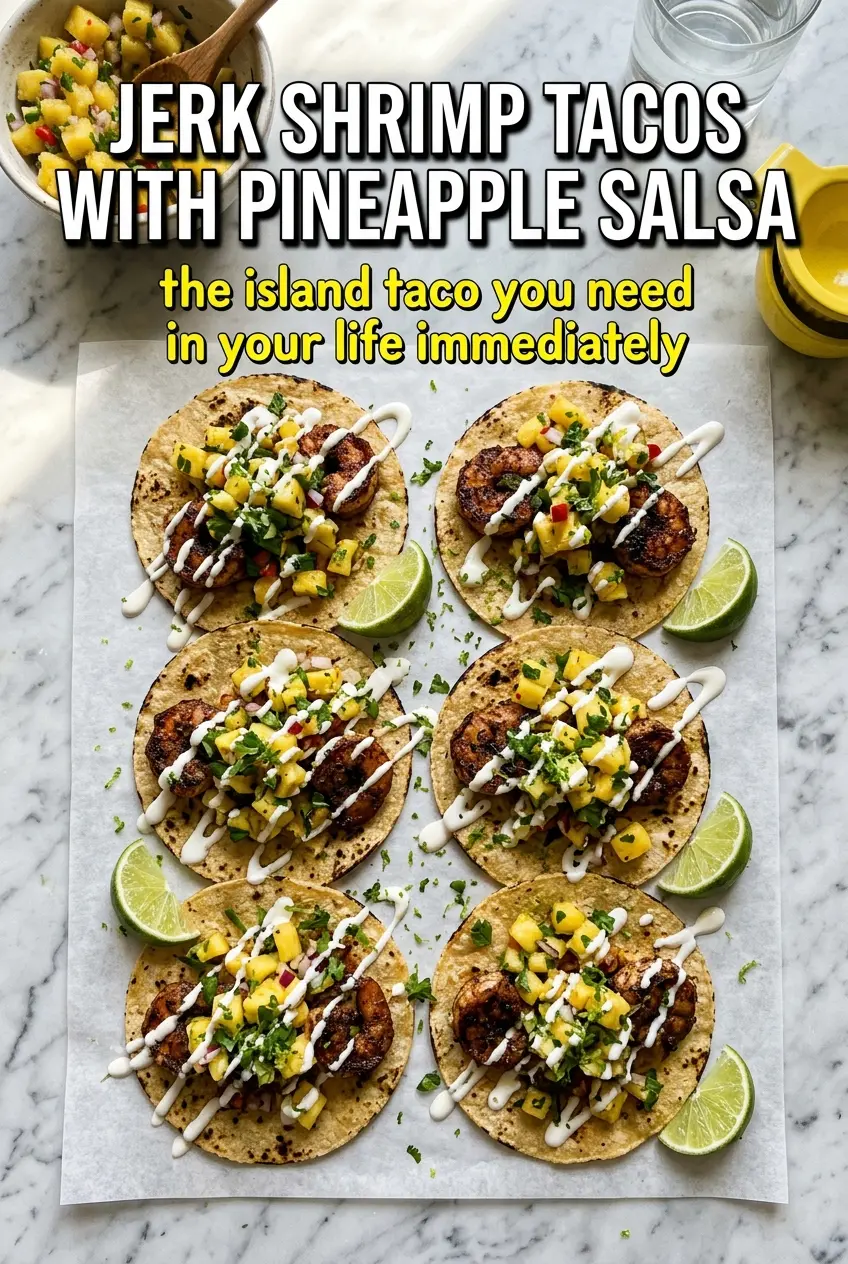
Jerk Shrimp Tacos with Pineapple Salsa
Ingredients
Equipment
Method
- Combine jerk seasoning, lime juice, and olive oil in a small bowl to create a paste, stirring until it looks evenly mixed.
- Toss shrimp in the jerk mixture until well coated so every shrimp surface is covered with a dark, fragrant layer.
- Heat a large skillet over medium-high heat, then cook jerk-seasoned shrimp for 2-3 minutes per side until pink and cooked through, flipping once for even char.
- In a separate bowl, combine diced pineapple, minced red onion, minced jalapeño, and fresh cilantro to create pineapple salsa, stirring until the mixture is bright and evenly distributed.
- Warm corn tortillas on a griddle and fill each with cooked jerk shrimp while they’re hot.
- Top generously with pineapple salsa and garnish with additional cilantro and lime wedge before serving for a fresh, tropical finish.