Bright, cold shrimp ceviche lands with that clean citrus bite first, then the sweetness of shrimp, the crunch of cucumber, and the little kick from jalapeño. The texture matters here: the shrimp stay tender because they’re cooked just to pink before the citrus goes in, so you get a fresh, snappy appetizer instead of rubbery seafood or raw-tasting disappointment.
The balance in this version comes from using both lime and lemon juice, which keeps the acidity sharp without letting one-note lime take over. Red onion, cilantro, tomato, avocado, and cucumber all do different jobs: crunch, freshness, richness, and color. That mix keeps every bite interesting right down to the last chip scoop.
Below, I’ve included the timing that keeps the shrimp tender, the ingredient swaps that still make sense, and the one step that matters most if you want the ceviche to taste chilled and bright instead of flat.
The shrimp stayed tender and the citrus didn’t overpower anything. I loved how the cucumber and avocado made each bite feel fresh, and the 20-minute chill was just right.
Shrimp ceviche with lime, lemon, and crisp cucumber is the kind of cold appetizer that disappears fast.
The Shrimp Should Be Cooked Before the Citrus Hits It
Raw shrimp can be marinated in citrus for ceviche-style dishes, but this version is built for cooked shrimp, and that changes the whole margin for error. Cooking the shrimp first gives you control over the texture. The lime and lemon add brightness and a light cure, not the burden of also doing the cooking for you. That means the final bowl stays tender and clean-tasting instead of turning cloudy and mushy if it sits too long.
The other key is the ice bath. If the shrimp stay hot, they keep cooking after draining, and the outside can go tough before the citrus even goes in. Cool them fast, then slice them in half lengthwise so every piece gets coated and chilled evenly.
What Each Ingredient Is Actually Doing in This Ceviche
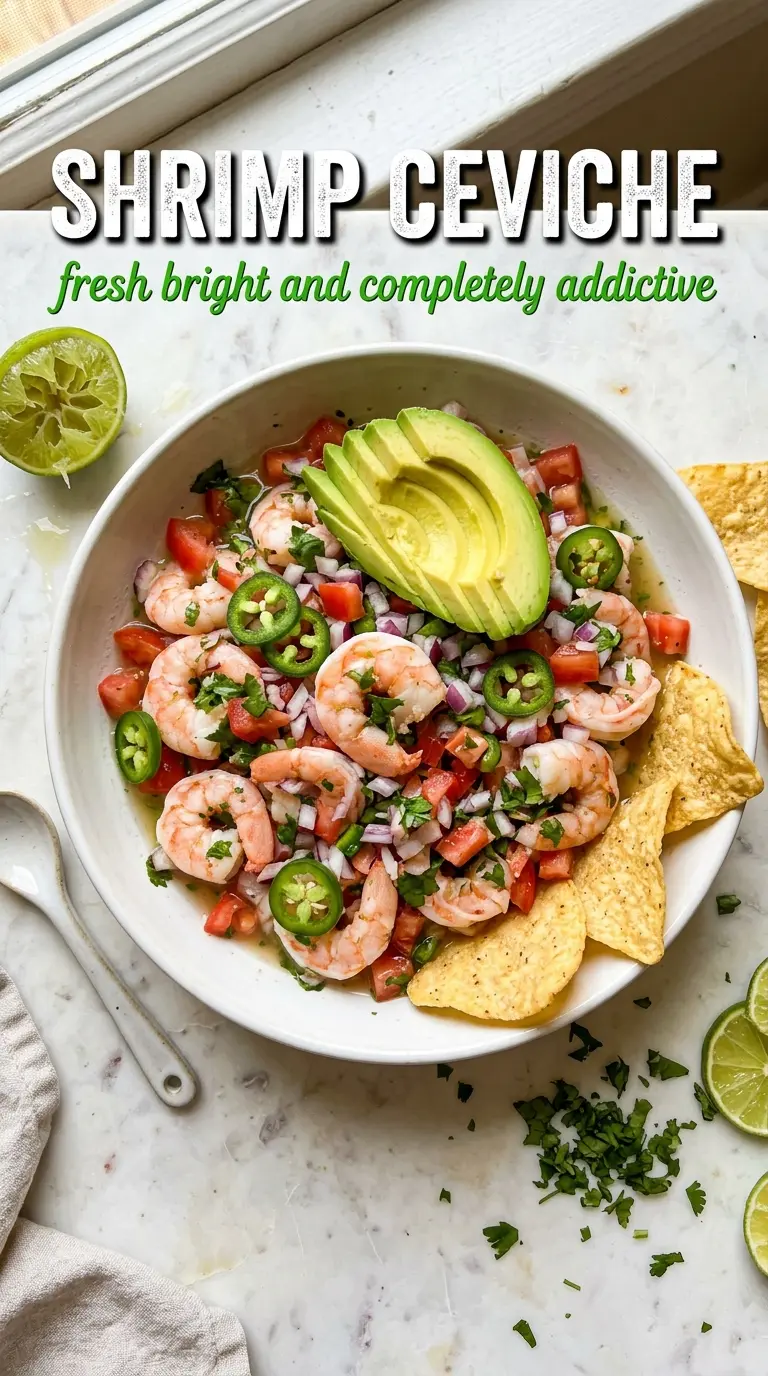
- Shrimp — Large shrimp hold their shape best and stay meaty after chilling. Smaller shrimp can work, but they soften faster and disappear into the mix. If you buy frozen shrimp, thaw them fully and pat them dry before cooking so they don’t water down the bowl.
- Lime and lemon juice — The blend gives you sharper citrus flavor than lime alone. Fresh juice matters here because bottled juice can taste dull and slightly bitter after chilling. If you only have limes, use all lime, but expect a narrower, less layered finish.
- Red onion — Thin slices bring crunch and bite, and they mellow just enough in the citrus. If raw onion is too aggressive for you, soak the slices in cold water for 10 minutes, then drain well. That keeps the flavor, but softens the sting.
- Avocado and cucumber — These balance the acidity with creaminess and cool crunch. Add the avocado at the end and toss gently so it stays intact instead of turning the whole bowl pale and soft. English cucumber works too if that’s what you have.
- Cilantro, jalapeños, and tomato — Cilantro gives the ceviche its fresh edge, jalapeños bring heat without heaviness, and tomato adds color plus a little sweetness. Seed the jalapeños if you want a milder bowl, and use ripe but firm tomato so it doesn’t collapse into the citrus.
The Short Chill That Pulls Everything Together
Cooking and Cooling the Shrimp
Bring the salted water to a boil before the shrimp go in, then cook just until they turn pink and opaque, about 2 to 3 minutes. If the shrimp curl into tight little rings and feel firm all the way through, they’ve gone too far. Transfer them straight to ice water so the carryover heat stops immediately, then drain well.
Letting the Citrus Work
Place the cooled shrimp in a non-reactive bowl and cover them with the lime and lemon juice. Use enough juice to coat every piece, and keep the bowl in the refrigerator for 20 minutes. The shrimp should taste bright and lightly cured, not aggressively sour; if they sit much longer, the citrus can start to dull the sweetness of the seafood.
Finishing With the Fresh Add-Ins
Add the onion, jalapeños, cilantro, tomato, avocado, and cucumber after the chill, not before. That keeps the vegetables crisp and the avocado from breaking down into the juice. Toss gently so the shrimp stay in clean halves and the bowl keeps its color instead of turning cloudy and bruised.
Serving It Cold
Taste for salt and pepper right before serving, then spoon the ceviche into a chilled bowl or glass. Cold tortilla chips or tostadas are the right move here because the ceviche is juicy, and the crunch gives each bite shape. If the bowl warms on the counter, the avocado softens and the whole dish loses its snap.
How to Adjust This Shrimp Ceviche for Heat, Mildness, or a Bigger Crowd
For a milder bowl
Seed the jalapeños and use only one or two, depending on how much heat you want. The citrus will still keep the ceviche lively, but the jalapeño won’t dominate the shrimp or overpower the avocado. This is the easiest adjustment when you’re serving people who want flavor without much spice.
For a dairy-free, gluten-free appetizer
This recipe already fits both without any changes, as long as your tortilla chips or tostadas are certified gluten-free if that matters for your kitchen. The main thing is to keep the shrimp and vegetables dry before mixing so the ceviche stays bright and not watery.
For a more avocado-forward version
Use two avocados instead of one and add them at the very end with a light hand. The result is creamier and richer, but the ceviche loses some of the sharp, brothy finish that makes it feel so fresh. It’s a good move if you want it to eat more like a full appetizer dip.
Storage and Reheating
- Refrigerator: Store leftovers in a covered non-reactive container for up to 1 day. The shrimp stay safe and tasty, but the avocado and cucumber lose their best texture quickly.
- Freezer: Don’t freeze this ceviche. The citrus, vegetables, and avocado all break down after thawing, and the shrimp turn mushy instead of clean and tender.
- Reheating: Don’t reheat it. Serve it cold straight from the fridge, and if it tastes muted after sitting, brighten it with a small squeeze of fresh lime and a pinch of salt instead of adding heat.
Questions I Get Asked About This Recipe
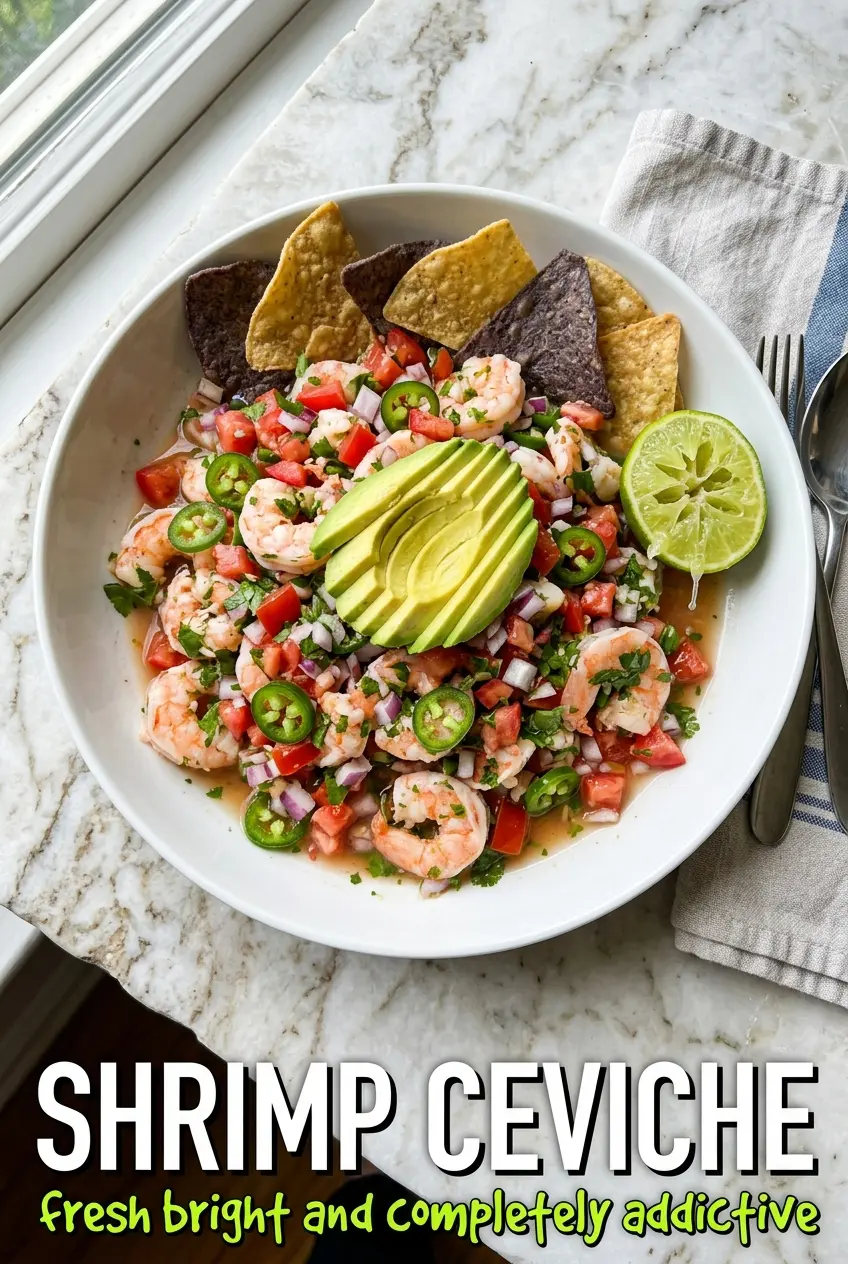
Shrimp Ceviche
Ingredients
Equipment
Method
- Bring a pot of salted water to a boil, then add the shrimp and cook for 2-3 minutes until pink and cooked through. You should see the shrimp turn opaque as they finish cooking.
- Drain the shrimp and cool immediately in ice water for 1-2 minutes. The shrimp should feel cool to the touch before you cut them.
- Cut the shrimp in half lengthwise. This helps them absorb the citrus faster and improves the texture in each bite.
- Place the cooked shrimp in a non-reactive bowl and pour the lime and lemon juice over them. Make sure the shrimp are mostly covered by the juices.
- Cover the bowl and refrigerate for 20 minutes. The shrimp will look more vibrant and slightly firmer as they cure.
- Add the red onion, jalapeños, cilantro, tomato, avocado, and cucumber to the bowl. Spread everything evenly so the citrus coats all the mix-ins.
- Season with salt and black pepper, then gently toss to combine. Stop as soon as the juices look evenly distributed and avoid mashing the avocado.
- Serve the shrimp ceviche chilled with tortilla chips or tostadas. Plate in a chilled glass or bowl and garnish with visible lime and cilantro if desired.