Bright, cold shrimp tucked into warm corn tortillas make these shrimp aguachile tacos stand out from the usual taco night lineup. The shrimp turn just opaque enough in the lime and chile marinade, keeping that clean, tender bite that makes aguachile such a pleasure to eat. Every taco hits the contrast that matters: juicy shrimp, sharp herbs, a little heat from serranos, and the creamy avocado softening the edges.
The key here is balance and timing. The sauce needs to be blended until fully smooth, then strained so it clings lightly instead of feeling gritty or leafy. A short rest is enough for the lime juice to cure the shrimp without pushing them into that chalky, overdone texture. Once the shrimp are pink and lightly firm, they’re ready. No stove required for the filling, which keeps the flavors bright and the texture crisp.
Below, you’ll find the small details that make these tacos work: how to keep the aguachile vivid, what to do if your chiles run hot, and the best way to serve them so the tortillas stay sturdy and the shrimp stay glossy.
The shrimp cured in exactly 15 minutes and stayed tender, not rubbery. Straining the sauce made a big difference too — it coated the tacos beautifully instead of pooling at the bottom.
Save these Shrimp Aguachile Tacos for the nights when you want bright lime-marinated shrimp, cool avocado, and a fast taco filling with real snap.
The Part Most Aguachile Tacos Get Wrong
The mistake is treating the shrimp like they need a long marinade. They don’t. Lime juice starts curing them fast, and with jumbo shrimp, 15 minutes is enough to turn them pink and opaque without pushing them into that tight, dry texture that ruins a good taco. If they sit much longer, the edges get firmer than the center and the whole bite loses that clean snap.
Straining the blended sauce matters just as much. A smooth aguachile clings to the shrimp and lets the herbs stay bright instead of muddy. If the sauce tastes sharp but flat, it usually needs salt, not more lime. The salt wakes up the cilantro and parsley and makes the whole thing taste greener.
What Each Ingredient Is Actually Doing In This Dish
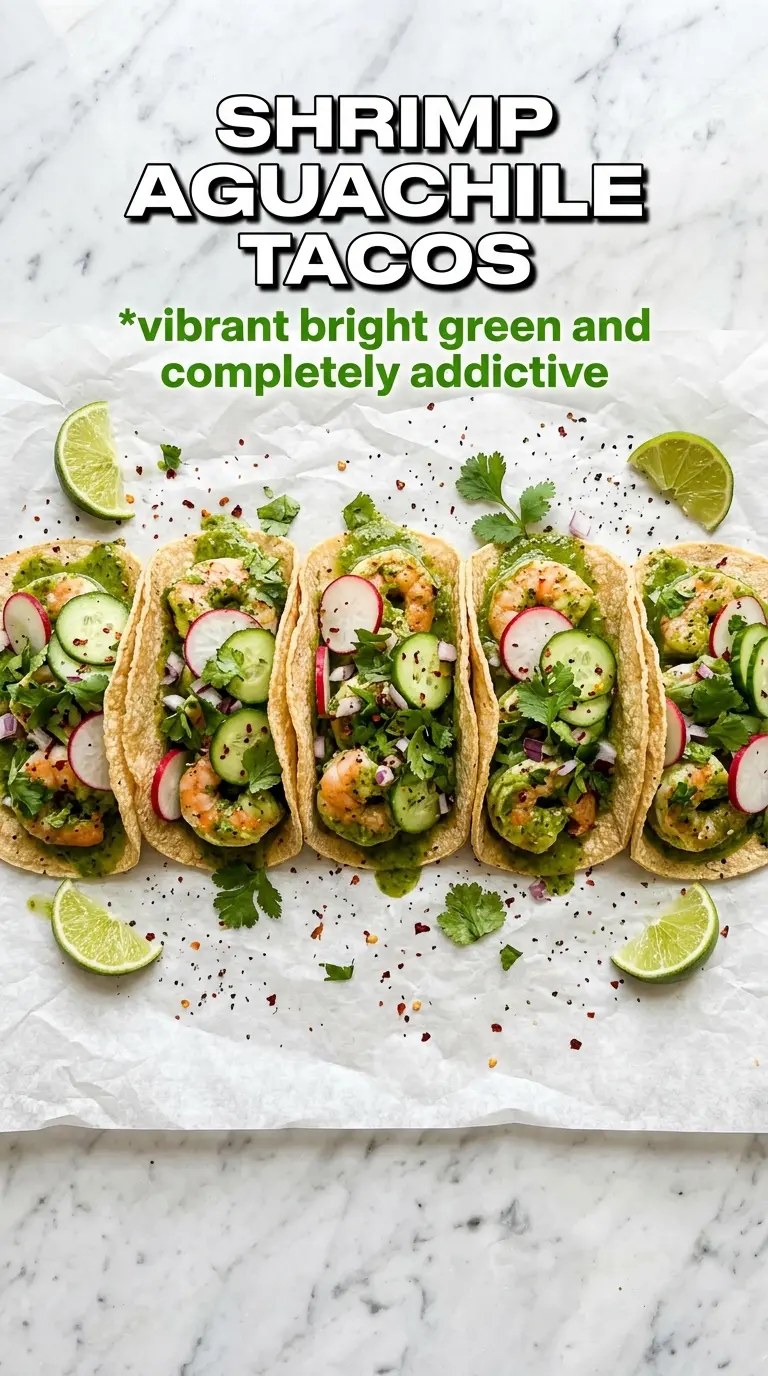
- Jumbo shrimp — Bigger shrimp hold their texture better during the short cure. Smaller shrimp work, but they can overcook in the lime faster, so watch the color closely if you substitute.
- Serrano peppers — These bring the heat without turning the sauce heavy. If yours run hot, use three instead of four and keep the ribs out of the blender for a cleaner burn.
- Cilantro and parsley — Cilantro gives the classic aguachile flavor, while parsley adds body and keeps the sauce from tasting one-note. If you hate cilantro, all parsley works, but the result will taste greener and less traditional.
- Lime juice — Fresh lime is nonnegotiable here. Bottled juice tastes dull and can make the sauce sharp in the wrong way, so use freshly squeezed limes and strain out the pulp if they’re especially seedy.
- Olive oil — A small amount softens the acidity and gives the sauce a glossy finish. Don’t skip it; it helps the marinade coat the shrimp instead of tasting thin and harsh.
- Corn tortillas — Their flavor fits the shrimp better than flour tortillas, and they stay sturdy under the acidic filling. Warm them just before serving so they bend without tearing.
How to Cure the Shrimp Without Overcooking Them
Blend the Sauce Until It Stays Bright
Blend the serranos, herbs, onion, salt, and lime juice until the mixture looks fully uniform and vivid green. If you still see leafy bits, the sauce will feel coarse in the taco, so blend a little longer before straining. Pass it through a fine mesh sieve and press gently; you want a smooth, pourable sauce, not a watery one, so don’t force pulp through the mesh.
Let the Lime Do Its Job
Use a glass bowl for the shrimp and pour the aguachile over them so every piece is coated. Stir once or twice during the 15-minute rest and watch for the shrimp to turn pink and opaque at the edges first, then all the way through. If the shrimp stay translucent after 15 minutes, they need a few more minutes; if they’re turning firm and curled tight, they’ve gone too far.
Build the Tacos at the Last Minute
Warm the tortillas on a skillet until they’re pliable and lightly toasted, then fill them right before serving. Add the shrimp first, then avocado and radish so the toppings support the sauce instead of getting buried in it. Drizzle on extra aguachile only at the table; if it sits in the tortilla too long, the shell softens and the whole taco loses its edge.
Three Ways to Adjust the Heat, Texture, and Presentation
Milder Heat for More People at the Table
Use three serranos instead of four and remove the seeds and ribs before blending. You’ll still get the green chile flavor, but the sauce will land cleaner and less aggressively hot. If you want it even gentler, swap one serrano for half a green bell pepper; the color stays bright, though the finish becomes less sharp.
No Cilantro, Still Fresh and Green
Use all parsley if cilantro tastes soapy to you. The sauce will be a little less classic and a bit more grassy, but it still cures the shrimp beautifully and keeps the color bright. Add an extra squeeze of lime at the end if the parsley makes the flavor feel rounder than you want.
Making It Gluten-Free Without Changing a Thing
This recipe is naturally gluten-free as written when you use corn tortillas. Check that your tortillas are made with corn only and warmed on a clean skillet. That keeps the tacos sturdy, crisp at the edges, and completely in line with the rest of the dish.
What to Do If You Want a Cooler, Creamier Finish
Add extra avocado and keep the radish slices thin so they soften the heat without hiding the shrimp. A little more olive oil in the sauce also gives the aguachile a silkier texture, which helps if you’re serving it with especially spicy serranos. Don’t add sour cream here; it dulls the clean, briny edge that makes aguachile work.
Serving It the Right Way
Have everything ready before the shrimp finish curing. Once they’re pink, the clock moves fast, and the tacos taste best immediately while the tortillas are warm and the sauce is glossy. If you need to pause, hold the cured shrimp in the fridge for a short time and warm the tortillas again right before assembling.
Answers to the Questions Worth Asking
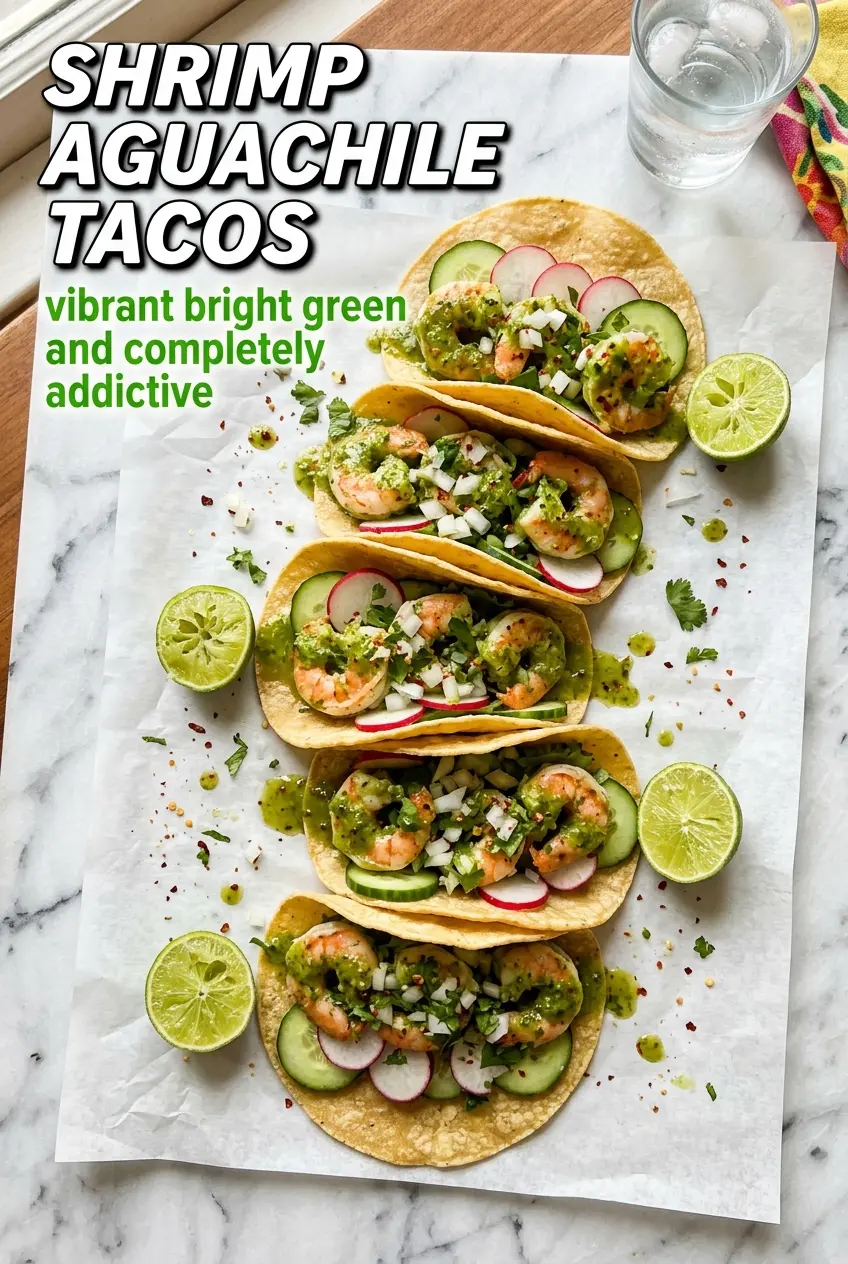
Shrimp Aguachile Tacos
Ingredients
Equipment
Method
- In a blender, combine serrano peppers, cilantro, parsley, white onion, salt, and lime juice. Blend until smooth, scraping down as needed, until the mixture looks bright and evenly green.
- Strain the blended mixture through a fine mesh sieve into a bowl, pressing to extract the liquid. The strained sauce should be vivid and translucent with no large bits visible.
- Whisk olive oil into the strained aguachile sauce until it looks glossy and slightly thickened. Stop when the sauce turns uniform and coats a spoon lightly.
- Place the jumbo shrimp in a glass bowl in a single layer if possible. Pour the aguachile mixture over the shrimp so every piece is coated.
- Let the shrimp sit at room temperature for 15 minutes in the glass bowl, uncovered if your kitchen is cool. Watch for the shrimp to turn pink and opaque as the acid cures them.
- Warm corn tortillas on a stovetop over medium heat for about 30–45 seconds per side until pliable. Keep them wrapped in a clean towel so they don’t dry out.
- Fill each tortilla with several cured shrimp, then add avocado slices and radish slices. Arrange to show the shrimp clearly, then drizzle extra aguachile sauce over the top.
- Serve immediately while the tortillas are warm and the shrimp look glossy and pink. Finish with any remaining green sauce so the tacos stay vivid.