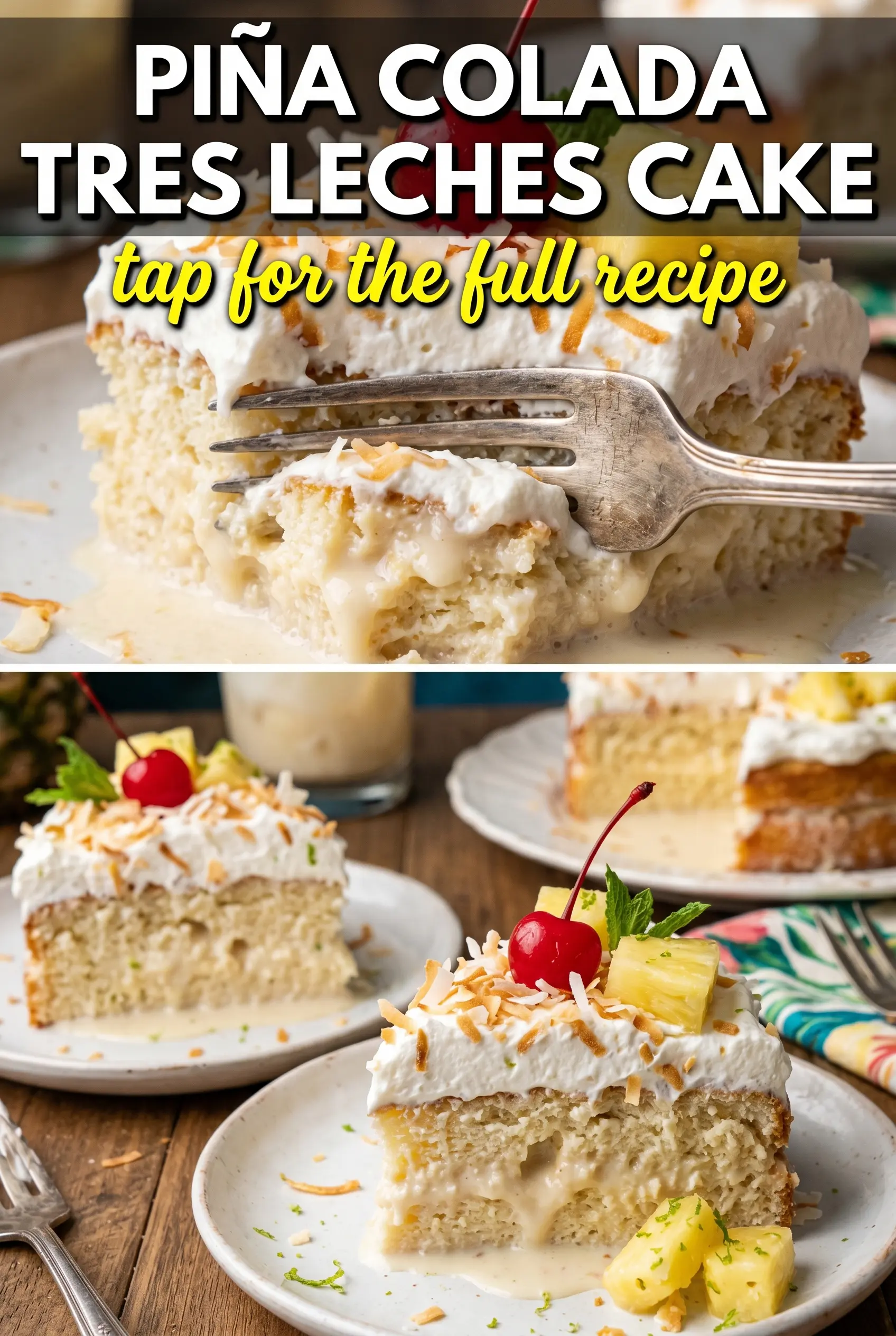
Piña Colada Tres Leches Cake is the kind of dessert that disappears slice by slice because the texture keeps changing in the best way. The cake starts out light and airy, then drinks up a coconut-rum milk mixture until it turns plush and custardy without getting heavy. A cloud of whipped cream on top and a finish of toasted coconut and pineapple make every bite land somewhere between a classic tres leches and a vacation dessert.
The trick is keeping the sponge cake delicate enough to soak without collapsing. Beating the egg whites to stiff peaks gives the batter its lift, and folding them in gently keeps the crumb open so the milk mixture can move through the cake instead of pooling on top. Coconut milk goes into the batter itself, which gives the cake a subtle tropical note before the topping even goes on.
Below, you’ll find the timing that keeps the cake from turning soggy, the best way to toast the coconut so it stays crisp, and a few smart swaps if you want to skip the rum or lean harder into the pineapple.
The milk mixture soaked in evenly and the cake stayed light instead of mushy. I used pineapple juice instead of rum and still got that perfect piña colada flavor.
Save this Piña Colada Tres Leches Cake for the next time you want a coconut-soaked cake with toasted topping and chilled whipped cream.
The Reason This Sponge Soaks Up Flavor Without Turning Dense
The cake has to be sturdy enough to hold all that milk, but not so tight that it turns chewy. Separating the eggs and whipping the whites gives the batter its lift, which matters here more than in a standard layer cake because tres leches needs little pockets in the crumb for the soak to move through.
Overmixing after the flour goes in is the fastest way to lose that structure. Stir just until the batter looks smooth, then fold in the whites with a light hand. If the cake bakes up flat or rubbery, the whites were either underbeaten or knocked down during folding.
- Cake flour substitute: All-purpose flour works well here, but if you want a finer crumb, swap in 1 1/4 cups cake flour plus 1/4 cup all-purpose flour. That keeps the cake extra tender without becoming fragile.
- Coconut milk: Use full-fat canned coconut milk for the best flavor. Light coconut milk won’t give the same richness, and the batter needs that fat to carry the tropical note through the crumb.
- Egg whites: Room-temperature whites whip higher and fold in more smoothly. Cold eggs will still work, but they take longer to reach stiff peaks and can leave a slightly tighter batter.
- Rum or pineapple juice: Rum gives the classic piña colada edge, while pineapple juice keeps it bright and family-friendly. Either one works because the condensed and evaporated milks do most of the structural work in the soak.
What Each Milk Is Doing in the Soak
The soaking mixture looks simple, but each part has a job. Sweetened condensed milk brings the sweetness and that thick, silky body that clings to the cake. Evaporated milk loosens the mixture just enough so it can absorb evenly, and rum or pineapple juice gives the dessert its signature piña colada direction instead of plain vanilla sweetness.
Don’t pour the soak over a warm cake. The crumb needs to cool first or the milk mixture slips straight through and collects in the bottom of the dish. A fork makes enough channels for the liquid to move through without shredding the cake into bits.
- Sweetened condensed milk: There isn’t a true substitute for the texture it brings. If you reduce the sugar anywhere else, keep this ingredient in place or the cake loses its tres leches character.
- Evaporated milk: This keeps the soak creamy without making it cloying. Whole milk can work in a pinch, but the soak will be thinner and less velvety.
- Rum: Use a light or gold rum if you want the coconut and pineapple to stay front and center. Dark rum adds more molasses depth, which tastes good but pushes the dessert away from the classic piña colada feel.
- Heavy cream: For the topping, use cold heavy cream straight from the fridge. It whips faster, holds its shape better, and gives you that clean, billowy finish instead of a soft, sliding layer.
How to Build the Soak and Topping So Nothing Gets Mushy
Whipping the Cake Base
Start by beating the yolks and sugar until they turn pale and thick, almost like loose ribbon. That stage matters because it traps air and gives the cake its tender lift before the whites even go in. Add the coconut milk and vanilla before the flour, then stop mixing as soon as the batter comes together. If the batter looks stiff, it has been overworked.
Folding in the Whites
Beat the egg whites until they hold firm peaks that stand up without drooping. Fold them in with a wide spatula in two or three additions, turning the bowl as you go so you don’t streak out the volume you just built. The finished batter should look airy and slightly uneven, not glossy and dense. That unevenness is what gives the baked cake its sponge-like crumb.
Soaking the Cake Evenly
Let the cake cool all the way before piercing it. Use a fork and work across the whole surface so the milk mixture has pathways to travel through the crumb. Pour slowly and give the cake time to absorb; if you dump the soak in all at once, it can run straight to the edges and leave the middle underdone. After that, the refrigerator does the rest.
Finishing with Cream and Coconut
Whip the cream with powdered sugar until it holds stiff peaks, then spread it over a fully chilled cake. If the cake is still warm, the topping melts and the whole surface slides. Toast the coconut until it smells nutty and turns light golden, then scatter it on right before serving so it keeps its crunch against the soft cake.
How to Adapt This for Different Crowds and Different Booze Policies
Pineapple-Only Version
Swap the rum for pineapple juice and keep everything else the same. The cake stays bright and tropical, but the flavor leans more toward pineapple cream than the boozy cocktail version. This is the best choice if you’re serving kids or want the fruit to be the main note.
Dairy-Free Adaptation
Use full-fat canned coconut milk in the cake and swap in a dairy-free sweetened condensed milk and evaporated milk alternative if you can find them. For the topping, whip a chilled coconut cream instead of heavy cream. The texture stays rich, though the finished cake will taste more coconut-forward and less like a classic tres leches.
Extra Tropical Finish
Add a few tablespoons of finely chopped pineapple to the whipped cream or tuck a thin layer of pineapple between the cream and toasted coconut. That gives every slice a brighter fruit bite, but don’t overload it or the topping can slide and the cake will lose its clean layers.
Storage and Reheating
- Refrigerator: Keep covered and chilled for up to 4 days. The cake gets a little softer each day, which is part of the charm, but the coconut topping will lose some crunch.
- Freezer: Freeze the plain soaked cake without the whipped cream or pineapple for up to 1 month. Thaw overnight in the refrigerator, then add the topping fresh so the texture stays light.
- Reheating: Don’t reheat this cake. Tres leches is meant to be served cold, and warming it makes the cream slide and the soak break down into a puddle.
Answers to the Questions Worth Asking
Piña Colada Tres Leches Cake
Ingredients
Equipment
Method
- Preheat the oven to 350°F and grease a 9x13 baking dish so the cake releases easily.
- Whisk the all-purpose flour, baking powder, and salt in a bowl until evenly combined.
- Beat the egg yolks with the granulated sugar until pale, about 3 minutes.
- Add the coconut milk and vanilla extract to the yolk mixture and mix until smooth.
- Fold the flour mixture into the yolks just until no dry streaks remain.
- Beat the egg whites until stiff peaks form, then gently fold them into the batter.
- Pour the batter into the greased 9x13 baking dish and bake for 30 minutes, until the center looks set.
- While the cake cools, combine the sweetened condensed milk, evaporated milk, and rum or pineapple juice.
- Pierce the cooled cake all over with a fork so the milk mixture can soak through.
- Pour the milk mixture evenly over the cake.
- Refrigerate for at least 2 hours until fully soaked and sliceable.
- Whip the heavy cream with the powdered sugar until stiff peaks form.
- Spread or pipe the whipped cream onto the cooled, soaked cake.
- Top with toasted coconut flakes and fresh pineapple chunks.
- Serve chilled for the best creamy texture and clean slices.