Bright citrus, tender fish, and that first cool, salty bite make Mexican ceviche one of those appetizers people keep hovering around. When it’s done right, the fish turns opaque and silky without losing its clean flavor, and the lime, orange, red onion, and jalapeño give every spoonful a sharp, fresh snap. The best versions don’t taste muddy or overly acidic. They taste balanced, crisp, and alive.
The little trick here is using orange juice alongside lime juice. Lime does the curing, but a touch of orange rounds out the acidity so the fish tastes bright instead of harsh. A non-reactive bowl matters too, because metal can throw off the flavor while the citrus is doing its work. And the fish should be cut into even pieces so it “cooks” at the same rate all the way through.
Below, I’ll walk through the timing that keeps ceviche tender instead of chalky, plus the small ingredient choices that make a noticeable difference. Once you know those details, this becomes one of the easiest dishes to pull together for a crowd.
The fish turned perfectly opaque in 30 minutes and stayed tender, not rubbery. The orange juice took the edge off the lime, and the avocado at the end made each bite feel balanced.
Save this Mexican ceviche for the days when you want something cold, bright, and ready in under an hour.
The Part That Keeps Ceviche Tender Instead of Tough
With ceviche, the biggest mistake is treating the citrus like a marinade you can ignore for an hour or two. That’s how you end up with fish that goes from soft and opaque to tight and chalky. The acid keeps working the whole time, so the goal is to stop as soon as the fish has turned opaque and the centers are no longer translucent.
The other thing people miss is the cut. Big uneven chunks cure unevenly, which means some bites are still glassy while others are already overdone. Aim for even, bite-size pieces so the citrus can do its job at the same pace. Stirring once or twice during the rest helps expose all sides without breaking the fish apart.
- Fresh white fish — Use sea bass, snapper, or halibut from a source you trust. This is the place to spend a little more, because texture and freshness drive the whole dish.
- Lime juice — Fresh-squeezed lime is non-negotiable here. Bottled juice tastes flat and can make the ceviche taste harsh instead of bright.
- Orange juice — This softens the lime and gives the ceviche a rounder finish. Fresh juice is best, but a good no-pulp orange juice will work in a pinch.
- Red onion — Thin slices give crunch and sharpness. If the onion tastes too aggressive, soak it in cold water for 10 minutes, then drain well before adding it.
What Each Ingredient Is Actually Doing in the Bowl
Every ingredient here has a job, and the dish gets better when you treat them that way. The fish is the base, but the citrus cures it and sets the texture. Red onion brings bite, jalapeño brings heat, cilantro brings freshness, and tomato adds a little juice and sweetness so the mixture doesn’t taste one-note. Avocado goes in at the end so it stays intact instead of disappearing into the citrus.
Salt matters more than people think in ceviche. Added at the end, it wakes up the lime, softens the edges of the onion, and makes the fish taste seasoned instead of just acidic. If your jalapeños are especially hot, remove the seeds and membranes. If they’re mild, leave some in for more bite.
- Orange juice — The citrus blend matters here. Orange doesn’t replace lime; it keeps the cure from tasting sharp and one-dimensional.
- Cilantro — Use fresh leaves and tender stems. The stems carry a lot of flavor, so don’t throw them away unless they’re thick and woody.
- Tomato — Dice it small and drain off extra juice if it looks watery. Too much liquid dilutes the citrus and makes the ceviche soggy.
- Avocado — Add it last so it stays creamy and intact. Slightly firm avocado holds up better than one that’s already soft.
How to Cure the Fish and Keep the Texture Clean
Start With a Cold Bowl and Even Cuts
Put the fish in a chilled, non-reactive bowl and cut it into even pieces before anything else touches it. The size should be small enough that the citrus reaches the center quickly, but not so small that it falls apart after stirring. If the bowl is warm, the fish starts softening before the cure is done, which makes the texture less clean.
Use Enough Citrus to Submerge the Fish
Pour the lime and orange juice over the fish until it’s fully covered. Dry patches stay undercured, and that’s where you get a mix of textures that feels uneven on the tongue. Give it a gentle stir once or twice during the 30 minutes so the pieces cure evenly, but don’t mash or overwork the fish.
Watch for Opaque Edges, Not a Clock Alone
Thirty minutes is the target here, but the fish tells you when it’s ready. The pieces should turn opaque all the way through and feel firm at the edges while still looking tender. If the fish sits much longer, the texture tightens up, so drain off some of the citrus and move on as soon as it’s set.
Fold in the Fresh Ingredients at the End
Add the onion, jalapeño, cilantro, tomato, and avocado after the fish has cured. That keeps the vegetables crisp and the avocado creamy instead of broken down. Season at the end so you can taste the actual balance; once the salt goes in, the ceviche should taste bright, clean, and lightly briny, not bluntly sour.
How to Adapt This for Different Tables and Different Pantry Shelves
Make It Milder for Heat-Sensitive Guests
Remove the jalapeño seeds and membranes, or use just one pepper. You’ll keep the fresh pepper flavor without the lingering burn, which lets the citrus and fish stay front and center.
Use Shrimp Instead of Fish
Poach or blanch peeled shrimp just until pink, then chill and chop before tossing with the citrus and vegetables. Shrimp gives you a sweeter, firmer ceviche-style bite, but it doesn’t need the same curing time as fish.
Make It Gluten-Free Without Changing Anything
The ceviche itself is naturally gluten-free. Just serve it with corn tostadas or certified gluten-free tortilla chips instead of anything flour-based.
Skip the Avocado Until Serving Time
If you’re making this ahead for guests, leave out the avocado and add it right before serving. That keeps the bowl from turning soft and lets the avocado stay clean and green instead of getting bruised by the citrus.
Storage and Serving Timing
- Refrigerator: Best eaten the same day. It will hold for about 1 day, but the fish firms up and the vegetables release more liquid.
- Freezer: Don’t freeze ceviche. The texture of the fish and avocado breaks down badly once thawed.
- Serving: Keep it chilled until the last minute and serve immediately after mixing in the vegetables. A cold bowl helps the ceviche stay fresh and keeps the fish from overcooking in the citrus.
Answers to the Questions Worth Asking
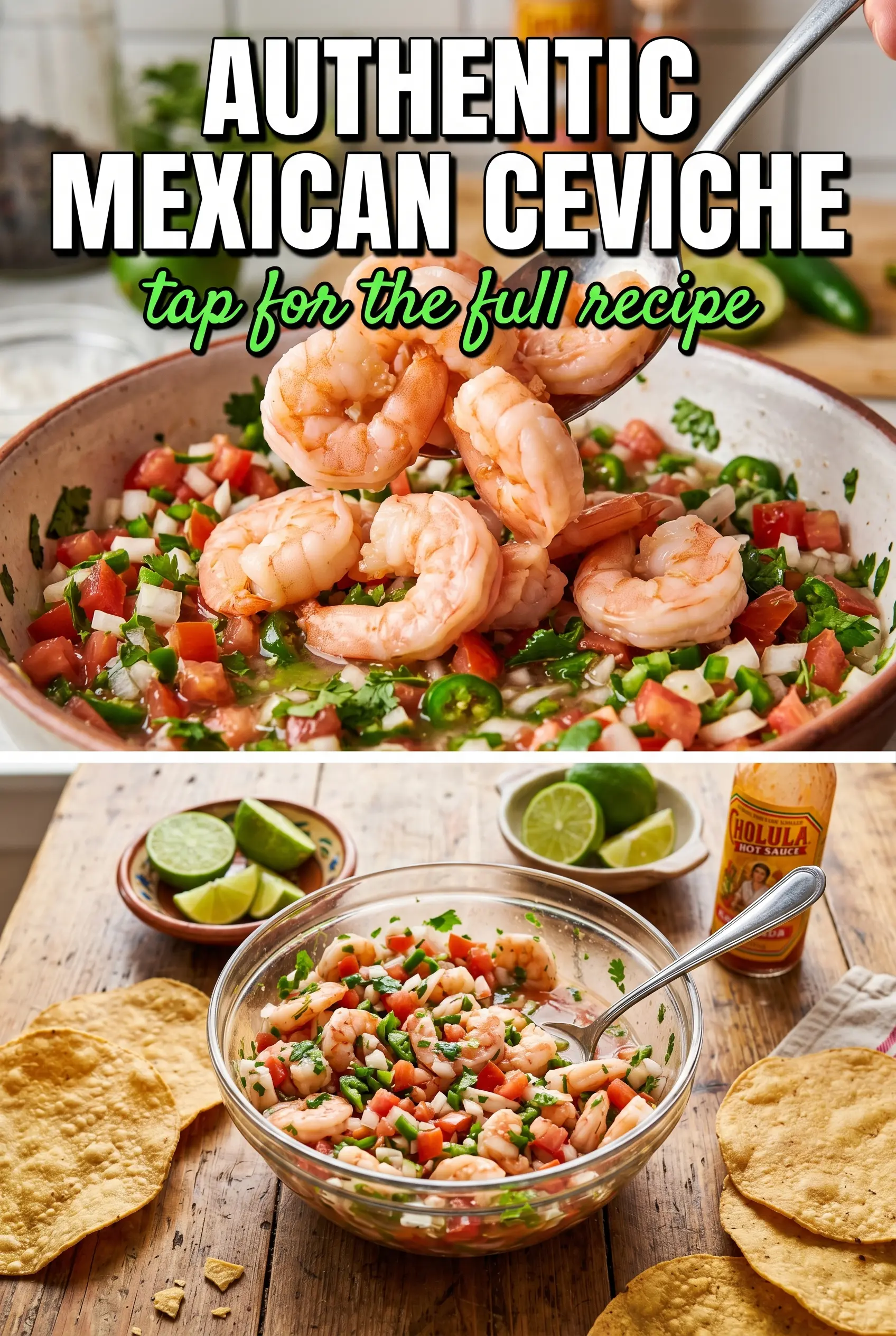
Authentic Mexican Ceviche
Ingredients
Equipment
Method
- Place diced fish in a non-reactive bowl, then pour lime juice and orange juice over the fish until fully submerged. Cover and refrigerate at 35°F (2°C) for 30 minutes.
- Stir the bowl occasionally during the 30 minutes so all pieces are evenly exposed to the citrus. Continue until the fish turns opaque and looks “cooked” from the citric acid.
- Add sliced red onion, minced jalapeños, chopped cilantro, diced tomato, and diced avocado to the cured fish. Gently toss to combine without breaking up the avocado.
- Season with salt and black pepper, then taste and adjust lime juice if needed. Toss one more time and serve immediately in chilled bowls or small glasses.
- Serve the ceviche right away with tostadas or tortilla chips on the side. Photograph with lime wedges, fresh herbs, and—if desired—extra jalapeño slices for visible color.