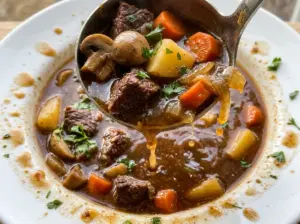
The beef doesn’t get tender just because it’s been in the pot a long time. I learned that the broth needs to stay at a quiet simmer: a rolling boil makes the meat seize up, while low, steady heat gives the chuck time to soften. That’s the difference between a pot of beef stew with mushrooms that’s hearty and spoon-tender and one that’s still stubbornly chewy.
I also like how this stew builds its flavor in layers, right in the Dutch oven. The beef and mushrooms brown first, then the onion, celery, garlic, and tomato paste pick up what’s left on the bottom. Red wine loosens those browned bits before the broth goes in, giving the finished stew a deep, savory base with tender vegetables and plenty of mushrooms.
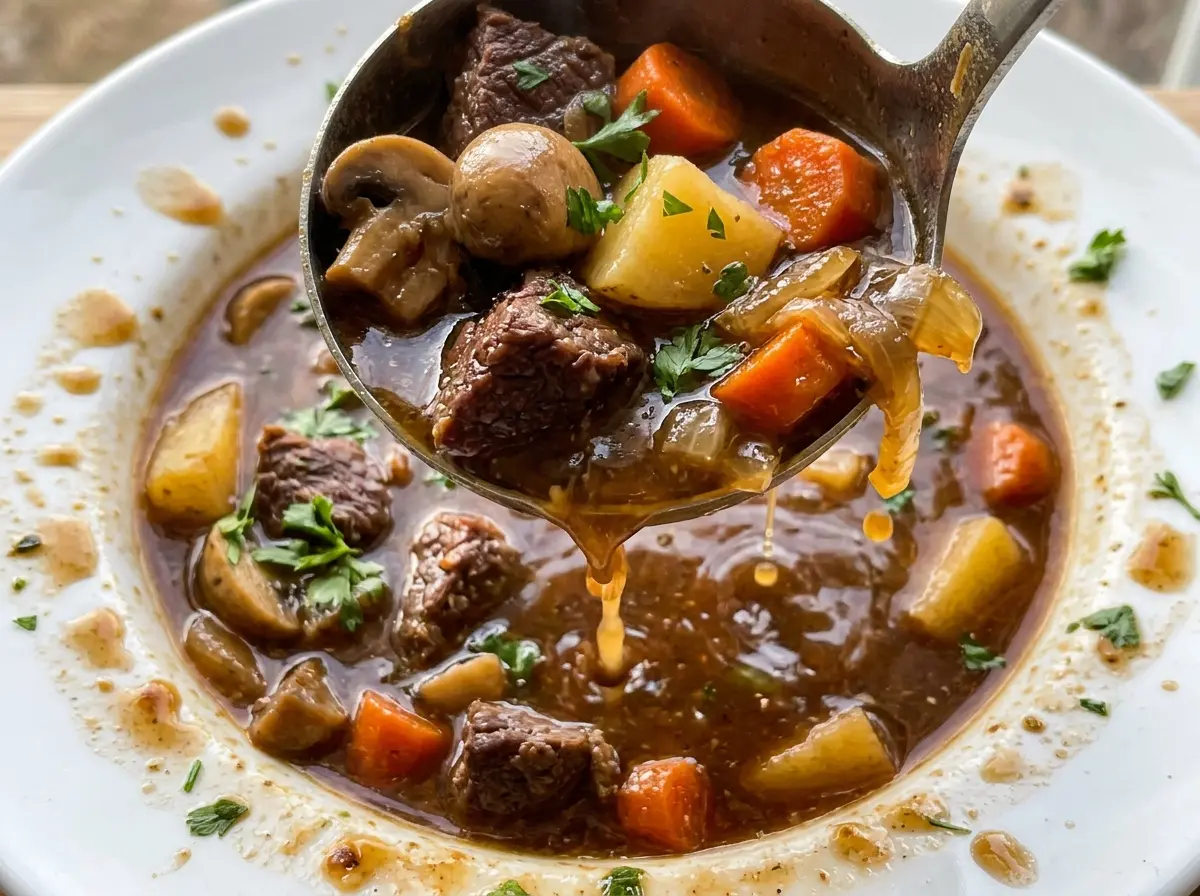
Kitchen Note
Keep the potatoes and carrots in even 1-inch pieces. If they’re cut much smaller, they can soften before the full 30 to 40 minutes are up.
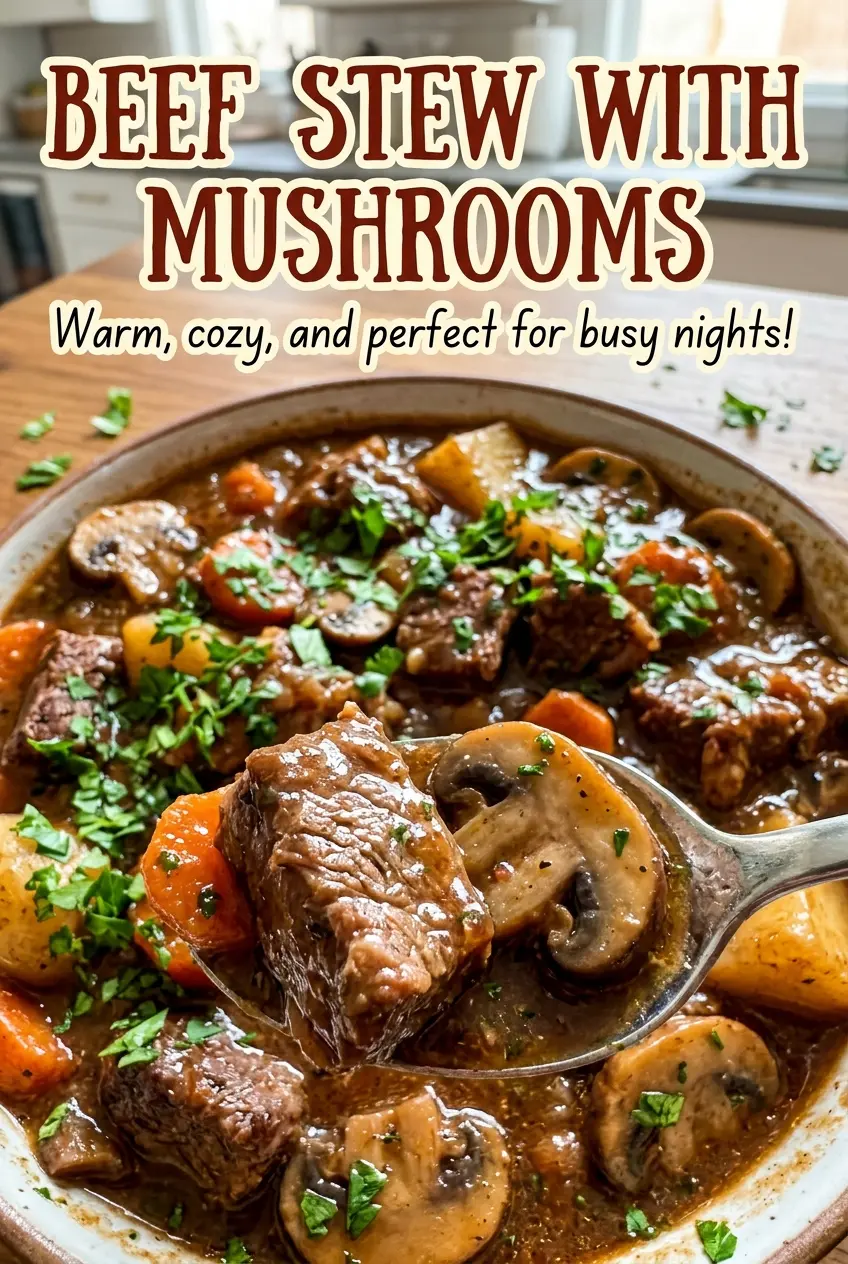
Save this beef stew with mushrooms for a cozy dinner: fork-tender chuck, browned cremini mushrooms, and a rich red-wine broth.
Why Flour-Coated Beef Gives This Stew Its Body
The flour on the beef does more than help the seasoning cling. As the coated pieces brown and then simmer in the broth, some of that flour gradually thickens the liquid. The result is a stew with a little more body than plain broth, without needing a separate slurry or an extra thickening step.
That’s also why an even, light coating works better than a thick blanket of flour. Patting the beef dry before tossing it helps the flour cling instead of turning pasty, and browning the meat in batches gives the pieces room to color. If the pot is crowded, the beef releases moisture and steams before it can develop those browned edges. Take the extra minute to work in batches; the color on the meat adds flavor to the whole pot.
The broth won’t be as thick as gravy, and it shouldn’t be. It needs to stay loose enough to surround the potatoes, carrots, and mushrooms while they cook. By the time the beef is fork-tender and the vegetables have simmered in that base, the flour has done its quiet work.
What the Beef, Mushrooms, and Wine Bring to the Pot
- Beef chuck — Chuck has enough connective tissue to turn tender during the long, gentle simmer. Leaner cuts don’t give you the same forgiving texture; they can dry out before they soften. Cut the beef into even cubes so the pieces finish at about the same time.
- Cremini mushrooms — Their earthy flavor stands up to the beef and red wine, and they keep a satisfying bite after cooking. Choose firm mushrooms without wet or slimy spots; quartering them leaves substantial pieces in the finished stew.
- Dry red wine — Wine adds acidity and depth to the base, balancing the richness of the beef. Use a dry red you’d be comfortable drinking; a very sweet wine can push the broth in the wrong direction. If wine isn’t an option, see the variation below for a broth-based version.
- Tomato paste, onion, celery, and garlic — Together, these form the savory foundation rather than a pronounced tomato sauce. Tomato paste brings concentrated flavor, while the chopped vegetables soften into the broth. Mince the garlic so it cooks quickly with the paste instead of leaving large raw-tasting pieces.
- Yukon Gold potatoes and carrots — Yukon Golds hold their shape better than floury potatoes during a long simmer, and carrots add sweetness to the savory broth. Keep the cuts consistent so the vegetables soften evenly.
Building the Stew in Layers Before the Long Simmer
Coat the Beef for an Even Brown
Pat the beef dry, season it with the kosher salt and black pepper, then toss it with the flour until the pieces have a light, even coating. Heat 3 tablespoons of vegetable oil in a 6-quart Dutch oven over medium-high heat. Brown the beef in batches, turning as needed, for about 3 to 4 minutes per batch, then move it to a plate. If the beef is pale and wet-looking, the pot is too crowded; give the next batch more room.
Brown the Mushrooms on Their Own
Add the remaining 1 tablespoon of oil to the pot, then add the quartered cremini mushrooms. Cook them, stirring occasionally, for 6 to 8 minutes, until they’ve browned and released their moisture. Moving them to the plate with the beef keeps them from cooking all the way through during the long beef simmer. Look for color on the cut sides, not just softened mushrooms.
Soften the Vegetables and Deglaze
Add the chopped onion and celery to the same pot and cook, stirring, for about 5 minutes, until softened. Stir in the minced garlic and tomato paste and cook for 1 minute; the paste should darken slightly and smell savory, not scorched. Pour in the red wine and scrape the bottom of the pot to loosen the browned bits. Let it simmer for 2 to 3 minutes before stirring in the beef broth, dried thyme, bay leaf, and browned beef.
Let the Beef Turn Tender, Then Finish the Vegetables
Bring the stew to a gentle simmer, cover the pot, and cook over low heat for about 1 1/2 to 2 hours, until the beef is fork-tender. Keep the heat low enough that the liquid bubbles gently rather than boiling hard. Stir in the potatoes, carrots, and browned mushrooms, cover again, and simmer for 30 to 40 minutes, until the vegetables are tender. Remove the bay leaf before serving the stew hot.
Simple Ways to Adapt This Beef and Mushroom Stew
A flour-free, gluten-free variation
Leave out the flour and use certified gluten-free low-sodium beef broth. Brown the seasoned beef without a coating; the stew will still be hearty, but the broth will be thinner because there’s no flour to give it body.
A version without red wine
Use beef broth in place of the wine when you deglaze the pot. The stew will still taste savory, but it won’t have the same acidity or wine depth; scrape up the browned bits thoroughly so none of that flavor stays stuck to the bottom.
Leave out the potatoes for a lighter bowl
Omit the Yukon Gold potatoes and keep the carrots in the stew. The broth stays less starchy, and the mushrooms and carrots become more prominent. Add the carrots and mushrooms at the same point in the cooking process.
Storage and Reheating
- Refrigerator: Refrigerate leftovers within 2 hours and keep them for 3 to 4 days. The broth may thicken as it chills, and the potatoes will soften a little more.
- Freezer: Freeze in airtight portions for up to 3 months for best quality. The potatoes may turn softer or slightly grainy after thawing, but the stew remains useful for a quick meal.
- Reheating: Warm it gently in a covered saucepan over low heat, stirring occasionally, until it reaches 165°F. Avoid a hard boil, which can make the beef and vegetables break down more than you want.
Questions That Come Up While Making Beef Stew
Beef Stew with Mushrooms
Ingredients
Equipment
Method
- Pat the beef dry, season it with the salt and pepper, and toss it with the flour to coat.
- Heat 3 tablespoons of the oil in a 6-quart Dutch oven over medium-high heat; brown the beef in batches, turning as needed, about 3 to 4 minutes per batch, then transfer it to a plate.
- Add the remaining 1 tablespoon oil to the pot and cook the mushrooms, stirring occasionally, until browned, 6 to 8 minutes; transfer them to the plate with the beef.
- Add the onion and celery to the pot and cook, stirring, until softened, about 5 minutes.
- Add the garlic and tomato paste and cook for 1 minute.
- Pour in the wine and scrape up the browned bits from the bottom of the pot.
- Simmer for 2 to 3 minutes.
- Stir in the broth, thyme, bay leaf, and browned beef.
- Bring the stew to a gentle simmer, cover, and cook over low heat until the beef is fork-tender, about 1 1/2 to 2 hours.
- Stir in the potatoes, carrots, and browned mushrooms; cover and simmer until the vegetables are tender, 30 to 40 minutes.
- Remove the bay leaf and serve the stew hot.