A fork should slide through the squash without catching on a firm center; a few undercooked cubes can leave the filling lumpy even after a good mash. I roast the squash until it’s fully tender, then let it cool briefly before mixing it with the eggs and milk. That gives this butternut squash casserole a smooth, softly set center instead of a watery one.
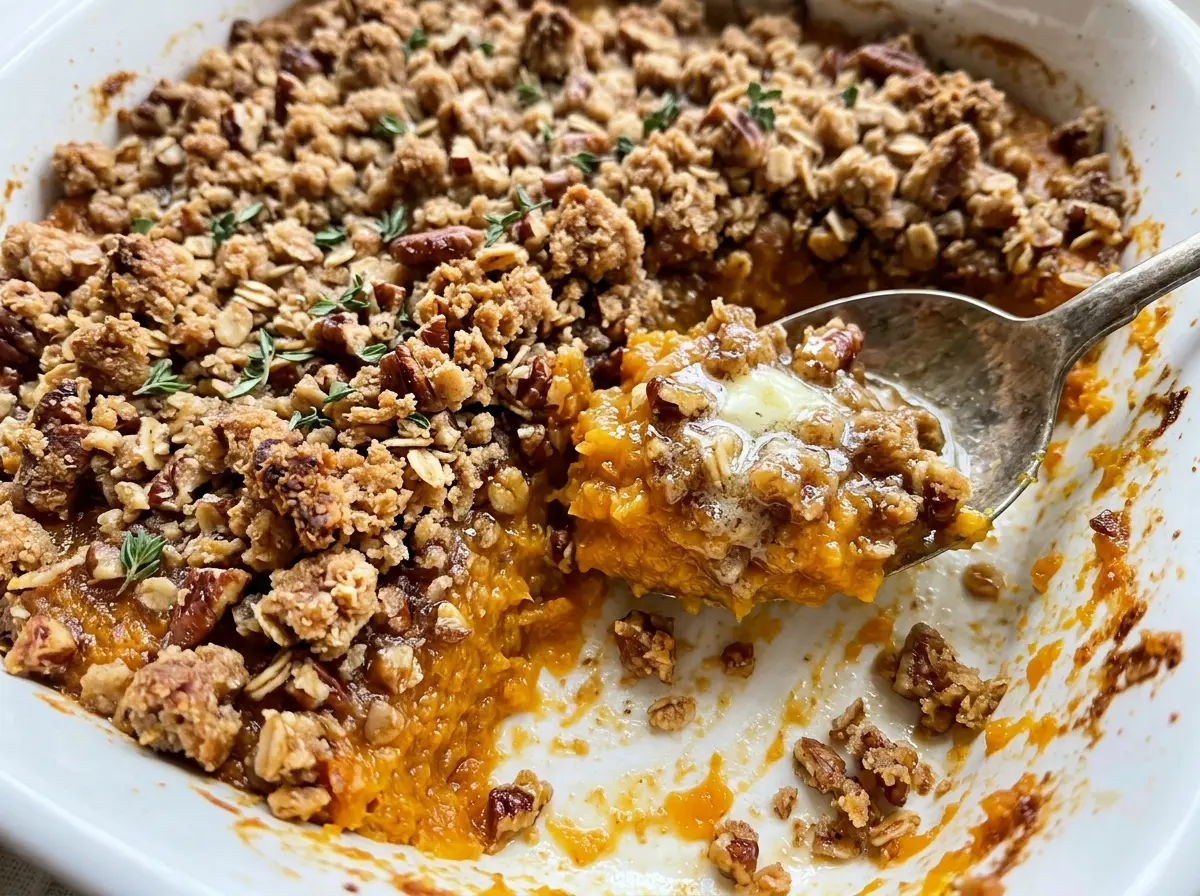
The pecan topping brings the contrast I want against that tender squash: buttery crumbs with a little crunch, not a thick layer that hides the filling. The cinnamon, nutmeg, and vanilla keep the sweetness warm without making the casserole taste like dessert. Each spoonful has a soft, gently spiced middle under a crisp, golden top.
Kitchen Note
Give the casserole the full 10-minute rest after baking. The center is still settling when it comes out, and cutting into it right away makes the soft filling slump instead of holding a neat spoonful.
Save this butternut squash casserole for its tender spiced center and golden pecan crumb topping.
Why Roasting the Squash Keeps the Filling from Turning Loose
Butternut squash carries plenty of moisture. When that moisture stays in the squash, the egg-and-milk filling can bake up soft and loose instead of holding together when you scoop it. Roasting the cubes on a rimmed baking sheet gives moisture a chance to escape, while the squash’s natural sweetness becomes more concentrated. That’s a different starting point from cooking the squash in water, which can leave it wetter.
The casserole also depends on a balance: squash gives the filling its body, and the eggs help it set in the oven. You want a tender center, not a dry, firm one, so the goal isn’t to squeeze or cook every bit of moisture out. Roast until the cubes are very tender, mash them, and stir the filling just until everything is evenly combined. Those details let the squash stay soft without making the finished casserole soupy.
What the Squash and Pecan Crumb Each Bring to This Casserole

- Butternut squash — Choose firm squash with smooth skin if you’re peeling it yourself. The 1-inch cubes roast at a similar pace, so cut larger pieces down rather than mixing sizes. Its sweetness and creamy texture are the base of the dish; none of the other listed ingredients can stand in for it.
- Olive oil — A light coating helps the squash roast evenly. There’s no need to reach for an expensive bottle here; the squash and spices carry the flavor.
- Eggs and whole milk — Eggs give the filling structure, while whole milk loosens the mashed squash enough to make it spoonable. Both matter to the soft set, so I keep them in rather than trying to replace one with another listed ingredient.
- Unsalted butter — Melted butter enriches the squash filling, while cold butter makes the topping crumbly. Keep those two uses separate: warm, melted butter belongs in the filling, and the topping butter needs to stay cold as you work it in.
- Vanilla, cinnamon, and nutmeg — Vanilla rounds out the squash’s sweetness, and the two spices add warmth without taking over. Ground spices are fine here; freshness matters most when your jars have been open long enough to lose their aroma.
- All-purpose flour, brown sugar, and pecans — Flour gives the topping its crumb structure, brown sugar adds a deeper sweetness, and pecans bring the crisp, nutty bite. Chopped pecans save prep time, but keep the pieces small enough to sit neatly across the filling.
Roast, Mix, and Bake Without Losing the Soft Center
Roast the Cubes Until a Fork Slides Through
Heat the oven to 400°F and line a rimmed baking sheet with parchment paper. Toss the 1-inch squash cubes with olive oil and spread them in a single layer. Roast for 30 to 35 minutes, until very tender; a fork should pass through the largest cube without resistance. Let the squash cool for 10 minutes before mashing it until mostly smooth.
Stir the Filling Until Even, Not Frothy
Lower the oven temperature to 350°F and coat a 2-quart baking dish with nonstick cooking spray. Stir the mashed squash with the melted butter, granulated sugar, eggs, whole milk, vanilla, cinnamon, nutmeg, and kosher salt. Stop once the mixture looks evenly blended; vigorous beating adds air the filling doesn’t need. Spread it evenly in the prepared dish.
Work the Cold Butter into the Crumb
Mix the flour, brown sugar, and chopped pecans in a bowl. Add the cold butter pieces and work them in with your fingertips until the mixture forms coarse crumbs. If the butter starts to feel soft, pause briefly rather than pressing everything into a smooth paste. The finished topping should look crumbly enough to scatter over the squash.
Bake Until Golden, Then Let It Settle
Sprinkle the topping evenly over the filling and bake for 35 to 40 minutes. Look for a golden top and check that the center reaches 160°F. If the edges are golden before the middle is ready, use the center temperature—not the color at the sides—to judge doneness. Let the casserole rest for 10 minutes before serving.
Three Ways to Change the Texture or Topping
Pecan-Free Crumb Topping
Leave the pecans out of the topping for a nut-free adaptation. The flour, brown sugar, and butter still bake into a crumbly layer, though it won’t have the same crunchy bite. If you’re cooking for someone with a tree-nut allergy, check for cross-contact in the ingredients and on your equipment.
Leave a Little More Texture in the Squash
For a more rustic spoonful, stop mashing while a few small, tender pieces of squash remain. The filling will feel less uniform than the mostly smooth version, but the soft pieces make its texture more noticeable beneath the topping.
Make a Finer, More Even Crumb
Work the cold butter into the topping until the crumbs are smaller and more even than coarse pebbles. You’ll get a finer layer across the surface, with less distinct crunch from individual crumb clusters.
Storage and Reheating
- Refrigerator: Cover leftovers and refrigerate within 2 hours. They keep for 3 to 4 days; the topping softens as it sits.
- Freezer: Freeze cooled portions in an airtight container for up to 2 months. Thaw overnight in the refrigerator; expect a softer topping after thawing.
- Reheating: Reheat in a 350°F oven until the center reaches 165°F. If the top is already dark, cover it loosely so it doesn’t brown further while the middle heats.
Questions That Come Up While Making Butternut Squash Casserole
Butternut Squash Casserole
Ingredients
Equipment
Method
- Heat the oven to 400°F.
- Line a rimmed baking sheet with parchment paper.
- Toss the squash with the olive oil.
- Spread the squash in a single layer on the baking sheet and roast for 30 to 35 minutes, until very tender.
- Let the squash cool for 10 minutes.
- Mash the squash until mostly smooth.
- Reduce the oven temperature to 350°F.
- Coat a 2-quart baking dish with nonstick cooking spray.
- Stir the mashed squash with the melted butter, granulated sugar, eggs, milk, vanilla, cinnamon, nutmeg, and salt until evenly combined.
- Spread the filling in the dish.
- Mix the flour, brown sugar, and pecans.
- Work in the cold butter with your fingertips until the mixture forms coarse crumbs.
- Sprinkle the topping evenly over the filling.
- Bake for 35 to 40 minutes, until golden and the center reaches 160°F.
- Let the casserole rest for 10 minutes before serving.