The mixer goes from a streaky butter-and-peanut-butter mix to a creamy, pale dough in about two minutes. That’s the point where these peanut butter chocolate chip cookies start to come together: the peanut butter brings its unmistakable roasted flavor, while butter keeps the crumb tender instead of dry.
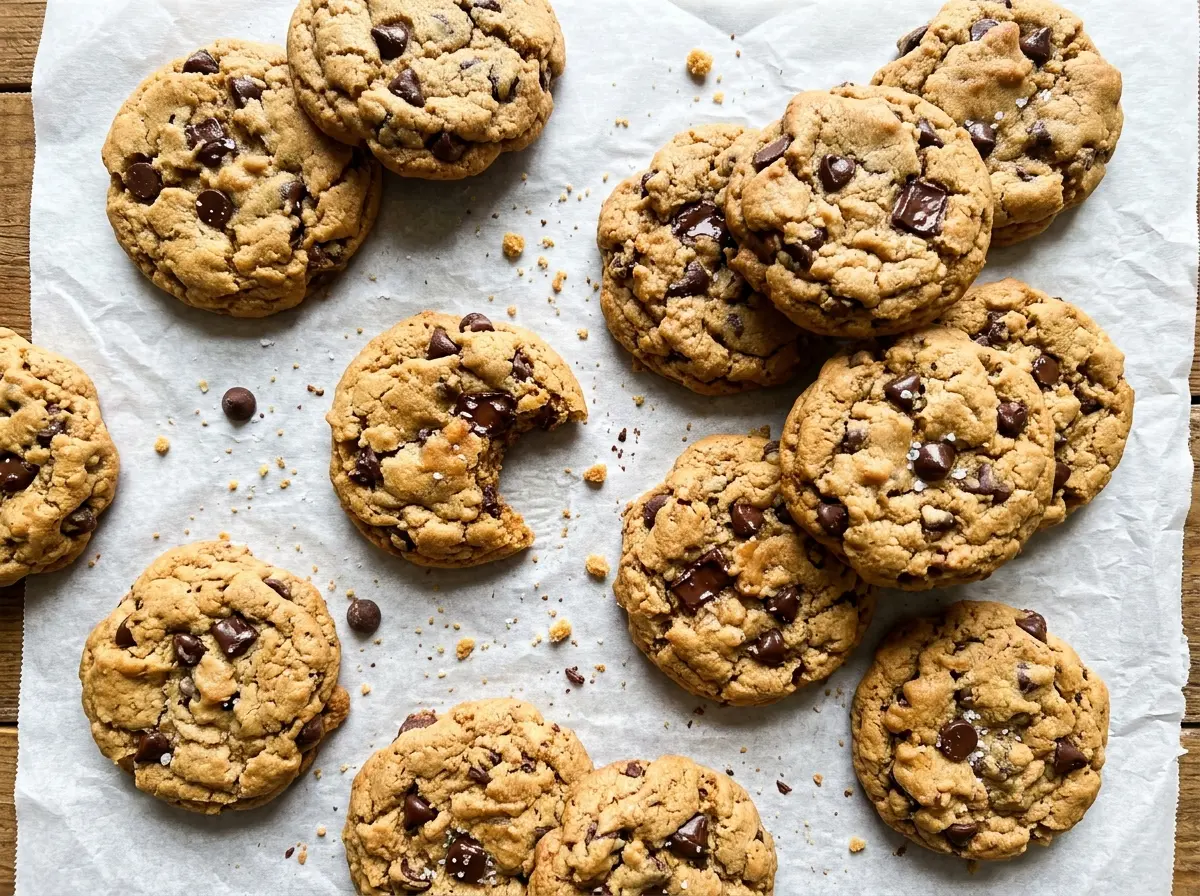
I keep the flour mixing short and scoop the dough while it’s still soft. A gentle flatten gives each cookie room to bake evenly, and the semisweet chips cut through the sweetness without taking over. The centers come out soft, the edges turn lightly golden, and the chocolate stays in generous little pockets.
Kitchen Note
Softened butter should give slightly when pressed but still hold its shape. If it’s shiny or partly melted, wait before mixing; melted butter changes how the cookies spread.
Save these peanut butter chocolate chip cookies for a bake when you want soft centers, golden edges, and plenty of semisweet chocolate.
Why Peanut Butter Cookies Turn Crumbly When the Dough Has Too Much Peanut Butter
Peanut butter gives a cookie plenty of flavor, but a dough built around it alone can bake up dry and fragile. This version uses butter alongside the peanut butter, so there’s enough fat for a tender bite without letting the peanut butter dominate the texture. The two sugars help, too: granulated sugar keeps the edges from feeling heavy, while brown sugar gives the middle a little more softness.
There’s a narrow window between a dough that’s mixed together and one that’s been worked too much. Once the flour goes in, I mix on low only until the last dry patches disappear. A few chocolate chips may shift around as you scoop, but keep the dough intact rather than kneading it to make every portion look uniform. That restraint helps the cookies stay tender instead of turning dense.
What Creamy Peanut Butter and Two Sugars Are Doing in This Dough

- Creamy peanut butter — A smooth, conventional creamy peanut butter blends into the butter and sugars without leaving crunchy bits in the dough. Choose a brand you like the taste of; there’s no need for a premium jar here. Natural peanut butter that separates can bring uneven amounts of oil into the mixture, so it’s a less dependable choice for this dough.
- Unsalted butter — Butter rounds out the peanut butter and keeps the cookies from baking up dry. A standard grocery-store butter works well; what matters more than brand is that it’s softened, not melted. If you only have salted butter, replace the unsalted butter with it and leave out the added salt.
- Granulated and light brown sugar — The two sugars shape the balance of edge and center. Dark brown sugar can stand in for light brown sugar in the same amount, though its deeper molasses note will come through more clearly. Keep the granulated sugar in place so the dough retains its balance.
- All-purpose flour — It gives the dough enough structure to hold its shape around the chips. For a gluten-free batch, use a cup-for-cup gluten-free baking blend that includes xanthan gum; the result may be a touch more delicate than the all-purpose version.
- Large egg — The egg binds the fats and dry ingredients into a scoopable dough. Use a large egg as written; changing the egg size shifts the moisture, and there isn’t a simple one-for-one replacement that keeps this texture intact.
- Semisweet chocolate chips — Semisweet chocolate keeps each bite from tasting overly sweet, and chips hold their shape as the cookies bake. Chopped semisweet chocolate works in their place; it gives you more irregular, melty pockets instead of neat chip-shaped pieces.
From Creaming to Cooling: The Stages That Shape These Cookies
Cream the Butter, Peanut Butter, and Sugars
Heat the oven to 350°F and line two 18×13-inch baking sheets with parchment paper. In a large bowl, beat the softened butter, creamy peanut butter, granulated sugar, and packed light brown sugar with an electric mixer on medium speed until creamy, about 2 minutes. Scrape down the bowl if a streak of butter is clinging to the side. The mixture should look cohesive, with no obvious pockets of either sugar.
Add the Egg, Then Bring the Dough Together
Beat in the egg and vanilla extract until combined. In a separate medium bowl, whisk together the flour, baking soda, and salt so the leavening is evenly distributed. Add that mixture to the butter mixture and mix on low just until no dry flour remains. Stop as soon as the dough comes together; continuing to beat it can make the cookies dense.
Fold in the Chips and Shape the Portions
Stir in the semisweet chocolate chips, then scoop the dough into 1 1/2-tablespoon portions. Arrange the portions about 2 inches apart on the lined sheets, leaving space for the cookies to spread. Gently flatten each portion before it goes into the oven. Press lightly rather than squashing the dough into a thin disk.
Bake for Soft Centers, Then Let Them Set
Bake one sheet at a time for 10 to 12 minutes, until the edges are lightly golden and the centers still look soft. Don’t wait for the centers to look fully firm in the oven; they’ll continue setting as they cool. Leave the cookies on the baking sheet for 5 minutes, then transfer them to a wire rack to cool completely. They’re delicate while hot, so give them that brief pause before moving them.
Easy Swaps for Different Peanut Butter Chocolate Chip Cookies
Give the Dough a Crunchier Peanut Bite
Use crunchy peanut butter in place of creamy peanut butter. The flavor stays familiar, but the cookies have small peanut pieces throughout and a slightly less even crumb.
Make a Gluten-Free Batch
Replace the all-purpose flour with a cup-for-cup gluten-free baking blend that contains xanthan gum. The cookies keep their peanut butter and chocolate flavor, though their texture can be a little more delicate when warm.
Make Them Dairy-Free
Use softened stick-style dairy-free butter and dairy-free semisweet chocolate chips. The cookies will still have a tender center, although the plant butter’s brand can affect how much they spread.
Storage and Reheating
- Refrigerator: Keep the cookies in an airtight container for up to 1 week; they’ll firm up and lose some softness, so room temperature is better for texture.
- Freezer: Freeze completely cooled cookies in an airtight freezer container for up to 2 months. Let them thaw at room temperature before eating.
- Reheating: Warm a cookie briefly in the microwave, checking after a few seconds. Don’t heat it until the chocolate is fully melted, or the cookie can turn soft and greasy.
Questions That Come Up While Baking These Cookies
Peanut Butter Chocolate Chip Cookies
Ingredients
Equipment
Method
- Heat the oven to 350°F.
- Line two 18x13-inch baking sheets with parchment paper.
- In a large bowl, beat the butter, peanut butter, granulated sugar, and brown sugar with an electric mixer on medium speed until creamy, about 2 minutes.
- Beat in the egg and vanilla until combined.
- In a medium bowl, whisk together the flour, baking soda, and salt.
- Add the flour mixture to the butter mixture and mix on low just until no dry flour remains.
- Stir in the chocolate chips.
- Scoop the dough into 1 1/2-tablespoon portions and arrange them about 2 inches apart on the prepared sheets.
- Gently flatten each portion.
- Bake one sheet at a time for 10 to 12 minutes, until the edges are lightly golden and the centers still look soft.
- Cool the cookies on the baking sheet for 5 minutes.
- Transfer the cookies to a wire rack to cool completely.