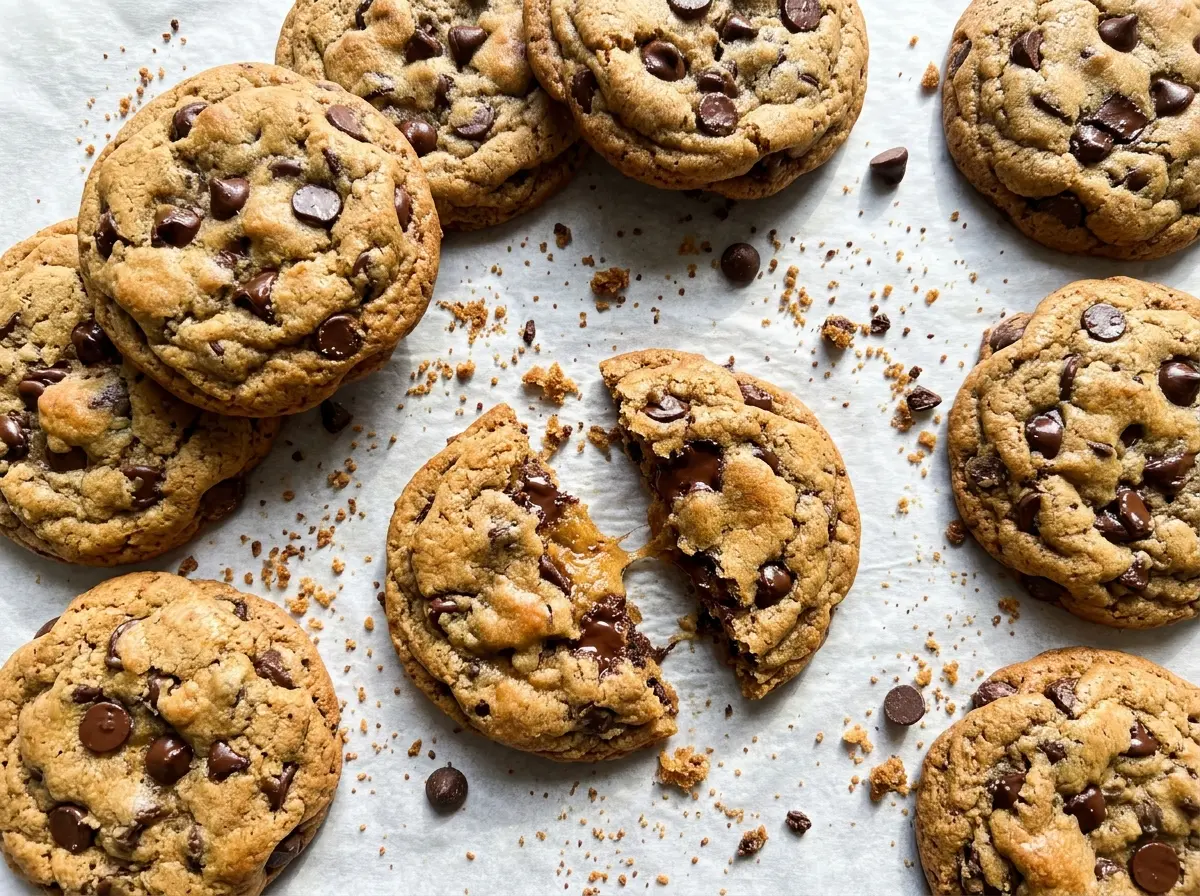
The edges start turning golden while the middle still looks a little too soft to call a cookie. That’s exactly the moment I want with these giant chewy chocolate chip cookies. They’re big enough to have a substantial, soft center, with enough browned edge to hold each cookie together once it cools.
Chilling the dough and shaping it into tall balls help each portion bake up thick instead of spreading into a thin, crisp disk. I also bake the two sheets on separate racks, then switch their positions halfway through so the cookies brown more evenly. The chocolate chips stay scattered through the dough rather than sinking into one sweet puddle. Break one open after it has cooled a bit, and you’ll see the soft, chewy middle these cookies are meant to have.
Kitchen Note
Let the cookies sit on the baking sheets for the full 10 minutes before moving them. They’re fragile when hot, and that short rest gives the soft centers time to set without drying out the edges.
Save these giant chewy chocolate chip cookies for the days you want thick cookies with soft centers and golden edges.
Why These Cookies Stay Thick Without Losing Their Chewy Centers
Big cookies need a little more structure than small ones. A regular scoop dropped onto a sheet tends to spread outward before the center has time to bake, leaving a wide cookie that can turn crisp all the way through. Here, a short chill firms the dough, and shaping each portion into a tall ball gives it more height to bake through.
The balance of sugars matters, too. Light brown sugar brings moisture and chew, while granulated sugar helps the edges bake up with a little more structure. Softened butter creams smoothly with both sugars, but it shouldn’t be melted; melted butter changes the dough’s texture and encourages more spreading. Keep the flour mixing brief once it joins the bowl, because working it hard develops gluten and can make a thick cookie tough instead of tender.
There’s a useful visual contrast to look for in the oven: golden edges alongside centers that still look soft. If you wait for the middles to look fully firm before taking the sheets out, the large portions are more likely to bake past that chewy stage. The cookies finish setting as they cool.
How the Sugars, Butter, and Chocolate Shape Every Bite

- Light brown sugar — Its molasses gives the dough a deeper, gently caramel-like flavor and helps keep the centers chewy. Pack it firmly when measuring so the amount stays consistent.
- Unsalted butter — Softened butter blends evenly with the sugars and helps create a tender crumb. Let it soften until a finger leaves a dent without sinking straight through; butter that’s greasy or partly melted won’t cream the same way.
- Eggs — They bind the dough and add moisture, which matters in cookies this large. Bring them to room temperature if you can, so they mix in smoothly with the creamed butter.
- All-purpose flour — It gives the dough enough structure to hold eight substantial portions. Fluff the flour, spoon it into the measuring cup, and level it rather than packing it down; too much flour can make the centers dry and bready.
- Baking soda — This gives the cookies lift and helps them brown. Check that yours is fresh, since an old container may not give the dough the same rise.
- Semisweet chocolate chips — Their firm shape holds up as the cookies bake, leaving chocolate throughout instead of a uniformly melted dough. A fresh bag is fine here; there’s no need for specialty chocolate.
Chill, Shape, and Bake for Thick, Evenly Browned Cookies
Set Up Both Racks Before Mixing
Heat the oven to 350°F and position the racks in the upper and lower thirds. Line two 18×13-inch rimmed baking sheets with parchment paper so the dough has a ready place to go once it’s mixed. Using both racks lets the eight portions bake at once, but their positions need to change halfway through for more even browning. Get the pans lined before you start portioning so the dough doesn’t sit out while you prepare them.
Cream the Butter and Sugars Until Smooth
Beat the softened butter with the light brown sugar and granulated sugar on medium speed for 2 to 3 minutes. The mixture should look creamy and evenly blended, not like separate butter pieces coated in sugar. Add the eggs one at a time, beating after each, then mix in the vanilla until combined. If the mixture looks slightly uneven after an egg goes in, keep mixing just until it comes together rather than adding the flour early.
Mix the Flour Just Until It Disappears
Whisk the flour, baking soda, and table salt together in a separate bowl so the leavener and salt are spread through the flour. Add this mixture to the butter mixture in two additions, mixing on low after each. Stop as soon as no dry flour remains; a few seconds too long can make the cookies less tender. Fold in the chocolate chips until they’re distributed throughout the dough.
Chill the Dough and Make Tall Portions
Cover the dough and chill it for 30 minutes. This gives the dough time to firm up, which makes it easier to shape and helps limit spreading in the oven. Divide it into 8 equal portions, about 5 ounces each, and shape each into a tall ball rather than flattening it. Arrange 4 balls on each prepared sheet, leaving about 3 inches between them so they have space to spread.
Pull the Sheets While the Centers Still Look Soft
Bake both sheets for 18 to 22 minutes, swapping their rack positions and rotating them front to back halfway through. Look for golden edges and centers that still appear soft; don’t wait for the middles to look completely firm. Let the cookies rest on the baking sheets for 10 minutes, then transfer them to a wire rack to cool. The cookies are large, so move them gently once they’ve had that time to set.
Three Simple Ways to Change These Giant Cookies
Make Them Dairy-Free with Baking Sticks
Replace the unsalted butter with an equal amount of dairy-free baking sticks, not soft tub spread, and use dairy-free semisweet chips. The dough will still cream and portion well, though the cookies may spread a little differently depending on the brand of baking sticks.
Use a Measure-for-Measure Gluten-Free Blend
Swap the all-purpose flour for a gluten-free measure-for-measure baking blend that includes xanthan gum, using the same volume. The cookies will have a slightly more delicate crumb, so let them rest on the baking sheets before moving them. A blend made for baking works better here than a single gluten-free flour such as almond or coconut flour.
Trade Chips for Chopped Semisweet Chocolate
Use the same amount of chopped semisweet chocolate in place of the chips. The smaller shards and uneven pieces melt into more streaks through the cookie, while larger chunks make distinct pools. Keep the pieces roughly chocolate-chip size so they mix through the dough without weighing down one portion.
Storage and Reheating
- Refrigerator: These cookies keep best at room temperature in an airtight container for up to 4 days. They’ll keep in the refrigerator for up to 1 week, but the cold firms them and can make them seem less chewy.
- Freezer: Freeze fully cooled cookies in an airtight container for up to 3 months, with parchment between layers to prevent sticking. Thaw at room temperature before serving.
- Reheating: Warm one cookie in the microwave for about 8 to 10 seconds to soften the chocolate and center. Longer heating can make the edges tough, so start with a short burst.
Questions That Come Up When Baking Giant Chocolate Chip Cookies
Giant Chewy Chocolate Chip Cookies
Ingredients
Equipment
Method
- Preheat the oven to 350°F and position racks in the upper and lower thirds.
- Line two 18x13-inch rimmed baking sheets with parchment paper.
- In a large bowl, beat the butter, brown sugar, and granulated sugar with an electric mixer on medium speed for 2 to 3 minutes, until creamy.
- Beat in the eggs one at a time.
- Beat in the vanilla until combined.
- In a separate bowl, whisk together the flour, baking soda, and salt.
- Add the flour mixture to the butter mixture in two additions, mixing on low just until no dry flour remains.
- Fold in the chocolate chips until evenly distributed.
- Cover the dough and chill for 30 minutes.
- Divide the dough into 8 equal portions, about 5 ounces each, and shape into tall balls.
- Arrange 4 balls on each prepared baking sheet, leaving about 3 inches between them.
- Bake both sheets for 18 to 22 minutes, swapping their rack positions and rotating them front to back halfway through, until the edges are golden and the centers still look soft.
- Let the cookies rest on the baking sheets for 10 minutes.
- Transfer the cookies to a wire rack to cool.