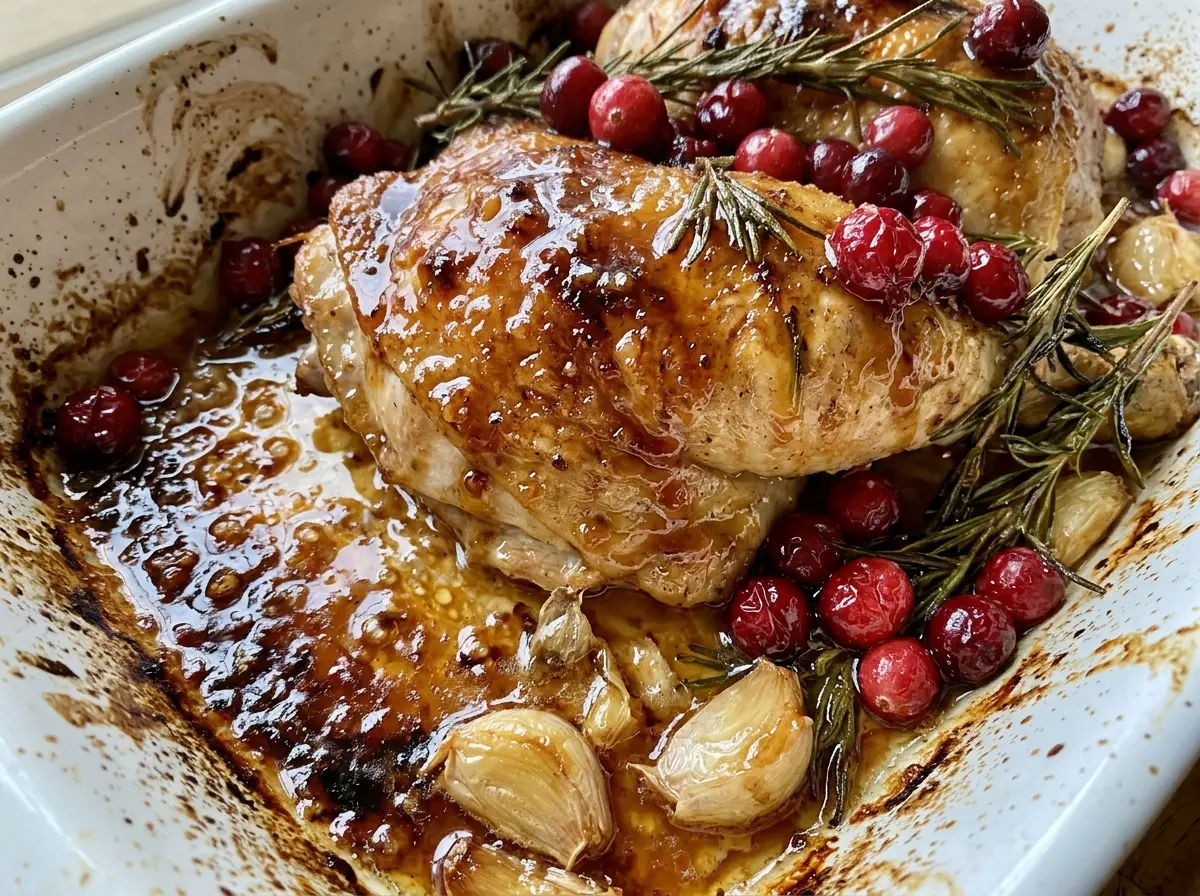
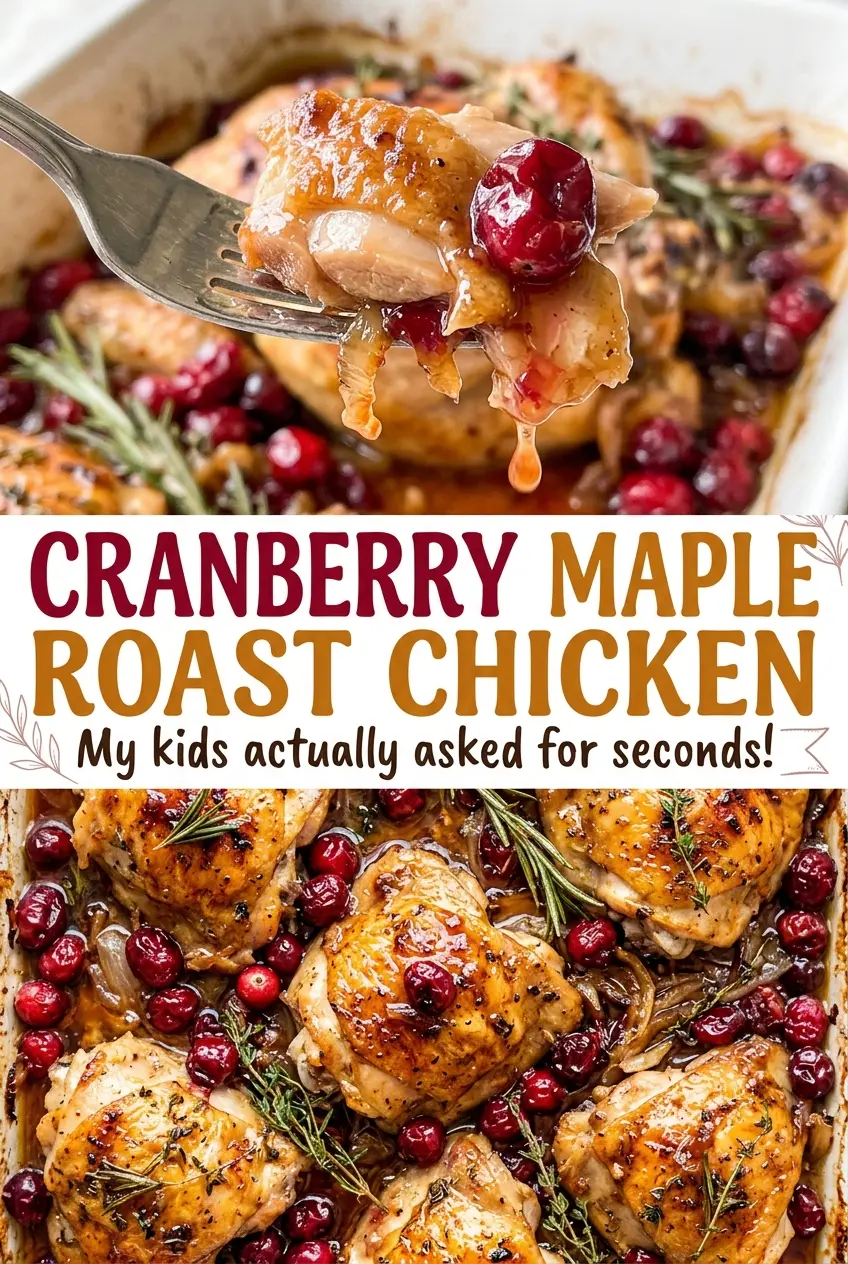
The cranberry glaze starts out sharp and bright in the saucepan, then turns glossy as it clings to the chicken. I brush it on only after the first stretch of roasting, so the skin has time to brown before the maple goes into the oven. That timing makes this cranberry maple roast chicken feel special without asking you to fuss over it.
A whole chicken gives you juicy breast meat, flavorful thighs, and plenty of browned skin in one pan. The glaze takes just a few minutes of attention while the bird roasts: cranberries burst in the maple and vinegar, and Dijon keeps the sweetness from feeling flat. After a short rest, the chicken is ready to carve with a little extra cranberry glaze on the side.
Kitchen Note
Set the two tablespoons of glaze aside before the brush touches the chicken. Keeping it in a clean bowl means you’ll have a fresh, untouched spoonful to serve at the table.
Save this cranberry maple roast chicken for a dinner with bronzed skin and a tart-sweet glaze that’s easy to make while the bird roasts.
Why the Maple Glaze Goes on After the First Roast
Maple syrup brings a gentle sweetness and a sticky finish, but its sugars can darken quickly in a hot oven. If it went on before the chicken started roasting, the glaze would spend the entire cook exposed to the heat. Brushing it on after the first 45 minutes gives the skin a head start on browning and lets the glaze color the bird during the final stretch instead.
The timing also gives the glaze a chance to cling. Simmering the cranberries until they burst and the mixture thickens turns a loose syrup into something that coats the back of a spoon and stays put on the chicken. It won’t form a thick candy shell; it makes a glossy, tangy layer with cranberry pieces tucked into it. Keep an eye on the bird as it finishes, since a 4-pound chicken and a 5-pound chicken won’t necessarily need the same amount of time.
What the Cranberries, Maple, and Mustard Bring to the Glaze
- Whole chicken — A bird in the stated 4- to 5-pound range fits the roasting time and pan setup. Choose one with the giblets removed; there’s no need for an expensive specialty bird for this glaze to shine.
- Olive oil, kosher salt, and black pepper — The oil helps the seasoning spread over the skin, while salt and pepper give the chicken a savory base beneath the fruit glaze. Regular olive oil works well here; save a pricier finishing oil for another use.
- Cranberries — Fresh berries bring tartness and a little texture once they burst. Frozen cranberries work too, which makes this glaze easy to pull together when fresh ones aren’t available.
- Pure maple syrup — It gives the glaze its rounded sweetness and maple aroma. Use pure maple syrup rather than pancake syrup; the latter has a different sweetness and won’t give the glaze the same character.
- Apple cider vinegar — Its acidity cuts through the maple and keeps the cranberry flavor lively. It’s worth using the specified vinegar rather than leaving the acid out, which would make the glaze taste sweeter and heavier.
- Dijon mustard — Dijon adds a savory, lightly sharp note that helps balance the fruit. A good everyday jar is fine; there’s no need for a specialty mustard.
- Unsalted butter — Stirring it in at the end softens the glaze’s sharp edges and gives it a smoother finish. Unsalted butter keeps the seasoning easier to control alongside the kosher salt on the chicken.
A Two-Stage Roast, Then a Rest Before Carving
Season and Start the Chicken Breast-Side Up
Heat the oven to 425°F and set a rack in a 9×13-inch roasting pan. Pat the chicken dry with paper towels, then rub it all over with olive oil, kosher salt, and black pepper before placing it breast-side up on the rack. Dry skin gives the oven a better chance to brown it; if the surface is still damp, take another moment with the paper towels. Roast for 45 minutes before adding any glaze.
Simmer the Cranberry Maple Glaze
While the chicken roasts, combine the cranberries, maple syrup, apple cider vinegar, and Dijon mustard in a small saucepan. Simmer over medium heat for 8 to 10 minutes, stirring occasionally, until the berries burst and the mixture thickens. If most berries are still whole and the glaze looks watery, keep it simmering until those cues change rather than stopping early. Stir in the butter until it melts into the glaze.
Brush, Finish Roasting, and Rest
Set aside 2 tablespoons of glaze in a clean bowl, then brush the rest over the chicken. Return the bird to the oven for 25 to 40 minutes more; the skin should look burnished and the thickest part of the breast and innermost part of the thigh should each read 165°F on a thermometer, away from the bone. Transfer the chicken to a cutting board and let it rest for 15 minutes before carving. Serve with the reserved glaze.
Two Small Changes for Different Tables
A Dairy-Free Cranberry Glaze
Leave out the butter for a dairy-free version. The cranberries, maple, vinegar, and Dijon still make a tart, spoonable glaze, though it won’t have the same rounded, buttery finish.
Use Frozen Cranberries
Frozen cranberries work in place of fresh ones in the same saucepan. Add them to the maple mixture and simmer until they burst and the glaze thickens; the finished glaze will still have the same tart-sweet character.
Storage and Reheating
- Refrigerator: Refrigerate leftover chicken and glaze in separate airtight containers within 2 hours. The chicken keeps for 3 to 4 days; the skin will soften in storage.
- Freezer: Carve the chicken and freeze it in airtight portions for up to 4 months for best quality. Freeze leftover glaze separately.
- Reheating: Warm chicken covered in a 325°F oven until hot throughout, and warm the glaze separately. High heat can dry out the breast before the thicker pieces are warm.
Questions That Come Up While Roasting This Chicken
Cranberry Maple Roast Chicken
Ingredients
Equipment
Method
- Heat the oven to 425°F.
- Set a rack in a 9x13-inch roasting pan.
- Pat the chicken dry with paper towels.
- Rub the chicken all over with the olive oil, salt, and pepper.
- Place the chicken breast-side up on the rack.
- Roast the chicken for 45 minutes.
- While the chicken roasts, combine the cranberries, maple syrup, apple cider vinegar, and Dijon mustard in a small saucepan.
- Simmer over medium heat for 8 to 10 minutes, stirring occasionally, until the cranberries burst and the mixture thickens.
- Stir in the butter until melted.
- Set aside 2 tablespoons of glaze in a clean bowl.
- Brush the remaining glaze over the chicken.
- Roast for 25 to 40 minutes more, until a thermometer inserted into the thickest part of the breast and the innermost part of the thigh, away from bone, reads 165°F.
- Transfer the chicken to a cutting board and rest for 15 minutes before carving.
- Serve with the reserved glaze.