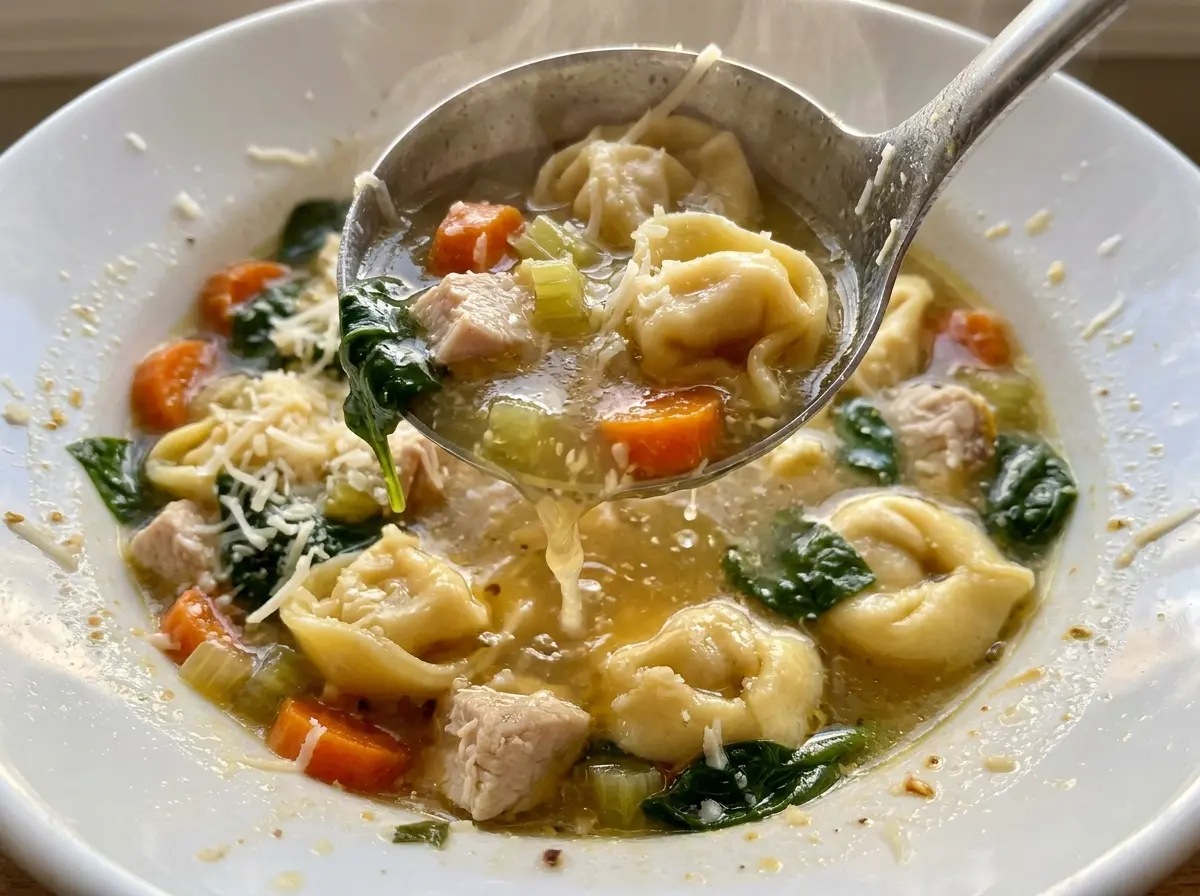
The onion, carrots, and celery turn soft around the edges before the broth even goes in, and that’s when the kitchen starts smelling like soup. I make this Chicken Tortellini Soup when I want a full, satisfying bowl without a creamy base: cheese-filled pasta gives the broth substance, while spinach and lemon keep it bright. The chicken simmers right in the pot, so its flavor becomes part of the broth instead of staying separate.
I like the balance here. The vegetables make a savory base, Italian seasoning keeps the broth familiar, and a little lemon juice at the end lifts everything without taking over. The chicken shreds easily once it’s cooked, and the spinach wilts in just a moment. This pot makes six servings, with tender chicken, soft greens, and warm tortellini in every bowl.
Kitchen Note
A 6-quart Dutch oven gives the vegetables room to soften and holds the broth and chicken comfortably. A smaller pot can feel crowded once the tortellini goes in, which makes it harder to stir without breaking the pasta.
Save this Chicken Tortellini Soup for a cozy dinner with tender chicken, cheese-filled pasta, and a bright lemon finish.
Why the Tortellini Shouldn’t Simmer With the Chicken
The chicken and tortellini need very different amounts of time in the pot. Chicken breasts need a long, gentle simmer to cook through, while refrigerated tortellini cooks quickly. Add the pasta at the beginning and it keeps softening while the chicken finishes; the seams can split, and the filling can work its way into the broth.
Cooking the chicken first gives the broth time to pick up its savory flavor without asking the pasta to wait through that longer simmer. Lift the cooked chicken onto a plate, bring the broth back to a gentle boil, and cook the tortellini on its own schedule. The chicken goes back in only after it’s shredded, so it stays tender and the pasta keeps its shape. That order is what makes the bowl feel like soup, not a pot of overcooked stuffed pasta.
The Ingredients That Keep the Broth Savory, Not Heavy

- Chicken breasts — Boneless, skinless breasts keep the soup lean and shred into tender pieces. Boneless, skinless thighs are a workable swap with a richer taste; their cooking time can differ, so check doneness rather than relying on the breast timing. Choose whichever cut looks fresh and is easy to trim.
- Low-sodium chicken broth — It gives the soup its body while leaving room for the kosher salt already in the pot. A dependable boxed broth is fine; the low-sodium label matters more than buying a premium brand. Regular-sodium broth can work, but use less added salt so the finished soup doesn’t turn harshly salty.
- Refrigerated cheese tortellini — The fresh pasta cooks quickly and brings a mild, creamy cheese filling to each spoonful. Check that the package is intact and follow its cooking directions; the brand matters less than using refrigerated tortellini rather than assuming another pasta has the same timing. Meat-filled refrigerated tortellini is an easy flavor change.
- Yellow onion, carrots, and celery — Together they create the sweet, savory base that makes the broth taste rounded. A white onion can replace the yellow onion without changing the method, though its flavor is a little sharper. Slice the carrots and celery evenly so they soften at a similar pace; ordinary grocery-store vegetables work well here.
- Garlic and Italian seasoning — Freshly minced garlic has a clearer aroma than jarred garlic, but jarred minced garlic is a practical substitute; use the conversion on its label for the amount called for. Italian seasoning brings several familiar dried-herb notes in one spoonful, so it’s more convenient here than swapping in a single herb.
- Baby spinach and lemon juice — Baby spinach wilts quickly and keeps the finish light. Fresh lemon juice smells brighter, while bottled juice works in the same amount if that’s what you have. Add either at the end so the lemon stays noticeable and the greens don’t cook down into the broth.
- Olive oil — It helps the vegetables soften and gives the base a gentle fruitiness. A neutral cooking oil can stand in if needed, though it won’t bring quite the same flavor; there’s no need to use an expensive bottle for this soup.
Build the Broth First, Then Cook the Tortellini
Soften the vegetables before adding garlic
Heat the olive oil in a 6-quart Dutch oven over medium heat. Add the diced onion, sliced carrots, and celery, then cook for 5–7 minutes, stirring occasionally, until the vegetables begin to soften. Stir in the minced garlic and cook for 30 seconds, just until fragrant. Keep it moving during that short cook so the garlic doesn’t scorch.
Simmer the chicken gently in the broth
Add the chicken broth, chicken breasts, Italian seasoning, kosher salt, and black pepper. Bring the pot to a boil, then reduce the heat until the broth holds a gentle simmer rather than a rolling boil. Cook for 18–25 minutes, until the thickest part of each breast reaches 165°F. Transfer the chicken to a plate as soon as it’s cooked so it doesn’t keep simmering while the pasta goes in.
Let the tortellini cook on its own schedule
Bring the broth back to a gentle boil before adding the refrigerated tortellini. Cook it according to the package directions, usually 3–5 minutes. Keep an eye on the pasta near the end of its cooking time; the pieces should be tender, with their seams still intact. A vigorous boil or constant rough stirring can break them apart.
Shred the chicken and finish the soup
While the tortellini cooks, shred the chicken with two forks. Return it to the pot with the baby spinach and lemon juice, then stir for 1–2 minutes. The spinach should wilt and the chicken should be heated through. Take the pot off the heat once the greens are soft; they don’t need a long simmer.
Easy Changes for a Different Bowl of Chicken Tortellini Soup
Use meat-filled tortellini for a heartier broth
Replace the cheese-filled tortellini with refrigerated meat-filled tortellini and cook it according to its package directions. The filling makes the soup taste more savory and substantial, while the rest of the pot stays familiar.
Make a gluten-free version with gluten-free tortellini
Use gluten-free cheese tortellini and gluten-free chicken broth, and choose gluten-free Italian seasoning if needed. Cook the pasta by its package directions and stir gently at the finish; some gluten-free pasta is more delicate than wheat pasta.
Turn up the lemon for a brighter finish
Stir a little extra lemon juice into the finished soup, tasting as you go. The broth will taste sharper and fresher, which is a nice contrast to the cheese filling; add it gradually so the lemon doesn’t take over.
Storage and Reheating
- Refrigerator: Store in airtight containers for 3–4 days. The tortellini will continue to absorb broth and soften as it sits.
- Freezer: Freeze in airtight, freezer-safe containers for up to 2–3 months. The chicken and broth freeze well, but the tortellini will be softer after thawing.
- Reheating: Warm gently on the stovetop, stirring now and then, until the soup is hot throughout. Avoid a hard boil; it can make the pasta split and turn mushy.
Questions That Come Up While This Soup Simmering
Chicken Tortellini Soup
Ingredients
Equipment
Method
- Heat the olive oil in a 6-quart Dutch oven over medium heat.
- Add the onion, carrots, and celery and cook for 5–7 minutes, stirring occasionally, until the vegetables begin to soften.
- Stir in the garlic and cook for 30 seconds, until fragrant.
- Add the chicken broth, chicken breasts, Italian seasoning, salt, and pepper.
- Bring to a boil, then reduce the heat to maintain a gentle simmer and cook for 18–25 minutes, until the thickest part of each chicken breast reaches 165°F.
- Transfer the chicken to a plate and bring the broth back to a gentle boil.
- Add the tortellini and cook according to the package directions, usually 3–5 minutes.
- Shred the chicken with two forks.
- Return the chicken to the pot with the spinach and lemon juice.
- Stir for 1–2 minutes, until the spinach wilts and the chicken is heated through.