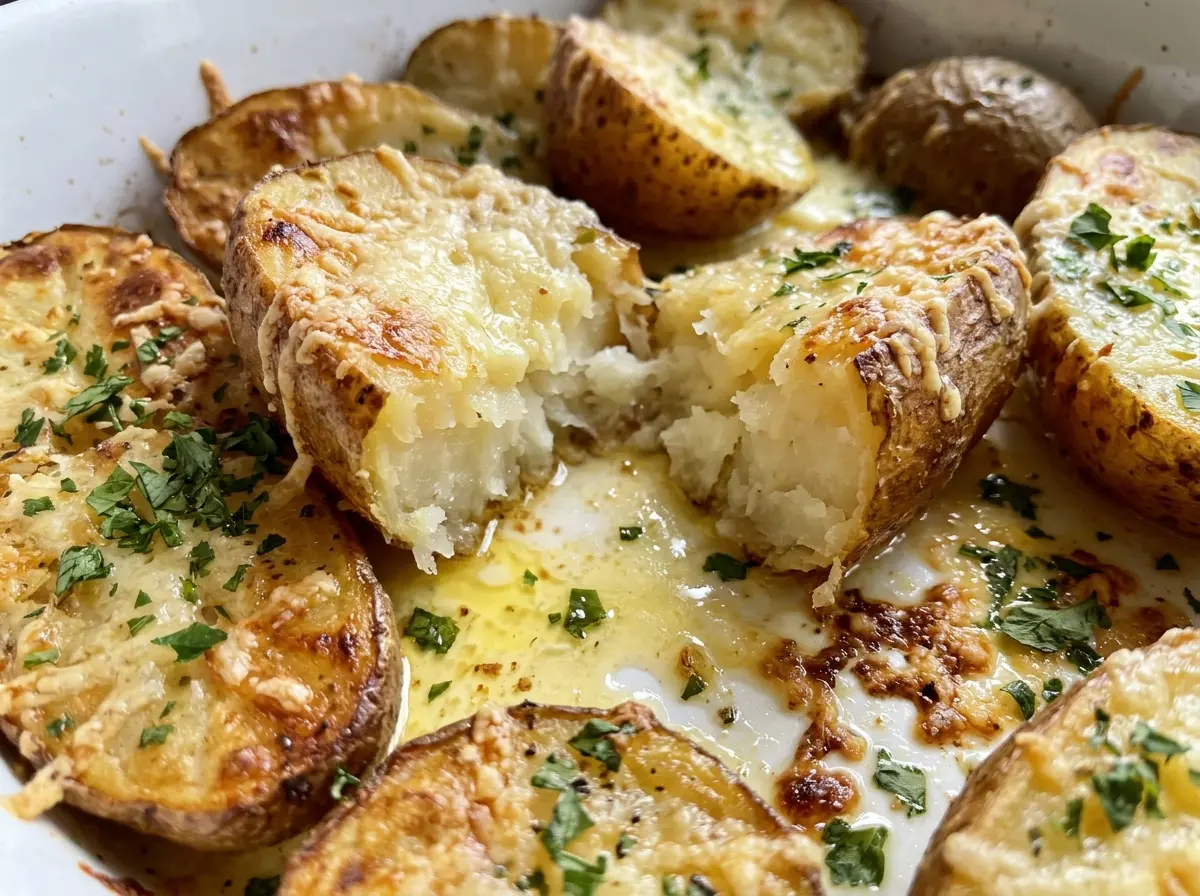
When the baking sheet comes out, the potatoes look simple from above; the good part is hiding underneath. Flip one over and there’s a crisp, deeply golden Parmesan layer clinging to the cut face. Parmesan baked potatoes get that contrast without a separate pan for the cheese or a long list of seasonings.
I like this method because the cheese cooks right against the flat side of each potato while the centers turn tender. The potatoes need to sit cut-side down, and the Parmesan mixture needs to be spread thinly across the parchment before they go on. That little bit of contact is what turns the cheese into a crust instead of a scattered topping. Let the potatoes rest before lifting them, and you’ll have warm, tender centers with a salty, browned bottom.
Kitchen Note
Give the potatoes the full five-minute rest on the pan before you lift them. A thin spatula slips under the browned Parmesan more cleanly than pulling up on a potato edge.
Save these Parmesan baked potatoes for a side dish with tender centers and a crisp, golden cheese crust.
Why the Parmesan Goes Under the Potatoes, Not Over Them
Most roasted potatoes get their seasoning on top, but this method puts the cheese underneath. The flat, cut side presses the Parmesan mixture against the parchment, so the cheese melts and browns in one thin layer as the potatoes bake. The potato’s weight keeps that layer close to the heat and gives it a broad surface to cling to.
Putting Parmesan on top would give you a different result: exposed cheese can brown unevenly while the potato surface stays soft. Here, the parchment holds the cheese in place until it sets, and the potato keeps it attached when you lift each half. Spread the mixture in a thin layer rather than leaving thick mounds; a crowded patch of cheese won’t brown as evenly as the open areas. The payoff is a browned base on every potato, not a few isolated bits of cheese on top.
What the Parmesan, Butter, and Potato Choice Each Bring
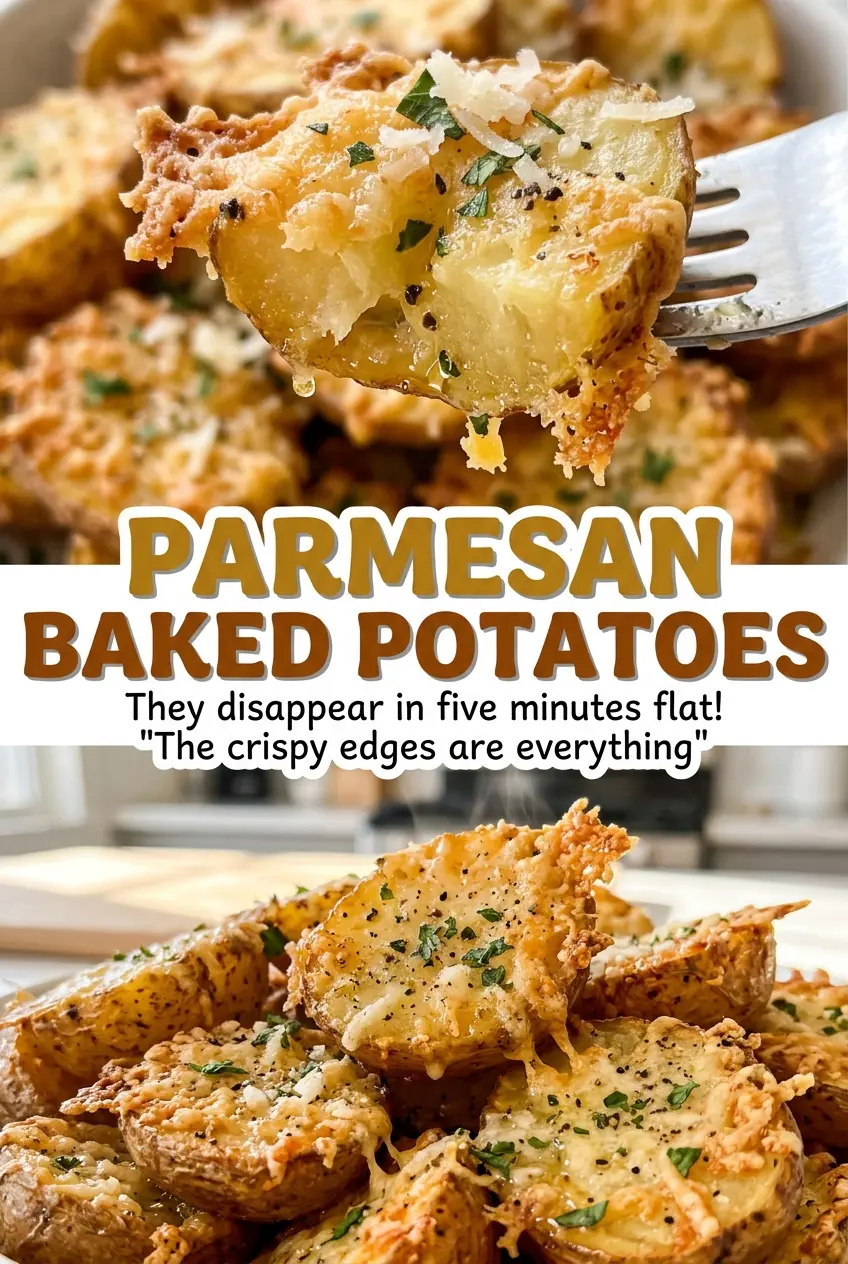
- Finely grated Parmesan — The fine pieces spread into a continuous layer more easily than thick shreds. Since the cheese is the crust itself, its texture matters more here than it would in a topping scattered over a finished dish.
- Melted unsalted butter — Butter helps the Parmesan mixture spread across the parchment and carries the garlic powder, salt, and pepper with it. Unsalted butter keeps the seasoning level predictable; salted butter varies by brand.
- Garlic powder, kosher salt, and black pepper — Garlic powder distributes evenly through the cheese mixture without adding moisture. The salt and pepper season the crust as it browns, so stir them through rather than sprinkling them separately over the potatoes.
- Small Yukon Gold or red potatoes — Both varieties work at the specified size, but they bring slightly different textures. Yukon Golds tend to have a creamier center, while red potatoes hold a firmer shape. Halve them so each piece has a flat side to set against the Parmesan.
How to Get the Golden Parmesan Base to Release Cleanly
Heat the oven and line the pan
Heat the oven to 425°F and line a rimmed baking sheet with parchment paper. The paper gives you a surface to spread the cheese mixture over and helps the browned layer lift with the potatoes. Keep the parchment flat across the pan so the mixture can be spread in an even layer. Have the potatoes ready to arrange as soon as the cheese mixture is spread.
Spread the Parmesan mixture thinly
Stir together the Parmesan, melted butter, garlic powder, kosher salt, and black pepper until evenly combined. Spread it over the parchment in a thin layer, covering the area where the potatoes will sit. If you leave thick clumps, they’ll brown less evenly than the thinner parts. Work gently so the mixture stays on the paper rather than gathering at one edge.
Set the potatoes cut-side down
Arrange the halved potatoes over the Parmesan mixture with their cut sides down. That flat contact lets the cheese brown against the potato as the center cooks through. Bake for 35 to 40 minutes, until the potatoes are fork-tender and the Parmesan is deeply golden. If a fork meets resistance in the center, the potatoes need more time within that baking window.
Rest before lifting
When the potatoes are tender and the cheese has browned deeply, take the pan from the oven and leave everything in place for five minutes. The cheese is delicate while it’s fresh from the oven, so lifting too soon can break the crust away. Slide a thin spatula under each potato and lift it with the browned Parmesan attached. If one edge catches, ease the spatula farther underneath instead of tugging the potato up.
Choose the Potato Texture You Want
Use Yukon Gold for a creamier middle
Choose small Yukon Gold potatoes when you want a softer, creamy center beneath the Parmesan crust. Keep them within the stated size range so they cook through during the same bake.
Use red potatoes for a firmer bite
Small red potatoes keep a firmer, more defined shape after baking, which is handy when you want the halves to hold together neatly on the plate. Their cut faces still give the Parmesan a flat surface to cling to.
Storage and Reheating
- Refrigerator: Store leftovers in an airtight container for up to 3 days. The potatoes stay tender, but the Parmesan crust softens.
- Freezer: They can be frozen in an airtight container, though the potato texture may turn mealy and the cheese loses its crisp edge after thawing. Refrigerating is better for the texture.
- Reheating: Warm them uncovered in the oven until heated through. A microwave works for a quick portion, but the trapped steam softens the browned Parmesan further.
Questions That Come Up While Making Parmesan Baked Potatoes
Parmesan Baked Potatoes
Ingredients
Equipment
Method
- Heat the oven to 425°F.
- Line a rimmed baking sheet with parchment paper.
- Stir together the Parmesan, melted butter, garlic powder, salt, and pepper.
- Spread the mixture over the parchment in a thin layer.
- Arrange the potatoes cut-side down over the Parmesan mixture.
- Bake for 35 to 40 minutes, until the potatoes are fork-tender and the Parmesan is deeply golden.
- Let the potatoes rest on the pan for 5 minutes.
- Lift the potatoes off with a thin spatula, keeping the browned Parmesan attached.