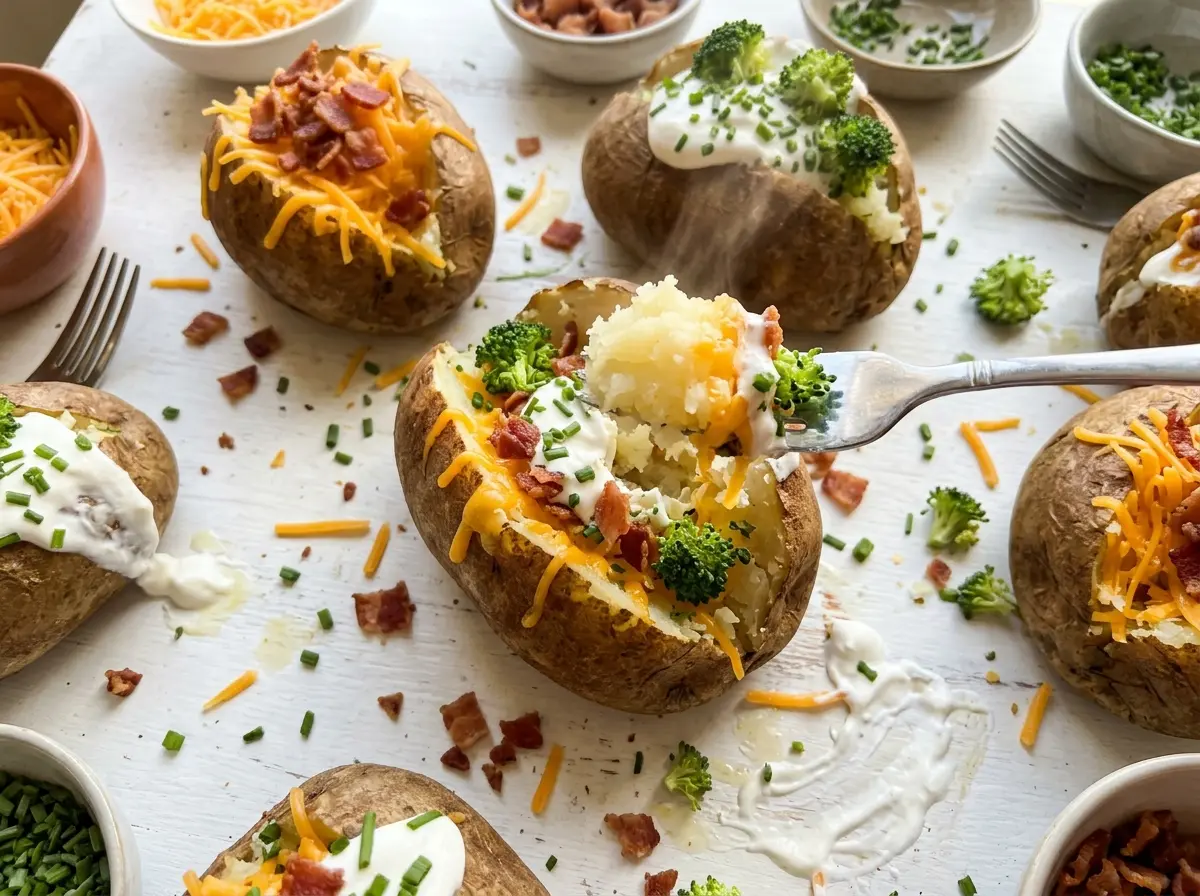
The skins should feel dry before the oil goes on, and the first forkful should be fluffy enough to hold a little butter in every bite. That’s what makes a baked potato bar more than a row of toppings beside dinner: each hot potato becomes its own meal, and everyone can build it the way they like.
I use large russets because their starchy centers turn tender in the oven while the skins stay sturdy enough to hold a generous scoop of sour cream, cheddar, bacon, and green onions. A light coating of oil and kosher salt is all the outside needs. Serve the potatoes as soon as they’re split and fluffed, and the toppings melt in without hiding the potato underneath.
Kitchen Note
Softened butter is worth getting out ahead of time. It spreads into the hot potato instead of sitting in a cold lump, so each forkful gets a little buttery richness.
Save this Baked Potato Bar for a relaxed dinner with fluffy russets and a topping for every kind of potato person.
Why Dry Russet Skins Matter More Than a Heavy Coat of Oil
Russets have a starchy interior that bakes up fluffy, but the skin needs a little attention too. Scrubbing gets rid of grit; drying the potatoes afterward keeps leftover water from sitting between the skin and the oil. When the surface is dry, a light rub of vegetable oil coats it evenly and the salt sticks where it should.
More oil doesn’t make a better potato. A thick coating can leave the skin greasy, while a thin one helps it bake up pleasantly firm around the soft center. The rimmed baking sheet catches any drips, and the potatoes can bake directly on it without getting wrapped or covered.
Size matters for timing, too. These large russets are each 10 to 12 ounces, so they have enough time in the oven for the center to turn tender without the outside scorching. Choosing potatoes close in size helps them finish at a similar pace, which makes serving the bar easier.
What Each Baked Potato Bar Topping Brings to the Table

- Russet potatoes — Their high-starch flesh turns light and fluffy, the right contrast to creamy toppings. Choose large potatoes that are close in size so the bake is more even. Yukon Golds are a possible stand-in, but their denser, waxier centers won’t have the same fluffy texture.
- Vegetable oil — A neutral oil gives the skins a thin, even coating without competing with the toppings. The inexpensive bottle is fine here. Another neutral cooking oil can take its place in the same amount.
- Unsalted butter and sour cream — Softened unsalted butter melts into the potato, and sour cream brings a cool, tangy contrast. Plain full-fat Greek yogurt can replace sour cream in the same amount; it’s thicker and a little sharper, but still works well with the other toppings.
- Cheddar cheese — Cheddar brings a familiar savory bite and melts against the hot potato. A sharper cheddar gives you more flavor, but ordinary shredded cheddar is perfectly suited to a casual topping bar. Pepper Jack is an easy swap if you’d like some heat.
- Cooked bacon and green onions — Crumbled bacon adds a salty, smoky note, while thinly sliced green onions keep each bite fresh. The bacon needs to be cooked before it goes into its serving bowl; chives can stand in for green onions if you want a milder, finer garnish.
From Fork-Pierced Potatoes to a Ready-to-Build Bar
Season the Russets Evenly
Heat the oven to 425°F with a rack in the center. Pierce each scrubbed, dried potato several times with a fork, then rub each one with vegetable oil and sprinkle it with kosher salt. Set them on an 18×13-inch rimmed baking sheet. Don’t skip the fork holes; they let steam escape as the potatoes bake.
Bake Until a Knife Slides In Easily
Bake the potatoes for 50 to 65 minutes, until a knife slides easily into the center of each one. The exact point within that range depends on the potatoes, so test them individually rather than assuming they’ll all finish together. If the center still resists the knife, it needs more oven time. A properly tender potato gives way without a hard spot in the middle.
Set Out the Toppings and Fluff the Centers
Put the butter, sour cream, cheddar, bacon, and green onions in separate serving bowls. Keeping them apart lets each person choose what goes on their potato and how much. Split each hot potato lengthwise, fluff the inside with a fork, and serve with the toppings. Fluffing opens up the center so the first spoonful of butter or sour cream can settle into the potato rather than sliding over a compact surface.
Three Ways to Adapt the Topping Bar
Make a Dairy-Free Potato
Use plant-based butter, dairy-free sour cream, and dairy-free cheddar in place of the dairy toppings, and leave out the bacon for a dairy-free serving. Keep each replacement in its own bowl. The potato stays fluffy, though the plant-based cheese may melt differently and the sour cream alternative may be milder than dairy sour cream.
Keep the Bar Vegetarian
Leave the bacon out and serve the butter, sour cream, cheddar, and green onions as the topping choices. The result is still hearty and creamy, with the sharp cheddar and green onions taking the lead instead of the smoky bacon.
Turn Up the Heat with Pepper Jack
Replace the cheddar with shredded Pepper Jack in the same amount. Its gentle chile heat gives the bar a livelier bite, while the sour cream and butter keep the topping combination mellow and creamy.
Storage and Reheating
- Refrigerator: Refrigerate leftover potatoes and toppings in separate covered containers within 2 hours; use them within 3 to 4 days. The potato centers will firm up and the skins will soften.
- Freezer: Freeze cooled potatoes without toppings, wrapped individually in airtight packaging, for up to 1 month for best quality. Thaw them in the refrigerator before reheating; the skin and center may be softer than freshly baked.
- Reheating: Warm potatoes in a 350°F oven until the center reaches 165°F, or use a microwave for a quicker option. Reheat the potatoes without the toppings; sour cream and cheese are best added afterward, and the microwave softens the skins.
Questions That Come Up When Setting Out a Potato Bar
Baked Potato Bar
Ingredients
Equipment
Method
- Heat the oven to 425°F and set a rack in the center.
- Pierce each potato several times with a fork.
- Rub the potatoes with the vegetable oil.
- Sprinkle the potatoes with the kosher salt.
- Arrange the potatoes on an 18x13-inch rimmed baking sheet.
- Bake for 50 to 65 minutes, until a knife slides easily into the center of each potato.
- Put the butter, sour cream, cheddar, bacon, and green onions in separate serving bowls.
- Split each hot potato lengthwise.
- Fluff the inside of each potato with a fork.
- Serve the potatoes with the toppings.