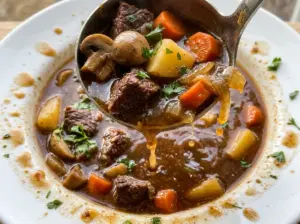
When the beef starts to brown, the skillet picks up a deep, savory smell and little browned bits begin sticking to the bottom. Those bits are exactly what I want before the Guinness goes in. This slow cooker Guinness beef stew takes a few minutes at the stove first, but that short skillet session gives the finished broth a much fuller, rounder taste.
I use Yukon Gold potatoes because they hold their shape through a long cook, while chuck turns tender as it simmers with the stout and broth. The Guinness brings a roasted, slightly malty note that sits nicely beside the beef; it doesn’t make the stew taste like a glass of beer.
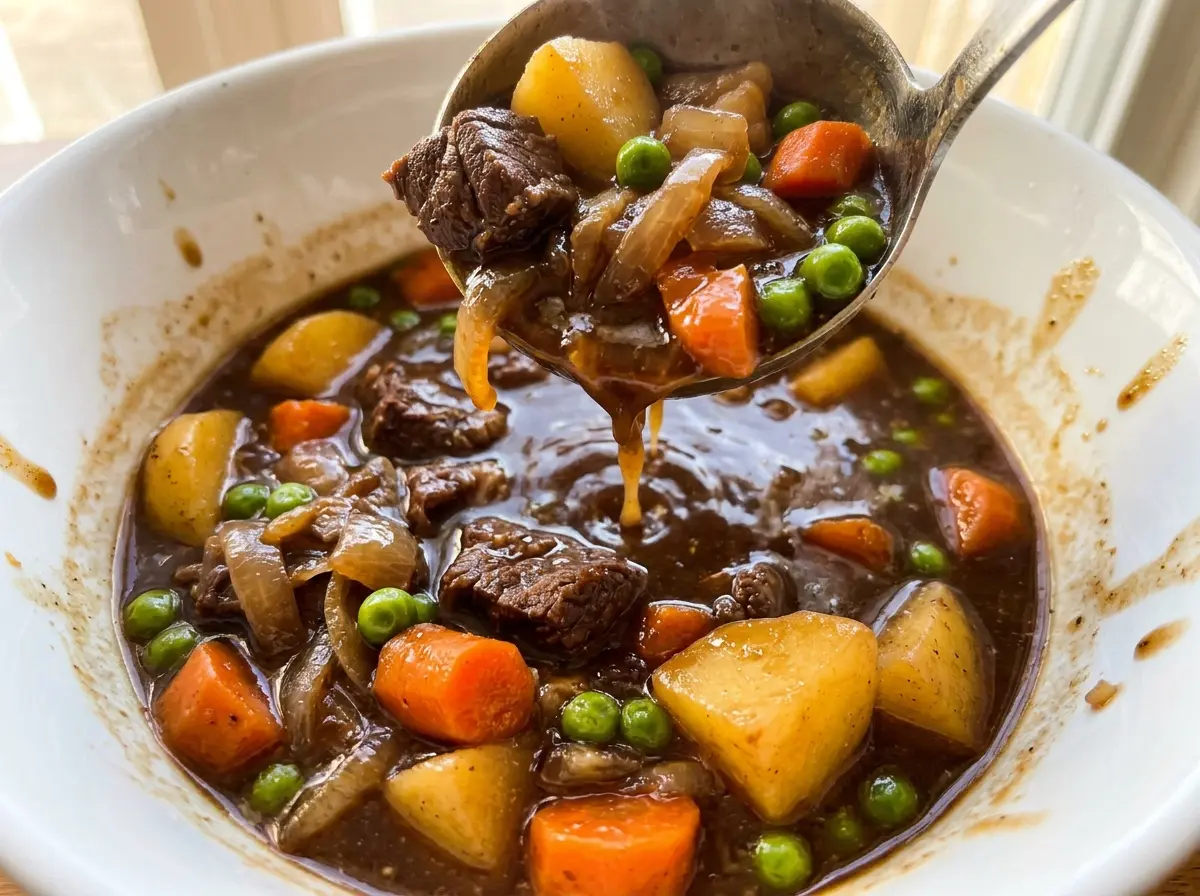
At the end, a quick cornstarch slurry gives the cooking liquid a proper stew-like thickness, and a short rest lets everything settle. Spoon up a piece of tender beef with a potato and carrot, all coated in that dark, savory gravy.
Kitchen Note
Keep the potatoes in 1 1/2-inch pieces and the carrots in 1-inch pieces. That size difference helps the vegetables hold up while the chuck cooks until tender.
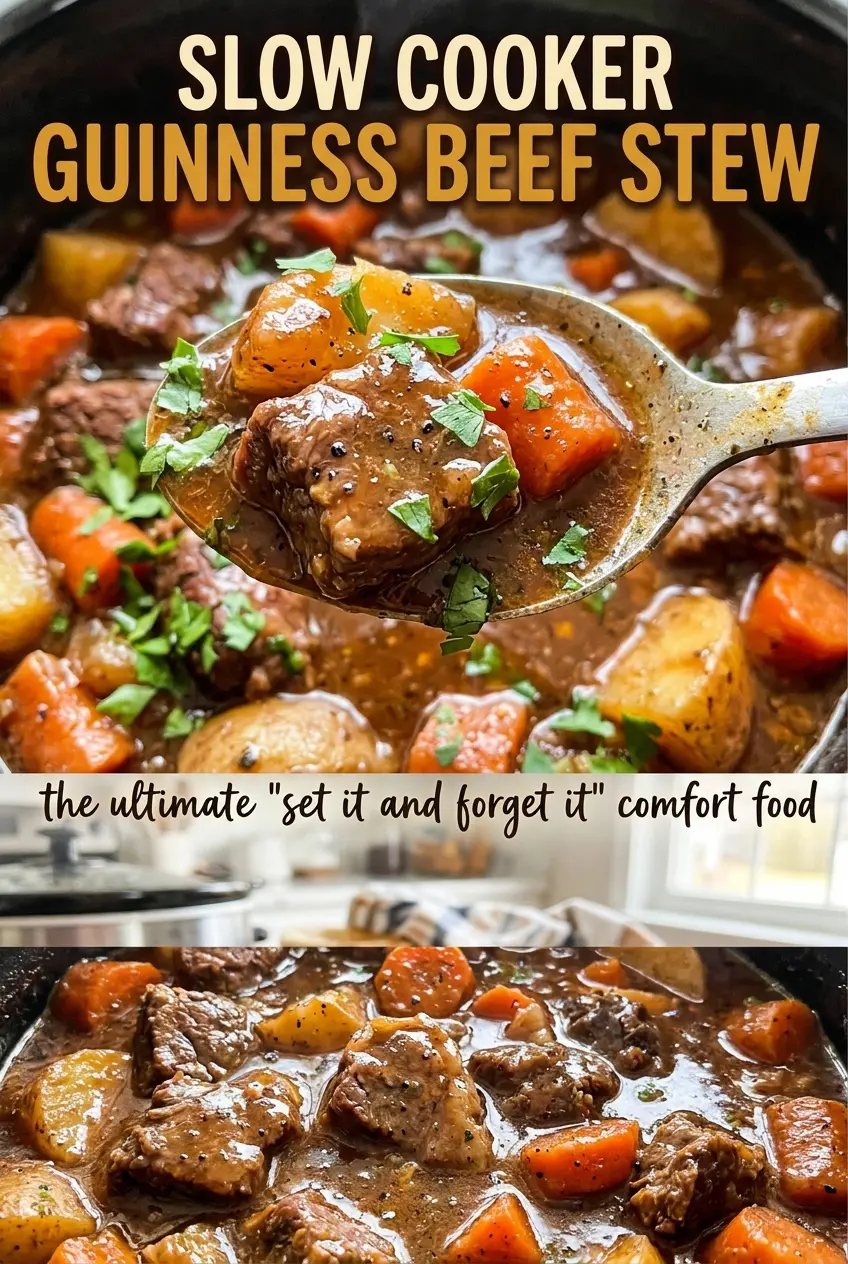
Save this slow cooker Guinness beef stew for tender chuck, sturdy vegetables, and a rich stout gravy waiting at the end of the day.
Why the skillet step changes the whole pot
Slow cookers are good at making beef tender, but they don’t brown meat. If the cubes go straight into the cooker, you miss the browned surface that gives the broth its deeper, more savory foundation. Searing the beef in batches lets the skillet stay hot enough for real color instead of letting the meat release moisture and steam.
Those browned bits left in the pan are useful, too. Once the Guinness goes in, scraping the skillet loosens them into the liquid, carrying their flavor into the stew instead of leaving it behind. The onion softens in the same pan, and the tomato paste gets a brief cook before the liquid is added. It’s a small amount of stovetop work, but it gives the slow-cooked beef a more developed taste than a dump-and-start stew.
What the beef, Guinness, and starches each bring
- Beef chuck — Its marbling and connective tissue suit a long, moist cook, giving you tender cubes and a beefy broth. Choose chuck with visible streaks of fat; very lean beef won’t give the same richness. Well-marbled stewing beef is a workable alternative, though the texture may vary by cut.
- Yukon Gold potatoes — They keep their shape better than floury potatoes during the long cook. Red potatoes are a useful swap and have a similar waxy texture; russets tend to soften more and can make the broth cloudy.
- Guinness Draught — The stout brings roasted grain and a gentle bitterness that balances the rich beef. Another dry stout can stand in, but its bitterness and roastiness will change the finished broth; a sweet or light beer won’t give the same character.
- All-purpose flour and cornstarch — The flour coating helps the beef brown, while the smooth cornstarch slurry thickens the liquid at the end. They do different jobs, so don’t treat them as interchangeable in the method. For a gluten-free adaptation, use a gluten-free all-purpose flour blend for the coating and gluten-free Worcestershire sauce.
- Low-sodium beef broth — It adds savory depth without making it harder to control the seasoning. Regular beef broth works, but the finished stew may taste saltier; taste before adding any extra salt.
From skillet fond to a thick slow-cooker gravy
Set up the vegetables
Put the potatoes and carrots in the bottom of a 6-quart slow cooker. This gives you a ready bed for the beef and the skillet mixture. Keep the cooker nearby while you work at the stove so the browned beef can go straight into it.
Coat and brown the chuck
Pat the beef dry, season it with the salt and pepper, then toss it with the flour until coated. Heat the canola oil in a 12-inch skillet over medium-high heat until shimmering. Brown the beef in batches for 2 to 3 minutes per side, then transfer each batch to the slow cooker. Crowding the skillet makes the beef steam, so leave space around the cubes as they brown.
Build the stout base
Add the diced onion to the skillet and cook over medium heat for 4 to 5 minutes, stirring, until softened. Stir in the garlic and tomato paste and cook for 1 minute. Pour in the Guinness and scrape up the browned bits, then simmer for 2 minutes. Stir in the broth, Worcestershire sauce, thyme, and bay leaves before pouring the mixture over the beef and vegetables.
Let the slow cooker soften the beef
Cover and cook on LOW for 7 to 8 hours or HIGH for 4 to 5 hours. The beef is ready when a fork slides into a cube easily and the meat yields without a chewy pull. Slow cookers can vary, so use that tenderness cue alongside the time range rather than relying on the clock alone.
Thicken and let the stew rest
Stir the cornstarch and cold water together until the mixture is smooth, then stir it into the stew. Cover and cook on HIGH for 15 to 20 minutes, until the broth thickens. Remove the bay leaves and let the stew rest for 10 minutes before serving. The slurry should disappear into the gravy without leaving pale streaks.
Two ways to adapt this Guinness beef stew
Make it gluten-free
Replace the all-purpose flour used to coat the beef with a gluten-free all-purpose flour blend, and use gluten-free Worcestershire sauce. The cornstarch slurry still thickens the stew, while the coating may brown a little differently depending on the blend.
Make it without stout
Replace the Guinness with beef broth, using the can to measure the same volume. The stew will lose the stout’s roasted, malty edge and taste more directly of beef and vegetables, but the slow-cooker method stays the same.
Storage and Reheating
- Refrigerator: Store in an airtight container for 3 to 4 days. The potatoes may soften a little as they sit.
- Freezer: Freeze in airtight containers for up to 3 months. Thaw in the refrigerator; the potatoes may be softer after thawing, but the stew still reheats well.
- Reheating: Warm gently on the stovetop over medium-low heat, stirring now and then, until hot throughout. Add a splash of beef broth if the gravy has thickened too much, and avoid a hard boil that can break up the potatoes.
Questions that come up with slow cooker Guinness stew
Slow Cooker Guinness Beef Stew
Ingredients
Equipment
Method
- Place the potatoes and carrots in a 6-quart slow cooker.
- Pat the beef dry.
- Season the beef with the salt and pepper.
- Toss the beef with the flour to coat.
- Heat the oil in a 12-inch skillet over medium-high heat until shimmering.
- Brown the beef in batches for 2 to 3 minutes per side.
- Transfer the browned beef to the slow cooker.
- Add the onion to the skillet and cook over medium heat for 4 to 5 minutes, stirring, until softened.
- Stir in the garlic and tomato paste and cook for 1 minute.
- Pour in the Guinness, scraping up the browned bits.
- Simmer for 2 minutes.
- Stir the broth, Worcestershire sauce, thyme, and bay leaves into the skillet.
- Pour the mixture over the beef and vegetables.
- Cover and cook on LOW for 7 to 8 hours or HIGH for 4 to 5 hours, until the beef is fork-tender.
- Mix the cornstarch with the cold water until smooth.
- Stir the cornstarch mixture into the stew.
- Cook covered on HIGH for 15 to 20 minutes, until thickened.
- Remove the bay leaves.
- Let the stew rest for 10 minutes before serving.