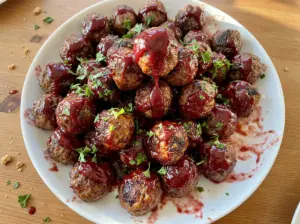
The grape jelly looks like it has no business next to barbecue sauce, right up until you stir them together. The jelly melts into the sauce as the meatballs heat, and that sharp-sweet combination turns a bag of frozen meatballs into something coated and easy to serve. I make these grape jelly BBQ meatballs when I want a slow cooker appetizer that doesn’t need browning, chopping, or a separate sauce pan.
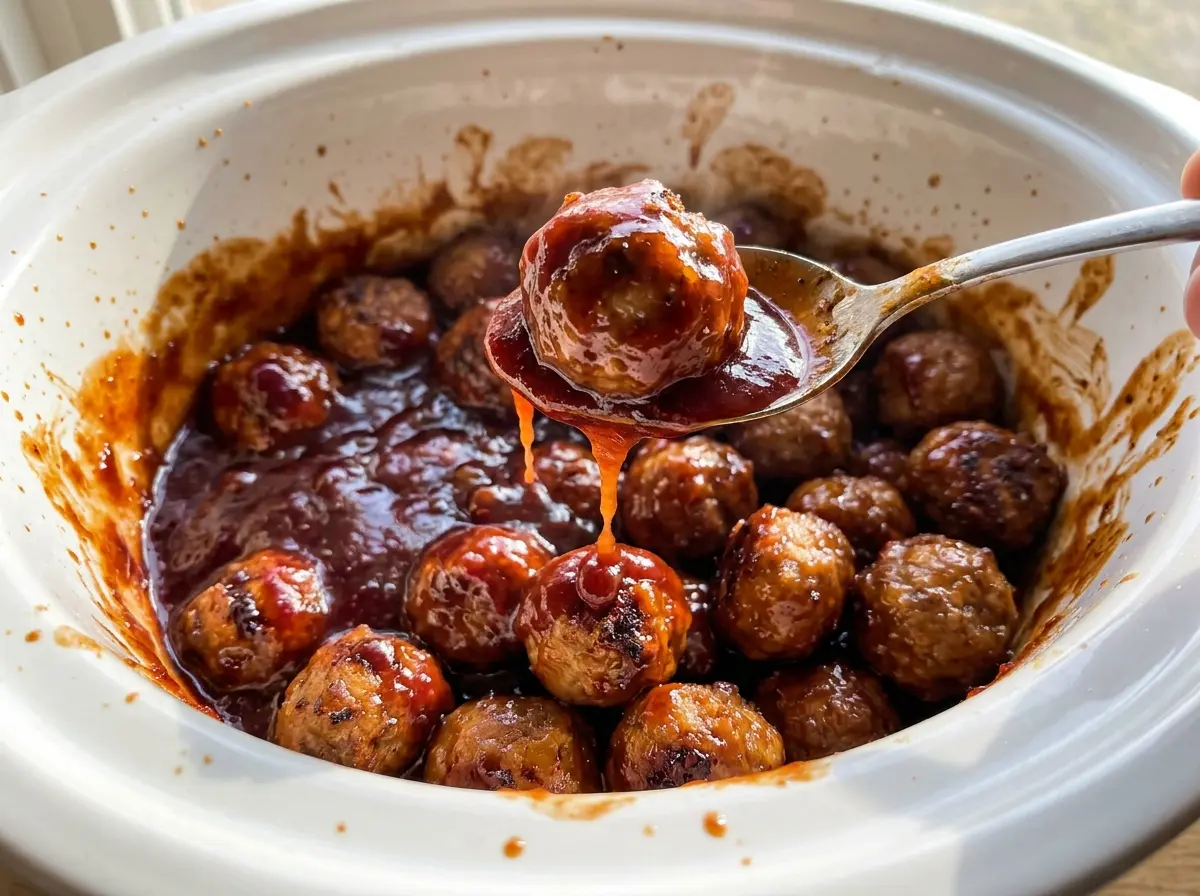
It helps to think of the two sauce ingredients as partners, not competing flavors. Grape jelly brings sweetness and body; barbecue sauce adds the tang and smoky edge that keeps the finished sauce from tasting like candy. Add the frozen, fully cooked meatballs right after stirring the sauce together, then let the slow cooker do the work until they’re hot throughout. The result is tender meatballs with a glossy sweet-and-tangy coating.
Kitchen Note
Stir the jelly and barbecue sauce together before the meatballs go in. Getting the sauce uniform first means you can coat the meatballs evenly without trying to break up jelly while stirring around them.
Save these grape jelly BBQ meatballs for a party or potluck when you want a hands-off slow cooker appetizer with a sweet-tangy sauce.
Why the Jelly Doesn’t Make These Meatballs Taste Like Candy
Grape jelly is sweet on its own, and barbecue sauce can be sweet too. The balance comes from using both in equal-sized containers: the jelly softens the sharper, smoky, or tangy notes in the barbecue sauce, while the sauce gives the jelly a savory counterpoint. As they warm together, the two ingredients become one coating rather than a layer of jelly sitting on top of the meatballs.
That balance also means your barbecue sauce choice shapes the finished dish. A tangier or smoky sauce gives the sweetness more contrast; a sweeter sauce makes the final coating taste rounder and more candy-like. If you already know your barbecue sauce runs sweet, choose a less-sweet style before you start rather than trying to correct the finished slow cooker. The meatballs themselves are straightforward, so the sauce is where you can steer the flavor.
Keep the proportions even when you change the style of sauce. The goal isn’t to hide the grape flavor; it’s to make sure the barbecue sauce brings enough savory, tangy character to keep each bite balanced.
Why the Jelly and Barbecue Sauce Need Different Jobs
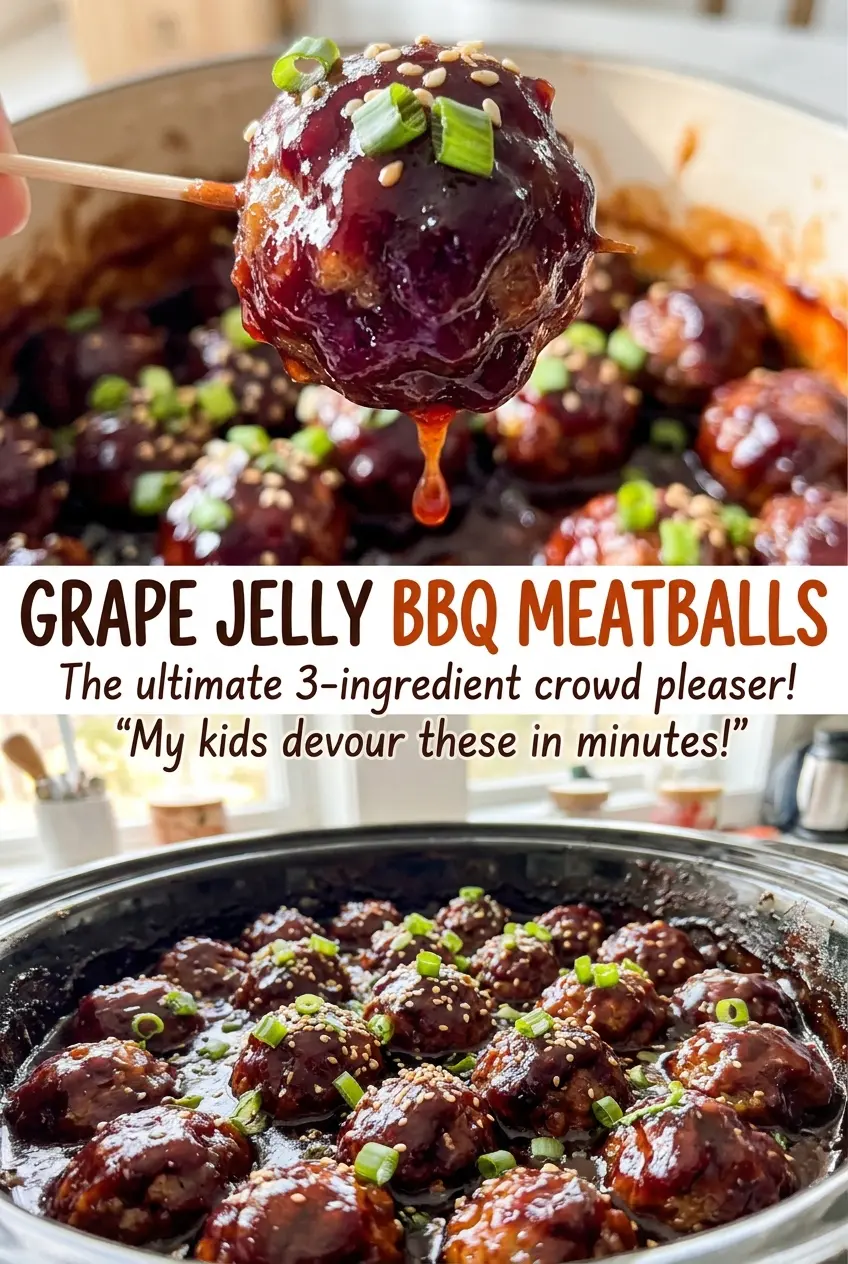
- Grape jelly — It gives the sauce its distinctive fruit sweetness and helps create a smooth coating as it warms. A standard grape jelly is the right choice when you want the familiar flavor; a different fruit jelly or cranberry jelly works as a swap, but it changes the character of the sauce. No special prep is needed.
- Barbecue sauce — This brings the tang, spice, and smoke that balance the jelly, so its flavor matters more than the brand. The inexpensive bottle is fine; choose a style you already like, and pick a tangier or smoky version if you want more contrast. A spicier barbecue sauce is also an easy way to give the finished meatballs a little heat without adding another ingredient.
- Frozen fully cooked meatballs — Use frozen meatballs that are already cooked, since the slow-cooker timing is built around heating them through rather than cooking raw meat. Different brands vary in seasoning and size, but either can work; the center still needs to be hot throughout before serving. For a dietary swap, frozen fully cooked gluten-free meatballs can replace regular ones.
Building the Sauce and Heating the Meatballs Through
Stir the Two-Part Sauce Together
Add the grape jelly and barbecue sauce to a 6-quart slow cooker. Stir until the two are combined before adding anything else. At first the jelly may look thicker than the barbecue sauce, so keep stirring until you no longer see separate pockets of either ingredient. This gives the meatballs a consistent coating from the start.
Coat the Meatballs While They’re Frozen
Add the frozen, fully cooked meatballs to the sauce and stir to coat them. Work gently so the meatballs stay intact, and check that sauce reaches the ones at the edges as well as those in the middle. Don’t thaw them first; the cooking times here are for frozen meatballs. Once they’re coated, cover the slow cooker.
Let the Slow Cooker Finish the Job
Cook on LOW for 4 to 5 hours or on HIGH for 2 to 3 hours. The meatballs should be hot throughout and reach 165°F before you serve them. Since slow cookers can heat at different rates, use the temperature and the center of a meatball as your cue rather than relying only on the earliest time in the range. If the centers are still cool, keep cooking until they’re heated through.
Simple Swaps for a Different Sauce or Dietary Need
Use cranberry jelly for a tarter finish
Swap the grape jelly for cranberry jelly and keep the barbecue sauce the same. The sauce will taste fruitier and sharper, with less of the familiar grape-jelly sweetness. It keeps the same simple two-ingredient sauce approach.
Choose a smoky or spicy barbecue sauce
Keep the grape jelly and switch only the barbecue sauce to a smoky or spicy style. A smoky sauce gives the sweetness more depth, while a spicy one adds a little kick; the exact heat depends on the sauce you choose.
Make a gluten-free version
Use frozen fully cooked gluten-free meatballs and gluten-free barbecue sauce, keeping the grape jelly as it is. The sauce stays sweet and tangy, though the meatball seasoning may differ from the regular version. Keep the same slow-cooker method and check that the centers are hot throughout.
Storage and Reheating
- Refrigerator: Refrigerate leftovers within 2 hours in a covered container and use them within 3 to 4 days. The sauce firms up when cold and loosens as it warms.
- Freezer: Freeze the meatballs with their sauce in an airtight, freezer-safe container for up to 2 to 3 months. Thaw them in the refrigerator before reheating.
- Reheating: Warm them gently in a covered saucepan over low heat or in the microwave, stirring partway through so the sauce heats evenly. Avoid reheating leftovers in the slow cooker, which can take too long to bring them back up to temperature.
Questions I Get About Grape Jelly BBQ Meatballs
Grape Jelly BBQ Meatballs
Ingredients
Equipment
Method
- Add the grape jelly and barbecue sauce to a 6-quart slow cooker and stir until combined.
- Add the frozen meatballs and stir to coat them in the sauce.
- Cover and cook on LOW for 4 to 5 hours or HIGH for 2 to 3 hours, until the meatballs are hot throughout and reach 165°F.