Roasted brown sugar carrots come out tender in the center, caramelized at the edges, and coated in a glossy glaze that clings to every bite. The butter and brown sugar work together to create that sticky finish, while the cinnamon adds just enough warmth to keep the sweetness from tasting one-note. They land on the table looking simple, but they disappear fast.
The trick here is giving the carrots enough space on the pan so they roast instead of steam. A hot oven and a single layer are what turn the sugar mixture into a lacquer instead of a puddle. Cutting the carrots on the bias gives you more surface area, which means more browned edges and better texture in the final dish.
Below, I’ve included the small details that matter most: how to keep the glaze from burning, what to do if your carrots are on the thick side, and the easiest ways to change up the seasoning without losing that caramelized finish.
The carrots caramelized instead of turning mushy, and the brown sugar glaze thickened right up in the pan. I made them for Sunday dinner and everyone kept sneaking bites before we even sat down.
Save these roasted brown sugar carrots for the dinner plates that need a glossy, caramelized side with barely any extra work.
The Mistake That Keeps Carrots From Caramelizing
Carrots need heat and space to brown properly. If the pan is crowded, the moisture they release sits around them and turns the whole batch soft instead of glazed. A lined sheet pan helps with cleanup, but the real difference is leaving enough room for the carrots to roast in a thin layer.
The other place people lose the dish is with the sugar. Brown sugar burns faster than plain vegetables roast, so the goal is deep color, not an aggressive blast of heat. At 400F, the carrots soften first and then the glaze thickens around the edges without scorching before the centers are tender.
What Each Ingredient Is Actually Doing In This Dish
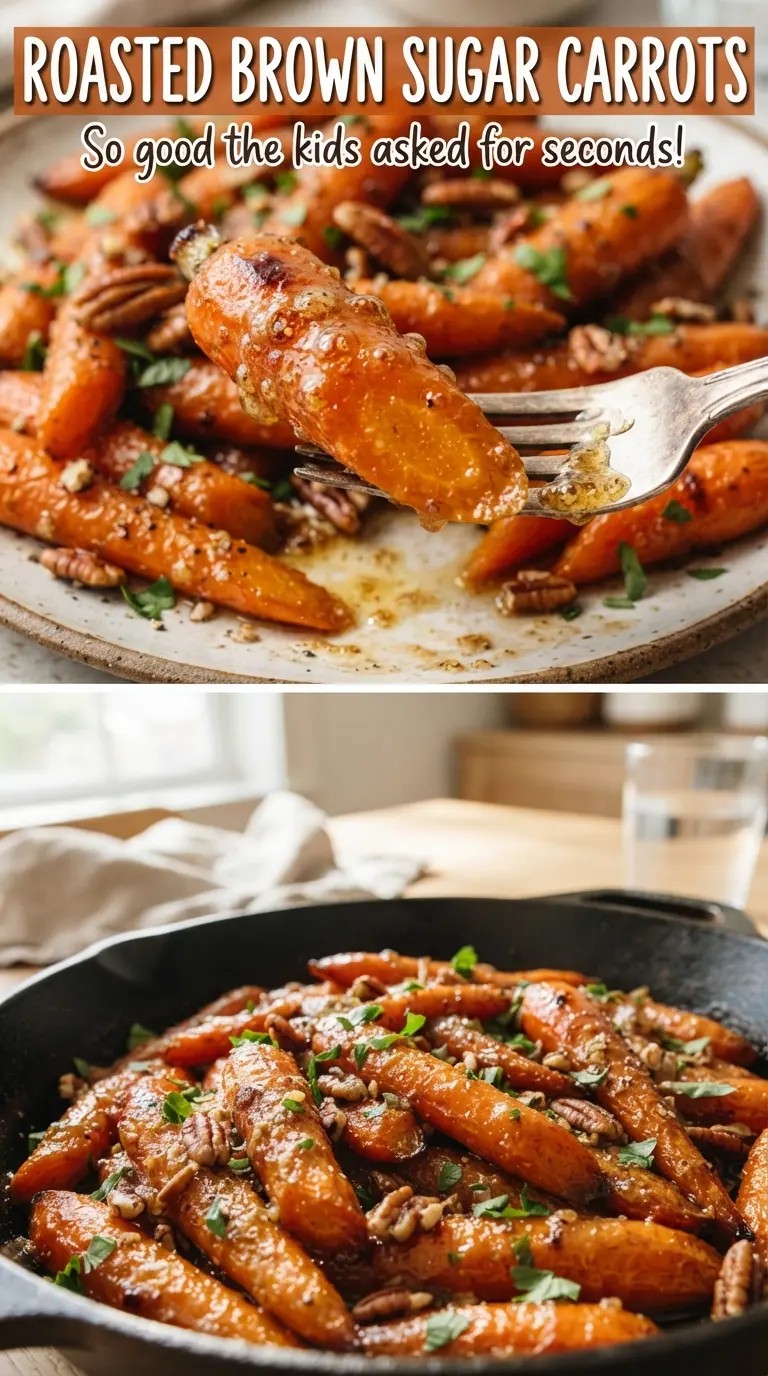
- Carrots — These are the backbone of the dish, so choose firm, bright carrots with a sweet, fresh smell. Cutting them on the bias gives more surface area for browning, and keeping the pieces close in size helps them finish at the same time.
- Butter — Melted butter coats the carrots and helps the sugar cling while encouraging browning. You can use salted butter if that’s what you have, but keep the added salt on the lighter side so the glaze doesn’t tip too salty.
- Brown sugar — This is what builds the glossy finish. Light or dark brown sugar both work, though dark brown sugar gives a deeper molasses note and a slightly richer glaze.
- Cinnamon — A small amount is enough. It rounds out the sweetness and makes the carrots taste warm instead of candy-like.
- Parsley — Fresh parsley matters at the end because it cuts through the sweetness and makes the finished pan look brighter. Skip dried parsley here; it won’t give the same fresh lift.
How To Get A Sticky Glaze Without Burning The Pan
Tossing The Carrots Evenly
Mix the carrots with the melted butter, brown sugar, salt, pepper, and cinnamon until every piece looks lightly coated. If the sugar seems sandy at first, that’s fine; it melts as the carrots roast and combine with their juices. The important part is getting an even coating so some pieces don’t scorch while others stay plain.
Roasting For Browning, Not Steaming
Spread the carrots in a single layer on the foil-lined sheet pan. If they pile up, they’ll steam and stay pale. Roast them until the edges start to darken and the glaze looks syrupy, then toss them once halfway through so the bottom side gets a chance to caramelize too.
Finishing In The Pan Juices
When the carrots come out, toss them right in the sticky juices left on the pan. That last toss matters because it coats the carrots in the concentrated glaze instead of leaving it behind on the foil. Add the parsley at the end so it stays fresh and doesn’t wilt into the sauce.
How To Change These Carrots Without Losing The Caramelized Finish
Use maple syrup instead of brown sugar
Swap the brown sugar for an equal amount of maple syrup if you want a deeper, woodsy sweetness. The glaze will be a little looser and may brown slightly faster, so keep a closer eye on the pan near the end of roasting.
Make it dairy-free
Use melted plant-based butter with a neutral flavor. The carrots will still caramelize, though the glaze may taste a little less rich than the butter version.
Add a savory edge
A pinch of thyme or a small splash of balsamic at the end gives the carrots a sharper finish. Add it after roasting, not before, or the extra acid can keep the glaze from thickening the way it should.
Storage and Reheating
- Refrigerator: Store in an airtight container for up to 4 days. The glaze will thicken and the carrots will soften a bit as they chill.
- Freezer: Freezing isn’t ideal here. Carrots lose a lot of their roasted texture once thawed, and the glaze turns watery.
- Reheating: Warm them in a 350F oven on a sheet pan until hot. The oven brings back some of the edges; the microwave softens them too much and can make the glaze separate.
Answers to the Questions Worth Asking
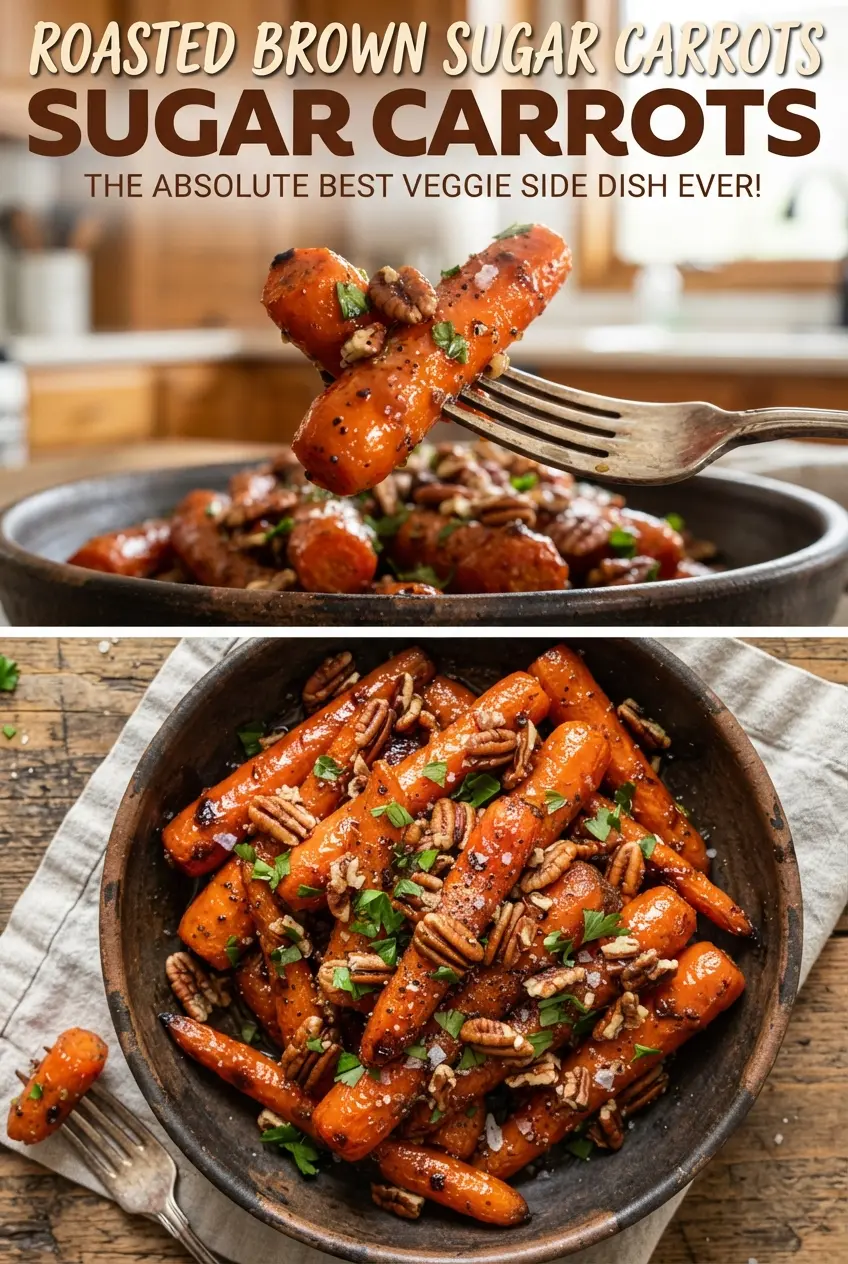
Roasted Brown Sugar Carrots
Ingredients
Equipment
Method
- Preheat the oven to 400F, then line a sheet pan with foil for easy cleanup.
- Toss the carrots with melted butter, brown sugar, salt, black pepper, and ground cinnamon until evenly coated.
- Spread the carrots in a single layer on the sheet pan so they roast and caramelize instead of steaming.
- Roast for 25-30 minutes at 400F, tossing halfway through, until tender and caramelized with darker, glossy edges.
- Toss the carrots in the pan juices to recoat them in the sticky glaze, then garnish with chopped fresh parsley.
- Serve the carrots hot straight from the pan for the best caramel sheen.