Butternut squash casserole bakes into that sweet-savory middle ground people keep going back for: creamy squash underneath, buttery pecan streusel on top, and just enough cinnamon and brown sugar to make the whole dish feel warm without turning it into dessert. The texture is what makes it memorable. The squash base stays smooth and spoonable, while the topping bakes up crisp and golden so every serving gets a little contrast.
The trick is treating the squash like a mash, not a watery puree. Boiling it until tender is only half the job; it needs to drain well before you mix in the eggs and milk, or the casserole turns loose and loses its body in the oven. The streusel matters too. Using melted butter and flour with chopped pecans gives you those craggy, toasted bits that stay crisp instead of sinking into the filling.
If you’ve made squash casseroles that came out bland or soggy, the notes below will help. I’m walking through the part that keeps the filling creamy, the swap that works if you need a gluten-free topping, and the little detail that keeps the pecans from burning before the casserole finishes baking.
The squash was creamy without being runny, and that pecan topping stayed crisp even after sitting on the table for a bit. I served it with ham and there wasn’t a spoonful left.
Save this butternut squash casserole for a creamy squash side with a crisp pecan streusel that bakes up golden every time.
The Reason This Casserole Stays Creamy Instead of Turning Watery
Most squash casseroles get into trouble because the squash carries too much water into the bake. Once that moisture hits the eggs and sugar, the filling loosens up and can bake up soft instead of plush. Draining the squash well after boiling is the step that protects the texture.
The other thing that matters here is mixing the filling until it’s smooth before it goes into the dish. That breaks up any stringy bits and helps the eggs distribute evenly, which is what gives the casserole its custardy set. If the mash still looks wet in the bowl, keep stirring for another minute; squash that sits in a steamy pile will always seem looser than squash that’s been well drained and fluffed.
What Each Ingredient Is Actually Doing in the Dish
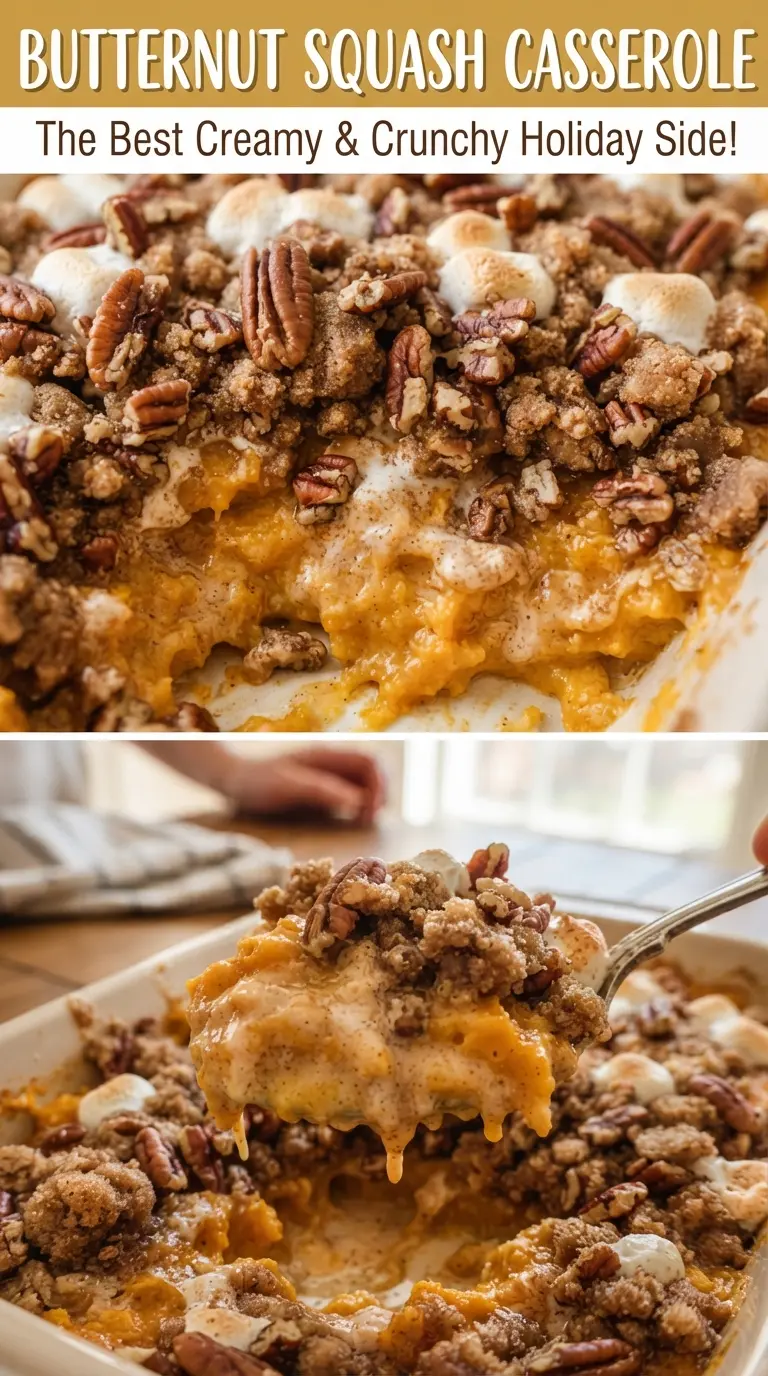
- Butternut squash — This is the base of the casserole, and its natural sweetness gives you that classic Southern-style side dish flavor. Fresh squash gives the best texture here; frozen squash can work in a pinch, but it usually holds more water, so drain it aggressively before mashing.
- Butter — Butter carries the flavor and keeps both the filling and topping rich. Melted butter blends smoothly into the mash and also helps the streusel clump into those crisp, crumbly bits instead of staying sandy.
- Brown sugar — Brown sugar deepens the sweetness and adds a little molasses note that fits squash better than white sugar would. It’s split between the filling and topping, so you get sweetness in every layer without making the casserole taste flat.
- Eggs — The eggs set the filling and keep it from collapsing once it cools. There isn’t a good substitute if you want the same custardy texture, though a flax egg can hold the mixture together for a vegan version at the cost of a softer, less stable finish.
- Pecans — These are what make the topping worth the extra step. Chop them fairly small so they toast evenly and don’t fall off in big pieces when you scoop the casserole.
- Flour — Flour binds the topping into a streusel and keeps it from melting into the filling. If you need the recipe gluten-free, a 1:1 gluten-free flour blend usually works well here because the topping’s job is structure, not rise.
Getting the Topping Golden Without Drying Out the Filling
Boiling and Draining the Squash
Boil the cubed squash until it’s very tender and the pieces break apart with almost no resistance. Drain it well, then let it sit a minute in the colander so steam can escape instead of ending up in the casserole. If you rush this part, you’ll see it later as a loose center and a topping that sinks. A quick mash in the pot or bowl while the squash is still hot helps the butter melt evenly.
Building the Creamy Base
Mash the squash with the butter, brown sugar, eggs, milk, vanilla, cinnamon, and salt until the mixture is smooth and even. The filling should look thick and spreadable, not soupy. Stop once the eggs are fully blended; overmixing won’t hurt the flavor, but it can make the texture a little gluey. Spread it into the baking dish in an even layer so it bakes at the same rate from edge to center.
Making the Streusel
Mix the flour, pecans, melted butter, and remaining brown sugar until the mixture looks crumbly and uneven. You want little clumps, not a paste. If it feels wet, add a spoonful more flour; if it seems dusty, add a touch more melted butter. Scatter it over the casserole without pressing it down so hot air can move through the crumbs and crisp them up.
Baking Until the Edges Bubble
Bake until the topping is golden and the edges of the casserole are bubbling. That bubbling edge is the sign the filling has heated through and set around the sides. If the top browns before the center is hot, lay a loose piece of foil over the dish for the last part of baking. Pull it from the oven when the filling looks set but still soft in the middle; it will firm up a bit as it rests.
How to Adapt This for a Crowd, a Shortcut, or a Gluten-Free Table
Gluten-Free Topping
Swap the all-purpose flour for a 1:1 gluten-free baking blend. The topping stays crisp and crumbly, though it may brown a little faster, so start checking it a few minutes early. This is the cleanest change in the recipe because the flour is there for structure, not for lift.
Less Sweet, More Savory
Cut the brown sugar back by a few tablespoons in the filling and use a lighter hand in the topping. The casserole will taste more like a squash side dish and less like a dessert-adjacent bake, which works well next to ham, turkey, or roast chicken.
Nut-Free Version
Leave out the pecans and replace them with rolled oats for a softer, toastier topping. You’ll lose the rich crunch of the nuts, but the casserole still gets a good golden lid with a little chew. If you go this route, keep an eye on the oven because oats brown faster than pecans.
Storage and Reheating
- Refrigerator: Store covered for up to 4 days. The topping softens a bit in the fridge, but the flavor holds well.
- Freezer: Freeze the baked casserole, tightly wrapped, for up to 2 months. The filling freezes better than the topping, so expect the streusel to lose some crispness after thawing.
- Reheating: Reheat in a 325F oven, covered loosely with foil, until hot in the center. The biggest mistake is microwaving it uncovered, which makes the squash dry at the edges while the topping turns soggy.
Questions I Get Asked About This Recipe
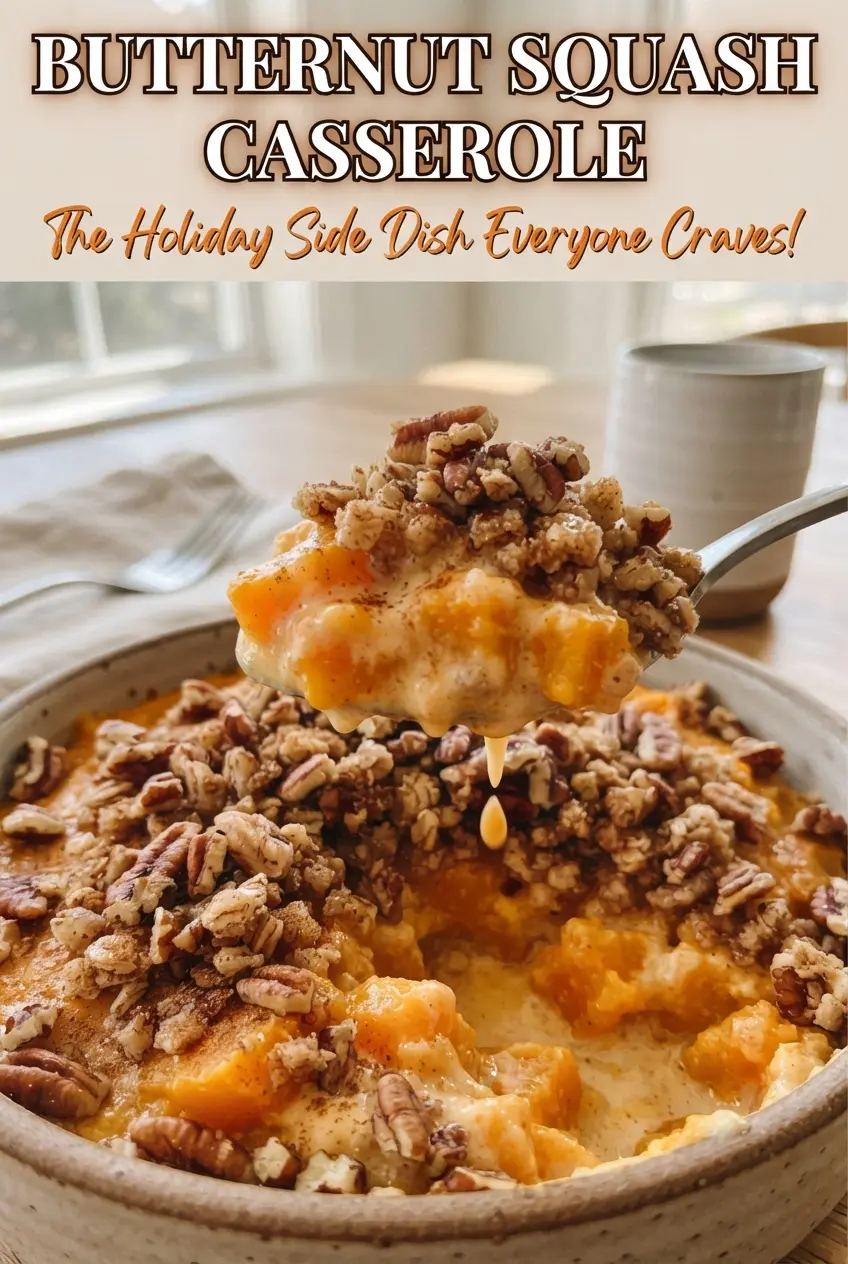
Butternut Squash Casserole
Ingredients
Equipment
Method
- Bring a pot of water to a boil and cook the butternut squash for 15 minutes until very tender, then drain well (you should be able to mash it easily).
- Preheat the oven to 350F and grease a 9x13-inch baking dish.
- Mash the butternut squash with 1/4 cup butter, 1/4 cup brown sugar, eggs, milk, vanilla extract, ground cinnamon, and salt until smooth.
- Spread the butternut squash mixture evenly into the prepared baking dish.
- Mix the flour, chopped pecans, remaining butter, and remaining brown sugar into a crumbly topping.
- Sprinkle the crumbly pecan topping over the squash.
- Bake at 350F for 35-40 minutes, until the topping is golden and the edges bubble.